7day futureverse festival
| |

7-day FutureVerse festival brings young people fro…

PESHAWAR: A seven-day youth festival bringing together young people from different parts of Pakistan, including a strong participation of women, was held at TMUC Peshawar with activities focused on skills development, entrepreneurship, technology and creative expression.

FutureVerse 2026 was organised by the Directorate of Youth Affairs, Khyber Pakhtunkhwa, in collaboration with The Order of Pen (TOOP). Over the course of seven days, the festival brought together participants from across Khyber Pakhtunkhwa, including the newly merged districts, as well as other parts of the country.
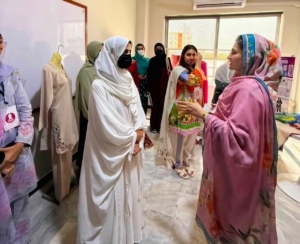
The seven-day programme featured training sessions, competitions, workshops, exhibitions and interactive activities organised under five themes — FounderVerse, TechVerse, MindVerse, JusticeVerse and StyleVerse.

Participants explored entrepreneurship, design thinking, robotics, personality development, fashion, art and other emerging fields. Industry professionals and mentors also engaged with participants during different sessions.

A significant feature of the seven-day event was the participation of women from different backgrounds and regions. They took part in training sessions, competitions, creative activities and discussions covering technology, entrepreneurship, leadership and other emerging areas.

Director Youth Affairs Khyber Pakhtunkhwa Abbas Khan Afridi said the participation of young people from different parts of the country, particularly women, reflected the need for broader access to learning and professional opportunities.


“FutureVerse has provided young people with a space to learn, exchange ideas and explore their potential over seven days. The participation of women and young people from different regions is particularly encouraging. We want to create more opportunities where they can gain practical skills, connect with mentors and pursue their ambitions,” he said.

Mr Afridi said the Directorate would continue to support initiatives that provide young people with access to skills, mentorship and practical exposure.

The festival also allowed participants to compete, collaborate and showcase their work while interacting with peers from different educational, social and regional backgrounds.

The organisers said the inclusion of participants from the newly merged districts and other parts of Pakistan was intended to widen access to youth-oriented programmes and encourage greater interaction among young people from diverse communities.

Similar Posts

  • | |

    Doctors reject FBR POS system, warn of public prot…

    Islamabad: The Pakistan Medical Association Punjab has warned the Federal Board of Revenue that doctors could launch legal action, protests and even withdraw medical services if the proposed Point of Sale system is imposed on private healthcare establishments. PMA Punjab President Dr Kamran Saeed Sheikh said the medical community was ready to fight the issue through courts, public protests, banners and awareness campaigns if its concerns were not addressed. He said the doctors could also consider token strikes or withdrawal of services. The warning came during a press conference at the National Press Club, where the PMA Punjab provincial council met in Islamabad. Doctors from different parts of Punjab discussed the FBR initiative concerning POS systems and the requirements linked to Section 175C. Dr Kamran Saeed Sheikh said doctors were not refusing to pay taxes. He stressed that the medical profession should not be treated like an ordinary business because healthcare is an essential public service. According to Dr Kamran Saeed Sheikh, the proposed system could create additional technical and financial difficulties for doctors and ultimately increase the cost of healthcare for ordinary patients. He also raised concerns about patient privacy. He said information about a patient’s illness, visits and expenses must remain confidential and should not be exposed through systems that could allow unnecessary access or monitoring. The PMA Punjab president said private healthcare providers were already paying taxes on several areas, including electricity, equipment, water, gas and buildings. He argued that adding more technical requirements could take doctors away from their main responsibility of treating patients. Dr Kamran Saeed Sheikh also warned that doctors were already leaving Pakistan and that healthcare establishments in some areas were closing rather than opening. He said further administrative pressure could make the situation worse. The PMA leadership said it had already held two meetings with the FBR and had also sent written communications explaining its position. According to Dr Kamran Saeed Sheikh, the discussions had not produced the result the doctors wanted. He said the medical community was prepared to keep all legal and democratic options open. “We will fight legal battles, go to court and protest,” Dr Kamran Saeed Sheikh said during the briefing. He also warned that doctors could come onto the streets and consider withdrawal of services if the issue was not resolved. Dr Maqsood Zahid, President Elect of PMA Punjab, also questioned whether POS technology was suitable for medical services. He argued that healthcare was different from selling ordinary products because doctors provide services that can be required at any time, including emergencies during the night. He said doctors could not stop treating an emergency patient simply because a machine was not working or an internet connection had failed. Dr Maqsood Zahid said many patients also receive treatment without paying the full amount. Some patients receive services at half rates, while others are treated free of charge. He questioned how such cases would be properly reflected through a system designed mainly around payment records. He gave the example of a hospital in Mian Channu, Khanewal, where doctors reportedly deal with many patients without charging them. He said that out of 100 patients, around 60 could be treated without receiving even a single penny, making a simple payment based system difficult to apply to real medical practice. The doctors also argued that medical treatment cannot be measured in the same way as the sale of a retail product because the cost and complexity of treatment can change from patient to patient. Dr Maqsood Zahid said the medical community was willing to discuss a suitable tax formula with the government if a system could be designed according to the realities of medical practice. The PMA representatives said doctors across the country were being represented in discussions on the issue. They said representatives from Sindh, Khyber Pakhtunkhwa, Balochistan, Karachi, Islamabad and Punjab had participated in consultations. The PMA also raised the problem of smaller clinics in remote areas. Doctors argued that poor internet services, electricity problems, shortage of technical workers and maintenance costs could create serious difficulties for clinics outside major cities. Dr Muzaffar Niazi said doctors would not accept a situation in which the medical profession was treated like a normal retail business. He said doctors were prepared to pursue legal action, demonstrations, public awareness campaigns and other forms of protest. The PMA leadership also stressed that it was not against taxation itself. Dr Maqsood Zahid said doctors were law abiding citizens and accepted that taxes were necessary to run the country. The main demand was for the government to develop a system that recognised the special nature of healthcare and did not place unnecessary financial and administrative pressure on doctors or patients. The PMA Punjab had already formally raised the issue with the FBR. In a letter dated January 20, 2025, Dr Kamran Saeed Sheikh, President PMA Punjab, asked the FBR Chairman to defer the installation of POS systems in private healthcare establishments. The letter warned that additional administrative, technical and financial requirements could increase the cost of healthcare and reduce the time available for doctors to provide medical treatment. It also pointed to problems such as unreliable electricity and internet services, shortage of technical staff and difficulties faced by small and medium sized clinics. PMA Punjab also warned in the letter that additional pressure on private healthcare could discourage young doctors and female doctors from starting private practices in remote and less developed areas and could contribute to further brain drain from Pakistan. The letter was also copied to the President of Pakistan, Prime Minister, Governor Punjab, Federal Minister for Finance and Revenue, Chief Minister Punjab, Speaker Punjab Assembly, provincial health ministers and the Chairman Punjab Health Care Commission. The PMA leadership has now made clear that the dispute is no longer limited to a technical discussion over a machine. Doctors say the issue involves taxation, patient privacy, the cost of healthcare and the ability of small clinics to continue providing services. If the disagreement remains unresolved,

  • |

    Zidane takes charge as France head coach

    France have appointed former midfielder and Real Madrid manager Zinedine Zidane as their new head coach, beginning a new era for the national team. The French Football Federation confirmed the appointment on Tuesday. The 54-year-old succeeds Didier Deschamps, who stepped down after 14 years in charge. Deschamps guided France to the 2018 World Cup title and the 2020-21 Nations League trophy. He also led the team to the Euro 2016 and 2022 World Cup finals. Zidane now returns to the national setup more than two decades after helping France win the 1998 World Cup on home soil. He played a key role in that historic campaign and won the Ballon d’Or the same year. The appointment brings together Zidane’s successful playing career and an impressive managerial record. As Real Madrid coach, he won three consecutive Champions League titles and established himself as one of Europe’s most successful managers. Zidane’s first major challenge will be to build on France’s strong squad and prepare the team for the next international cycle. His appointment is expected to bring a fresh tactical approach while maintaining France’s status as one of the world’s leading football nations. His tenure is set to run through the 2030 World Cup. The new France boss is expected to begin his international campaign with a Nations League match away to Turkey. France will then host Italy at the Stade de France on October 2.

  • |

    NYC homeowners sue Mamdani over new pied-à-terre tax rollout

    A group of New York City homeowners has taken legal action against Mayor Zohran Mamdani and the city’s finance authorities over the rollout of a new pied-à-terre tax, arguing that the administration wrongly identified some primary residences as potential second homes. The lawsuit was filed on Friday by homeowners Simon Hedley, Rachel O’Brien and Carmine Morano. The plaintiffs are not challenging the legality of the tax itself. Instead, their case focuses on how city officials identified properties and made information about potentially affected homeowners publicly available. The dispute follows the publication of a city property tax roll containing the names and addresses of more than 900,000 property owners. Although most of those properties are not subject to the new surcharge, nearly 17,000 homeowners received notices warning that their properties could potentially fall under the tax. The homeowners allege that the city’s process has incorrectly flagged primary residences and unnecessarily exposed private information. O’Brien said her family’s permanent home was identified as a possible second residence despite records indicating that the property was their primary residence. She described the situation as unreasonable and questioned why homeowners were publicly listed when their properties might not ultimately be subject to the tax. The plaintiffs have asked the court to declare the notices and the publicly released property information unlawful. They are also seeking restrictions on public access to the list. In addition, the homeowners want the city to suspend response requirements and halt enforcement measures while the legal proceedings are underway. A spokesperson for Mayor Mamdani said the administration was committed to ensuring that the tax process remained clear and accessible. The spokesperson added that the city’s Law Department was prepared to defend the administration against the lawsuit. The pied-à-terre tax targets qualifying non-primary residences valued at more than $5 million, along with certain cooperative apartments valued at $1 million or above. The surcharge was included in Mamdani’s fiscal 2027 budget as part of efforts to address New York City’s budget shortfall. The rollout has triggered significant criticism from affected homeowners. In response, Mamdani extended the deadline for property owners to demonstrate that their homes are their primary residences by four weeks. The new deadline is now September 18, giving homeowners additional time to challenge their classification and provide documentation to city authorities.

  • Senate questions PPRA over ePADS security and transparency

    Islamabad: The Public Procurement Regulatory Authority (PPRA) came under Senate scrutiny as lawmakers raised concerns over transparency, cybersecurity and accountability in Pakistan’s public procurement system. During a meeting of the Senate Standing Committee on Cabinet Secretariat, members questioned whether the country’s new digital procurement system was strong enough to protect government contracts, public money and sensitive information. The committee, chaired by Senator Rana Mahmood ul Hassan, reviewed PPRA’s performance and examined reforms aimed at improving how government departments purchase goods and services. The Managing Director of PPRA informed the committee that the Electronic Pakistan Acquisition and Disposal System, known as ePADS 2.0, has been introduced to make government procurement more transparent and reduce the chances of irregularities. Officials said the digital system now covers the complete procurement process, starting from planning until the final award of contracts. The committee was informed that Standard Bidding Documents have been added to the system to ensure all government departments follow the same procedures and prevent unauthorised changes in tender documents. Officials also informed lawmakers that payments made outside the ePADS system are no longer accepted, making the process more controlled and financially accountable. However, committee members raised questions about the electronic procurement platform’s cybersecurity, data protection, and overall safety. Lawmakers questioned how the system protects sensitive procurement information and whether Pakistan’s digital procurement framework matches international standards. The committee directed PPRA to provide a detailed briefing on the cybersecurity measures, encryption methods and data protection systems used in ePADS. Members also asked PPRA to compare Pakistan’s cybersecurity practices with leading international procurement systems to identify areas where improvements are needed. The committee stressed that a digital system can only succeed if it remains secure, reliable and protected from possible cyber threats. During the meeting, members also questioned the difference between manual and electronic procurement, the time required to complete procurement processes and the method used to select successful bidders. PPRA officials explained that contracts are awarded through the Most Advantageous Bid evaluation system. Officials said the relevant government departments decide technical requirements and qualification standards according to procurement rules. The committee was informed that complaints related to procurement decisions are handled through a formal grievance system before parties can approach courts or other legal forums. The committee also discussed government procurement during emergency situations, especially the purchase of fuel and essential goods during changing conditions in the Middle East. PPRA officials clarified that no special exemption was provided for emergency purchases. They informed the committee that existing Public Procurement Rule 21A already provides a legal method for urgent procurement during supply shortages or emergency requirements. The committee also reviewed draft regulations for the disposal of public assets. Officials informed members that the Disposal of Public Assets Regulations 2026 have been prepared according to the updated procurement framework and ePADS requirements. A special disposal module has also been developed within ePADS to ensure public assets are disposed of through a transparent process. The committee directed PPRA to continue improving procurement standards, expand vendor training across Pakistan and strengthen the overall digital procurement system. Members said better procurement management is important because government spending directly affects public services and national development. The committee also expressed concern over the Islamabad Club Administrator’s absence during the meeting despite the session being held at the club. Members recommended that Islamabad Club elections should be conducted according to rules and decided to raise the matter with the Prime Minister’s Office. The committee further expressed dissatisfaction over the National Vocational and Technical Training Commission’s failure to follow previous committee directives. Members recommended referring the matter to the Privileges Committee and informing the Prime Minister about the issue.

  • | | |

    No date finalised for renewed US-Iran talks, sources say

    Efforts to revive direct negotiations between the United States and Iran are continuing through diplomatic channels, but no date or venue has been finalised for the next round of talks, according to informed sources. The sources said discussions are ongoing with the help of mediators from Pakistan and Qatar, who are working with both Washington and Tehran to arrange a fresh round of negotiations aimed at reducing tensions and restoring dialogue after months of conflict. Officials familiar with the process said there is currently no scheduled meeting between American and Iranian negotiators in Islamabad. They added that both Islamabad and Doha remain possible venues for future talks, although no final decision has been made. According to the sources, Pakistan’s Interior Minister Mohsin Naqvi is expected to visit Tehran in the coming days to discuss diplomatic efforts and explore ways to help restart negotiations between the two countries. Diplomatic contacts between the two sides have reportedly continued despite recent hostilities, with mediators exchanging messages in an effort to revive dialogue under the Islamabad Memorandum of Understanding signed earlier this year. The sources said both countries are expected to begin with indirect discussions through mediators before moving to direct negotiations. The initial phase is likely to focus on maintaining the current reduction in hostilities and building mutual confidence rather than addressing Iran’s nuclear programme. One of the main issues expected to dominate future discussions is the Strait of Hormuz, a strategically important waterway through which a significant share of the world’s oil supply passes. Mediators are reportedly working on proposals to ensure safe maritime navigation and reduce tensions in the Gulf. Meanwhile, Iran’s Foreign Ministry said there are currently no direct negotiations taking place with the United States. Iranian officials confirmed that Tehran is engaged in discussions with Oman regarding a temporary maritime route through the Strait of Hormuz but stressed that these talks should not be interpreted as an agreement to fully reopen the strategic waterway. Iran also maintained that any broader agreement would depend on changes in the regional security situation and an end to what it described as continued US pressure. Regional tensions remained high as Iranian media reported that the country’s Revolutionary Guard had shot down a US MQ-9 Reaper drone over the Strait of Hormuz. Separately, several oil tankers reportedly changed their shipping routes to avoid potential security threats near the Bab al-Mandab Strait, increasing transportation costs for energy shipments. At the same time, Israel launched military exercises involving naval and ground forces, saying the drills had been planned in advance. Israeli forces also continued military operations in southern Lebanon, while cross-border tensions remained elevated despite an existing ceasefire. US President Donald Trump recently said he had postponed a planned military strike against Iran after receiving requests from regional countries to allow more time for diplomacy. He expressed hope that negotiations could eventually lead to agreements on the Strait of Hormuz and broader regional security issues.

  • |

    Gold prices rise ahead of US inflation data

    Gold prices advanced nearly 1% on Wednesday as investors reduced expectations of further monetary tightening by the US Federal Reserve and turned their attention to upcoming inflation figures that could provide fresh clues about the central bank’s next policy move. Spot gold rose 0.9% to $4,406.34 per ounce by 0330 GMT, while US gold futures for December delivery gained 0.6% to $4,466.70. The precious metal remained supported after recording strong gains in recent sessions, although prices faced technical resistance around the 100-day moving average. Gold had climbed to a 10-week high on Tuesday before retreating from the key technical level near $4,387 per ounce, marking its second decline this month. Market analysts said changing expectations for US interest rates were providing an important boost to bullion. “The primary driver for gold is the reduction in pricing of rate hikes by the Fed,” said Kelvin Wong, senior market analyst at OANDA. He added that gold had also benefited from a technical breakout above the $4,200 level late last week, which helped strengthen upward momentum and encouraged further buying. Weaker jobs data shifts Fed expectations Gold’s recent rally has been supported by signs of cooling in the US labour market. Bullion recorded its strongest weekly performance since January on Friday after employment data came in weaker than expected, prompting traders to reassess expectations for further interest-rate increases. According to the CME FedWatch Tool, markets were pricing in roughly a 50% probability of a rate hike in September, compared with about 60% before the release of the jobs report. Investors are now awaiting the latest US Consumer Price Index figures, due later on Wednesday. The inflation report could have a significant impact on expectations for the Federal Reserve’s upcoming decisions. A softer-than-expected inflation reading could reinforce expectations for a less aggressive monetary policy stance, potentially providing additional support to gold. Conversely, stronger inflation could revive concerns about higher interest rates and put pressure on non-yielding assets. Gold typically benefits from lower interest rates because bullion does not generate interest income. When borrowing costs and bond yields decline, the opportunity cost of holding gold tends to fall, making the metal more attractive to investors. However, Chicago Federal Reserve President Austan Goolsbee has cautioned that inflation remains a key concern. He said he was more worried about inflation remaining excessively high than about weakness in the labour market, highlighting the challenge facing policymakers as they balance price stability against employment conditions. Geopolitical tensions add to safe-haven demand Geopolitical developments in the Middle East also remained an important factor for financial markets. Oil prices extended their gains after the United States and Yemen’s Iran-aligned Houthi movement reported separate attacks involving shipping on Tuesday. At the same time, hopes for an agreement to end the conflict involving Iran appeared to weaken. Iran has indicated that the Strait of Hormuz would remain closed unless Washington agrees to its conditions, raising concerns over the potential impact on global energy supplies. The Strait of Hormuz is a critical route for international oil shipments, and any prolonged disruption could increase energy prices and intensify inflationary pressures worldwide. Such uncertainty can also encourage demand for traditional safe-haven assets such as gold. Silver, platinum and palladium also advance Other precious metals followed gold higher during Wednesday’s session. Spot silver gained 1.2% to $65.46 per ounce. The metal remained below Tuesday’s peak, which marked its highest level since June 22. Platinum also strengthened, rising 0.6% to $1,754.10 per ounce, while palladium advanced 0.8% to $1,370.86.

Leave a Reply

Your email address will not be published. Required fields are marked *