major fuel smuggling

Major Fuel Smuggling Ring Exposed at Chiang Rai-Myanmar Border

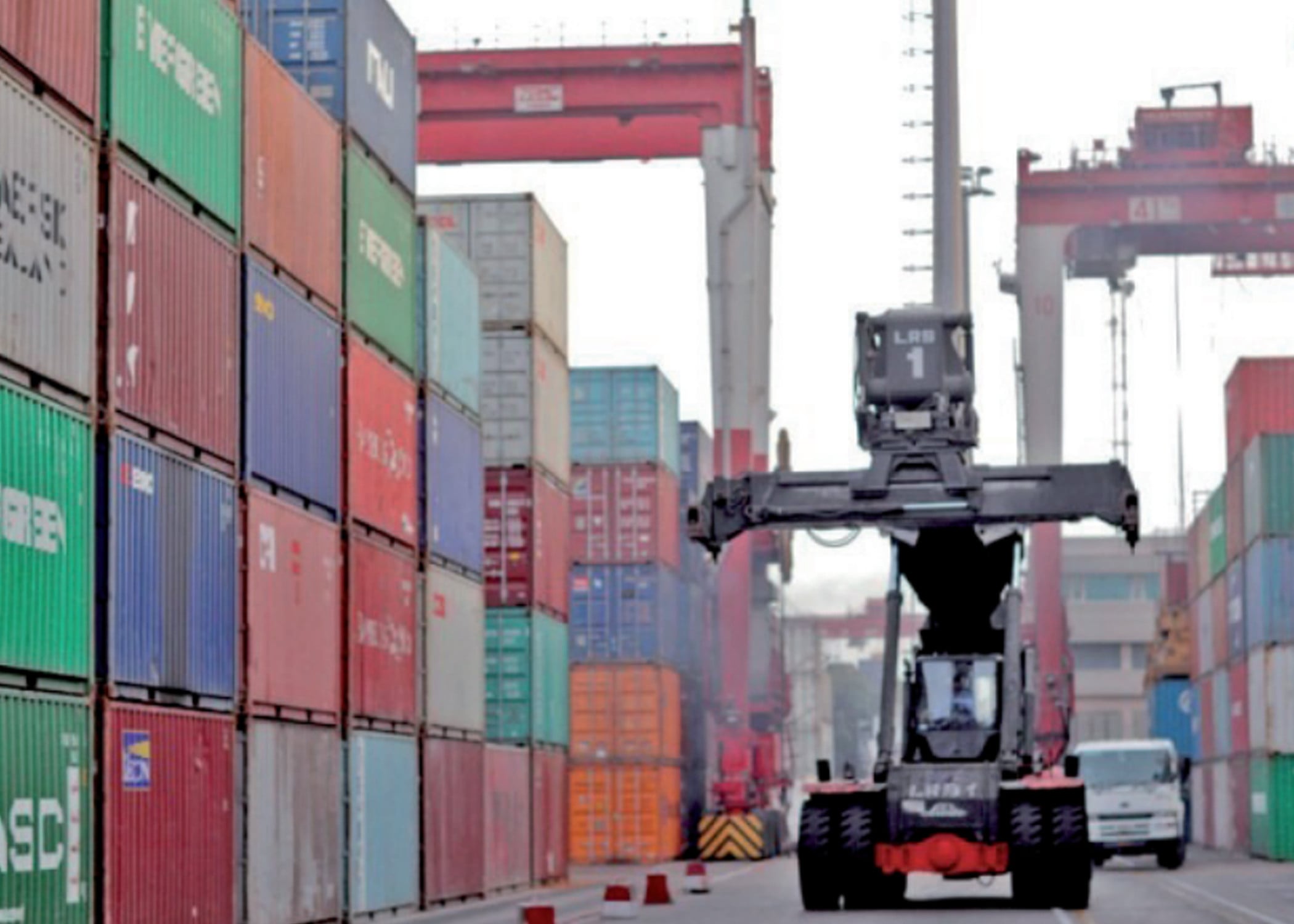
CHIANG RAI – Thai law enforcement officials have exposed a massive fuel smuggling operation operating along the Mekong River. Smugglers have successfully bypassed a national export ban by using falsified shipping documents. The illegal operation has rerouted tens of millions of liters of fuel directly into Myanmar.

National Police Deputy Chief General Thatchai Pitaneelaboot led a special task force to inspect the Golden Triangle border area in Chiang Saen. Investigators discovered that traders claimed their fuel shipments were headed to Laos. Instead, the cargo ships turned around and unloaded the fuel at Myanmar ports.

Key Takeaways

  • Bypassing the Ban: Smugglers bypassed a strict Thai fuel export ban to Myanmar by falsifying shipping documents for Laos.
  • Massive Volume: Officials estimate that tens of millions of liters of fuel have been illegally diverted via the Mekong River.
  • Economic Damage: The large-scale smuggling operation has caused substantial tax revenue losses for the Thai government.

The Thai government originally banned fuel exports to Myanmar on February 5, 2025. This restriction targeted regional call center scams, online gambling rings, and modern slavery syndicates. Authorities cut off electricity, internet services, and energy supplies at major land checkpoints like Mae Sot and Mae Sai.

However, criminal networks quickly adapted by moving their operations away from heavily monitored land borders. They chose the Mekong River because the open water border makes cargo tracking highly complex. The unique geography of the Golden Triangle allowed cargo vessels to easily misdeclare their final destinations.

According to the official report by Manager Online, local police and customs officials tracked these vessels for nearly a year. A single modified cargo boat can carry up to 400,000 liters of fuel per trip. Authorities intercepted a major smuggling vessel on July 13, 2026, to gather critical financial evidence.

Tax Evasion and Crackdown Actions

The illegal fuel trade has caused massive financial losses for Thailand through severe tax evasion. Diesel fuel represents the second-largest export product passing through the Chiang Saen customs checkpoint. The total official value of this energy trade exceeded 14 billion baht during the previous year.

Pol. Gen. Thatchai stated that the task force is currently expanding its investigation to identify every network accomplice. The police are cooperating with international agencies to dismantle the financial systems supporting these illegal trade routes. Authorities plan to implement stricter vessel tracking systems along the river borders to prevent future smuggling.

Stricter shipping inspections will soon be enforced at all northern ports to protect national economic interests. Government agencies are also working to improve communication and share real-time cargo data across the border. These combined efforts aim to close the transport loopholes created by dishonest regional traders.

Trending News:

Tragedy Claims Young Police Officer: Chiang Rai Family Recovers Body After Deadly Pub Fire

Inside Thailand’s $50 Billion Tourism Empire and the Hidden Economy

 

Similar Posts

  • | | |

    UAE visa restrictions threaten Pakistan’s Gulfoo…

    Pakistani business leaders have raised concerns over reported difficulties in obtaining UAE visas, warning that the situation is disrupting trade, business travel and export activities. The restrictions are causing uncertainty among Pakistani exporters and traders who regularly travel to the UAE for commercial meetings, exhibitions and other business activities. Ismail Suttar, Founder and Chairman of the Salt Manufacturers Association of Pakistan, said Pakistani citizens were facing serious difficulties in obtaining UAE visas. He said the reasons for the reported restrictions had not been clearly communicated. Business representatives said the issue was particularly worrying for companies with established operations in Dubai. Several Pakistani businessmen have offices and long-standing commercial interests in the UAE. Some business owners have also reportedly faced difficulties travelling to the UAE to visit their families. Representatives of the business community said repeated visa rejections had created considerable uncertainty. A member of the Karachi Chamber of Commerce and Industry said the matter had been formally raised with UAE authorities. A letter was sent to the UAE consul general on June 11, followed by another communication on July 7. The business community says the visa situation could also affect Pakistan’s participation in major international exhibitions. Gulfood, one of the major food and beverage exhibitions held in Dubai, is a particular concern. Pakistani food companies are preparing for the upcoming event, but exporters fear that their sales teams may not receive visas. Business leaders say participation in such exhibitions is important for finding international buyers and expanding exports. Without visas, company representatives cannot display products, hold meetings or negotiate new deals. They warned that prolonged travel restrictions could affect Pakistan’s efforts to increase exports and strengthen commercial ties with international markets. Former Federation of Pakistan Chambers of Commerce and Industry Secretary General Shahid Anwar said visa conditions for Pakistanis differed across Gulf countries. He noted that some Gulf states had introduced measures that made travel easier for Pakistani citizens. Saudi Arabia has included Pakistan in a package-based tourist visa programme, while Kuwait has restored several visa categories for Pakistani nationals. According to Anwar, these developments indicate improving engagement in some bilateral relationships. The situation with the UAE, however, remains unclear. UAE authorities have maintained that there is no general visa ban on Pakistanis and that applications across different categories continue to be processed. Business representatives, however, say their experiences do not always match the official position. Rawalpindi Chamber of Commerce and Industry President Usman Shaukat said several chamber members with established businesses in the UAE were facing visa problems. Some businessmen have long-standing commercial links and property interests in the UAE. Despite this, they have reportedly struggled to obtain visas. The difficulties have resulted in cancelled meetings and missed international exhibitions, according to business representatives. They said the impact was being felt not only in Rawalpindi but also among business communities in Karachi, Lahore and other major commercial centres. Travel industry representatives have also reported a significant decline in movement between Pakistan and the UAE. Aviation consultant Wahid Mukhtar said travel to the UAE had been badly affected by visa difficulties. He said family and visit visa applications were also facing high rejection rates. He added that labour visa holders continued to travel, while holidaymakers were increasingly choosing destinations such as Azerbaijan and Tashkent. Qatar has also changed its visa arrangements for Pakistani travellers, according to travel industry representatives. The reported restrictions are also affecting Pakistanis travelling for medical and health-related activities. Masood Ahmed said some applicants below the age of 40 were facing difficulties in obtaining Dubai visas, even when they had supporting letters. He said older applicants were experiencing comparatively fewer problems. Some younger applicants had previously been approved when travelling with family during major health exhibitions. Business leaders have urged the Pakistani government to intervene diplomatically. They want Islamabad to engage with UAE authorities and seek clarity on the visa situation.

  • | | |

    91 trade exhibitions, 11 foreign delegations but n…

    Islamabad:Pakistan has preferential trade arrangements with 93 countries. Its trade promotion authority participated in 91 international exhibitions and sent 11 trade delegations abroad in the last financial year, yet the country still has no registered Pakistani trade representative organisation or joint chamber in China. The absence of a formal Pakistani commercial organisation in China became a major point of concern before the Senate Standing Committee on Commerce, as senators questioned why Pakistan has not established a stronger private sector trade presence in one of its most important international markets. The committee, chaired by Senator Anusha Rahman, was told that no Pakistani joint chamber is currently registered in China and no Pakistani trade representative organisation is operating there. The Secretary Commerce said a Pakistani chamber could be established in China either as a joint chamber or as a branch, but it would have to meet the requirements set by Chinese authorities. He further explained that only one joint chamber from Pakistan could register itself in China under the relevant arrangements. Senators questioned why such an organisation had not been established despite the large scale business relationship between Pakistan and China. The Secretary Commerce said the reason could best be explained by the trade organisations themselves. The issue became more important when senators asked what real benefit Pakistan would gain from establishing a joint chamber or representative office. The Secretary Commerce said the Ministry of Commerce could not give a clear position on the matter and suggested that the Federation of Pakistan Chambers of Commerce and Industry and other chambers should provide their views. He said Pakistani private sector organisations could establish a chamber in major Chinese commercial centres such as Beijing or Shanghai, while the Ministry of Commerce would provide full support to interested chambers if they fulfilled Chinese requirements. Senator Anusha Rahman said a chamber could help Pakistani companies follow up more effectively on commercial opportunities in China. The discussion exposed a gap between Pakistan’s growing trade ambitions and its physical commercial presence in an important foreign market. The committee also examined the performance of the Trade Development Authority of Pakistan and its efforts to increase exports. The Chief Executive of TDAP said the authority was often blamed whenever Pakistan’s exports failed to grow, but export performance depended on several factors beyond the authority’s direct control. He pointed to production costs, electricity prices and the cost of financing as major factors affecting the ability of Pakistani businesses to compete in international markets. This means that simply sending trade delegations or participating in international exhibitions cannot guarantee higher exports if Pakistani products remain expensive to produce. The Commerce Minister, Jam Kamal Khan, told the committee that the Ministry of Commerce regularly sends policy proposals and recommendations to the government to improve the country’s trade environment. He said he had also proposed to the Prime Minister that reciprocal incentives should be pursued to increase exports. The minister said the Ministry of Commerce was working on new proposals to improve international marketing and increase Pakistani exports. He stressed that Pakistan could not become more competitive in international markets without dealing with the underlying costs faced by businesses and improving the investment environment. The figures presented by TDAP showed that the authority remained active in promoting Pakistani products abroad. During the last financial year, TDAP participated in 91 international exhibitions. The authority also organised or supported 11 trade delegations to foreign countries to search for new markets and strengthen business connections. Pakistan currently has preferential trade arrangements with 93 countries, giving Pakistani businesses access to special trade opportunities in international markets. However, the Senate committee stressed that trade agreements and international relationships must produce visible economic results. Members said Pakistan’s trade agreements should not remain only on paper. They should lead to higher exports, more investment and greater access for Pakistani businesses in foreign markets. The Chief Executive TDAP also clarified an important point about the authority’s financing. TDAP does not receive funding from the Export Development Fund. Instead, it receives government financing for specific projects. The committee also discussed the importance of stronger cooperation between Pakistani and Chinese institutions and private sector organisations. Senator Saleem Mandviwalla highlighted the role that Chinese international cooperation and trade specialists could play in developing stronger business and investment links. The discussion suggested that Pakistan needs to connect several areas of economic policy instead of treating export promotion as a separate activity. Lower production costs, cheaper and reliable electricity, easier access to finance, stronger investment policies, better international marketing and effective trade representation are all important if Pakistani companies are to compete successfully abroad. TDAP’s participation in 91 international exhibitions and 11 foreign trade delegations shows that the authority is actively trying to open doors for Pakistani exporters. But the Senate discussion also made clear that opening doors is only the first step. Pakistan must ensure that its businesses are able to walk through those doors with competitive products, attractive prices and the capacity to supply international buyers. The committee appreciated TDAP’s efforts but stressed the need for a coordinated national strategy linking trade policy, investment, industrial competitiveness, export promotion and overseas market representation.

  • | | |

    Pakistan stock exchange slides over 1,100 points 

      KARACHI: The Pakistan Stock Exchange (PSX) experienced a volatile trading session on Tuesday as strong gains recorded in early trading quickly disappeared, with the benchmark KSE-100 Index ending the day more than 1,100 points lower. Widespread profit-taking in major sectors, combined with cautious investor sentiment influenced by global market uncertainty, weighed heavily on the market. The benchmark KSE-100 Index initially climbed to an intraday high of 178,768.83 points, reflecting optimism among investors during the opening hours. However, the momentum proved short-lived as selling pressure gradually intensified across the market. By the close of trading, the index had fallen to 177,083.22 points, registering a decline of 1,116.80 points, or 0.63%, after touching an intraday low of 177,043.10 points. Market participants attributed the sharp reversal to extensive profit-booking in several heavyweight sectors. Commercial banks, oil and gas exploration companies, cement manufacturers, investment firms, and fertiliser stocks all came under significant selling pressure, dragging the benchmark index into negative territory despite its promising start. Investor confidence also remained subdued due to mixed developments in international financial markets. Asian stock markets traded without a clear direction as investors balanced encouraging corporate earnings from the United States against continuing geopolitical tensions. At the same time, international oil prices climbed by more than two percent as uncertainty surrounding diplomatic efforts to ease tensions between the United States and Iran persisted. Concerns over potential disruptions to global oil supplies through major shipping routes also contributed to market caution. Commenting on the day’s performance, Ahmed Sheraz, an equity trader at KTrade Securities, said the KSE-100 Index remained under pressure throughout the session because the market lacked fresh positive catalysts capable of sustaining its recent upward momentum. According to him, the absence of encouraging economic or corporate developments prompted investors to lock in profits after recent gains. Sheraz noted that selling activity was widespread across key sectors, particularly banking, oil and gas, cement, investment companies, and fertilisers. He added that despite Brent crude oil trading between $84 and $86 per barrel, investors largely preferred to stay on the sidelines while waiting for stronger economic indicators and corporate earnings announcements before making new investment decisions. Looking ahead, Sheraz believes the stock market is likely to remain highly sensitive to news flow. Upcoming corporate earnings reports, macroeconomic indicators, and foreign investment activity are expected to play a decisive role in shaping market sentiment over the coming weeks. He also identified the 176,500 to 177,000-point range as an important technical support level for the benchmark index, suggesting that maintaining this level could help stabilise the market. Trading activity slowed compared with the previous session. Total market volume declined to 711.2 million shares, down from 785.3 million shares recorded on Monday. Meanwhile, the total value of traded shares stood at Rs25.8 billion. A total of 495 companiesparticipated in trading during the session. Among them, 161 stocks closed higher, 295 stocks ended in negative territory, while 39 stocks remained unchanged. Pakistan International Bulk Terminal emerged as the session’s most actively traded stock, with approximately 89.8 million shares changing hands. The company’s share price declined by Rs0.34, closing the session at Rs16.74.

  • |

    OGRA increases petrol, diesel prices again

    Islamabad – The Oil and Gas Regulatory Authority (OGRA) has announced another increase in petroleum prices marking the fourth consecutive day of fuel price hikes and issued new rates for petrol and high-speed diesel. According to an OGRA notification, the price of petrol has been increased by Rs. 4.40 per litre bringing the new price to Rs. 331.52 per litre. Similarly, the price of high-speed diesel (HSD) has been raised by Rs. 3.62 per litre taking the new price to Rs. 378.66 per litre. The notification states that the revised prices will come into effect from 12:00 a.m. on the night between July 23 and July 24 after which fuel stations across the country will charge customers according to the new rates. OGRA said the price adjustment was made after taking into account global crude oil prices, import costs and other relevant market factors. The continued increase in petroleum prices is expected to raise transportation costs which could in turn push up the prices of essential commodities. Members of the public and the business community have expressed concern over the repeated increases and urged the government to take effective measures to stabilize fuel prices. It is worth noting that this is the fourth consecutive day that OGRA has increased petroleum prices resulting in a significant rise in fuel costs over the past several days.

  • Bangkok Property Market Shifts to High-Value Homes Amid Economic Slowdown

    BANGKOK –  The Bangkok residential real estate market is undergoing a significant transformation in 2026. Developers are shifting their focus toward higher-priced homes while reducing the total number of new properties entering the market. According to data released by the Agency for Real Estate Affairs, residential properties remain the core driver of Thai real estate. […]

  • | | |

    Lab report finds 176 substandard samples of oil, g…

    ISLAMABAD: A laboratory assessment has found that 176 out of 491 samples of packaged edible oil, ghee and milk failed to meet national quality standards. According to a statement issued by the Ministry of Planning, a total of 491 samples of packaged cooking oil, ghee and milk products were tested. Of these, 315 samples were found to comply with national standards, while 176 were declared substandard. The ministry said approximately 36% of the tested samples failed to meet the required quality standards. The assessment showed significant variations across different products. Of the 204 samples of vanaspati ghee tested, 98 were found to be below the required standards. Similarly, 40 out of 146 samples of blended cooking oil failed the quality assessment, while 26 of 104 samples of packaged liquid milk were declared substandard. The report also found quality concerns in milk powder, refined palm oil and refined canola oil. Eight of the 18 milk powder samples failed to meet national standards, while three of four refined palm oil samples were found to be substandard. In the case of refined canola oil, one out of 13 tested samples did not meet the required standards. The findings have highlighted concerns over the quality of commonly consumed food products and the need for stronger monitoring and enforcement to ensure that packaged edible oils, ghee and dairy products available in the market comply with national quality requirements.

Leave a Reply

Your email address will not be published. Required fields are marked *