federal government freezes
| |

Federal government freezes ad hoc relief allowance…

The federal government has decided to keep the 2023 and 2024 ad hoc relief allowances unchanged for its employees, maintaining the existing rates while also outlining the allowance structure for newly appointed staff.

According to a notification issued by the Ministry of Finance, the Ad Hoc Relief Allowance-2023 will remain frozen at the level applicable on June 30, 2023, and will not be revised until further instructions are issued.

Under the current arrangement, employees in Grades 1 to 16 will continue to receive an allowance equal to 35% of their basic pay, while officers in Grades 17 to 22 will receive 30% of their basic pay under the 2023 relief allowance.

The ministry has also announced that the Ad Hoc Relief Allowance-2024 will remain frozen at the rates applicable on June 30, 2026. Employees in Grades 1 to 16 will continue to receive 25% of their basic pay, whereas those in Grades 17 to 22 will receive 20% of their basic pay.

The decision means there will be no increase in these allowances until further notice, although eligible employees will continue receiving them at the existing rates. The notification also provides guidance on the applicable allowance rates for newly recruited federal government employees, ensuring uniform implementation across government departments.

The Finance Ministry said the revised pay and allowance framework will remain effective unless amended through a future government notification.
Similar Posts

  • | |

    Government cuts petrol price by Rs3.19, diesel by …

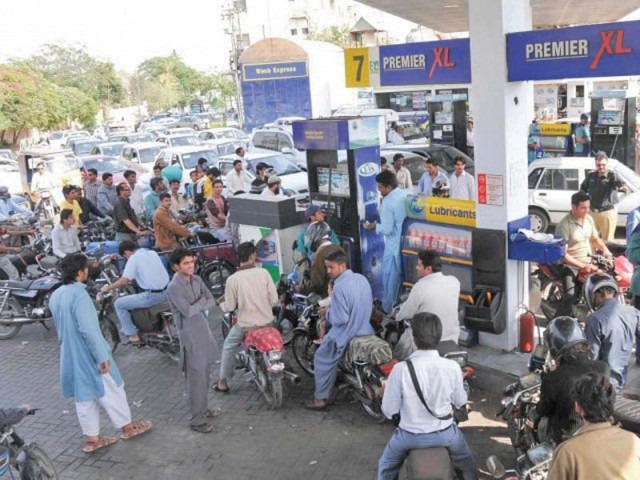
    The federal government has announced a reduction in petrol and high-speed diesel (HSD) prices for August 7, providing limited relief to consumers amid continued fluctuations in international oil markets. According to a notification issued by the Ministry of Petroleum, petrol prices have been reduced by Rs3.19 per litre, bringing the new price to Rs329.82 per litre. Meanwhile, the price of high-speed diesel has been lowered by Rs1.50 per litre and will now be available at Rs382.36 per litre. The latest adjustment comes just one day after the government increased petrol prices by Rs4.45 per litre while reducing HSD prices by Rs2 per litre for August 6. The frequent revisions reflect the country’s newly introduced fuel pricing mechanism, which allows daily adjustments based on international market movements. The government introduced the daily fuel price review system on July 17 in response to volatility in global oil prices following renewed tensions in the Middle East. Under the new mechanism, domestic fuel prices are calculated using a seven-day average of international petroleum rates in line with global pricing practices. Pakistan remains highly dependent on imported petroleum products, making domestic fuel prices vulnerable to changes in international crude oil markets. According to the Pakistan Economic Survey 2024-25, petroleum products represent one of the country’s largest import categories. Any rise in global oil prices increases Pakistan’s import bill, puts pressure on foreign exchange reserves, and contributes to inflation. In previous years, fuel prices were managed through government subsidies and administrative controls. While such measures provided short-term relief for consumers, they also increased financial pressure on the national budget, oil marketing companies, and refineries. Higher subsidies contributed to fiscal challenges and increased public borrowing. Global factors continue to influence oil prices, including decisions by oil-producing nations, conflicts in energy-producing regions, sanctions, and disruptions in major shipping routes such as the Strait of Hormuz and the Red Sea. International crude prices recently moved higher after reports that an Iranian parliamentary committee was considering measures affecting shipping through the Strait of Hormuz. Brent crude futures increased by more than $3 per barrel, while US West Texas Intermediate (WTI) futures also recorded gains. Market analysts said traders remain focused on geopolitical developments and negotiations involving major oil-producing countries. Since a significant portion of global energy supplies previously moved through the Strait of Hormuz, any disruption in the route could immediately affect crude prices and fuel costs worldwide. The latest reduction in Pakistan’s fuel prices is expected to offer temporary relief to motorists and businesses, although future adjustments will continue to depend on international oil market trends.

  • |

    DR Congo bans copper and cobalt concentrate exports to boost domestic smelting

    The Democratic Republic of Congo has banned the export of copper and cobalt concentrates, accelerating national efforts to enforce in-country mineral processing and retain greater economic value from its natural resources. The ministerial decree, signed by Mines Minister Louis Kabamba Watum, Foreign Trade Minister Julien Paluku Kahongya, and Economy Minister Daniel Mukoko Samba, takes effect immediately. The regulation revokes a previous 2023 framework and its associated exemptions, replacing them with a comprehensive structure governing mineral exports alongside a new tax regime on mining by-products. Following news of the export ban, benchmark three-month copper on the London Metal Exchange rose by up to 1.8 per cent to $14,369.50 per metric ton, approaching historic record highs. While the prohibition is absolute, the decree allows for temporary one-year waivers under specific strategic circumstances. Major mining operators, including Ivanhoe Mines, which runs the Kamoa-Kakula copper complex in partnership with Zijin Mining,indicated that domestic processing facilities, such as the on-site smelter and the Lualaba copper smelter in Kolwezi, process the majority of local yields. Analysts note that because the vast majority of Congolese copper and cobalt is already refined locally into cathodes and hydroxides prior to shipment, the new policy primarily aims to eliminate remaining concentrate exports while standardising royalty collections across trace mineral by-products.

  • |

    Shaheen Afridi returns as Kandy Royals eye LPL 2026 Title push

    COLOMBO: The Kandy Royals have received a timely boost ahead of the Lanka Premier League (LPL) 2026 playoffs, with Pakistan pace spearhead Shaheen Shah Afridi set to rejoin the squad for the tournament’s decisive knockout stage. Afridi’s return comes as welcome news for the Royals, who are preparing for a high-stakes Eliminator after sealing a dramatic place in the playoffs. The left-arm fast bowler had briefly left the tournament last week due to personal commitments, leading to widespread speculation that his LPL campaign had ended. However, the franchise has confirmed that the Pakistan star will return just in time for the business end of the competition. Adding further firepower to the squad, Kandy have also recruited Pakistan all-rounder Khushdil Shah and explosive batter Hassan Nawaz. The trio is expected to significantly strengthen both the batting and bowling departments as the Royals chase their first LPL title in recent years. The arrivals come following the departure of experienced all-rounder Moeen Ali, Afghanistan opener Sediqullah Atal, and Scotland international Brandon McMullen, who have left the squad after completing their commitments. Despite losing three key overseas players, Kandy management moved swiftly to secure quality replacements capable of making an immediate impact. Kandy Royals’ road to the playoffs was anything but straightforward. At one stage, their qualification hopes appeared to be fading, but fortune smiled on the franchise when a rain-affected clash between Jaffna Kings and Dambulla Sixers produced the result they needed to advance. The dramatic turn of events kept their championship dream alive and set the stage for an exciting knockout campaign. With Shaheen Afridi leading the pace attack once again, expectations among supporters have risen considerably. The Pakistani left-armer has consistently been one of the world’s premier white-ball bowlers, renowned for his ability to strike early with the new ball and deliver under pressure in crunch moments. The LPL 2026 playoffs begin on August 5 at Colombo’s iconic R. Premadasa International Cricket Stadium. The opening day will feature a Qualifier between Jaffna Kings and Galle Gallants, while Kandy Royals will face Colombo KAPS in a must-win Eliminator. Victory would keep Kandy’s title hopes alive and move them one step closer to lifting the LPL trophy. With Shaheen Afridi back in the lineup and two more Pakistani stars joining the squad, the Royals believe they have the experience, balance and firepower needed to challenge for championship glory in Sri Lanka’s premier T20 competition.

  • | |

    Peshawar High Court blocks deportation of two Afgh…

    The Peshawar High Court has stopped the deportation of two Afghan journalists who are currently living in Pakistan. The court has directed the federal government to decide their cases within two months. The petitioners have been identified as Syed Ehsanullah Salehi and Syed Munir Ahmed. Both are Afghan journalists. The court said the two petitioners entered Pakistan on valid visas. They are currently residing in the country. According to the petitioners, they have applied for resettlement in France. Their applications are still under consideration. The petitioners also informed the court that the French embassy has already verified their cases. Their lawyer told the court that both journalists face a risk of arrest and deportation. He said the fear of deportation has also restricted their freedom of movement in Pakistan. After hearing the case, the high court directed the federal government to determine the matter within 60 days. The court also issued directions for the situation if the government fails to reach a decision within the given period. It said the Ministry of Interior should grant the petitioners temporary permission to remain in Pakistan. The ruling provides temporary relief to the two Afghan journalists while their cases are being reviewed by the relevant authorities. Separately, Minister of State for Interior Talal Chaudhry said Afghan nationals who wish to return to Pakistan in the future can do so after obtaining a valid visa. The development comes as Afghan nationals in Pakistan continue to face scrutiny over their legal status and documentation. The court’s decision means that the two petitioners cannot be deported while the government considers their cases within the period set by the court

  • | |

    Flood alert as rivers rise, Sukkur, Marala and Bal…

    ISLAMABAD: Pakistan is bracing for another spell of flood-related risks as heavy monsoon rains, rising river levels and high water storage at major dams put several parts of the country on alert. The National Disaster Management Authority (NDMA), through its National Emergencies Operation Centre, has warned of possible low to moderate flooding in vulnerable areas of Khyber Pakhtunkhwa, Punjab, Balochistan and Azad Jammu and Kashmir. According to the latest assessment, the Indus River has already reached low flood levels at Kalabagh, Chashma, Taunsa and Guddu. While the Ravi, Chenab, Jhelum, Kabul and Sutlej are currently within normal ranges, officials expect water flows in several major rivers to increase on August 8 and 9. The NDMA has identified Sukkur on the Indus, Marala on the Chenab and Balloki on the Ravi as areas where low-level flooding could occur. The Jhelum downstream of Mangla Dam and the Kabul River near Adezai are also being closely monitored. Several districts in Khyber Pakhtunkhwa, including Chitral, Upper Dir, Abbottabad, Shangla, Khyber, Orakzai, Kohat, Tank and North and South Waziristan, face the possibility of low to moderate flooding. In AJK, Bagh and Kotli are also considered vulnerable, while Zhob, Musakhel, Kohlu, Barkhan and Dera Bugti in Balochistan remain under watch. Punjab is facing risks from hill torrents, particularly in Dera Ghazi Khan and Rajanpur. The NDMA has also warned of possible urban flooding in Rawalpindi, Gujranwala, Sialkot, Narowal, Faisalabad, Okara and Lahore. Water storage at the country’s major reservoirs remains high. Tarbela Dam’s water level has reached 1,548 feet, with storage at 97.94 per cent, compared with 95.98 per cent during the same period last year. Mangla Dam is at 1,205.2 feet, with storage recorded at 62.99 per cent, slightly above last year’s 62.80 per cent. Authorities have urged residents, tourists and travellers in mountainous and flood-prone areas to remain vigilant, as intense monsoon rainfall can trigger flash floods, landslides and debris flows with little warning. People have been advised to avoid riverbanks, streams and other vulnerable locations and to check weather forecasts and road conditions before travelling as the monsoon system continues to affect the country.

  • |

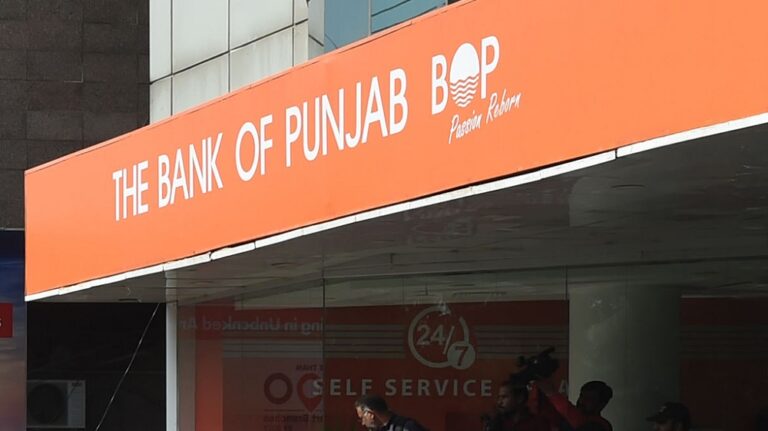
    Bank of Punjab Board approves Up to Rs30bn equity injection by Punjab government

    LAHORE: The Board of Directors of The Bank of Punjab (BOP) has approved a proposal for an equity injection of up to Rs30 billion by the Government of Punjab, a move aimed at strengthening the bank’s capital position and supporting its next phase of expansion. The decision was taken at a board meeting held on August 7, 2026. Under the proposal, the Punjab government will subscribe to ordinary shares to be issued by the bank through a mechanism other than a rights issue. The proposed transaction will not take effect immediately and remains conditional on obtaining all required statutory, corporate, shareholder and regulatory approvals. According to the bank, the planned capital injection is an important step in its broader transformation strategy and will provide additional financial capacity to support sustainable growth across its key business segments. Share issuance price The ordinary shares will initially be issued at Rs38.20 per share. However, if the market price of BOP shares is higher than this amount at the time of issuance, the shares will be issued at the prevailing market price plus a premium of 5 percent. As a result, Rs38.20 will serve as the minimum or floor price for the proposed share issuance. The transaction is expected to reinforce the bank’s capital base and provide greater flexibility to manage balance-sheet expansion while maintaining prudent financial and risk-management standards. BOP expands its market presence The Bank of Punjab has undergone significant changes in recent years, with the institution expanding its balance sheet, improving financial performance and strengthening its position across several sectors of Pakistan’s economy. The bank has developed a strong presence in areas including small and medium-sized enterprise (SME) financing, agricultural lending, affordable housing, digital banking and credit cards. It has also increased its focus on women’s participation and leadership in banking and financial services. BOP is further expanding its activities in commercial and corporate banking, particularly in areas linked to export-oriented businesses. The bank said these business segments have positioned it as an important participant in supporting economic activity, employment creation and financial inclusion across the country. Capital requirements rise with expansion Despite the bank’s growth, the rapid expansion of its operations has increased pressure on its existing capital base. BOP said its capital position has historically remained relatively limited compared with the size of its operations and the growth opportunities available to the institution. The proposed Rs30 billion injection is therefore expected to provide the bank with additional capacity to expand its core businesses while maintaining financial resilience. The additional capital could also enable BOP to increase its low-cost deposit base and grow lending operations without facing the same level of capital constraints. The bank said strengthening its capital position would allow it to pursue growth while maintaining a balanced and prudent approach to balance-sheet management. Strong financial performance The proposed capital injection comes as BOP continues to report strong underlying financial performance. During 2025, the bank recorded revenue growth of around 29 percent, while its earnings increased by more than 40 percent year on year. The bank also witnessed significant appreciation in the value of its shares during the period. According to the bank, the proposed capital raise should therefore be viewed primarily as growth capital rather than a measure aimed at addressing immediate financial weakness. The additional equity is expected to provide the financial foundation required for BOP to continue expanding its operations and investing in new business opportunities. International expansion in focus Another important component of the bank’s future strategy is its international expansion. The capital injection is expected to support the next phase of BOP’s growth, including an international venture that has recently received approval from the State Bank of Pakistan. The move could provide the bank with an opportunity to broaden its geographical footprint and develop new sources of business and revenue. With the proposed equity injection, BOP aims to strengthen its financial position, support expansion in priority sectors and improve its ability to serve businesses, consumers and other customers as demand for banking and financial services continues to grow.

Leave a Reply

Your email address will not be published. Required fields are marked *