government cuts petrol
| |

Government cuts petrol price by Rs3.19, diesel by …

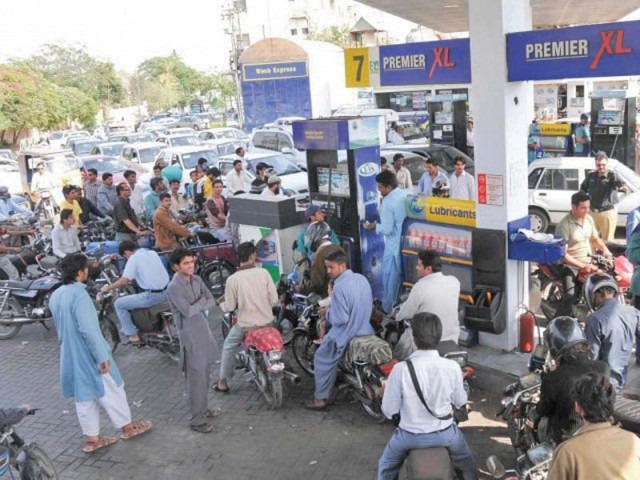
The federal government has announced a reduction in petrol and high-speed diesel (HSD) prices for August 7, providing limited relief to consumers amid continued fluctuations in international oil markets.

According to a notification issued by the Ministry of Petroleum, petrol prices have been reduced by Rs3.19 per litre, bringing the new price to Rs329.82 per litre. Meanwhile, the price of high-speed diesel has been lowered by Rs1.50 per litre and will now be available at Rs382.36 per litre.

The latest adjustment comes just one day after the government increased petrol prices by Rs4.45 per litre while reducing HSD prices by Rs2 per litre for August 6. The frequent revisions reflect the country’s newly introduced fuel pricing mechanism, which allows daily adjustments based on international market movements.

The government introduced the daily fuel price review system on July 17 in response to volatility in global oil prices following renewed tensions in the Middle East. Under the new mechanism, domestic fuel prices are calculated using a seven-day average of international petroleum rates in line with global pricing practices.

Pakistan remains highly dependent on imported petroleum products, making domestic fuel prices vulnerable to changes in international crude oil markets. According to the Pakistan Economic Survey 2024-25, petroleum products represent one of the country’s largest import categories. Any rise in global oil prices increases Pakistan’s import bill, puts pressure on foreign exchange reserves, and contributes to inflation.

In previous years, fuel prices were managed through government subsidies and administrative controls. While such measures provided short-term relief for consumers, they also increased financial pressure on the national budget, oil marketing companies, and refineries. Higher subsidies contributed to fiscal challenges and increased public borrowing.

Global factors continue to influence oil prices, including decisions by oil-producing nations, conflicts in energy-producing regions, sanctions, and disruptions in major shipping routes such as the Strait of Hormuz and the Red Sea.

International crude prices recently moved higher after reports that an Iranian parliamentary committee was considering measures affecting shipping through the Strait of Hormuz. Brent crude futures increased by more than $3 per barrel, while US West Texas Intermediate (WTI) futures also recorded gains.

Market analysts said traders remain focused on geopolitical developments and negotiations involving major oil-producing countries. Since a significant portion of global energy supplies previously moved through the Strait of Hormuz, any disruption in the route could immediately affect crude prices and fuel costs worldwide.

The latest reduction in Pakistan’s fuel prices is expected to offer temporary relief to motorists and businesses, although future adjustments will continue to depend on international oil market trends.

Similar Posts

  • | |

    Pakistan plans $500 million export-oriented auto z…

      A major initiative has been announced to establish an automotive zone on 150 acres of land at Port Qasim in Karachi, with the government expecting the project to create new opportunities for exports and generate significant foreign exchange for Pakistan. The announcement was made during a meeting of the Port Qasim Authority Board, chaired by Federal Minister for Maritime Affairs Junaid Anwar Chaudhry. The meeting reviewed plans aimed at strengthening Pakistan’s maritime infrastructure and promoting industrial and export-related activities through the country’s major port facilities. Speaking at the meeting, Federal Minister Junaid Anwar Chaudhry said the proposed auto zone would cover approximately 150 acres at Port Qasim. He said the project was expected to generate around $500 million in annual exports, while contributing approximately $200 million in foreign exchange earnings each year According to the minister, the auto zone will provide a range of facilities linked to the automotive industry. These will include refurbishment facilities, display areas and spare-parts services. The development is expected to support businesses involved in the import, refurbishment and export of automotive products and components. The minister said the project would create new export opportunities for Pakistan’s automotive sector and help the country strengthen its position in international markets. He described the proposed auto zone as an integrated framework that would bring together automobile imports, refurbishment and exports at a single location. The initiative is also expected to encourage greater investment in the automotive sector by providing businesses with dedicated infrastructure and facilities. By bringing different stages of automotive-related activities together, the project could help improve efficiency and create opportunities for companies seeking to expand their operations in Pakistan. Port Qasim’s strategic importance as one of Pakistan’s major ports could further support the project. The location provides access to maritime transportation and international trade routes, potentially making it easier for automotive businesses to handle imported vehicles, spare parts and other related products before exporting refurbished or finished products to overseas markets. The government expects the auto zone to contribute to the country’s broader efforts to increase exports and generate foreign exchange. Pakistan has been seeking new avenues to expand its export base and reduce pressure on its foreign exchange reserves. In this context, the proposed automotive zone could provide a platform for developing value-added activities rather than relying solely on the import and sale of automotive products. The inclusion of refurbishment facilities is particularly significant because it could allow imported vehicles and automotive components to be repaired, upgraded or prepared for resale and export. Similarly, dedicated spare-parts facilities could support both local businesses and export-oriented automotive operations. The project is therefore being presented as more than a conventional industrial development. It is intended to establish an integrated automotive ecosystem connecting imports, refurbishment, display, spare parts and exports. If implemented as planned, the Port Qasim auto zone could attract investment, support businesses associated with the automotive industry, create employment opportunities and increase Pakistan’s export earnings. The government believes that the project will open new avenues for growth in the automotive sector while contributing to the country’s overall foreign exchange generation and export expansion efforts.

  • |

    153mm rain puts Gujrat on high alert as new drainage interventions help avert major urban flooding

    GUJRAT: Torrential monsoon rain measuring 153 millimetres battered Gujrat, triggering a district-wide rain emergency and keeping the civil administration, Water and Sanitation Agency (WASA) and other civic departments on high alert. Despite the intense downpour, officials claimed that newly completed drainage interventions and a coordinated emergency response helped prevent widespread urban flooding in the city. Deputy Commissioner Noor-ul-Ain Qureshi remained in the field throughout the operation, inspecting drainage arrangements and monitoring the performance of five newly completed interventions executed by the Irrigation Department under the Punjab Development Programme. The projects, completed in a record five months, were designed to protect Gujrat from sheet flow entering the city from the Bhimber and Azad Jammu and Kashmir (AJK) side during heavy monsoon rains. According to the district administration, each of the five newly constructed drains has the capacity to carry 200 cusecs of water, diverting the incoming sheet flow towards Bhinder Nullah and Halsi Nullah. Officials described the projects as a significant step towards improving Gujrat’s flood resilience, saying they played an important role in reducing pressure on the city’s drainage network during the latest spell of heavy rain. Meanwhile, Managing Director WASA Gujrat Kashan Hafeez Butt supervised rain emergency operations across the city, with 20 emergency teams deployed in the agency’s three operational zones. Dewatering sets, suction machines and heavy machinery remained operational throughout the day to remove accumulated rainwater from roads, markets and residential areas. Among the worst-hit locations was Madina Bazaar Staff Gali, where rainwater accumulated to nearly one foot. WASA teams carried out continuous pumping operations before clearing the area. Water also collected at Dhakki Chowk, where approximately six inches of standing water was removed after several hours of drainage work. Officials said traffic on Rehman Shaheed Road, Shadman Colony and other major arteries remained largely uninterrupted due to the timely deployment of emergency teams. Field staff continued monitoring low-lying areas to ensure rainwater did not accumulate again as intermittent showers continued. Residents acknowledged that several streets experienced temporary waterlogging during the peak of the rainfall but said conditions improved as emergency crews reached affected areas. Commuters reported slow-moving traffic in parts of the city during the morning because of reduced visibility and rainwater on roads. The district administration maintained close coordination with WASA, the Irrigation Department, Rescue 1122 and other relevant agencies throughout the operation. Officials said emergency personnel would remain on alert as further monsoon rains are forecast, with machinery stationed at vulnerable locations for immediate deployment if required. Authorities also appealed to residents to cooperate by avoiding the disposal of garbage into storm-water drains, warning that blocked drainage channels significantly reduce the efficiency of the drainage system during heavy rainfall. The latest monsoon spell once again tested Gujrat’s urban drainage infrastructure. However, officials maintained that the combination of newly completed irrigation works, continuous field monitoring by the deputy commissioner and round-the-clock WASA operations enabled the city to withstand the 153mm rainfall without any major disruption to traffic or public life. The district administration said all departments would continue monitoring weather conditions and remain prepared to respond swiftly to any further rain-related emergencies.

  • | |

    Pakistan goods transporters association declares i…

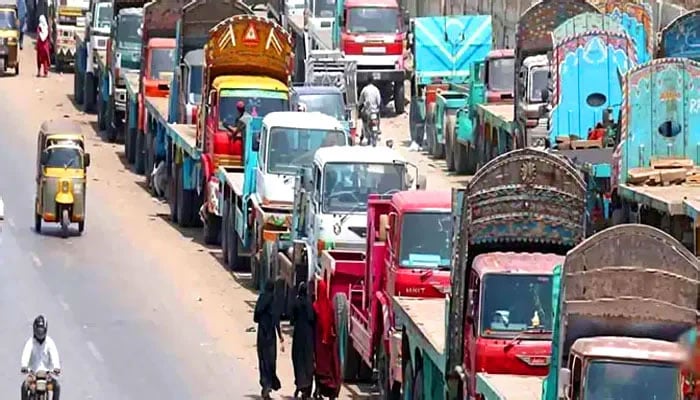
      The Pakistan Goods Transporters Association has raised serious concerns over the volatile and unpredictable daily adjustments in petroleum prices, stating that such frequent fluctuations make it impossible for the transport sector to continue operations smoothly. In a press conference held in Lahore, association officials, led by President Nabeel Mahmood Tariq, articulated a series of demands and grievances that have been mounting over recent months, warning that without immediate government intervention, the entire logistics and supply chain network could face severe disruption. Addressing the media alongside other senior office-bearers of the All Pakistan Goods Transporters Association, Nabeel Mahmood Tariq emphasized that the transportation industry is the backbone of the national economy, responsible for moving essential commodities, industrial raw materials, and consumer goods across the length and breadth of the country. However, he argued that the current pricing mechanism for petroleum products—which has seen almost daily revisions—has created an environment of extreme uncertainty for fleet operators. Unlike larger corporate entities, most truck owners and small transport companies operate on thin profit margins, and without a stable fuel pricing framework, they are unable to quote competitive rates to clients or plan their operational budgets effectively. Tariq pointed out that many transporters have already started grounding their vehicles, as each trip now carries the risk of financial loss if fuel prices rise unexpectedly mid-journey. Beyond fuel prices, the association president laid out a comprehensive list of demands aimed at reducing the financial burden on the sector. First and foremost, he called for an immediate end to unnecessary customs checking at various inter-provincial checkpoints. According to Tariq, these intrusive and repetitive inspections not only cause long delays—sometimes stretching into hours—but also open the door to harassment and bribery, which further inflate the cost of doing business. He urged the federal and provincial governments to streamline customs procedures and adopt a more efficient, technology-driven system that would expedite the movement of goods without compromising security or revenue collection. Another major point of contention raised by Tariq was the recent increase in toll taxes on highways and motorways. He demanded that this hike be rolled back completely, arguing that transporters are already struggling with rising maintenance costs, spare part prices, and tyre rates. The additional toll burden, he said, is simply unsustainable and forces many operators to take longer, less safe alternative routes, which ultimately hurts the overall efficiency of freight movement. Turning his attention to provincial policies, particularly in Punjab, Tariq called for the establishment of new, modern truck terminals across the province. He noted that existing truck stands and loading points are outdated, overcrowded, and lack basic amenities for drivers and helpers. New truck yards, equipped with proper parking, resting areas, workshops, and loading/unloading facilities, would not only improve working conditions but also reduce traffic congestion in urban centers. He also strongly condemned the 300 percent increase in token tax imposed on commercial vehicles in Punjab, labeling it as punitive and counterproductive. He demanded that this excessive tax hike be withdrawn immediately, asserting that it disproportionately affects small owner-operators who form the majority of the association’s membership. In a significant announcement, Nabeel Mahmood Tariq declared that the association fully supports the wheel-jam strike (hunger strike) called for August 8, which has been organized by various transport unions across the country to pressure the government into addressing these long-standing issues. He clarified that this is not a political move but a last-resort measure to draw attention to the existential crisis facing the transport industry. He warned that if the government fails to respond positively before that date, thousands of trucks, trailers, and tankers will park on the roads, effectively paralyzing the movement of food, medicine, fuel, and industrial goods. Such a strike, he cautioned, would have catastrophic consequences for an already fragile economy, leading to shortages, price hikes, and factory closures. Concluding his address, Tariq appealed to Prime Minister Shehbaz Sharif and the chief ministers of all provinces to personally intervene and hold urgent consultations with transport representatives. He reiterated that the industry is not asking for subsidies or charity, but merely for a predictable policy environment, fair taxation, and the elimination of corrupt practices at checkpoints. He expressed hope that the government would act wisely and avert a crisis that benefits no one except speculators and hoarders. The press conference ended with a unanimous resolution passed by the association leaders, vowing to continue their struggle peacefully but firmly until all their legitimate demands are met. The coming days, they warned, will be decisive for the future of Pakistan’s transport sector and, by extension, its entire supply chain.

  • |

    AI manipulation claimed in PARC hiring; 105 candidates still waiting

    Islamabad: The Senate Standing Committee on National Food Security erupted in controversy today as concerns over recruitment at the Pakistan Agricultural Research Council (PARC) were aired with unprecedented intensity. Senators claimed that the federal research body may have violated constitutional equity, leaving candidates from Sindh and Balochistan sidelined while Punjab and Khyber Pakhtunkhwa dominated appointments. At the heart of the storm are 230 vacant posts at PARC. Although the posts were advertised nationwide and tested through the third party Candidates Testing Services (CTS), only 125 candidates have received appointment letters, leaving 105 hopefuls in limbo. Senator Poonjo Bheel voiced sharp criticism, accusing PARC of sidelining smaller provinces, potentially breaching Article 38(g) of the Constitution. “Appointments have disproportionately favored Punjab and KP,” he warned, “while Sindh and Balochistan candidates are deprived of their due share.” PARC representatives defended their process, noting that a few Sindh candidates were appointed purely on merit and promising interviews for remaining Sindh and Balochistan candidates in the coming week. Yet, the Committee remained unconvinced. Senators stressed that results should be announced simultaneously across all provinces, warning that staggered releases could create perceptions of bias. The session took an even more sensational turn when officials revealed allegations of a coordinated propaganda campaign against PARC. Officials claimed that artificial intelligence (AI) may have been used to manipulate recruitment results, prompting the Committee to recommend immediate show cause notices for any employees involved in such activities. The Chairman directed PARC to submit a detailed list of the appointing authorities responsible for each recruitment decision and a comprehensive record of the 105 pending candidates’ interviews. The Committee demanded transparency and accountability to prevent further distrust in the nation’s premier agricultural research body. The Committee’s stern message made it clear: “Merit alone cannot justify provincial inequity, and any manipulation digital or human will not be tolerated.” The meeting was attended by Senators Rahat Jamali, Shahadat Awan, and Poonjo Bheel, with the agenda moved by Senator Shahadat Awan deferred due to the absence of the Federal Minister and Secretary.

  • |

    Historic floods leave at least six dead in Indiana

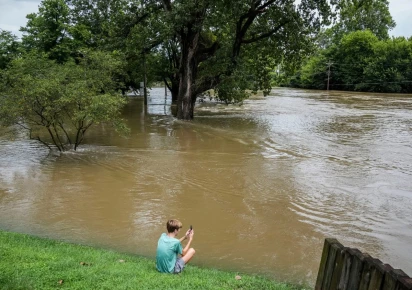
    At least six people have died in the US state of Indiana after severe storms brought record-breaking rainfall and triggered widespread flooding. Authorities said several areas received more than 11 inches of rain over two days. The heavy rainfall caused the White River to rise rapidly, flooding communities and forcing large-scale rescue operations. More than 90 people and 45 pets were rescued from flooded areas, according to local authorities. The worst flooding was reported along the White River, stretching from Hamilton County towards the northern suburbs of Indianapolis. Several neighbourhoods were left under water. In Indianapolis, floodwaters submerged vehicles and reached residential properties. Some residents used kayaks and small boats to move through streets that had turned into waterways. The White River rose above 24 feet in Anderson and Noblesville. The level exceeded records set during the major flooding of 1913, highlighting the severity of the disaster. Indianapolis Mayor Joe Hogsett declared a local emergency and urged people living near the river to leave their homes if authorities advised evacuation. Emergency officials described the flooding as an unprecedented event. Marion County Emergency Management director Jacob Spence said the scale of the disaster was unlike anything recently experienced in the area. Several counties reported storm-related deaths. One woman, aged 58, was found dead in Delaware County after apparently attempting to drive through floodwaters. Authorities also confirmed fatalities in Jennings, White, Porter and La Porte counties. Indiana Governor Mike Braun said he had spoken with US President Donald Trump about the disaster. He said a request for a federal emergency declaration was being processed to speed up assistance for affected communities. Braun expressed sympathy for the families who lost loved ones and urged residents to remain cautious. He warned people to stay away from flooded roads and fast-moving water. The National Weather Service continued to issue flood warnings across parts of central Indiana. Officials warned that water levels were still rising in some locations. More severe weather was also expected. Emergency authorities urged residents to monitor official warnings and avoid unnecessary travel. The storms were not limited to Indiana. Tornadoes, intense rainfall and flash flooding affected several parts of the US Midwest. Damage was reported across a broad area stretching from the Chicago region towards western Pennsylvania.

  • | | |

    Fatima Zahra secures Pakistan’s first Commonweal…

      Pakistan received its first major success at the Commonwealth Games as national boxer Fatima Zahra secured a place in the women’s boxing semifinals, guaranteeing the country’s first medal of the tournament. Competing in the women’s 60kg weight category, Fatima Zahra delivered a dominant performance in the quarterfinals, defeating New Zealand’s Jordan Wilson by a unanimous 5-0 decision. With the victory, the Pakistani boxer advanced to the semifinals and ensured at least a bronze medal for her country under the competition’s boxing format. The quarterfinal bout took place at the SEC Hall Five in Glasgow, where Fatima Zahra displayed confidence, composure, and technical superiority throughout the contest. She controlled all three rounds with disciplined boxing, combining effective footwork, accurate punches, and strong defensive skills to keep her opponent under pressure from the opening bell until the final round. Her impressive display left no room for doubt among the judges. All five judges scored the contest in her favor, awarding her a comprehensive unanimous decision victory over Jordan Wilson. The result marked one of Pakistan’s most significant achievements at the ongoing Commonwealth Games and provided an early boost to the country’s medal hopes. According to the boxing competition rules, every athlete who reaches the semifinals is guaranteed at least a bronze medal, as there is no third-place playoff. By advancing to the last four, Fatima Zahra officially secured Pakistan’s first medal of the Games, regardless of the outcome of her semifinal contest. The achievement is another milestone in Fatima Zahra’s growing international career. She has consistently represented Pakistan on the global stage and has already established herself as one of the country’s leading female boxers. Her latest success reflects both her dedication and the steady progress she has made through years of hard work and international competition. This is not the first time Fatima Zahra has won a medal for Pakistan at a major sporting event. She previously claimed a bronze medal at the Islamic Solidarity Games, where her performances earned widespread praise and highlighted her potential to compete against some of the best boxers in the region. That experience has helped strengthen her confidence and prepared her for bigger challenges on the international stage. Following her convincing victory in the quarterfinals, Fatima Zahra has now set her sights on the semifinal, where she will aim to continue her winning run and secure a place in the gold medal match. A victory in the next round would guarantee Pakistan either a silver or gold medal, making it one of the country’s most notable boxing achievements in recent years. Her qualification for the semifinals has been welcomed as an encouraging moment for Pakistan’s sporting community, particularly for women’s boxing, which continues to grow despite facing limited resources and opportunities. Fatima Zahra’s success is expected to inspire aspiring female athletes across the country and demonstrate that Pakistani women can compete successfully at the highest levels of international sport. With a guaranteed bronze medal already secured, all eyes will now be on Fatima Zahra as she prepares for the semifinal showdown. Pakistani fans will be hoping she can maintain her outstanding form, overcome her next opponent, and move one step closer to winning the Commonwealth Games title, adding another memorable chapter to Pakistan’s sporting history.

Leave a Reply

Your email address will not be published. Required fields are marked *