153mm rain puts
|

153mm rain puts Gujrat on high alert as new drainage interventions help avert major urban flooding

GUJRAT: Torrential monsoon rain measuring 153 millimetres battered Gujrat, triggering a district-wide rain emergency and keeping the civil administration, Water and Sanitation Agency (WASA) and other civic departments on high alert. Despite the intense downpour, officials claimed that newly completed drainage interventions and a coordinated emergency response helped prevent widespread urban flooding in the city.
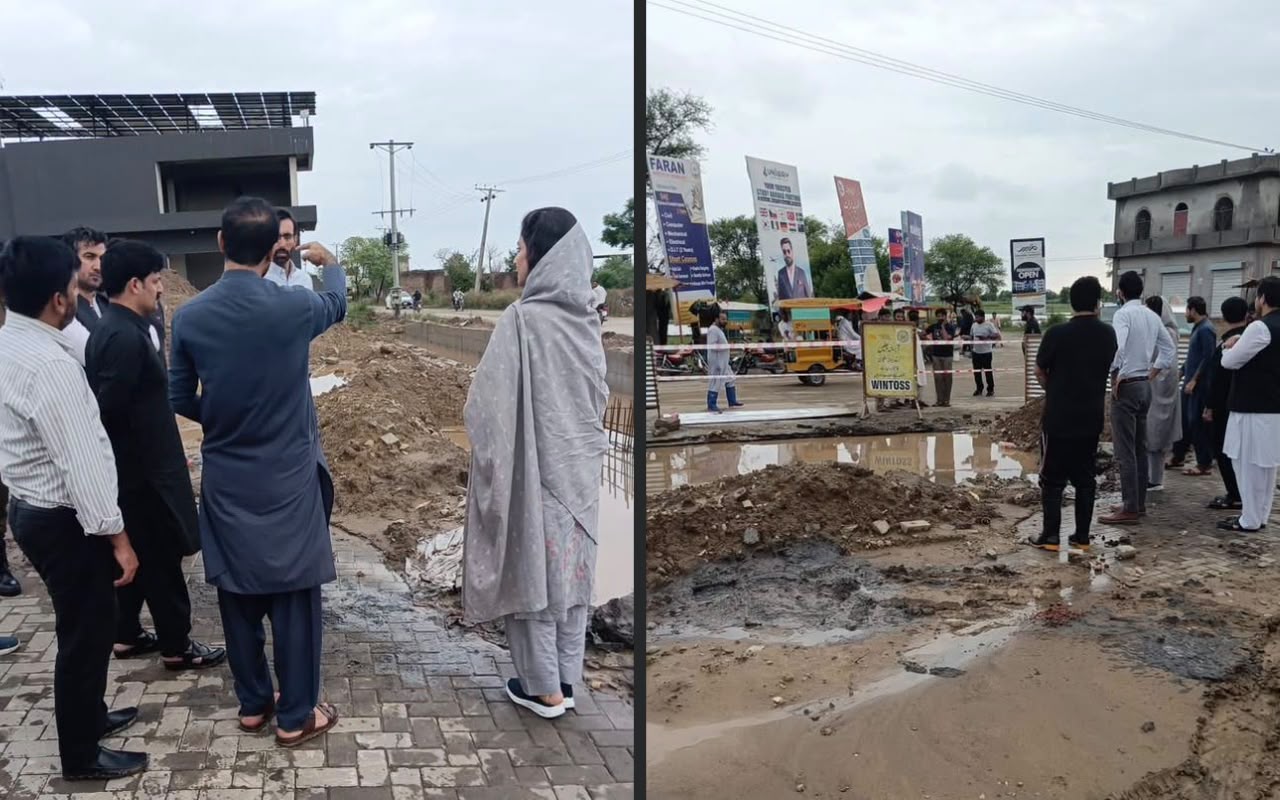
Deputy Commissioner Noor-ul-Ain Qureshi remained in the field throughout the operation, inspecting drainage arrangements and monitoring the performance of five newly completed interventions executed by the Irrigation Department under the Punjab Development Programme. The projects, completed in a record five months, were designed to protect Gujrat from sheet flow entering the city from the Bhimber and Azad Jammu and Kashmir (AJK) side during heavy monsoon rains.
According to the district administration, each of the five newly constructed drains has the capacity to carry 200 cusecs of water, diverting the incoming sheet flow towards Bhinder Nullah and Halsi Nullah. Officials described the projects as a significant step towards improving Gujrat’s flood resilience, saying they played an important role in reducing pressure on the city’s drainage network during the latest spell of heavy rain.
Meanwhile, Managing Director WASA Gujrat Kashan Hafeez Butt supervised rain emergency operations across the city, with 20 emergency teams deployed in the agency’s three operational zones. Dewatering sets, suction machines and heavy machinery remained operational throughout the day to remove accumulated rainwater from roads, markets and residential areas.
Among the worst-hit locations was Madina Bazaar Staff Gali, where rainwater accumulated to nearly one foot. WASA teams carried out continuous pumping operations before clearing the area. Water also collected at Dhakki Chowk, where approximately six inches of standing water was removed after several hours of drainage work.
Officials said traffic on Rehman Shaheed Road, Shadman Colony and other major arteries remained largely uninterrupted due to the timely deployment of emergency teams. Field staff continued monitoring low-lying areas to ensure rainwater did not accumulate again as intermittent showers continued.
Residents acknowledged that several streets experienced temporary waterlogging during the peak of the rainfall but said conditions improved as emergency crews reached affected areas. Commuters reported slow-moving traffic in parts of the city during the morning because of reduced visibility and rainwater on roads.
The district administration maintained close coordination with WASA, the Irrigation Department, Rescue 1122 and other relevant agencies throughout the operation. Officials said emergency personnel would remain on alert as further monsoon rains are forecast, with machinery stationed at vulnerable locations for immediate deployment if required.
Authorities also appealed to residents to cooperate by avoiding the disposal of garbage into storm-water drains, warning that blocked drainage channels significantly reduce the efficiency of the drainage system during heavy rainfall.
The latest monsoon spell once again tested Gujrat’s urban drainage infrastructure. However, officials maintained that the combination of newly completed irrigation works, continuous field monitoring by the deputy commissioner and round-the-clock WASA operations enabled the city to withstand the 153mm rainfall without any major disruption to traffic or public life.
The district administration said all departments would continue monitoring weather conditions and remain prepared to respond swiftly to any further rain-related emergencies.
Similar Posts

  • | |

    Poor internet access threatens girls’ education …

    PESHAWAR: Poor internet connectivity is creating serious problems for girls pursuing education in the merged districts of Khyber-Pakhtunkhwa. Students in remote areas often struggle to attend online classes. They also face difficulties downloading study material and submitting assignments. For 16-year-old Khadija Bibi from Kurram district, finding an internet signal has become part of her daily life. During the summer holidays, she often leaves her home and climbs a nearby hill. She carries her mobile phone with her. She stands on the rocky slope and searches for a stronger signal. She uses the limited connection to download lecture notes and complete academic tasks. She also tries to attend online classes from the hill. However, the weak network frequently disconnects. This causes her to miss lessons and submit assignments late. Khadija is a BS Computer Science student at Benazir Women University Peshawar. She said unreliable internet had become one of the biggest challenges in her education. She said students in remote areas were being left behind as education increasingly depended on digital technology. The problem is not limited to Kurram. Thousands of girls across the merged districts face similar difficulties. The region already has several major education challenges. Poverty remains a serious obstacle. Insecurity has also affected access to education. Many areas also lack proper schools and other educational facilities. The digital divide has added another challenge. Several schools in the merged districts either do not have computer laboratories or have laboratories without working computers. Some also lack internet connections. This prevents students from gaining basic computer skills. It also makes online education difficult. Official data highlights the wider education crisis in the region. Benazir Income Support Programme data shows that 66 per cent of children in North Waziristan are out of school. The rate stands at 63 per cent in Bajaur. It is 61 per cent in South Waziristan. Mohmand and Khyber each record an out-of-school rate of 51 per cent. Kurram and Orakzai each have a rate of 47 per cent. Girls face additional difficulties because of limited access to technology. The Khyber-Pakhtunkhwa Women Empowerment Policy 2026-2030 highlights the scale of the digital divide. According to the policy, only 11 per cent of women in the merged districts have access to the internet. The female literacy rate is also extremely low. It stands at only 17 per cent. Education and digital inclusion advocates say poor infrastructure is a major reason for the situation. Weak mobile networks make internet access unreliable. Many families also cannot afford smartphones or regular internet packages. Some girls have to borrow phones from family members. This makes it difficult for them to attend online classes regularly. Access to technology is also affected by social restrictions. In some communities, families remain concerned about girls using mobile phones and the internet. Concerns about online safety and social pressure often result in restrictions. Cultural norms can also limit girls’ access to digital technology. Experts say improving internet coverage alone will not solve the problem. Girls also need greater freedom to travel to schools, universities and training centres. Better transport facilities could help students reach educational institutions more easily. It could also improve access to vocational training and employment opportunities. Experts have urged the provincial government and telecommunications authorities to give greater attention to the merged districts. They say residents should receive reliable internet services similar to those available in settled areas. Improved digital infrastructure could transform educational opportunities for girls in remote communities. Reliable internet would allow students to attend online classes without travelling long distances. They could access digital libraries and educational resources. They could also develop computer skills and participate in online training programmes. For students like Khadija, internet access is more than a technological facility. It is directly linked to education and future opportunities. Without reliable connectivity, many talented girls may continue to struggle despite their willingness to study. Addressing the digital divide therefore requires investment in telecommunications infrastructure, schools, digital devices and affordable internet services. It also requires efforts to remove social barriers that prevent girls from using technology.

  • | |

    Canada announces retaliatory tariffs as trade talks with US collapse

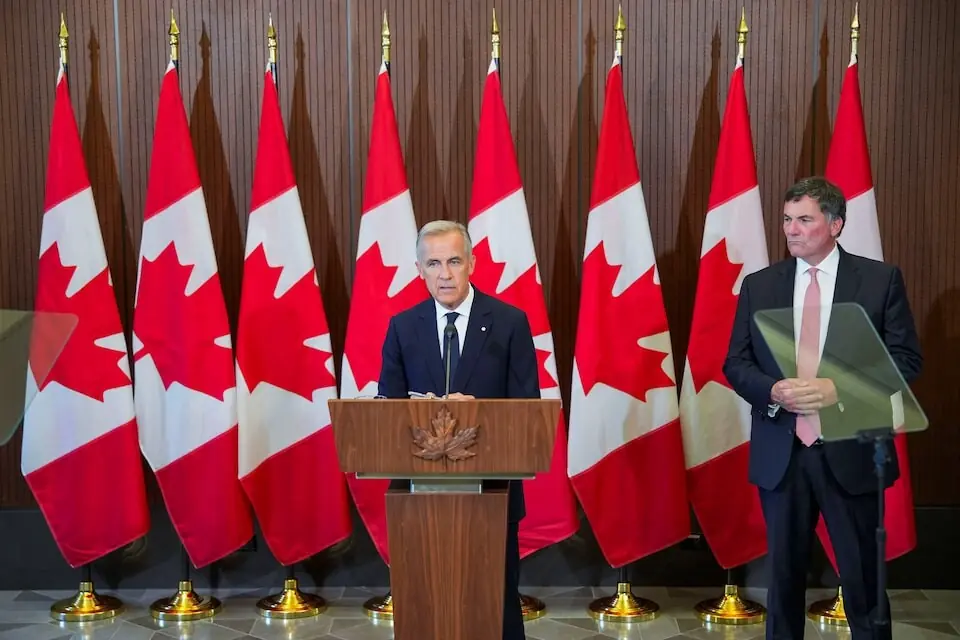
    OTTAWA: Canada has announced plans to impose new tariffs on a range of American products in response to steep duties introduced by US President Donald Trump on Canadian goods, marking another sharp deterioration in trade relations between the two North American neighbours. Prime Minister Mark Carney said on Saturday that Canada would adopt a “dollar-for-dollar” approach to Washington’s latest tariffs. The retaliatory measures are scheduled to take effect on September 8 and will cover products including US steel, electronics, appliances, agricultural equipment, pulp and paper and other goods. The announcement came after three days of intensive negotiations between Canadian and US officials ended without a trade agreement. Both sides blamed the other for the failure to reach a breakthrough, raising fresh uncertainty over the future of the United States-Mexico-Canada trade framework. Carney vows to defend Canadian economy Speaking at a press conference in Ottawa, Carney said Canada would respond to the US measures in an effort to shield workers, farmers, businesses and families from the economic impact of the new duties. “Canada will match Washington’s new tariffs dollar for dollar,” Carney said, stressing that Ottawa could not accept the conditions put forward by the US administration. Asked whether the dispute had effectively developed into a trade war, Carney responded in stark terms, saying Canada had been attacked and therefore had to defend its economic interests. The Canadian government said its countermeasures would target a broad selection of US products. Further details, including the specific goods affected and the tariff rates, are expected to be announced in the coming days. Carney also indicated that Ottawa would introduce support programmes for Canadian industries affected by the American duties. The assistance could remain in place for several years depending on the impact of the trade measures. US-Canada negotiations break down The latest dispute follows the collapse of negotiations that had been viewed as an opportunity to prevent a further escalation in tariffs. US Trade Representative Jamieson Greer described the failed talks as a missed opportunity for Canada and said Washington would proceed with measures responding to Canadian retaliation. He also suggested that no fresh negotiations were immediately planned. The White House and offices representing the US commerce secretary and trade representative did not immediately issue a detailed response to Canada’s announcement. The breakdown has created additional uncertainty for businesses operating across the US-Canada border, particularly industries that depend heavily on integrated North American supply chains. New US duties affect key Canadian exports The latest US tariffs apply to a range of Canadian exports, including wine, furniture, dairy products, cement, clothing, fishing equipment and hockey-related products. According to the Canadian government, the new duties affect approximately $20 billion worth of Canadian exports to the United States. Unlike some previous measures, the latest tariffs do not fully exempt products traded under the existing North American trade agreement. The new duties represent a relatively small share of Canada’s overall exports to the US, but officials and industry representatives warn that individual sectors could face significant pressure. Industries such as softwood lumber, wine, manufacturing and other export-oriented businesses could experience weaker demand, higher costs and potential employment losses if the dispute continues. Candace Laing, chief executive of the Canadian Chamber of Commerce, urged companies across the country to prepare for a prolonged period of uncertainty. Dispute over vehicles and trade conditions One of the most difficult issues during the negotiations involved the treatment of larger vehicles. Canadian negotiators reportedly sought to extend preferential tariff arrangements for light-duty vehicles to medium- and heavy-duty trucks. Washington opposed the proposal, according to people familiar with the negotiations. Carney said the US position could have placed Canadian-made models at a competitive disadvantage. He specifically pointed to vehicles produced in Canada, including Ford’s F-350, F-450 and F-550 trucks and General Motors’ Silverado. The Canadian prime minister also said some US proposals touched on issues involving Canadian culture, language and sovereignty, although he did not provide further details. Ontario backs Ottawa’s position Ontario Premier Doug Ford, a prominent critic of US tariffs, welcomed Carney’s decision to reject what he described as an unfavourable agreement. Ford said the proposed terms would have harmed Ontario’s automotive, steel and manufacturing industries, adding that he supported Ottawa’s decision to retaliate rather than accept a deal that he considered damaging to the province. Ontario is particularly exposed to disruptions in US-Canada trade because of its large manufacturing and automotive sectors and its close integration with American supply chains. Canada seeks new international partnerships The escalating dispute also comes as Canada seeks to reduce its economic dependence on the United States. Nearly 70% of Canadian exports are destined for the US market, making the country particularly vulnerable to changes in American trade policy. Carney has nevertheless pledged to strengthen Canada’s relationships with other countries and explore new trade and security partnerships. The prime minister was elected on a platform that included a tougher negotiating stance toward the Trump administration. His government has maintained that Canada should defend its economic interests while looking for opportunities to expand trade beyond its southern neighbour. Public opinion has also strengthened Ottawa’s position, with polling indicating that many Canadians oppose making major concessions to Washington. Conservative Party leader Pierre Poilievre, who leads the federal opposition, also called for national unity in response to the US tariffs.

  • | | | |

    US forces disable two ships amid rising tensions i…

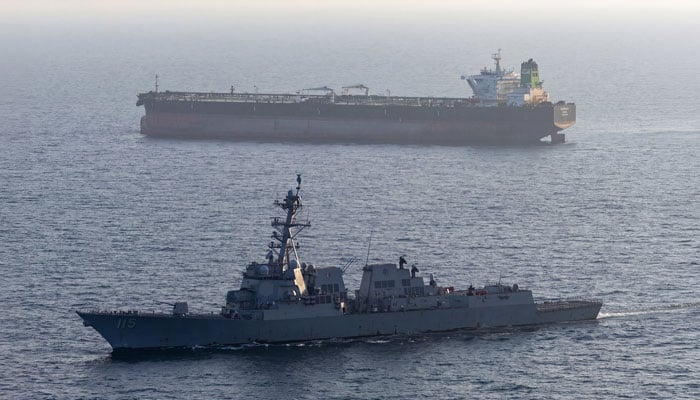
    WASHINGTON: Tensions around the Strait of Hormuz have intensified after the United States said its forces had disabled two commercial vessels that failed to comply with orders linked to its naval blockade of Iranian ports. The US Central Command (CENTCOM) said American forces had redirected 12 commercial vessels attempting to breach the blockade as of July 25. Two ships that allegedly refused to comply were disabled, while two others were boarded to verify compliance. The latest development adds another layer of uncertainty to maritime traffic through one of the world’s most strategically important waterways, where any disruption can have consequences for global energy and shipping markets. CENTCOM said the Mozambique-flagged M/T Lavine was disabled in the Gulf of Oman on July 24 after its crew allegedly attempted several times to violate the blockade and ignored repeated warnings. According to the US military, the vessel had been heading towards Iran but is no longer travelling to an Iranian port. The US military also reported a separate operation involving the Comoros-flagged M/T Charminar in the Arabian Sea. American forces boarded the tanker on July 25 for verification. After the inspection, the vessel was allowed to continue its journey, according to CENTCOM. CENTCOM has described the naval blockade as remaining fully in effect, saying its forces are continuing to monitor commercial shipping and enforce restrictions on vessels travelling to or from Iranian ports. The confrontation comes amid heightened US-Iran tensions and growing concerns over the security of maritime routes around the Gulf of Oman and Strait of Hormuz. The waterway is a crucial passage for international trade and energy shipments, making military activity in the area particularly sensitive. The US claims its measures are aimed at preventing vessels from violating the blockade, while Iran has continued to challenge restrictions on shipping in the region. The latest incidents could further complicate efforts to maintain safe commercial navigation. With American forces increasing enforcement and vessels facing greater scrutiny, shipping companies operating near the region are likely to remain on high alert. For now, the Strait of Hormuz remains a major flashpoint, with every confrontation at sea carrying the risk of a broader escalation.

  • |

    Kartik Aaryan likely to return as Rooh Baba in Bhool Bhulaiyaa 4

    Bhool Bhulaiyaa has become one of Bollywood’s most successful film franchises, and fresh reports have sparked excitement among fans about a possible fourth instalment. While the makers have not officially announced the project, speculation surrounding Bhool Bhulaiyaa 4 continues to grow. The third film in the horror-comedy series was released on November 1, 2024, and proved to be another commercial success at the box office. Following its strong performance, reports have suggested that the franchise is set to continue with Kartik Aaryan once again leading the cast as the beloved ghostbuster, Rooh Baba. According to the latest industry buzz, director Anees Bazmee is also expected to return to helm the upcoming film. Bazmee successfully directed both Bhool Bhulaiyaa 2 and Bhool Bhulaiyaa 3, playing a key role in reviving the franchise with a fresh storyline while maintaining its signature mix of horror and comedy. Insiders claim that discussions regarding the project are currently underway, with the production team reportedly working on finalising agreements. If everything falls into place, Bazmee and Kartik Aaryan are expected to reunite for the fourth chapter of the blockbuster series. The makers are reportedly keen to expand Bhool Bhulaiyaa into one of India’s biggest film franchises. Early work on the concept for the new instalment is said to have already begun, with efforts focused on delivering another entertaining horror-comedy experience for audiences. Reports further suggest that Kartik Aaryan has been actively involved in the creative discussions and is enthusiastic about returning as Rooh Baba, a character that has become closely associated with his career. However, there has been no official word regarding the rest of the cast, leaving fans wondering which familiar faces could return and whether any new actors will join the franchise. The Bhool Bhulaiyaa journey began in 2007 with the original film directed by Priyadarshan. Starring Akshay Kumar, Vidya Balan, Shiney Ahuja and Ameesha Patel, the film was an adaptation of the acclaimed Malayalam classic Manichitrathazhu. It received widespread praise from audiences and critics alike, eventually becoming a major box office success and earning cult status over the years. After a gap of 15 years, the franchise returned with Bhool Bhulaiyaa 2 in 2022. Directed by Anees Bazmee, the sequel introduced Kartik Aaryan as Rooh Baba alongside Kiara Advani and Tabu. The film performed exceptionally well in theatres and successfully revived the franchise for a new generation of moviegoers. The success continued with Bhool Bhulaiyaa 3 in 2024. The film featured Kartik Aaryan, Triptii Dimri, Vidya Balan reprising her iconic role, and Madhuri Dixit in a key appearance. Blending comedy, suspense and supernatural elements, the film once again attracted large audiences and became another box office winner. Although Bhool Bhulaiyaa 4 has not yet been officially announced, the growing speculation has already generated significant excitement. Fans are now eagerly waiting for a formal confirmation to see Rooh Baba return for another spooky adventure.

  • |

    DR Congo bans copper and cobalt concentrate exports to boost domestic smelting

    The Democratic Republic of Congo has banned the export of copper and cobalt concentrates, accelerating national efforts to enforce in-country mineral processing and retain greater economic value from its natural resources. The ministerial decree, signed by Mines Minister Louis Kabamba Watum, Foreign Trade Minister Julien Paluku Kahongya, and Economy Minister Daniel Mukoko Samba, takes effect immediately. The regulation revokes a previous 2023 framework and its associated exemptions, replacing them with a comprehensive structure governing mineral exports alongside a new tax regime on mining by-products. Following news of the export ban, benchmark three-month copper on the London Metal Exchange rose by up to 1.8 per cent to $14,369.50 per metric ton, approaching historic record highs. While the prohibition is absolute, the decree allows for temporary one-year waivers under specific strategic circumstances. Major mining operators, including Ivanhoe Mines, which runs the Kamoa-Kakula copper complex in partnership with Zijin Mining,indicated that domestic processing facilities, such as the on-site smelter and the Lualaba copper smelter in Kolwezi, process the majority of local yields. Analysts note that because the vast majority of Congolese copper and cobalt is already refined locally into cathodes and hydroxides prior to shipment, the new policy primarily aims to eliminate remaining concentrate exports while standardising royalty collections across trace mineral by-products.

  • |

    Alliance Française de Lahore exhibits ‘What…

    LAHORE — The gallery at Alliance Française de Lahore opened its doors to art enthusiasts on August 10, 2026. The exhibition presented “What’s Remains”  curated by Anne Sophie Français. The evening paired thought-provoking artworks installations with a lively Kathak dance showcase. The multidisciplinary art offered attendees a rich space and human experience. The art exhibition was curated as a inquiry into what lingers after a place is traversed or a voice is silenced. “What’s Remains“ features new works by three emerging Pakistani visual artists: Rabya Khalid, Sarim Syed and Yumna Salman. They worked across diverse mediums ranging from cyanotypes and charcoal drawings to intricate textile sculptures. Rabya Khalid anchors her compositions in rich cyanotype blues overlaid with soft pastels and color pencils. Rabya focuses on urban architectural features. Water towers, elevated rooftops and quiet watchtowers dominate her skyline studies. Her works cast functional city infrastructure as silent or watchful witnesses to human activity. Sarim Syed utilized delicate charcoal rendering. Sarim creates dreamlike, atmospheric landscapes that occupy the boundary between remembering and forgetting. Her works evoke the lingering sensation of places once inhabited, capturing moments suspended between presence and absence. Yumna Salman brings a tactile, social critique to the gallery space. Yumna knots loose threads onto rigid metal wire mesh. Her labor-intensive textile installations reinterpret traditional weaving techniques to question inherited social norms, gender roles and collective memory. She turned each deliberate knot into an act of quiet resistance. Following the gallery preview, the evening changed into a vibrant 7:30 PM Kathak performance. The performance featured dedicated dance students. They celebrated an intensive month of rhythm, classical movement and expressive storytelling. The fluid footwork and rhythmic precision of the dancers created a unified dialogue with the silent, lingering themes of the surrounding artwork. Alliance Française de Lahore continues to act as an essential platform for emerging talent. The institution provides artists a non-commercial environment to showcase work, inspire public dialogue and strengthen cultural ties between Pakistani and Francophone creative communities. “What’s Remains” invites viewers to engage with stories that endure through art, memory and movement.

Leave a Reply

Your email address will not be published. Required fields are marked *