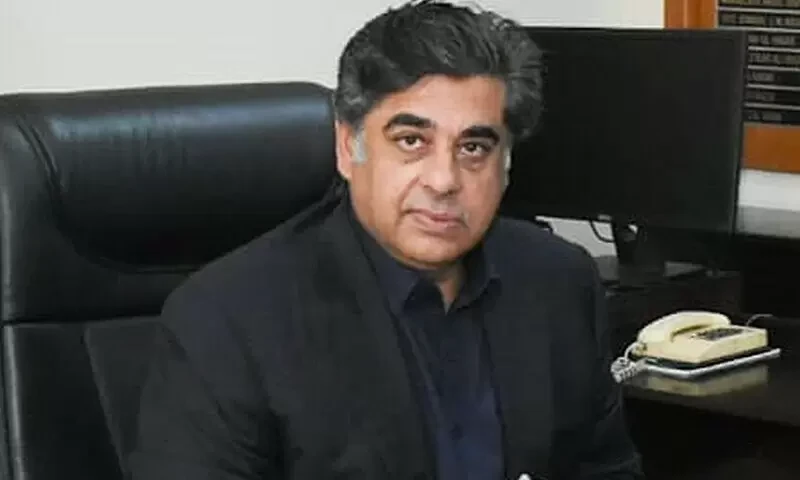
atc extends mushtaq
| |

ATC extends Mushtaq Ahmad’s remand by four d…

An Anti-Terrorism Court (ATC) in Islamabad has extended the physical remand of former Jamaat-e-Islami senator Mushtaq Ahmad and his co-accused, Daniyal, by four more days in connection with a case linked to a protest over the situation in Azad Jammu and Kashmir (AJK).

The two accused were produced before the court after completing an earlier three-day physical remand. During the hearing, the prosecution sought a 30-day remand, arguing that investigators still needed additional time to recover a vehicle and weapons allegedly connected to the case.

According to prosecutors, the investigation remains incomplete because the alleged recoveries have not yet been made. They requested extended custody to continue the inquiry.

After hearing arguments from both sides, the court rejected the request for a 30-day remand and instead approved a four-day extension in police custody.

The case was registered at Islamabad’s Shalimar Police Station under charges related to a protest concerning recent unrest in Azad Jammu and Kashmir.

Mushtaq Ahmad’s legal team has previously claimed that he was detained after attempting to enter AJK to express solidarity with people affected by recent violence in the region. They alleged he was stopped by security personnel at Azad Pattan Bridge, denied entry into AJK and later taken into custody by Punjab Police while returning to Islamabad.

Following his release from the earlier detention, Mushtaq Ahmad announced plans to organise a peaceful gathering in Islamabad to express solidarity with the people of Kashmir. He invited political activists, students, journalists and members of the Kashmiri community to participate in the event.

The case comes amid heightened political tensions following recent protests in Azad Jammu and Kashmir, where clashes reportedly resulted in casualties and injuries, drawing criticism from several political parties and human rights groups.

Similar Posts

  • | | |

    PSX soars as KSE-100 Index jumps over 5,000 points…

    KARACHI: The Pakistan Stock Exchange (PSX) wrapped up the trading week on a bullish note, with investors driving the benchmark KSE-100 Index sharply higher amid sustained buying interest and renewed market optimism. According to the PSX’s weekly market update, the KSE-100 Index gained 5,072 points during the week, closing at 176,094 points. The strong performance reflected growing investor confidence as the market continued its upward momentum. Throughout the week, the benchmark index traded within a 4,510-point range, touching a weekly high of 179,123 points while falling to a low of 174,612 points. Analysts said the wide trading range highlighted active investor participation and healthy market activity. The rally capped off a positive week in which the stock market maintained strong momentum. On the final trading day of July, the KSE-100 Index had already climbed 546 points, setting the stage for an impressive weekly finish. Trading activity also remained robust. During the five trading sessions, investors exchanged approximately 4.15 billion shares, with the total value of transactions reaching Rs158 billion, indicating strong liquidity and continued interest from market participants. Meanwhile, the market’s overall capitalization increased by Rs477 billion over the week, reaching Rs19.755 trillion. The significant rise in market value underscores improving sentiment among investors despite ongoing economic challenges. Market experts say the latest gains reflect confidence in Pakistan’s financial markets, supported by sustained institutional buying and expectations of improving macroeconomic conditions. However, they caution that investors will continue to monitor economic indicators, corporate earnings and policy developments that could influence market direction in the coming weeks. The latest weekly performance reinforces the Pakistan Stock Exchange’s position as one of the region’s best-performing markets this year, with investors hoping the bullish trend will continue if economic stability and positive business sentiment remain intact.

  • | |

    Ariana Grande takes legal action after alleged the…

    Ariana Grande is taking a firm stand against the unauthorized leaks of her unreleased music and private creative materials. The Grammy-winning singer has filed a lawsuit against unidentified individuals, accusing them of orchestrating a years-long hacking campaign that targeted people within her professional circle and resulted in the release of confidential content never meant for the public.  According to court documents filed in Los Angeles County Superior Court on July 27, Grande’s lawsuit names John Doe 1 and John Does 2 through 100 as defendants. The singer alleges that the individuals illegally accessed digital accounts belonging to photographers, producers and other close collaborators through phishing schemes and other hacking methods. The complaint claims the hackers stole unreleased songs, photographs, videos and audio recordings documenting Grande’s creative process.  Grande’s legal team argues that the stolen files were never intended for public release and that some of the material was sold on the dark web for significant amounts of money. The lawsuit further claims that 45 unreleased songs were leaked in 2023 alone and that hundreds of similar leaks have affected the singer since the beginning of her music career in 2011. According to the complaint, the repeated breaches have caused “substantial and irreparable harm” to both her career and her personal privacy.  The singer is not only seeking damages but is also asking the court to help identify the anonymous individuals behind the alleged cyberattacks. By obtaining subpoenas, her legal team hopes to trace the hackers’ digital footprints and hold them accountable for what the lawsuit describes as an unlawful invasion of privacy and intellectual property theft.  A source close to Grande told People that the legal action goes beyond her personal case. The source said the lawsuit is intended to protect artists’ rights and discourage future attacks on musicians and other creators. “Artists deserve the right to control how and when their art is shared with the world,” the source said, emphasizing that unauthorized leaks undermine the creative process.  Grande has previously spoken out against music leaks. In a 2024 interview, she warned those responsible for leaking her unreleased song “Fantasize” that there would be consequences, famously saying, “I’ll see you in jail, literally.” Her latest lawsuit demonstrates that she is now following through on that warning.  As the legal battle unfolds, Grande’s case highlights the growing challenges artists face in protecting their work in the digital age. The outcome could have wider implications for how the entertainment industry combats cybercrime, safeguards unreleased content and defends creators’ rights in an increasingly connected world. 

  • | |

    Israel quietly receives advanced INS Drakon submar…

    JERUSALEM: Israel has quietly taken delivery of the advanced INS Drakon submarine, with the handover reportedly taking place without the usual public ceremony or official fanfare. According to media reports, the submarine belongs to the Dakar-class fleet and was built in Germany by Thyssenkrupp Marine Systems (TKMS). The vessel is regarded as one of the most sophisticated additions to the Israeli Navy’s underwater fleet. Defense analysts say the INS Drakon is designed for long-range covert operations, intelligence gathering, and extended deployments at sea, significantly enhancing Israel’s naval capabilities. The submarine is part of Israel’s ongoing efforts to modernize its maritime defense amid evolving regional security challenges. Some defense experts have also suggested that Israel’s Dolphin-class submarines may be capable of carrying nuclear-armed missiles, although Israeli authorities have never officially confirmed such capabilities. The arrival of the INS Drakon further strengthens Israel’s strategic naval deterrence and expands its ability to conduct long-duration missions across distant maritime regions.

  • |

    US-backed Venezuela talks set to begin as Machado stays out of negotiations

    Negotiations aimed at reshaping Venezuela’s political system are expected to begin in the coming days with support from the United States, but the country’s most influential opposition leader, Maria Corina Machado, will not take part in the discussions. The talks are intended to lay the foundation for future democratic elections and political reforms following major changes in the country’s leadership. The dialogue will bring together representatives of Venezuela’s interim government and a faction of the opposition. Jorge Rodriguez, president of the National Assembly and an experienced negotiator, will head the government delegation. The opposition team will be led by Dinorah Figuera, who heads the opposition controlled National Assembly elected in 2015. That legislature continues to be recognised by the United States as Venezuela’s last democratically elected parliament. Sources familiar with the process said Washington encouraged Figuera to lead the opposition delegation because of her position within the 2015 assembly. The United States has backed her group’s efforts to reform Venezuela’s electoral authority and judicial system in preparation for future elections that it says should be free and transparent. Machado’s absence has attracted significant attention because she remains the country’s most popular opposition figure. The Nobel Peace Prize winner has been living mostly outside Venezuela after spending months in hiding following the disputed 2024 presidential election. She recently announced plans to return to Venezuela to assist communities affected by the devastating earthquakes that struck the country in June, despite concerns expressed by some US officials about the timing of her return. Reports suggesting that the Trump administration discouraged Machado from returning have been rejected by US President Donald Trump. Since the removal of former president Nicolas Maduro earlier this year, Machado has largely remained outside the political process promoted by Washington. US officials have argued that broader political support is needed to lead the country’s transition. According to people familiar with the negotiations, Machado was either informed about the talks shortly before they were announced or was never invited to join the delegation because she is not a member of the 2015 National Assembly. Despite her exclusion, she has said she will not obstruct any effort that genuinely advances democracy. Machado has stated that she will judge the success of the negotiations by whether they restore democratic institutions, release political prisoners and establish a clear path toward credible elections. Political analysts believe the negotiators face pressure to deliver meaningful progress quickly. They say any agreement must convince Venezuelans that the process is capable of producing real political change while addressing concerns over Machado’s absence from the discussions. The interim government is expected to use the negotiations to seek the removal of remaining US sanctions. Washington has previously eased restrictions on Venezuela’s oil, gas and gold industries after agreements aimed at improving electoral conditions. Officials hope further progress could lead to additional sanctions relief as part of a broader political settlement. Although the talks were initially scheduled to begin on August 1, sources close to both the government and the opposition said they are now expected to start on Sunday or Monday after the opposition delegation arrives in Caracas. Previous negotiations between the opposition and the former Maduro administration produced limited results. An agreement before the 2024 election promised fair competition and full opposition participation, but Machado was later barred from running. International observers and the United States questioned the election outcome, arguing that opposition candidates received the majority of votes while state institutions declared Maduro the winner. Some experts believe excluding Machado’s political movement leaves an important section of Venezuelan society without direct representation. However, they also note that divisions within the opposition have existed for years, making further splits unlikely. US Secretary of State Marco Rubio has said the United States supports an inclusive political process and believes Machado represents a significant part of Venezuelan society. He stressed that Washington’s role is to facilitate negotiations rather than control them. Opposition figures also say US involvement provides reassurance because many political leaders have previously faced arrests and legal action that they describe as politically motivated. They believe continued international support will be essential if the negotiations are to produce lasting democratic reforms.

  • | |

    Rs. 38 trillion in Bank deposits raise alarm as Go…

      LAHORE: Former caretaker federal minister and prominent industrialist Dr. Gohar Ijaz has raised serious concerns over Pakistan’s economic direction, warning that growing bank deposits alongside declining industrial activity indicate that capital is moving away from productive sectors.   Speaking to *Minute Mirror*, Ijaz said bank deposits had increased from around Rs. 21 trillion three years ago to Rs. 38 trillion, describing the trend as evidence that people were increasingly choosing to keep their money in banks rather than invest in businesses. He argued that excessive taxation was making industrial activity increasingly difficult. According to Ijaz, an effective tax burden of around 45 percent has discouraged investors and forced several businesses to reduce operations or shut down. “Three years ago, Rs. 21 trillion was lying in banks. Today, it has increased to Rs. 38 trillion,” Ijaz said, arguing that the country needed to encourage investment in manufacturing, exports and employment instead of allowing capital to remain parked in financial institutions. He also claimed that Pakistan could address a significant portion of its external debt if the textile industry received appropriate policy support. Ijaz said the All Pakistan Textile Mills Association (APTMA) had been offering for years to help generate enough foreign exchange for Pakistan to repay $10 billion in debt within one year. According to him, the proposal would require measures such as competitive energy prices, rational taxation, export incentives and a stable policy environment. He maintained that Pakistan’s industrial sector had the capacity to significantly strengthen the country’s foreign exchange position if its competitiveness was restored. Ijaz also criticised what he described as policy distortions in the sugar sector. He alleged that sugar mill-owning families had benefited from additional profits of approximately Rs. 30 billion per month due to pricing mechanisms, subsidies and regulatory decisions. He did not present documentary evidence for the figure during the interview but argued that government policies should prioritize consumers, industrial growth and the national economy rather than benefiting a limited number of influential groups. The former minister further commented on the current political and civil-military leadership, saying the Army and Prime Minister were receiving unprecedented recognition. He expressed optimism that stronger economic policies could enable Pakistan to overcome its financial challenges. Economists and business leaders have similarly pointed to high interest rates, expensive energy, inflation, taxation and policy uncertainty as major factors behind weak private investment. When bank returns appear more attractive and less risky than establishing or expanding businesses, capital can increasingly shift toward financial assets. Industry leaders have therefore called for lower and more predictable taxes, competitive electricity and gas tariffs, faster refunds, fewer ad-hoc duties and incentives for export-oriented manufacturing. Ijaz’s remarks highlight a broader challenge facing Pakistan: having substantial liquidity does not necessarily translate into economic productivity. For the country to generate employment, increase exports and strengthen its ability to repay external debt, more capital needs to flow into productive businesses. The central question, therefore, is whether future economic policies will encourage investment, manufacturing and exports or continue to make bank deposits more attractive than business expansion.

  • |

    Japan marks 81 years since Nagasaki bombing amid nuclear debate

    Japan commemorated the 81st anniversary of the atomic bombing of Nagasaki on August 9, 2026. The ceremony was held as the country faces renewed debate over its nuclear policy and security strategy. Thousands gathered at Nagasaki Peace Park to remember the victims of the 1945 attack. Participants observed a moment of silence at 11:02am. It marked the exact time when the United States dropped the atomic bomb on the city. The bombing killed an estimated 74,000 people. The attack came three days after the atomic bombing of Hiroshima, where about 140,000 people were estimated to have died. Japan surrendered on August 15, 1945. The surrender brought World War II to an end and marked a major turning point in Japan’s history. The anniversary has also become a focus of debate over Japan’s long-standing pacifist and non-nuclear policies. Prime Minister Sanae Takaichi attended the Nagasaki ceremony. She has opened discussion on Japan’s postwar non-nuclear principles at a time of growing security concerns in East Asia. The debate has intensified as China expands its military capabilities in the region. Questions have also emerged over the long-term reliability of the US security commitment to Japan. Takaichi has maintained that Japan should pursue a realistic and practical approach toward achieving a world without nuclear weapons. However, her position on all three of Japan’s non-nuclear principles remains unclear. Japan’s three principles have traditionally called for the country not to possess, produce or permit the introduction of nuclear weapons into its territory. Takaichi supports the principles against possessing and developing nuclear weapons. She has not given the same clear commitment regarding the third principle. Her position has sparked concern among pacifists and atomic bomb survivors. Critics fear that any change in Japan’s nuclear stance could weaken the country’s postwar commitment to nuclear disarmament. Nagasaki Mayor Shiro Suzuki strongly defended the city’s anti-nuclear position during the ceremony. Suzuki described nuclear weapons as an absolute evil. He rejected the argument that nuclear weapons could be considered a necessary evil for national security. He also urged the central government to uphold Japan’s war-renouncing Constitution. He called on Tokyo to maintain its non-nuclear principles and participate in the upcoming review conference of the Treaty on the Prohibition of Nuclear Weapons. The mayor’s remarks came as Japan considers changes to its defence policy. The government is seeking stronger military capabilities in response to growing regional security threats. The anniversary also highlighted concerns about atomic bomb survivors who have not been officially recognised as hibakusha. Some people exposed to radiation during the Nagasaki bombing remain outside the government’s official recognition criteria. Their exclusion is linked to their location at the time of the attack and the areas officially designated as part of the blast zone. Shigemitsu Tanaka, head of the Nagasaki Atomic Bomb Survivors Council, raised the issue directly with Takaichi. Tanaka urged the government to provide support to both officially recognised survivors and those who remain unrecognised. He said the survivors are aging and that time is running out for them. Takaichi responded that the government already provides medical expense subsidies to unrecognised survivors on a level comparable to assistance given to officially recognised hibakusha. She said the government would continue implementing such support. The Nagasaki anniversary therefore carried both historical and political significance this year. Survivors and peace advocates continue to call for stronger commitments to nuclear disarmament. At the same time, Japan’s government is balancing its pacifist traditions with growing concerns over regional military threats.

Leave a Reply

Your email address will not be published. Required fields are marked *