eight bodies recovered
| |

Eight bodies recovered after Broad Peak avalanche

Rescue teams have recovered the bodies of eight mountaineers following the devastating avalanche on Broad Peak, while the search continues for two missing climbers. Another victim has been identified, but the body remains trapped in an area that rescuers have so far been unable to reach.

Speaking to the media, the President of the Alpine Club of Pakistan described the incident as one of the deadliest accidents in the history of Broad Peak. He said a total of 11 climbers are believed to have been caught in the avalanche, triggering a large-scale rescue operation.

He said the first phase of the operation began immediately after the incident. On the opening day, rescuers recovered the bodies of two climbers and also found partial human remains believed to belong to another victim.

According to the Alpine Club, the first two recovered victims were a Nepalese mountaineer and a female climber from Oman. Rescue operations were carried out under extremely difficult weather and terrain conditions at high altitude.

The Pakistan Army assisted the mission by providing helicopters to transport rescue teams and airlift the recovered bodies from the remote mountain. The aerial support played a key role in speeding up the recovery process.

The Alpine Club president said that during the latest phase of the operation, the bodies of four Nepalese climbers and one Chinese mountaineer were successfully recovered and transported from the mountain.

He added that rescuers have also identified another climber’s body. However, it is located in an inaccessible area, making immediate recovery impossible because of dangerous terrain and the continued risk of avalanches.

Search teams are still looking for the remaining two missing climbers. Rescue officials said every effort is being made to locate them despite severe weather, snow-covered slopes and difficult mountain conditions.

The tragedy has shocked Pakistan’s mountaineering community and highlighted the dangers faced by climbers attempting to scale some of the world’s highest peaks. Broad Peak, located in the Karakoram mountain range, is one of Pakistan’s tallest mountains and attracts climbers from around the world each year.

Similar Posts

  • |

    Poland unveils Europe’s tallest Virgin Mary statue in tiny village

    A towering new statue of the Virgin Mary has been unveiled in a small Polish village, instantly becoming the tallest statue anywhere in Europe. Standing at 55.6 metres, the monument now dominates the local skyline. The devotional sculpture was consecrated by a local bishop during a ceremony held on Saturday in the rural village of Konotopie. The unveiling comes at a notable moment, as the Catholic Church’s broader influence over public life in Poland continues to decline. Despite its scale, the statue sits in a remote location, far from any of Poland’s major population centres. Its placement was reportedly requested specifically by a wealthy local couple who funded the project. During the ceremony, two helicopters were seen circling above the towering figure, which stands with arms open and a large crown atop its head. The dramatic aerial display added to the significance of the occasion. While Poland remains a predominantly Catholic country, many younger Poles living in urban areas have grown increasingly distant from the church and its traditions. The statue’s unveiling arrives against that broader backdrop of shifting religious engagement. Among those attending Saturday’s ceremony was Lech Walesa, the former Polish president who played a central role in the collapse of communism in the country. Now 82, Walesa reflected on his own life journey in comments to the Associated Press, describing his story as one that started and ended with the Virgin Mary. Local authorities are hoping the massive structure will serve a dual purpose going forward, functioning as both a significant pilgrimage site and a tourist attraction. To support that goal, the statue includes a viewing platform built directly into its base, offering visitors a chance to take in sweeping views of the surrounding countryside. The unveiling adds Poland to the small list of countries hosting record-breaking religious monuments, and local officials appear hopeful the structure will draw visitors from well beyond the immediate region in the years ahead.

  • |

    PhD exams face explosive questions over quality

    A renewed debate over the reliability of PhD examinations has emerged following questions surrounding the doctoral thesis of Professor Jason Arday. Arday submitted his PhD thesis at Liverpool John Moores University in July 2015. The controversy resurfaced after Professor Richard Dawkins publicly questioned whether the thesis had been thoroughly examined. Other commentators have also raised concerns about its academic quality and allegations of plagiarism. The debate has now expanded beyond the individual case. It has prompted questions about how universities assess doctoral research and whether the existing system consistently maintains the required academic standards. A PhD normally represents several years of specialised research. A doctoral thesis can contain tens of thousands of words and often requires extensive academic reading and analysis. The assessment is generally carried out by two examiners. One is usually from the candidate’s university, while the other comes from an external institution. Critics argue that the workload involved in examining a thesis is not always matched by the financial compensation provided to examiners. Examiners are commonly paid a relatively modest fee for reviewing lengthy and complex research. This has raised concerns that some may not devote sufficient time to the process. There are also concerns about inconsistencies in examination decisions. Some candidates have reportedly failed their PhDs despite believing that their research met the required standard. Others have received a pass even when questions remained about the quality of their work. The appeal process can be particularly difficult for unsuccessful candidates. A failed PhD can mean years of research being lost. Students who finance their own studies can also face substantial financial losses. For those hoping to build academic careers, the consequences can be even more serious. Another issue is the selection of examiners. Supervisors often play a role in recommending academics to assess their students’ work. Critics say professional relationships within academia could potentially influence the choice of examiners or the assessment itself. Academic misconduct presents another challenge. Universities can spend considerable time investigating allegations of plagiarism and other forms of cheating. Lengthy investigations can involve hearings, appeals and administrative procedures. The discussion has also highlighted the subjective nature of academic assessment. Different examiners can sometimes reach different conclusions about the same research. In some cases, candidates who fail with one set of examiners may later receive a pass from another panel after an appeal. There is no suggestion that these concerns necessarily apply to Arday’s examination. The available debate does not establish whether his thesis met or failed to meet the required standard. However, the controversy has renewed calls for universities to examine their doctoral assessment systems. Questions include how examiners are selected, whether they receive adequate compensation, how thoroughly theses are reviewed and how allegations of academic misconduct are handled. The wider debate is therefore about more than one doctoral thesis. It raises fundamental questions about the credibility, consistency and accountability of the PhD examination process.

  • |

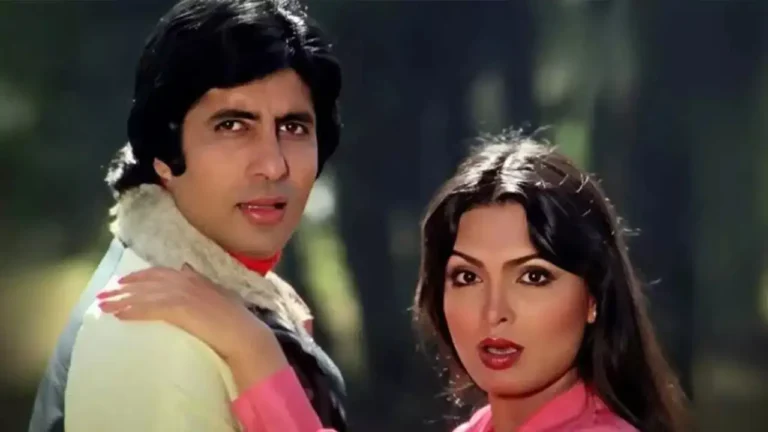
    Amitabh Bachchan and Parveen Babi’s complicated bond revisited

    Amitabh Bachchan and Parveen Babi were among the most popular on-screen pairs of their era. Their chemistry was widely appreciated, particularly in films such as Deewaar and Kaala Patthar. The two actors developed a friendship while working together, but their relationship later became surrounded by speculation and controversy. At the time, rumours circulated that Amitabh and Parveen were romantically involved, despite Amitabh being married to actress Jaya Bachchan. However, these claims were never established as fact. Reports suggested that Amitabh eventually distanced himself from Parveen, something she reportedly found difficult to accept. Parveen later made disturbing allegations against Amitabh in an interview with a magazine. She claimed that he was an international gangster who wanted to harm her and alleged that his associates had kidnapped her. She further claimed that she had been taken to an island, where she believed doctors performed surgery on her and placed a transmitter or electronic chip beneath her ear. Her allegations attracted considerable attention, but they were later understood in the context of her deteriorating mental health. Parveen had been diagnosed with schizophrenia, a serious mental health condition that can affect a person’s perception, thoughts and behaviour. Amitabh subsequently addressed her claims and explained that her illness had caused her to become extremely fearful of other people and experience delusions and hallucinations. Despite the painful circumstances surrounding their past, another emotional episode involving Parveen occurred years later when she unexpectedly encountered her former boyfriend, actor Kabir Bedi. The meeting took place at a hotel in 2004, approximately a year before Parveen’s death. Kabir later recalled the encounter during a conversation with Siddharth Kannan. According to his recollection, he approached Parveen and greeted her warmly. However, she responded with visible sadness and spoke about how people believed she was mentally unwell. Kabir tried to reassure her, but the conversation reportedly took an emotional turn. He remembered seeing a sudden change in her expression, reflecting the difficult state she appeared to be in at the time. The meeting left a lasting impression on him, particularly because he had known Parveen closely during their relationship years earlier. Parveen Babi’s life and career remain a complicated chapter in Bollywood history. She rose to extraordinary fame during the 1970s and became one of the industry’s most recognisable actresses. Yet, behind her glamorous public image, she struggled with serious mental health difficulties and increasing isolation. Her story has continued to generate discussion because of the contrast between her remarkable success as an actress and the personal struggles she experienced later in life. Her relationships with prominent actors, including Amitabh Bachchan and Kabir Bedi, have also remained subjects of public interest, although many claims surrounding her personal life were based on rumours and accounts that cannot always be independently verified.

  • | |

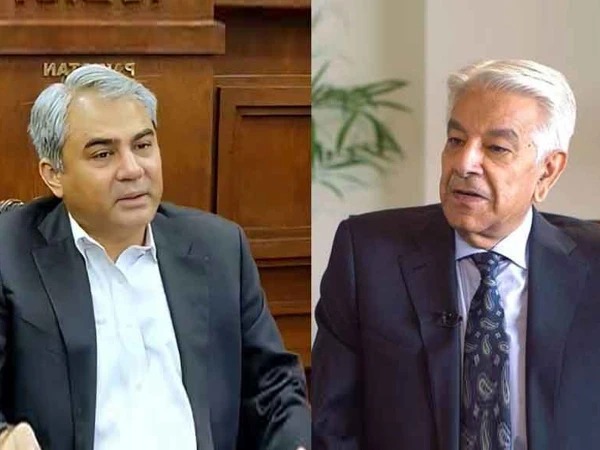
    Khawaja Asif urges Mohsin Naqvi to start system re…

    Defence Minister Khawaja Asif has advised Interior Minister Mohsin Naqvi to begin efforts for changing the system by ensuring the implementation of the National Action Plan and improving performance within his own ministry. Reacting to Mohsin Naqvi’s recent remarks about weaknesses in the existing system, Khawaja Asif said he personally agrees to a large extent with the concerns raised by the interior minister. However, he emphasized that meaningful reforms should be pursued through constitutional and legal platforms, particularly Parliament and the cabinet. In a statement shared on social media, Khawaja Asif said that discussions about major reforms would produce better results if they were presented on parliamentary forums. He added that Parliament provides the appropriate platform for strengthening institutions and bringing sustainable changes through a constitutional process. The defence minister described Mohsin Naqvi as a powerful figure within the government and said that he should use his position to initiate practical reforms. He suggested that the process of system improvement should begin from the Interior Ministry and through the implementation of the National Action Plan. Khawaja Asif said that the evolution of the current system has been influenced by group and personal interests over several decades, and there is now a need to make institutions stronger and more independent. He stressed that reforms should not remain limited to statements but should be translated into practical measures. He further stated that important national issues should be discussed in constitutional forums such as Parliament and cabinet meetings. According to him, involving these institutions would strengthen the system, while discussions outside constitutional platforms may not have the same impact or acceptance. The defence minister also referred to the National Action Plan and said that out of the 13 points highlighted by the military leadership, the points related to the armed forces are being implemented through significant sacrifices. However, he claimed that several points under the responsibility of the Interior Ministry still require progress. Khawaja Asif urged Mohsin Naqvi to take the first step toward system reform by focusing on responsibilities already assigned to his ministry. He said that not only the business community but the entire nation would support genuine efforts aimed at improving governance and strengthening national institutions. He concluded that while discussions on reform are important, real change requires consistent action, institutional cooperation, and progress through established constitutional mechanisms.

  • | | | |

    US forces disable two ships amid rising tensions i…

    WASHINGTON: Tensions around the Strait of Hormuz have intensified after the United States said its forces had disabled two commercial vessels that failed to comply with orders linked to its naval blockade of Iranian ports. The US Central Command (CENTCOM) said American forces had redirected 12 commercial vessels attempting to breach the blockade as of July 25. Two ships that allegedly refused to comply were disabled, while two others were boarded to verify compliance. The latest development adds another layer of uncertainty to maritime traffic through one of the world’s most strategically important waterways, where any disruption can have consequences for global energy and shipping markets. CENTCOM said the Mozambique-flagged M/T Lavine was disabled in the Gulf of Oman on July 24 after its crew allegedly attempted several times to violate the blockade and ignored repeated warnings. According to the US military, the vessel had been heading towards Iran but is no longer travelling to an Iranian port. The US military also reported a separate operation involving the Comoros-flagged M/T Charminar in the Arabian Sea. American forces boarded the tanker on July 25 for verification. After the inspection, the vessel was allowed to continue its journey, according to CENTCOM. CENTCOM has described the naval blockade as remaining fully in effect, saying its forces are continuing to monitor commercial shipping and enforce restrictions on vessels travelling to or from Iranian ports. The confrontation comes amid heightened US-Iran tensions and growing concerns over the security of maritime routes around the Gulf of Oman and Strait of Hormuz. The waterway is a crucial passage for international trade and energy shipments, making military activity in the area particularly sensitive. The US claims its measures are aimed at preventing vessels from violating the blockade, while Iran has continued to challenge restrictions on shipping in the region. The latest incidents could further complicate efforts to maintain safe commercial navigation. With American forces increasing enforcement and vessels facing greater scrutiny, shipping companies operating near the region are likely to remain on high alert. For now, the Strait of Hormuz remains a major flashpoint, with every confrontation at sea carrying the risk of a broader escalation.

  • | |

    Katy Perry slams Trump administration over ‘Fire…

    WASHINGTON: Pop star Katy Perry has sharply criticized the Trump administration after the White House used her hit song “Firework” in a social media video showing US military strikes on Iran, saying the use of her music was completely contrary to the message behind the song. The White House’s official TikTok account shared a video on Thursday featuring footage related to US attacks on Iran. The clip used the familiar “boom, boom, boom” lyrics from Perry’s 2010 hit alongside images of military strikes. The post carried a blunt warning directed at Iran, adding a strikingly confrontational tone to a song that Perry has long described as being about hope, confidence and personal strength. Perry responded on social media on Saturday, making clear that she had not authorized the use of the song and did not support the way it had been presented. “I’m deeply shocked and angry,” Perry said in her statement, objecting to the song’s appearance alongside images of destruction and military action. She emphasized that no permission had been sought from her for the video and that she did not endorse its message. For Perry, the controversy goes beyond the question of whether her music was used without authorization. She argued that the video fundamentally changed the meaning of a song intended to encourage people facing difficult moments. “Firework,” released in 2010, became one of Perry’s biggest international hits. Its message centers on self-belief, resilience and finding inner strength during challenging periods. The song has also become closely associated with celebrations and inspirational moments. That made its use in a military video particularly jarring for the singer. Perry said her music was created to bring people together rather than celebrate war, arguing that pairing an uplifting song with images of destruction undermined its original purpose. The dispute comes as tensions between Washington and Tehran remain extremely high, with military action and threats dominating international headlines. The White House has not been reported as having received Perry’s approval for the video, while her comments have reignited a wider debate over the use of popular music in political and military messaging. The incident also highlights the complicated relationship between artists and governments when copyrighted music is used in political communications. Musicians have repeatedly objected when their songs appear in campaigns or political videos without their consent. For Perry, however, the central issue appears to be the message. A song written to tell people to find their light in dark times was suddenly placed against scenes of war — a contrast she clearly believes turns its meaning upside down.

Leave a Reply

Your email address will not be published. Required fields are marked *