kallar syedan women

Kallar Syedan women hold March against inflation and petrol levy

Kallar Syedan – On the call of Ameer Jamaat-e-Islami Pakistan, Hafiz Naeem ur Rehman, just like across the entire country, the Jamaat-e-Islami Kallar Syedan Women’s Wing also held a march today for the elimination of inflation, unjust taxes on petrol, and the cruel levy.

The march started from the Jamaat-e-Islami Kallar Syedan officec and concluded at the NADRA office. Women from across the area participated in large numbers along with their children.

The participants were holding placards bearing slogans such as “Reduce Inflation” and “Let the People Live”. Besides this, the women also raised strong slogans against the government.

The march was addressed by Qari Qasim-ul-Haq, General Secretary Jamaat-e-Islami Kallar Syedan, Javed Iqbal, Naib Ameer Jamaat-e-Islami Kallar Syedan, and Shahida Javed, Nazima Jamaat-e-Islami Women’s Wing Kallar Syedan.

At the conclusion of the march, the speakers said that tomorrow, 7th August, on the instructions of the Ameer-e-Jamaat, we will come out for a massive protest. By blocking the Motorway at 26 Number Chungi, we will compel the government to end its cruel measures and abolish the petroleum levy, and we will secure the rights of the people.

Therefore, they appealed to all the people of Kallar Syedan to join this protest.

The caravan from Kallar Syedan will depart tomorrow after Friday prayers at 3 PM from the Jamaat-e-Islami Kallar Syedan office.

Similar Posts

  • Punjab sends relief supplies to flood-hit Sheikhupura

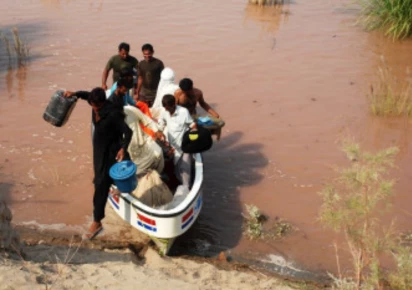
    LAHORE – On the directions of Chief Minister Punjab Maryam Nawaz Sharif, relief supplies comprising food, clean drinking water and livestock fodder have been dispatched for flood-affected people in Sheikhupura. The Lahore administration prepared and sent a relief food package for flood victims in Sheikhupura district. The consignment included 500 meal packs from Savour Foods and 150 food hampers from Al-Fatah Store. Acting on the chief minister’s directives, 10,000 bottles of clean drinking water were also sent to the affected areas. Fodder for livestock was dispatched, while portable washrooms were specially arranged for the flood victims.

  • | |

    Government will remain responsible for Imran’s h…

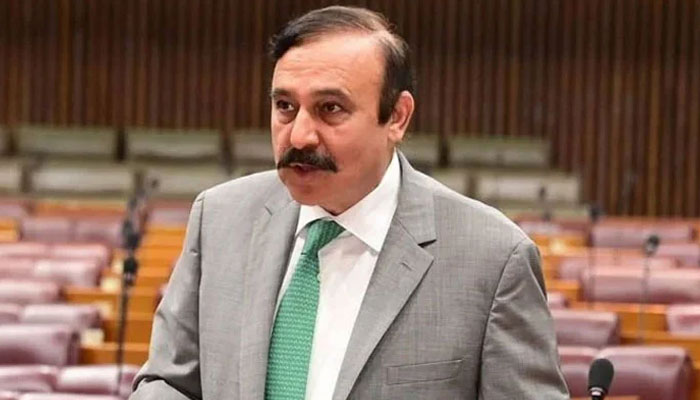
    ISLAMABAD: Federal Minister for Parliamentary Affairs Tariq Fazal Chaudhry has said the government will continue to take responsibility for the health and medical care of PTI founder Imran Khan. Speaking to the media, the minister said the government was already providing the former prime minister with the best available healthcare facilities. He said these facilities were provided without the PTI having to make any formal appeal. Chaudhry said the government was also praying for Imran Khan’s good health. He stressed that the state would continue to fulfil its responsibility regarding his medical treatment. The minister said the government would implement the Supreme Court’s decision regarding Imran Khan in letter and spirit. The Supreme Court has ordered that Imran Khan be shifted to a private hospital for medical treatment. Chaudhry also criticised what he described as the PTI’s changing position on the judiciary. He said it was encouraging to see PTI members praising the courts. However, he questioned the party’s approach to judicial decisions. He said the judiciary was praised when verdicts went in the PTI’s favour, but faced criticism when decisions went against the party. He maintained that Pakistan’s judiciary was independent and was delivering decisions on merit. The federal minister said the courts remained the legal route for obtaining relief and securing release. He noted that people had received relief through judicial decisions in the past. According to Chaudhry, the prime minister could not use executive authority to act against a court order. He said the government was bound to respect and implement judicial decisions. The minister also spoke about ongoing political contacts with the opposition. He said the opposition leaders involved in the process were not members of the PTI. However, they had the confidence of Imran Khan, according to him. Chaudhry said the government had made its position clear. The opposition leadership taking part in talks should have the confidence of the PTI leadership. He said the government did not want a situation in which it was engaged in negotiations while PTI leaders continued issuing statements against the process. The minister welcomed the PTI parliamentary party’s expression of confidence in the opposition leadership involved in the talks. He further said Prime Minister Shehbaz Sharif was expected to respond to the opposition leader’s letter within one or two days. After the response is sent, the venue for a joint meeting will be decided, he added.

  • | |

    UN condemns Swat blast as Pakistan warns of Afghan…

    UNITED NATIONS: The United Nations Security Council has strongly condemned the deadly suicide bombing in Swat, describing the attack as “heinous and cowardly” as Pakistan renewed its warning that terrorist groups continue to operate from alleged safe havens inside Afghanistan. The attack took place outside a police station in Kabal, Swat, on August 2, killing at least 16 Pakistani nationals, mostly civilians, and leaving dozens injured, according to the UN statement cited by Pakistan’s Dawn. The Tehreek-i-Taliban Pakistan (TTP) claimed responsibility for the bombing. In a statement issued through the office of the UN secretary general’s spokesperson, Security Council members expressed deep sympathy to the families of those killed and wished the injured a speedy recovery. The council also stressed that those behind the attack must be held accountable, calling for perpetrators, organisers, financiers and sponsors of terrorism to be brought to justice. The UN body reiterated its longstanding position that terrorism, regardless of its motivation, location or perpetrators, remains a serious threat to international peace and security. It also urged member states to cooperate with Pakistan in accordance with international law and relevant Security Council resolutions. Pakistan Raises Alarm Over Afghan Sanctuaries The condemnation came shortly after Pakistan raised concerns at a UNSC briefing over what it described as the growing threat from terrorist organisations operating from Afghan territory. Pakistan’s Permanent Representative to the UN, Ambassador Asim Iftikhar, said several groups continue to maintain safe havens inside Afghanistan and pose an increasing threat to Pakistan and regional security. He specifically named the banned TTP, Balochistan Liberation Army (BLA) and its Majeed Brigade, Islamic State Khorasan (IS-K), East Turkistan Islamic Movement (ETIM), and Al Qaeda affiliates. Pakistan urged the international community to ensure that Afghan soil is not used to launch terrorist attacks against neighbouring countries, while calling for stronger international cooperation to counter cross-border terrorism. The latest developments have added fresh pressure to an already sensitive security relationship between Pakistan and Afghanistan. They also came after the fourth US-Pakistan Counterterrorism Dialogue in Washington, where officials from both countries reaffirmed their commitment to combating terrorist organisations. For Pakistan, the UNSC condemnation provides international recognition of the seriousness of the Swat attack, while Islamabad continues to push for stronger action against militant networks it says operate across its western border.

  • | |

    Pakistan mediates US-Iran talks over Hormuz crisis

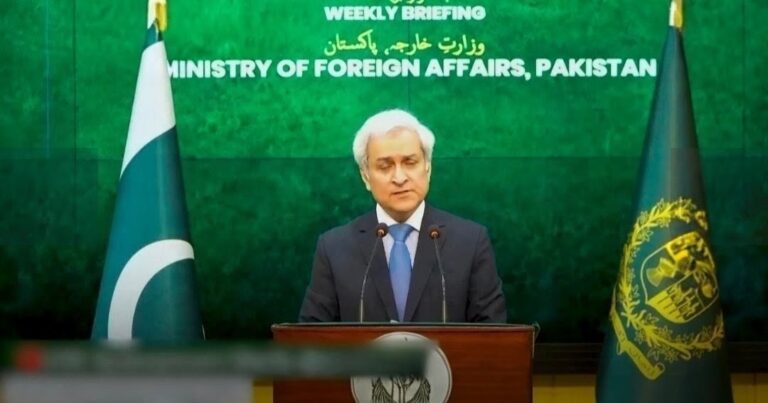
    Pakistan has confirmed that diplomatic negotiations between the United States and Iran remain active despite renewed military escalation across the Middle East, expressing hope that dialogue can prevent the conflict from spiraling into a wider regional crisis. Speaking at a weekly briefing in Islamabad, Foreign Office spokesperson Tahir Andrabi said negotiations were continuing with a particular focus on reducing tensions and addressing the growing dispute over the strategically vital Strait of Hormuz. “Negotiations between parties are ongoing, particularly on the Strait of Hormuz and to de-escalate,” Andrabi told reporters, emphasizing that Pakistan remains committed to promoting a peaceful resolution to the conflict. The spokesperson said Islamabad is working closely with all relevant parties to revive the Islamabad Memorandum of Understanding (MoU), an agreement aimed at creating a framework for technical discussions and confidence-building measures between Washington and Tehran. “We are doing our utmost to bring all parties back to the Islamabad MoU,” Andrabi said, adding that Pakistan is encouraging both sides to honor their commitments and continue technical-level talks despite recent hostilities. His remarks come as the region faces one of its most dangerous security crises in recent years. The United States has resumed large-scale military strikes on Iranian targets following missile attacks on American forces, while Iran has vowed further retaliation. The escalating conflict has raised fears over the security of the Strait of Hormuz, a key global shipping route through which a significant share of the world’s oil and liquefied natural gas supplies passes. Pakistan has consistently advocated diplomacy over military confrontation, warning that continued violence could threaten regional stability, disrupt global energy markets and increase the risk of a broader conflict involving additional countries. Analysts say Pakistan’s role as a mediator has become increasingly significant as communication channels between Washington and Tehran remain strained. While no breakthrough has yet been announced, officials believe sustained dialogue offers the best chance of easing tensions and preventing further escalation. With fighting continuing across the region, Islamabad has reiterated its support for peaceful negotiations, urging all parties to exercise restraint and prioritize diplomacy over confrontation in order to safeguard regional peace and international energy security.

  • | |

    Sindh Chief Minister reviews Karachi water reform …

      Sindh Chief Minister Syed Murad Ali Shah met with World Bank Country Director Bolormaa Amgaabazar during a high-level meeting held to review the progress of Karachi’s water reform projects. The meeting focused on accelerating initiatives aimed at improving the city’s water supply and wastewater management systems. It was attended by the Sindh Minister for Local Government, Karachi Mayor Murtaza Wahab, the Chief Secretary, the Principal Secretary, and other senior government officials. During the meeting, Chief Minister Murad Ali Shah and the World Bank Country Director assessed the overall progress of the Karachi Water and Sewerage Services Improvement Project (KWSSIP). Both sides agreed on a fast-track roadmap to improve Karachi’s water supply and drainage infrastructure. The Chief Minister directed all relevant departments to ensure the timely completion of ongoing KWSSIP projects and to accelerate progress on the K-IV water supply project, which is considered one of the city’s most important infrastructure initiatives. Officials informed the meeting that Sui Southern Gas Company handed over the project site on June 22, 2026. Preparations are currently underway for a joint technical inspection of the 96-inch diameter water pipeline. In addition, rehabilitation work on the NIPA Bridge and other related technical activities is progressing according to schedule, with completion targeted for August 20. The briefing also highlighted that the procurement process for the K-IV expansion project has entered its final phase. The World Bank has already issued its No Objection Certificate (NOC), clearing the way for the next stage of implementation. Authorities stated that the official tender for the K-IV project will be advertised shortly. Before large-scale installation begins, a pilot program will be launched to evaluate technical performance and operational efficiency. The meeting included a detailed review of the appointment of consultants and the technical studies required for the project’s successful implementation. Officials emphasized that these studies are essential to ensure that the infrastructure meets international standards and addresses Karachi’s long-term water management challenges. Karachi Mayor Murtaza Wahab informed the participants that chlorination stations have been relocated to their designated sites and are currently undergoing commissioning. Water quality testing is expected to begin on July 30, marking another significant milestone in the project. He also reported that compensation has been paid to 186 out of the 203 individuals affected by the development works, demonstrating continued progress in addressing social and resettlement obligations. Chief Minister Murad Ali Shah instructed the Karachi Water and Sewerage Corporation (KWSC) to complete the commissioning and testing process without delay. He reiterated that providing safe and clean drinking water to the people of Sindh remains one of the provincial government’s highest priorities. The Chief Minister further directed all concerned institutions to strengthen coordination and communication to avoid unnecessary delays. He stressed that modern water utility organizations operate through effective data management, metering systems, and advanced technology, adding that Karachi requires a modern and efficient water management system capable of meeting the demands of its growing population. Speaking at the meeting, World Bank Country Director Bolormaa Amgaabazar reaffirmed the World Bank’s continued commitment to supporting Karachi in achieving sustainable water supply and wastewater management. She emphasized that institutional reforms, good governance, social safeguards, and timely implementation are essential for the long-term success of the projects. She also expressed confidence that continued cooperation between the Sindh government and the World Bank would help improve essential public services and enhance the quality of life for Karachi’s residents.

  • | | | |

    Tanweer Ahmed champions human-centred AI at UN you…

    Tanweer Ahmed, a technology and artificial intelligence professional, has called for a human-centred approach to AI adoption, stressing that emerging technologies should support people rather than replace them. Speaking at the Youth and AI Summit at United Nations Headquarters in New York on International Youth Day, Ahmed delivered a presentation titled “Keeping Humanity in AI Adoption.” He focused particularly on how nonprofit organisations can use artificial intelligence responsibly while protecting human judgment and accountability. Ahmed said his professional background in technology consulting, data analytics and AI had given him experience in understanding the opportunities created by emerging technologies. However, he said his passion for the nonprofit sector was rooted in his earlier experiences working with communities and young people. He recalled working on a community farm and participating in cultural education activities in Cuba during 2007 and 2008. In 2010, he travelled to South Africa, where he taught mathematics to fifth-grade students. Ahmed said these experiences shaped his long-term desire to contribute to communities and help children around the world. He described his appearance at the UN event on International Youth Day as an honour and an opportunity to reconnect with those early aspirations. During his presentation, Ahmed discussed the rapid growth of artificial intelligence and its increasing use by individuals, businesses and nonprofit organisations. He explained that AI adoption should not simply mean occasionally using chatbots or other AI applications. Instead, organisations should strategically integrate AI into their daily workflows, operations and decision-making processes. Ahmed highlighted several areas where nonprofits can use AI, including internal productivity, communication, fundraising, grant writing and administrative tasks. He presented the Ugandan Water Project as an example of how AI can support a nonprofit organisation. The project works to improve access to clean water in Uganda and reduce the impact of waterborne diseases. According to Ahmed, the organisation uses AI to assist with grant applications and donor outreach. Previous grant applications and organisational information can be analysed to help prepare targeted applications for new funding opportunities. Ahmed stressed that AI-generated material is not simply submitted without human involvement. Staff review, edit and verify the content before applications are sent to funders. He said AI had also helped the organisation identify new grant opportunities and improve internal processes, including contract drafting and project-management workflows. Ahmed emphasised that the purpose of such technology should be to make employees more efficient rather than eliminate their jobs. He also discussed AI-powered voice-to-text technology used in social work and community services. Such systems can allow workers to record information while they are in the field and transfer it into required software, reducing the amount of time spent on administrative duties. Ahmed said reducing paperwork could give nonprofit workers more time to interact directly with the people and communities they serve. However, he warned that AI adoption also presents challenges. These include financial costs, limited access to technology, concerns over job losses, inaccurate information, privacy issues, bias and difficulties in understanding cultural and linguistic nuances. He also highlighted concerns about the environmental impact of the infrastructure required to operate increasingly powerful AI systems. Ahmed urged organisations to develop responsible AI policies covering privacy, security, fairness, transparency, human oversight and accountability. He encouraged nonprofit organisations to learn from one another and share successful experiences with AI, saying organisations working for social causes can benefit from cooperation rather than competing over technological approaches. A key message of his presentation was that humans must remain responsible for AI-assisted decisions. Ahmed warned organisations against blindly accepting AI-generated content and urged them to review outputs carefully, correct errors and ensure that technology does not replace human judgment. Who is Tanweer Ahmed, the Pakistani-American philanthropist? Pakistani-American businessman and philanthropist Tanweer Ahmed has attracted renewed attention in Pakistan following his reported $9 million contribution to the National University of Sciences and Technology (NUST) and his recent appearance alongside senior Pakistani officials in the United States. Ahmed, who is based in Houston, has built a diverse business portfolio in the United States while also becoming involved in philanthropy, education, healthcare and cricket. His recent contribution to NUST is aimed at supporting talented students from financially disadvantaged backgrounds. The endowment is expected to provide scholarships to deserving students each year, with a particular focus on fields such as artificial intelligence, information technology, science and other emerging technologies. Ahmed has said his objective is to ensure that talented Pakistani students are not deprived of quality education because of financial difficulties. He has also expressed plans to expand similar scholarship initiatives to other educational institutions. The businessman has also supported infrastructure and technology-related initiatives at NUST, including the development of facilities intended to strengthen research and innovation. His philanthropic activities extend beyond education. Ahmed has been associated with healthcare initiatives in Pakistan and has supported efforts aimed at providing assistance to communities affected by natural disasters. He also drew attention for his role in relief efforts following the devastating floods that struck Pakistan in 2022. He has been credited with helping mobilise substantial humanitarian assistance for flood-affected communities. Ahmed’s business journey began after he moved to the United States as a student. According to accounts of his career, he initially worked in restaurants and at gas stations while trying to establish himself. He later moved through several positions in the American fast-food industry. His career accelerated after he joined Jack in the Box as a shift manager. His performance and business approach helped him move into senior management positions, eventually leading to opportunities in the Taco Bell franchise system. Ahmed later expanded into franchising and developed a large portfolio of food outlets across several US states. His business interests have also extended into insurance, energy, transportation and other sectors. Over the years, he has developed a reputation as an entrepreneur who combines commercial ventures with philanthropic activities. Ahmed is also closely associated with the development of cricket in the United States. A passionate cricket enthusiast, he established the Prairie View Cricket Complex near Houston after acquiring a large tract of

Leave a Reply

Your email address will not be published. Required fields are marked *