thailand school shooting
|

Thailand school shooting leaves seven dead, 15 injured

At least seven people were killed and 15 others injured after a student opened fire at a school near Thailand’s capital Bangkok on Friday.

The suspected shooter was among those killed after turning the weapon on himself, according to police.

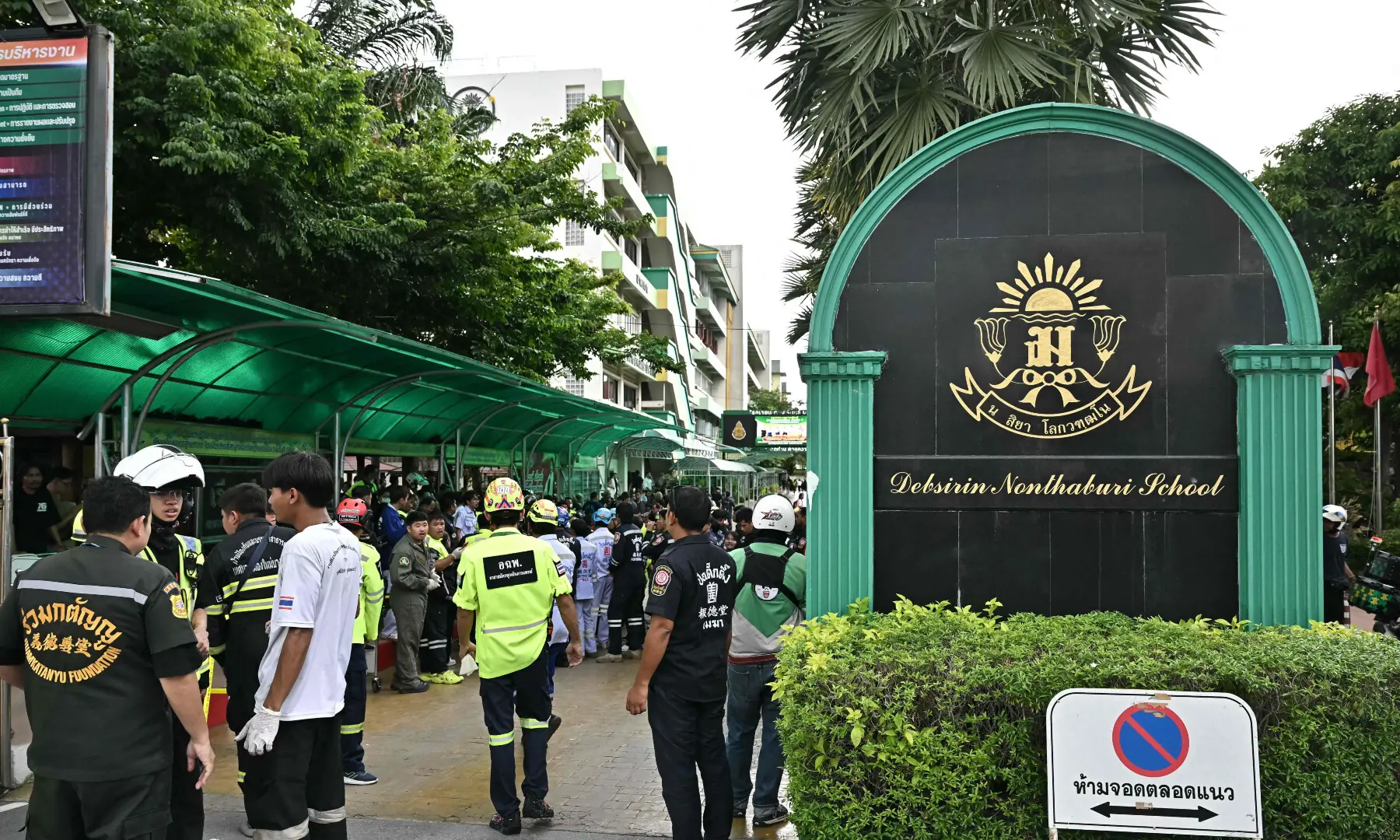
The incident took place at Debsirin Nonthaburi School in Nonthaburi province, northwest of Bangkok. Students rushed out of the school as emergency teams arrived at the scene.

Several wounded people were taken to nearby hospitals for treatment. Teachers and students were reportedly among those killed and injured.

A student at the school said he initially mistook the sound of gunfire for firecrackers or someone hitting an object. He later realised that several shots had been fired.

Prime Minister Anutin Charnvirakul described the incident as a terrible tragedy and questioned how such an attack could occur in the country.

Emergency responders said they treated several students who had suffered gunshot wounds to their backs, chests and arms. A male teacher was found dead on an upper floor of the school, while a female teacher was also found with serious injuries.

Rescue workers attempted to revive the injured teacher before rushing her to hospital, but she could not be saved.

Following the shooting, traffic around the school came to a standstill as parents rushed to collect their children. Authorities also moved to provide assistance to students, teachers and affected families.

Police identified the attacker as a student. The incident is the second school shooting reported in Thailand this year.

Thailand has experienced several deadly shooting incidents in recent years. The country witnessed its deadliest mass killing in 2022, when a former police officer killed 36 people, including 22 children, in a prolonged attack at a childcare centre.

Other deadly shootings have also taken place in Bangkok and other parts of the country, raising continued concerns over gun violence and firearm access.

Similar Posts

  • |

    India warns border tensions could affect ties with China

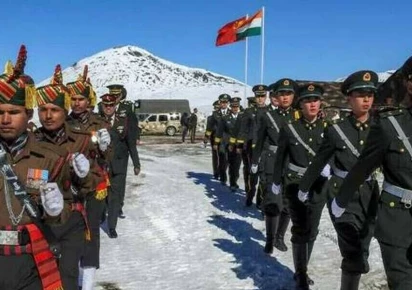
      India has stressed that maintaining peace along its disputed border with China is essential for improving relations between the two Asian powers. The statement comes amid reports of renewed encounters between Indian and Chinese troops in a remote part of the Himalayas. India’s latest remarks mark the second time in less than a week that New Delhi has addressed concerns over the border. The two countries have been attempting to rebuild relations after deadly clashes in 2020 severely damaged diplomatic ties. The issue is particularly significant ahead of the BRICS summit, scheduled to take place in New Delhi from September 12 to 13, where Chinese President Xi Jinping is expected to participate. Speaking at a regular media briefing on Tuesday, Indian Foreign Ministry spokesperson Randhir Jaiswal said New Delhi considers border matters with China extremely serious. He stressed that the situation along the disputed frontier would have a direct impact on the broader relationship between the two countries. Jaiswal said India had consistently communicated to Beijing that the condition of the border was closely connected to the overall state of bilateral relations. His comments came in response to questions about reports of a recent military encounter between troops from both countries. China’s Foreign Ministry and Defence Ministry did not immediately respond to requests for comment regarding the reported developments. According to news , Indian and Chinese military patrols reportedly came into contact in late July near Taksing, a remote village in Arunachal Pradesh’s Upper Subansiri district. The area lies along the border with Tibet and is located in the eastern Himalayas. China claims Arunachal Pradesh as part of what it describes as southern Tibet, referring to the region as Zangnan. India strongly rejects Beijing’s claim and maintains that Arunachal Pradesh is an integral part of Indian territory. The reported encounter allegedly occurred around 2.5 kilometres inside territory controlled by India. Chinese personnel reportedly withdrew from the area initially but returned in early August and set up two tents. However, Indian defence officials have rejected reports suggesting that the developments represent a significant increase in military tensions. The defence spokesperson responsible for Arunachal Pradesh described the reports as unverified and lacking sufficient evidence. A residents’ welfare organisation in the region had earlier raised concerns in a July 26 letter sent to local authorities. The group claimed that Chinese personnel were increasing their presence and moving into strategically important areas near the border. Reuters reviewed the letter. Military patrols from India and China occasionally encounter one another along their disputed 3,488-kilometre frontier. Such confrontations are not unprecedented, although they do not happen regularly. Relations between the two countries deteriorated sharply after a deadly confrontation in the western Himalayas in 2020. Twenty Indian soldiers and four Chinese troops were killed during the clashes, leading both sides to deploy tens of thousands of troops and large quantities of military equipment along the frontier. Tensions gradually began to ease after Indian Prime Minister Narendra Modi and Chinese President Xi Jinping held talks in 2024. The two leaders agreed to take steps to end the prolonged military standoff and work toward reducing tensions. Despite those efforts, the latest reports highlight the continuing sensitivity of the border dispute and the importance of maintaining stability as India and China attempt to restore their broader relationship.

  • | |

    Shahid Afridi’s missing Pet Dog found safe, form…

    Former Pakistan cricket captain and star all-rounder Shahid Khan Afridi has announced that his pet dog, which went missing in Islamabad a day earlier, has been found and safely returned home. Afridi shared the good news on social media, expressing his happiness and relief after being reunited with his beloved pet. The former captain had earlier appealed to the public for help after his dog disappeared in Islamabad. In his initial post on X, formerly known as Twitter, Afridi informed his followers that his pet dog was missing and requested people to help locate it. He explained that the dog was not simply a pet but had been raised as a member of his family. Afridi also shared the emotional history of the animal, revealing that the dog had survived a serious illness when it was only 30 days old. Despite facing severe health complications at such a young age, the dog recovered and became an important part of the family. The disappearance of the pet caused concern for the former cricketer, who turned to social media to seek assistance from the public. His appeal quickly attracted attention from his followers and social media users, many of whom shared and supported his post in an effort to help locate the missing dog. The former Pakistan captain later returned to social media with an update that brought relief to those who had followed the situation. He announced that his dog had been found and had safely made it back home. Sharing the positive news, Afridi thanked everyone who supported his appeal and helped spread the message about his missing pet. He expressed his gratitude to the people who shared his post and contributed to the search. Afridi said that the support he received from the social media community played an important role in the safe return of his dog. He thanked all those who stood by him and helped amplify his message during the difficult situation. The incident highlights how social media can be used not only for entertainment and communication but also to mobilize communities during emergencies and personal difficulties. Afridi’s large following helped his appeal reach a wider audience, increasing the chances of locating the missing pet. For Afridi, the return of the dog was particularly meaningful because of the strong bond he shares with the animal. Having cared for it since a very young age and watched it recover from a serious illness, he considers the dog a member of his family. The former captain’s emotional response also drew attention from fans who expressed happiness over the dog’s safe return. Many social media users welcomed the news and congratulated Afridi after he confirmed that the pet was back home. Shahid Afridi, one of Pakistan’s most popular cricketers, has remained active on social media and frequently interacts with his supporters. His latest post once again demonstrated the strong connection between the former cricketer and his followers. With the dog now safely back home, Afridi thanked the online community for its support and assistance. He said the outcome would not have been possible without the collective efforts of people who shared and supported his appeal. The former captain can now breathe a sigh of relief after what had been an anxious search for a much-loved member of his family.

  • |

    Ranbir Kapoor’s ‘Ramayana’ trailer is here and the internet has thoughts

    Nitesh Tiwari’s Ramayana finally gave fans what they were waiting for. The trailer dropped today at 4:15 am, timed deliberately with the Brahma Muhurat. It offered the clearest glimpse yet of the mythological epic, and reactions began pouring in within minutes. The cast includes Ranbir Kapoor as Lord Rama, Sai Pallavi as Sita, Ravi Dubey as Lakshman, and Yash as Ravana. The trailer begins with Ravana making a forceful entrance at a palace. He is met with resistance but responds with sheer power, announcing the start of his rule. As fear spreads across the realms, Lord Vishnu is reborn as Prince Ram, son of King Dasharatha, played by Arun Govil. The story then moves through Ram’s battles with demons alongside his brother Lakshman. It builds toward the pivotal moment when Queen Kaikeyi, played by Lara Dutta, forces Dasharatha to keep an old vow. This leads to Ram being exiled for fourteen years. Sita refuses to remain behind and insists on joining him. Compared to the earlier teaser, this trailer puts more emphasis on the scale of Ayodhya and Lanka. It relies less on fantastical creatures and focuses more on emotional depth. One notable absence is Hanuman, who does not appear even briefly, suggesting his big entrance is being saved for part two. Reactions online were loud and divided. Several viewers praised the visuals, music, and overall production value, with some calling it a landmark moment for Indian cinema. Others pushed back, especially given the film’s reported Rs 4,000 crore budget, arguing that certain shots still look unfinished or overly digital. Ranbir’s take on Rama became a major point of discussion too. Some fans appreciated his calm, restrained energy, saying it fit the character’s traditional image. Others were unconvinced, feeling his performance leaned too casual for the role. Yash, meanwhile, seemed to win over almost everyone. Fans repeatedly praised his screen presence as Ravana, calling it one of the standout aspects of the trailer. A few viewers also flagged Hanuman’s absence, while others felt the design of Kumbhkaran looked slightly cartoonish. The film’s score comes from A.R. Rahman and Hans Zimmer, with VFX handled by DNEG. Music rights for both parts have reportedly been secured by T-Series in a Rs 75 crore deal. Ramayana’s part one releases globally on November 8, coinciding with Diwali, with part two expected in 2027.

  • | | |

    Kuwait’s foreign minister arrives in Pakistan on…

    Kuwait’s Foreign Minister, Sheikh Jarrah Jaber Al-Ahmad Al-Sabah, arrived in Islamabad on Tuesday for an official visit to Pakistan at the invitation of Deputy Prime Minister and Foreign Minister Ishaq Dar. The visit highlights the longstanding friendship and growing diplomatic cooperation between the two countries. According to Pakistan’s Ministry of Foreign Affairs, the Kuwaiti foreign minister received a warm welcome upon his arrival at Islamabad International Airport. Additional Secretary for the Middle East, Zahid Hussain, welcomed the distinguished guest on behalf of the Pakistani government. During the visit, senior officials from both countries are expected to hold high-level discussions on a wide range of bilateral, regional, and international issues of mutual interest. The talks will focus on strengthening political cooperation, expanding economic partnerships, enhancing trade and investment opportunities, and promoting collaboration in various sectors. The Foreign Office stated that the visit reflects the deep-rooted brotherly relations between Pakistan and Kuwait, built on a shared history, mutual trust, and close cooperation over the years. Both nations have maintained friendly diplomatic ties and regularly work together on regional and international platforms. Pakistan and Kuwait enjoy strong cooperation in labor, energy, investment, and defense, while a large Pakistani expatriate community continues to contribute significantly to Kuwait’s economy. The leadership of both countries has repeatedly expressed a commitment to further strengthening these ties through increased engagement and high-level exchanges. Officials believe the visit will provide an opportunity to review the progress made in bilateral relations and identify new areas for collaboration. Discussions are also expected to cover regional developments in the Middle East and South Asia, as well as other international issues of common concern. The official visit underscores the shared commitment of Pakistan and Kuwait to enhancing diplomatic relations, promoting economic cooperation, and expanding strategic partnerships. It also reaffirms both countries’ desire to deepen engagement through regular dialogue and continued collaboration for mutual benefit. The outcomes of the meetings are expected to contribute to stronger Pakistan-Kuwait relations and pave the way for future initiatives aimed at boosting trade, investment, and regional cooperation.

  • | |

    Hamas warns it may halt Gaza deal if Israel fails to comply

    Hamas negotiating team member Ghazi Hamad has warned that the group will not implement any stage of the Gaza peace agreement if Israeli forces fail to meet their obligations under the deal. Speaking to Arab media, Hamad described the negotiations as difficult and complex but said Hamas worked to reach a practical arrangement that could satisfy all parties. He stressed that Hamas would link its own commitments to Israel’s compliance with the agreement. According to media reports, the group’s disarmament process will also depend on the withdrawal of Israeli forces from Gaza and progress toward rebuilding the Palestinian territory. Israel has not yet issued an official response to the reported agreement. Meanwhile, the Board of Peace has welcomed the reported agreement on Hamas disarmament. The body, established to oversee transitional arrangements in post-war Gaza, said Hamas had formally agreed to a detailed roadmap for implementing the next phases of the ceasefire. In a statement posted on X, formerly known as Twitter, the Board of Peace said Hamas had, for the first time, agreed to a workable plan for disarmament, paving the way for an Israeli withdrawal from Gaza. The board said the agreement followed months of serious and good-faith negotiations aimed at advancing US President Donald Trump’s vision for Gaza. The proposed framework includes new governance, security arrangements, humanitarian assistance, reconstruction and economic recovery, in line with the broader peace plan and UN Security Council Resolution 2803. Hamas and other Palestinian armed groups have reportedly agreed to a document outlining a plan for disarmament in Gaza. Trump described the development as a historic step toward peace and security. Under the reported framework, negotiators will prepare a detailed roadmap for Hamas’s disarmament within 14 days. The international oversight body may extend the deadline if necessary, provided all parties agree and the monitoring mechanism approves the extension.

  • | |

    Tarar calls for stronger narrative against terrori…

    Information Minister Attaullah Tarar has called for a stronger national effort to counter terrorism, extremism and misinformation, saying Pakistan’s fight against militancy cannot be limited to security operations. Addressing a capacity-building workshop in Islamabad, Tarar said the country also needed to win the battle of narratives by addressing misinformation and reducing the gap between public perception and facts. He said Pakistan had made considerable progress against terrorism through coordinated efforts by the federal and provincial governments, security forces and other state institutions. The National Action Plan, he added, had played an important role in bringing stakeholders together. According to Tarar, Pakistan’s security situation had improved significantly by 2017, allowing economic activity and investment to recover. However, he argued that a subsequent policy shift weakened years of counter-terrorism efforts. The minister stressed that national security policies should have continuity and should not change with changes in government. He called for political parties to develop consensus on major national policies so that long-term strategies could continue regardless of which party was in power. Tarar also highlighted the importance of Pakistan’s international narrative. He said the country had suffered heavily from terrorism and had made significant sacrifices involving security personnel, political figures, professionals and civilians. He said Pakistan had increasingly used international media platforms to present its position and challenge what it described as misleading narratives about terrorism and regional security. Discussing tensions with India following the Pahalgam incident, Tarar questioned the version of events presented by New Delhi. He reiterated Pakistan’s call for a transparent and internationally conducted investigation and said the country had sought to address the issue through diplomatic and media channels. The minister said terrorism had no religion, colour or ethnicity and maintained that the state would not allow violent groups to impose their ideologies on society. He warned that militant organisations were increasingly shifting their focus towards vulnerable and “soft” targets after facing pressure from security forces. He cited the Jaffar Express attack as an example and praised security agencies for their response. Tarar also raised concerns over the role of digital platforms in spreading extremist material and misinformation. He said the government was strengthening its legal and institutional mechanisms to deal with cybercrime and harmful online narratives. He said a Digital Communication Department had been established using modern technologies, including artificial intelligence-based monitoring and speech-to-text systems, to identify emerging narratives in the digital space. According to the minister, provincial governments were also being offered assistance in establishing similar communication structures. Tarar said state institutions also needed to promote Pakistan’s positive image by highlighting its culture, tourism, music, cuisine and arts. He praised Pakistan Television for contributing to efforts aimed at presenting a broader image of the country. He also stressed the need for better communication and timely reporting from Balochistan. The government, he said, was willing to support television networks in establishing bureaux in the province’s southern districts. Speaking about Balochistan, Tarar said development and security remained key government priorities. He highlighted infrastructure and counter-terrorism measures and said political stability and economic development were essential to addressing long-term challenges. The minister also cited Rescue 1122 as an example of a public policy that continued beyond political changes. He argued that successful national programmes should be preserved and expanded rather than discontinued because of political differences.

Leave a Reply

Your email address will not be published. Required fields are marked *