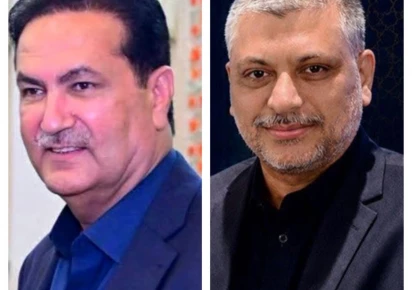
mir raza exhumation
| |

Mir Raza exhumation halted over medical board row

The exhumation of Mir Ali Raza’s body has been postponed for Friday, his father’s lawyer Jibran Nasir said.

Nasir spoke to the media and raised serious concerns over the medical board formed for the case. He said a third notification regarding the medical board had been issued.

According to Nasir, the first and second medical boards were merged to form a new third board. However, he said the family does not accept the latest notification.

He said Mir Raza’s parents had already recorded their statements before the investigating officer.

Nasir said the family would not allow the exhumation to take place under the supervision of what he called a disputed medical board. He described the exhumation as a sensitive legal process.

He said the court had directed the police surgeon and police to take necessary action. A medical team was formed after the court’s directions.

However, Nasir alleged that the medical board was changed overnight. He said the sudden change had raised serious questions for the family.

He questioned why doctors from Karachi were not included in the new board. He also questioned the removal of doctors who had been part of the earlier medical board.

Nasir asked why a new board was formed without first withdrawing the previous notification. He also questioned why the new notification was issued during the night.

He questioned the role of the Director General Health in Hyderabad. He asked under which law the official became the supervising officer of the medical board.

Nasir also questioned how the orders of the Karachi police surgeon were superseded. He asked which order of the health secretary was referred to in the letter issued from Hyderabad.

He said the family would not accept any alternative arrangement. They would only recognize the previously constituted eight-member medical board.

Nasir also raised questions about the investigation into Mir Raza’s death. He said the investigating officer could not recover a bullet casing for eight days.

According to him, the casing was recovered only after the family approached the court. He questioned how important the casing could be without the recovery of the pistol allegedly used in the incident.

Nasir also alleged that the investigating officer had not properly inspected Mir Raza’s room.

He said the family had lost a young member and wanted the case to be investigated with complete seriousness. He stressed that an exhumation was not an ordinary procedure.

Meanwhile, preparations for the exhumation had been completed at the PECHS cemetery in Karachi. A police team had also reached the cemetery.

Similar Posts

  • |

    Trial commences for Malaysian teenager accused of fatal school stabbing

    A 14-year-old boy has gone on trial in Malaysia for the alleged murder of his 16-year-old schoolmate, Yap Shing Xuen, whose body was discovered with multiple knife wounds in a secondary school toilet near Kuala Lumpur. The accused, who pleaded not guilty, faces up to 40 years in prison and potential caning if convicted, though capital punishment is barred due to his status as a minor under Malaysian law. Police confirmed the recovery of a written note at the scene and cited potential online influence, sparking nationwide debate concerning the impact of social media algorithms, incel subcultures, and youth exposure to radicalising content. In response to growing public concern surrounding youth safety, Malaysian authorities have instituted a policy prohibiting children under 16 from maintaining accounts on major social media platforms.

  • |

    Abdullah Shafique exits GSL to join Pakistan Test team

    Pakistan opener Abdullah Shafique has been released by Lahore Qalandars from the ongoing Global Super League (GSL) to join the national Test squad ahead of the team’s first Test assignment against the West Indies. The right-handed batter was originally part of Lahore Qalandars’ squad for the GSL campaign in Guyana. However, the franchise has confirmed his departure after his final appearance in the tournament, allowing him to link up with Pakistan’s Test squad in Trinidad and Tobago. To fill the vacancy left by Shafique, Lahore Qalandars have signed Bangladesh batter Shamim Hossain for the remainder of the Global Super League. The left-handed all-rounder is expected to strengthen the team’s middle order as the tournament enters its crucial stages. Shafique featured in Lahore Qalandars’ last match against the Guyana Amazon Warriors before leaving the competition. In that fixture, he played a quick cameo, scoring 21 runs off just 13 deliveries. His aggressive knock provided valuable momentum during the innings before he departed to fulfill his national team commitments. Following the conclusion of his GSL duties, Shafique is set to travel to Trinidad and Tobago, where Pakistan’s Test squad is currently preparing for its upcoming red-ball challenge against the West Indies. The 25-year-old has been drafted into the Test squad as a replacement for the injured Abdullah Fazal, who has been ruled out due to injury. His inclusion adds experience to Pakistan’s batting lineup, particularly at the top of the order, where he has previously delivered several important performances in Test cricket. Shafique has established himself as one of Pakistan’s dependable red-ball batters since making his Test debut. Known for his solid technique and temperament, he has played key innings in overseas conditions and remains an important part of Pakistan’s long-term plans in the format. His return to the national setup comes at an important time as Pakistan prepare for a challenging Test series in the Caribbean. The team management will hope his recent competitive cricket in the Global Super League helps him make a smooth transition into the Test environment. Meanwhile, Lahore Qalandars will continue their GSL campaign with Shamim Hossain replacing Shafique in the squad. The franchise will be aiming to maintain its momentum as it competes for a place in the knockout stage of the tournament. The Global Super League has featured several international stars this season, providing players with valuable match practice before returning to national duties. Shafique’s early exit from the competition highlights the priority given to international commitments, with Pakistan keen to have a full-strength squad available for the upcoming Test series against the West Indies. His move from franchise cricket back to international cricket marks another important step as Pakistan look to build a strong lineup for the remainder of their Test campaign.

  • |

    Global food prices hit three-year high in July

    Global food prices reached their highest level in three years in July. The United Nations Food and Agriculture Organization (FAO) said global food prices rose significantly due to weather conditions and the Iran-US war reaching a three-year high. The FAO Food Price Index tracks monthly changes in international prices of major food commodities. According to the index, global food prices rose to 131.1 points in July compared with 130.3 points in June. This was the highest level recorded since January 2023. The FAO’s chief economist had told a news agency in recent days that the world was once again facing food price inflation due to the wars in Iran and Ukraine as well as the El Niño climate phenomenon which can affect crop production. El Niño is a climate pattern in which a large part of the Pacific Ocean becomes unusually warm contributing to an increase in global temperatures. According to the international organization, wheat prices increased by 5.8% resulting in an overall 3.4% increase in commodity prices. Wheat exports through the Black Sea were affected while rising temperatures disrupted crop production in major wheat-growing regions. The FAO Vegetable Oil Price Index increased by 2% reaching its highest level since June 2022. Vegetable oil prices rose due to the Iran war and increased demand for biodiesel. Sugar prices increased by 5.6% amid weather-related concerns in Europe and Asia. However, meat prices declined by 2.8%.

  • |

    US announces visa curbs on cybercrime suspects

    The United States has announced a new visa restriction policy targeting foreign nationals accused of involvement in cybercrime, online fraud and other cyber-enabled criminal activities. The new measures will apply to people who are directly involved in such crimes or who knowingly assist criminal networks. The policy specifically covers online scams, cyber fraud and sextortion. US Secretary of State Marco Rubio said the policy was introduced as part of the Trump administration’s broader campaign against cybercrime and fraud targeting American citizens. The move follows an executive order signed by President Donald Trump aimed at combating cybercrime, financial fraud and schemes that exploit US citizens. According to the US State Department, online investment scams have become a major threat to Americans. The department said US citizens lost at least $10 billion to scams in 2024. Officials also raised concerns about criminal organisations operating across borders. Some scam operations are allegedly linked to transnational criminal groups and are associated with money laundering, corruption and human trafficking. The US government also highlighted the growing threat of sextortion. American children have reportedly been targeted by overseas criminals who use online platforms to manipulate and blackmail victims. Under the new policy, visa restrictions can be imposed on foreign nationals found responsible for or complicit in cybercrime and cyber-enabled criminal activities. In certain cases, immediate family members of individuals involved in such activities may also face visa restrictions. The policy has been introduced under Section 212(a)(3)(C) of the US Immigration and Nationality Act. The administration said visa restrictions would form part of a wider effort to disrupt international scam networks. Other measures could include sanctions, criminal prosecutions, asset seizures and extradition requests. Washington also plans to strengthen cooperation with international law enforcement agencies to identify and dismantle criminal networks operating across borders. Rubio said the United States would pursue individuals who target Americans through cybercrime and fraudulent schemes. The administration said the new restrictions were intended to increase the consequences for criminals and those who help them operate

  • | |

    Indian celebrities voice support for Cockroach Janta Party protests

    A growing number of prominent Indian celebrities and public figures have publicly voiced their solidarity with the youth-led Cockroach Janta Party (CJP) protests, amplifying the movement’s demands for educational reform, transparency, and youth empowerment. What began as a viral, satirical social media campaign addressing systemic issues like exam irregularities and widespread unemployment has rapidly evolved into a major political and cultural phenomenon across the nation. ​In recent days, several high-profile figures from the entertainment industry have used their platforms to condemn the harsh government response to peaceful student demonstrators at New Delhi’s Jantar Mantar. Actor Sonu Sood called for compassion and understanding from authorities, emphasizing that young students require supportive hands rather than force. Meanwhile, actor and comedian Vir Das urged fellow artists and performers not to remain silent, highlighting the hypocrisy of relying on young audiences for ticket sales while failing to stand up for their rights during moments of crisis. ​Joining the chorus of support, actor Dia Mirza strongly criticized the use of police force against peaceful marchers, expressing her distress over reports of harsh measures used against students and citizens demanding accountability. Actors Aditi Rao Hydari and Soha Ali Khan also shared messages advocating for constructive dialogue, dignity, and the fundamental right to peaceful protest, framing the issue as an urgent matter of human welfare and youth rights rather than partisan politics. ​Veteran actor Prakash Raj went a step further by physically joining demonstrators on the ground in Delhi, addressing crowds alongside activists and waving the Indian Constitution to demand accountability from political leadership. Raj openly challenged the broader film industry’s hesitation to speak up, noting that public judgment will fall on those who choose to remain silent during critical moments of youth struggle. ​The CJP movement—initially launched by digital activist Abhijeet Dipke—has resonated deeply with millions of young Indians frustrated by entrance exam scandals, job scarcity, and administrative indifference. Despite facing account suspensions, digital censorship, and heavy security measures at protest sites, the movement continues to build significant momentum both online and in public spaces. With influential cultural figures now lending their voices to the cause, the student-driven agitation has successfully pushed youth issues to the center of national debate.

  • | |

    Lahore High Court sets aside lower courts

      The Lahore High Court has overturned the decisions of two lower courts that had directed the National Database and Registration Authority (NADRA) to issue Computerized National Identity Cards (CNICs) to two individuals despite questions regarding their citizenship. The ruling reinforces that disputes involving suspected citizenship fall within the jurisdiction of NADRA’s verification mechanism rather than civil courts. Justice Mohsin Akhtar Kayani issued a detailed written judgment after allowing NADRA’s appeals against the decisions of the lower courts. In the judgment, the court clarified that civil courts do not have the legal authority to decide cases involving disputed or questionable citizenship. Instead, such matters must be addressed through the procedures established under the relevant laws governing nationality verification. According to the written decision, individuals whose identity cards have been blocked or whose citizenship status has been questioned must approach the NADRA Verification Board within 30 days. The High Court further directed the Verification Board to examine each case and issue a decision in accordance with the law within 60 days of receiving the application. The judgment explains that NADRA had challenged the rulings issued by the Senior Civil Judge in Sialkot and the Sessions Judge, who had ordered the authority to issue national identity cards to two citizens despite concerns regarding the authenticity of their Pakistani citizenship. The High Court concluded that these lower courts exceeded their legal jurisdiction by issuing such directives. Justice Kayani emphasized in the written ruling that obtaining a national identity card is a fundamental right of every eligible Pakistani citizen. However, the court also stressed that this right must be exercised in accordance with the law and only after citizenship has been properly verified through the legally prescribed process.   The respondents maintained before the court that they were Pakistani citizens by birth and therefore entitled to receive national identity cards. They argued that NADRA had incorrectly classified them as foreign nationals and subsequently blocked their CNICs, depriving them of an essential legal document required for everyday civic and economic activities. NADRA, on the other hand, presented documentary evidence supporting its decision to classify the individuals as non-citizens pending verification. According to the High Court’s judgment, the authority’s documentary evidence was found to be reliable and credible. The court observed that the respondents failed to produce sufficient evidence to establish their claim of Pakistani citizenship. The judgment further states that the lower courts overlooked significant documentary evidence and failed to apply the relevant legal principles before directing NADRA to issue the identity cards. As a result, the High Court held that these legal errors warranted judicial intervention. Justice Kayani noted that the High Court has the constitutional authority to correct legal mistakes committed by subordinate courts. Exercising this authority, the court declared both lower court decisions null and void, thereby allowing NADRA’s appeals. The ruling establishes an important legal precedent regarding the resolution of citizenship disputes in Pakistan. It clarifies that while access to a national identity card is a fundamental right, questions relating to citizenship must first be determined through NADRA’s statutory verification process rather than through civil litigation. The decision also seeks to ensure consistency in handling citizenship-related cases by directing affected individuals to the NADRA Verification Board and requiring the board to decide such matters within a specified timeframe. This approach aims to balance the protection of citizens’ rights with the need to maintain the integrity and accuracy of Pakistan’s national identity registration system.

Leave a Reply

Your email address will not be published. Required fields are marked *