slashes visas chinese

U.S. Slashes F-1 Visas for Chinese Students By Nearly 50 Percent

WASHINGTON, D.C. – The landscape of American higher education is undergoing a quiet but massive transformation. Recent data shows that the United States has sharply reduced the issuance of F-1 academic visas for Chinese students. This shift comes as federal authorities implement stricter vetting procedures and national security checks.

University campuses, which have long relied on international tuition dollars and global research talent, are now feeling the impact. Lawmakers and immigration experts point to changing political priorities as the main driver behind these sweeping policy changes.

Key Takeaways

  • Significant Reductions: F-1 student visa issuances for Chinese nationals saw a decline of nearly 50 percent during peak processing months compared to historical averages.
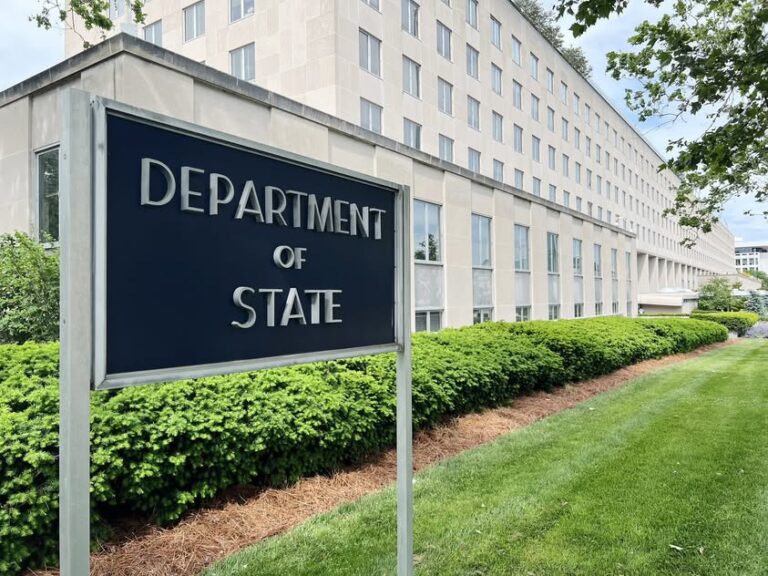
  • Heightened Security: The U.S. Department of State has increased scrutiny, focusing heavily on background checks, social media history, and potential ties to critical technology sectors.
  • Broader Economic Impacts: Reduced international enrollment directly influences university budgets, local campus economies, and the post-graduation labor pipeline.

According to a comprehensive report published by the Center for Immigration Studies, the drop in student visas is unprecedented. Analysts compared data from peak summer application windows and found that approvals for Chinese applicants fell by roughly 46 percent compared to previous multi-year averages.

This downward trend reflects a broader effort by federal agencies to re-evaluate who receives entry permissions. For years, China remained one of the leading countries of origin for foreign scholars attending American universities. Now, shifting geopolitical tensions are rewriting how admissions and immigration intersect.

Why Washington Is Tightening Restrictions on F-1 Academic Visas

National security concerns sit at the heart of these new visa limitations. Government officials argue that tighter controls are necessary to protect sensitive research and advanced technologies. Fields like artificial intelligence, biotechnology, and aerospace engineering face particular scrutiny.

Furthermore, the [suspicious link removed] has expanded social media vetting and background investigations for applicants coming from mainland China and Hong Kong. Officials want to ensure that individuals entering the country do not pose risks regarding intellectual property theft or foreign state influence. While proponents view this as a necessary step for defense, critics worry about the broader message it sends to global academic communities.

American colleges and universities depend heavily on international students to balance their financial books. Many institutions charge full out-of-state or international tuition rates, which help subsidize programs for domestic students. When visa numbers drop, university administrators often face sudden budget shortfalls.

Beyond tuition, graduate programs rely on international scholars to fill vital research and teaching assistant roles. Laboratories in science and technology departments are already noticing fewer applicants for open positions. Without a steady stream of global talent, some academic departments fear a slowdown in innovation and research output.

What This Means for Post-Graduation Work Programs

The decline in F-1 visas also threatens the pipeline for the Optional Practical Training program, commonly known as OPT. This program allows international graduates to work in the United States for a limited time after completing their degrees. Chinese and Indian nationals make up a significant majority of OPT participants, particularly in STEM fields.

Business groups and technology companies have traditionally supported these programs to recruit skilled labor. However, stricter federal oversight and proposed fees are creating new hurdles for employers. Companies that rely on international graduates may soon need to look elsewhere for entry-level talent.

As the United States tightens its borders, other English-speaking nations are welcoming displaced international students. Universities in the United Kingdom, Canada, and Australia are actively marketing themselves to students who might otherwise have chosen American institutions.

For prospective students in China, the decision to study abroad has become far more complex. Families must now weigh the prestige of an American degree against the reality of difficult visa interviews, changing regulations, and potential social friction. Ultimately, this shift marks the end of an era of open-door international recruitment for U.S. higher education.

Trending News:

China Unveils Sweeping Border Rules That Spark Global Debate

Chiang Mai Street Brawl!! Chinese Tourists and Local Clash on Tha Phae Road
 

Similar Posts

  • | | |

    Iran demands Qatar probe over missing pilots

    TEHRAN: Iran has asked Qatar to allow an Iranian military fact-finding team to enter the country to investigate the fate of pilots Tehran says went missing after an incident involving Iranian aircraft, adding another layer of tension to already strained regional relations. Iranian military official Mohammad Baqerzadeh, commander of the Armed Forces General Staff’s Committee for the Search for Missing Persons, said an Iranian Air Force expert team had been waiting for months to travel to Qatar, according to Iranian media. Baqerzadeh accused Qatari authorities of repeatedly delaying the investigation and called on the International Committee of the Red Cross to intervene in the case. Qatar, however, has rejected Iran’s claim that it is holding Iranian pilots. Doha said its search-and-rescue teams recently recovered the remains of one pilot after Iranian aircraft entered Qatari airspace in March and failed to respond to repeated attempts to establish contact. Qatari authorities said they had contacted Tehran to coordinate the transfer of the remains and invited Iranian officials to examine details of the search-and-rescue operation. Qatar said it had not received a response. The dispute comes as Tehran continues to focus heavily on the security of the Strait of Hormuz, one of the world’s most important energy shipping routes. Iran says air defence capacity survived war Separately, an Islamic Revolutionary Guard Corps official claimed that more than 85 per cent of Iran’s air-defence production capacity survived the recent conflict. According to Iranian media reports, the official said attacks on military production facilities had not significantly reduced the production or delivery of missiles and air-defence systems. He also claimed that production in some areas had increased and that Iran’s operational air-defence capabilities were now stronger than at the beginning of the fighting. The claims could not be independently verified. Hormuz shipping talks continue Iran has also announced progress in negotiations with Oman over new shipping routes through the Strait of Hormuz. Foreign Ministry spokesman Esmaeil Baghaei said Tehran and Muscat had reached an agreement on a shipping-route map following weeks of technical discussions. The negotiations began after a memorandum of understanding was signed in June to develop safer navigation arrangements. Foreign Minister Abbas Araghchi stressed that the technical talks with Oman should not be confused with negotiations over reopening the waterway. He said existing maritime routes were no longer functional and that Iran and Oman were working on a temporary route that could eventually become permanent. Tehran links security to US actions Iranian officials continue to insist that the full restoration of security in the strait depends on an end to what Tehran describes as US military pressure, threats and a naval blockade. Deputy Foreign Minister Kazem Gharibabadi also declared that the Strait of Hormuz would remain under Iranian control, while accusing Washington of suffering strategic setbacks. The statements underline the widening gap between Iran and the United States over the strategic waterway, despite technical discussions between Iran and Oman aimed at facilitating maritime navigation. Hezbollah commander reportedly killed Meanwhile, tensions have also continued along Iran’s regional front. Israel’s military said it killed Abu Hassan Alaa, described as a senior Hezbollah commander, in a strike in southern Lebanon. The Israeli army said the attack targeted a Hezbollah headquarters in the Ansar area. Hezbollah had not immediately commented on the claim. The developments show how multiple disputes remain intertwined across the region, from missing military personnel and air-defence claims to the sensitive question of shipping through Hormuz. For Tehran, however, control and security of the strait remain central. While Iran and Oman appear to be making technical progress on navigation arrangements, Iranian officials continue to maintain that any broader reopening of the waterway will depend on wider political and security conditions.

  • | |

    Trump hints at outcome from CIA chief’s surp…

    US President Donald Trump said something may come out of an unannounced meeting his CIA director held with Russian intelligence officials in Moscow on Tuesday, fueling speculation about the purpose of the trip amid stalled efforts to end the war in Ukraine. CIA Director John Ratcliffe flew into Moscow aboard a military aircraft and departed just hours later, and neither Trump nor US officials disclosed what the two sides discussed. Trump described the meeting as semi routine and said Washington wants to see the war in Ukraine come to an end. The last comparable high level contact between the two countries occurred in the months before Russia’s full scale invasion of Ukraine began. The Kremlin said Ratcliffe did not meet with Russian President Vladimir Putin during his visit. Kremlin press secretary Dmitry Peskov told reporters that contacts took place with Russian intelligence services but that no meeting occurred with Putin himself, adding that the president receives immediate briefings on all such matters. Peskov made the remarks in response to a question from a reporter with a Russian state affiliated newspaper, who asked whether Putin had been informed of the talks and at what level they took place. When the BBC’s Russia editor asked Peskov what topics the CIA discussions covered, he said he had nothing further to add beyond his earlier comments. He also said it remains too early to determine what effect the meeting might have on repairing the deeply strained relationship between Washington and Moscow, calling any assessment of the broader recovery process premature at this stage. Peskov described intelligence contacts between the two countries as a positive development, noting that such channels often remain open even during the most difficult periods in bilateral relations. Ahead of the visit, US officials informed Ukraine that a senior American delegation would travel to Moscow and asked Kyiv to pause strikes until the delegation had departed, according to a senior Ukrainian official who spoke to another news organization. Neither the CIA, the White House nor the Pentagon has issued an official statement addressing Ratcliffe’s trip. Ratcliffe now ranks among the highest level American officials to visit Russia during Trump’s second term in office. The last time a sitting CIA director traveled to Moscow was in November 2021, when then director William Burns warned Russian officials against sending troops into Ukraine. Weeks after that visit, the Kremlin launched its full scale invasion of the country. Since the invasion began, the United States has maintained a strained relationship with Russia, which has faced international isolation and sweeping economic sanctions. Trump met with Putin at a summit in Alaska last year, though the talks failed to produce any major breakthrough, and subsequent peace negotiations between Russia and Ukraine led by the United States appear to have stalled since then. John Foreman, who served as Britain’s military attache in Moscow between 2019 and 2022, told a radio program that American officials rarely send such a senior figure to Moscow unannounced and on short notice unless a significant development is underway. The unannounced nature of Ratcliffe’s visit, combined with the lack of official confirmation from Washington, has left analysts and diplomats speculating about whether the trip signals renewed backchannel efforts to break the deadlock in the Ukraine peace process, though officials on both sides have offered little indication of what practical outcome, if any, the meeting might produce.

  • |

    Major US financial firms targeted in extensive phone-phishing campaign

    Ransom-seeking cybercriminals have launched a coordinated campaign targeting high-profile US financial institutions, including Blackstone, Apollo Global Management, KKR, Bain Capital, and CME Group. A technical report from Google’s Threat Intelligence Group revealed that hackers created 72 malicious websites designed to steal corporate login credentials. Operatives used social engineering tactics, reaching employees directly on personal mobile phones while spoofing corporate IT helpdesk numbers. Under the guise of urgent system updates, callers guided staff to fraudulent domains such as “passkeyhelpdesk” or “secure-passkey” to capture login credentials and multi-factor authentication passcodes in real time. According to threat intelligence analysis, the campaign represents a strategic pivot toward private equity firms, law practices, and financial rating agencies, driven by the assessment that these targets hold sensitive commercial data worth paying substantial ransoms to protect. While digital intelligence data identified fake portals created for over 200 organisations, including Uber, Levi Strauss, and several major law firms, it remains unconfirmed which specific financial targets experienced compromised systems. The threat actors operating under names such as Redact, Falcon, Helix, and Pink share common digital infrastructure. Analysts noted that despite advanced enterprise perimeter security, direct voice-phishing techniques exploiting human trust continue to rank among the most effective cyber-intrusion vectors.

  • |

    Workers discover gold while replacing sewer line

    When a drainage or sewerage line is replaced, workers generally expect to find nothing more than waste and garbage inside it. However, during routine renovation work in Belgium, workers made an astonishing discovery: gold worth billions of Pakistani rupees. The incident took place in Sint-Gillis-Dendermonde, Belgium. Workers were replacing a sewer line during the renovation of a building. They removed part of the foundation to install new pipes when they noticed something shining underground. At first, they thought they had found one-euro coins but they soon realized that the objects were actually gold. According to Mario, the workers’ manager, “I looked carefully and picked up the gold. Then we dug further and found more coins and gold pieces. It was an incredible experience.” He said that in his 33 years of construction work, he had never experienced anything like this before. An 18-year-old student working with the team said that at first they could hardly believe what they had found because they had never expected to discover gold. After the treasure was examined, it was estimated to be worth around $14 million equivalent to more than Rs2.5 billion. Unfortunately for the workers, they were unable to keep the treasure and had to hand it over to the police. The treasure is currently being kept by a charitable organization.It is still unclear who originally owned the gold. However, the building was reportedly once owned by a wealthy family. Under Belgian law, the original owner can claim such a treasure within five years. If no claim is made during that period, the treasure will be divided between the person who discovered it and the owner of the property.

Leave a Reply

Your email address will not be published. Required fields are marked *