singapore oil stocks

Singapore Oil Stocks Bounce Back as Fuel Inventories See Major July Surge

BANGKOK – Singapore is witnessing a welcome shift in its critical energy markets this month. Recent data reveals that fuel oil inventories in the Asian trading hub have finally bounced back. Following several months of steady declines, onshore stockpiles surged by an impressive nine percent during July.

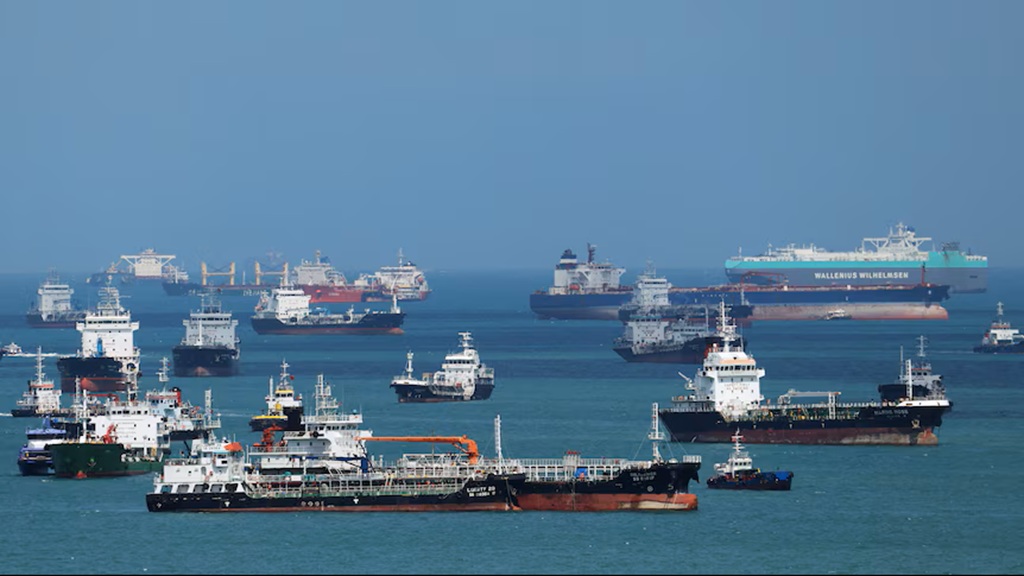
This much-needed rebound pushes the busy port’s total residual fuel oil stocks closer to 19 million barrels. The recent growth provides a bit of breathing room for a global market squeezed by ongoing shipping disruptions. However, total volumes still remain well below the peak levels recorded earlier this spring.

Keyways

  • Inventories climb higher: Singapore’s residual fuel oil stocks grew by nine percent in July, nearing 19 million barrels.
  • Import spike fuels the rebound: A massive 77 percent increase in net fuel imports was the primary driver of this recent growth.
  • Geopolitical tensions remain: Despite higher stocks, supply chain bottlenecks in the Middle East are causing longer lead times for ship refueling.

The primary engine behind this strong recovery is a sudden and significant spike in overseas purchases. According to Enterprise Singapore data, net fuel oil imports into the city-state skyrocketed by a stunning 77 percent in July. This represents a massive shift in trading momentum compared to the sluggish volumes seen earlier this summer.

Singapore successfully pulled in an extra 1.33 million barrels of fuel oil during the course of the month. At the same time, the amount of oil leaving the country as exports actually fell by about 225,000 barrels. Consequently, this combination created the perfect conditions for local storage tanks to fill up once again.

A few key international players supplied the bulk of these incoming fuel shipments. Brazil led the pack by providing a solid 16 percent of the total fuel oil imports for the month. Meanwhile, India and the United Arab Emirates followed closely, supplying 10 percent and 8 percent respectively.

Export Markets Hold Steady Despite Lower Volumes

While overall imports surged, Singapore’s export activity remained highly focused on a few core regional destinations. China maintained its steadfast position as the undisputed top buyer of the city-state’s fuel exports. In fact, Chinese buyers eagerly snapped up roughly 40 percent of all departing shipments in July.

Other Asian nations also continued to rely on Singapore for their critical daily energy needs. South Korea took in about 10 percent of the exports, while Bangladesh accounted for another nine percent. This steady regional demand clearly highlights Singapore’s vital ongoing role as a reliable energy distributor in Asia.

Furthermore, it is worth noting that residual fuel oil was not the only category to see positive momentum. Middle distillate inventories, which include essential everyday products like commercial diesel and aviation jet fuel, also increased during July. These specific vital stocks averaged nine percent higher than the volumes recorded back in June.

Supply Chain Strains and Geopolitical Headwinds

Despite the positive inventory numbers, the global shipping industry is still facing significant logistical headaches. The availability of Very Low Sulphur Fuel Oil (VLSFO) has actually tightened in Singapore recently. As a result, suppliers are now telling ships to expect long lead times of up to 20 days for refueling.

This lengthy delay is a notable increase from the 14 to 19 days quoted just a single week earlier. High Sulphur Fuel Oil (HSFO) supplies are facing similar harsh constraints, with wait times extending to roughly 15 days. Much of this delay stems directly from ongoing geopolitical conflicts negatively affecting major global shipping lanes.

Renewed international hostilities and rising tensions have severely disrupted vital vessel traffic through the critical Strait of Hormuz. Because of this dangerous bottleneck, cargo arrivals are delayed, and the port’s total inventories have not fully returned to pre-conflict norms. Global energy traders are watching these trade routes very closely.

Singapore Oil and Global Energy Markets

The global energy market remains highly sensitive to these unpredictable, fast-moving shipping risks. If tensions continue to flare in the Middle East, refinery production could face even more unexpected hurdles worldwide. For now, maritime buyers and sellers in Singapore are adapting to a new normal of extended wait times.

Interestingly, the supply of Low Sulphur Marine Gasoil (LSMGO) has completely bucked the recent tightening trend. Lead times for this specific fuel have actually improved, dropping down to between five and eight days. This small bright spot offers some welcome relief to shipping companies navigating the complex current market.

Ultimately, Singapore’s proven ability to rebuild its fuel stockpiles is a very promising sign for the industry. As recent reports frequently suggest, the dynamic city-state remains the secure anchor for Asia’s volatile marine fuel trade. Industry leaders will undoubtedly keep a very close eye on August inventory data to see if this growth continues.

Trending News:

Gas Shortages and High Prices Derail Southeast Asia’s Energy Plans

Singapore Court Fines Bloomberg $356,000 Over Luxury Real Estate Report


Similar Posts

  • | |

    US imposes tariffs on Pakistan and more than 60 trading partners

    The United States has introduced a new round of tariffs on imports from more than 60 trading partners, including Pakistan, as part of a broader effort to strengthen measures against goods allegedly linked to forced labour. The new duties officially came into effect on July 24 and are expected to affect trade between the United States and a large number of countries. Under the latest policy, Pakistan has been placed in the group of countries whose exports to the United States will face a 10% tariff. The same tariff rate has also been imposed on imports from countries including India, Bangladesh, the United Kingdom, Canada, Argentina, Cambodia, Ecuador, El Salvador, Guatemala, Honduras, Indonesia, Jordan, Malaysia, Mexico, Sri Lanka and Trinidad and Tobago. Another group of 38 countries will face a 12.5% tariff on goods exported to the US under the same policy. The US administration said the decision was taken because these countries had failed to effectively prevent the import or production of goods allegedly made through forced labour. According to American officials, stronger enforcement of labour laws and better monitoring of supply chains are needed to stop products made under forced labour conditions from entering international markets. The new measures are part of President Donald Trump’s trade agenda, which focuses on using tariffs to address trade and labour-related concerns. The administration has introduced the tariffs under Section 301 of the US Trade Act, a legal provision that allows the United States to take trade action against countries it believes are engaging in unfair trade practices. The latest action follows a major legal setback earlier this year. In February 2026, the US Supreme Court blocked the implementation of an earlier tariff package introduced by the Trump administration. That policy had proposed additional duties ranging from 10% to 50% on imports from several countries. Following the court’s decision, the administration adopted a different legal mechanism to introduce the current tariffs. The decision has drawn criticism from several US trading partners. Australia and Brazil have described the new tariffs as unfair and said they will continue diplomatic efforts to have the measures withdrawn. Norway also rejected the allegations behind the tariffs, saying the decision was based on unsubstantiated claims. Despite the broad scope of the new policy, several important products have been excluded. The tariffs do not apply to imports of crude oil, natural gas, selected agricultural commodities and fertilisers. Goods that are already subject to separate Section 232 national security tariffs, including steel, aluminium, automobiles and copper, are also exempt from the latest duties.

  • |

    Gold price in Pakistan rises by Rs1,700 per tola

    Gold prices moved higher across Pakistan on Monday, tracking an upward trend in the international bullion market, according to the latest rates issued by the All-Pakistan Gems and Jewellers Sarafa Association (APGJSA). The price of 24-karat gold per tola increased by Rs1,700, taking the new rate to Rs428,436. The recovery comes after a sharp decline recorded in the previous trading session, when the precious metal had fallen by Rs3,700 per tola to settle at Rs426,736 on Saturday. The price of 10 grams of 24-karat gold also witnessed an increase, climbing by Rs1,457 to reach Rs367,314 in local markets. Market analysts said the rise in domestic gold prices reflects the positive movement in global bullion markets, where investor demand strengthened amid ongoing uncertainty surrounding the global economic outlook and expectations regarding interest rate policies. In the international market, the price of gold gained $17 per ounce, pushing the bullion rate to $4,060 per ounce, including a premium of $20. The increase in global prices was mirrored in Pakistan’s local market, where gold rates are largely influenced by international trends and fluctuations in the value of the Pakistani rupee against the US dollar. Meanwhile, silver prices also registered a notable increase. The price of silver per tola rose by Rs54, reaching Rs6,291 in the domestic market.

  • |

    PSX jumps 2,100 points on global optimism

    The Pakistan Stock Exchange (PSX) witnessed a strong rally at the start of trading on Wednesday, with investors returning to the market after signs of easing geopolitical tensions in the Middle East lifted global sentiment. The benchmark KSE-100 Index climbed by more than 2,100 points during the opening session, reflecting renewed optimism among market participants. By around 9:30am, the KSE-100 Index was trading at 179,216.20 points, registering a gain of 2,132.98 points, or 1.20 percent, compared with the previous close. Market analysts attributed the sharp recovery to encouraging remarks from officials in Qatar and the United States, which strengthened expectations that diplomatic efforts could help prevent further escalation of the Iran conflict. The improved global outlook encouraged investors to increase buying in key sectors of the local market. The rally was broad-based, with significant buying interest recorded in automobile assemblers, cement manufacturers, commercial banks, fertiliser companies, oil marketing firms, power generation companies and refineries. Among the major gainers were heavyweight stocks such as Attock Refinery Limited (ARL), Mari Energies (MARI), Oil and Gas Development Company (OGDC), Pakistan Petroleum Limited (PPL), Pakistan Oilfields Limited (POL), Pakistan State Oil (PSO), Habib Bank Limited (HBL), MCB Bank, Meezan Bank (MEBL) and United Bank Limited (UBL), all of which traded in positive territory during the early session. Investor confidence also received support from reports that Pakistan has approached China to refinance a $1.3 billion commercial loan. According to reports, the financing is expected to be finalised later this month after both sides complete negotiations on the terms and conditions. Market participants believe the move could help strengthen Pakistan’s external financing position and provide support to the country’s foreign exchange reserves. The strong opening followed a volatile trading session on Tuesday, when the stock market closed significantly lower after investors engaged in widespread profit-taking. Although the KSE-100 Index had reached an intraday high of 178,768.83 points, selling pressure emerged later in the session as traders locked in gains following Monday’s impressive rally. Global financial markets also contributed to the positive sentiment. Asian equities advanced sharply after strong corporate earnings in the United States and continued enthusiasm for technology stocks pushed Wall Street to fresh record highs. Investors were further encouraged by hopes that diplomatic efforts would help keep the Strait of Hormuz open, easing concerns over disruptions to global energy supplies and putting downward pressure on oil prices and bond yields. Japan’s Nikkei index surged around 3 percent, while South Korea’s benchmark gained more than 4 percent. The broader MSCI Asia-Pacific Index outside Japan also posted strong gains, with Chinese blue-chip shares moving higher as investors welcomed improving market sentiment across the region. In the United States, stock futures remained stable after the S&P 500 reached another record high. However, trading in some technology stocks remained mixed. Chipmaker AMD declined in after-hours trading despite reporting earnings that exceeded analysts’ estimates, as investors had anticipated even stronger results. Concerns also persisted over the heavy capital spending required to support artificial intelligence infrastructure, with rising borrowing costs continuing to weigh on parts of the technology sector.

  • | | |

    Pakistani envoy highlights investment opportunitie…

    Pakistan’s Ambassador to the United States, Rizwan Saeed Sheikh, has held a series of meetings with American business leaders. The discussions focused on expanding economic and investment ties between Pakistan and the United States. The ambassador encouraged US investors to explore opportunities in Pakistan. He particularly highlighted the country’s mining and surgical instruments sectors. Sheikh said American investment could play an important role in developing Pakistan’s mineral resources. He stressed the need to add greater value to these resources through modern technology and investment. The ambassador also highlighted opportunities in Pakistan’s mineral sector. He said stronger cooperation with American companies could help improve processing and value addition. During the meetings, Sheikh welcomed an ongoing $200 million joint venture related to the export of Pakistani pink salt. He described such projects as an important step towards expanding trade and investment links between the two countries. He also called for increased US investment in Pakistan’s surgical instruments industry. The sector has significant potential for growth, particularly through modern production methods, advanced technology and international market access. As part of his engagements, Sheikh visited a facility in Naperville involved in the finishing, packaging and distribution of Pakistani surgical instruments. During the visit, he discussed the need to further develop the sector. He said Pakistani businesses could benefit from modern technology, better training and improved technical skills. The ambassador stressed that investment in skills and technology was important for increasing the quality and competitiveness of Pakistani surgical products. Sheikh also met officials of the Pakistan-American Chicago Land Chamber of Commerce. The meeting focused on strengthening commercial links between Pakistani and American businesses. He encouraged closer interaction between business communities in both countries. He said stronger business-to-business connections could help identify new investment opportunities and expand bilateral trade. The ambassador’s engagements form part of efforts to promote Pakistan as an attractive destination for foreign investment. The focus on minerals, surgical instruments and other export-oriented sectors is aimed at creating stronger commercial partnerships with US businesses.

Leave a Reply

Your email address will not be published. Required fields are marked *