pakistan women make
|

Pakistan women make winning start, crush Japan 58-34

HONG KONG: Pakistan’s women’s netball team made an impressive start to their campaign at the Asian Women’s Netball Plate Division Championship, defeating Japan 58-34 in a commanding opening match.

Pakistan controlled the contest from the early stages and never allowed Japan to establish a meaningful lead. The Pakistani players maintained pressure throughout the game, combining disciplined defending with effective attacking moves to keep their opponents on the back foot.

The victory gave Pakistan a strong opening to the championship and will provide the team with valuable confidence ahead of their next fixture.

Japan struggled to match Pakistan’s intensity as the match progressed. Pakistan’s consistent scoring and organized play helped them build a comfortable advantage, which they maintained until the final whistle.

The 24-point victory underlined Pakistan’s determination to make an impact in the competition and build momentum for the matches ahead.

The Asian Women’s Netball Plate Division Championship is being held in Hong Kong, bringing together teams competing for honours in the regional event. Pakistan will now turn their attention to their second match of the tournament.

Pakistan are scheduled to face Thailand on August 10, with the team hoping to carry the confidence from their convincing victory over Japan into the next encounter.

The Pakistani side’s emphatic opening win has put them on a positive footing, while another strong performance against Thailand could further strengthen their position in the tournament.

With the campaign now underway, Pakistan will be looking to maintain their winning momentum and continue their impressive run in Hong Kong.

Similar Posts

  • | |

    Iran says Oman deal nears completion but insists U…

    Iran said on Sunday that a deal with Oman establishing new shipping lanes through the Strait of Hormuz has entered its final stages, though Tehran maintained the critical waterway will remain closed until Washington satisfies a broader set of conditions tied to the ongoing standoff between the two countries. A US official told Reuters on Friday that an agreement between Iran and Oman appeared close and could soon lead to the reopening of the strait, a passage that carried roughly a fifth of global oil and liquefied natural gas shipments before Iran shut it down in response to American and Israeli military strikes earlier this year. Iranian Foreign Minister Abbas Araqchi confirmed on Sunday that negotiations over the strait, which sits between Iran and Oman, had reached their final stages. However, he repeated comments made a day earlier stressing that the waterway would not reopen unless additional conditions set by Tehran were met first. Iran’s Mehr news agency quoted Araqchi as saying the emerging agreement would establish the new shipping lanes to be used once the United States fulfils those conditions and the strait formally reopens. Araqchi said Iran and the United States are not currently engaged in direct talks and that Tehran has no plans to begin them as long as Washington continues to breach an interim agreement the two countries signed in June. He added that messages between the two sides are being exchanged through intermediaries rather than direct contact. Iran demands compensation and sanctions relief The United States launched air strikes against Iran in late February, saying the campaign aimed to prevent the Islamic Republic from acquiring nuclear weapons or using missiles and regional proxy forces to threaten the wider Middle East. Washington and Tehran agreed to a ceasefire in June, but the United States reimposed a blockade on Iranian shipping in the Gulf in July, a move Iran characterised as a violation of a truce that had already shown signs of collapse. A US official, speaking to Reuters on condition of anonymity, said the blockade on Iranian ports would lift once a deal restoring unimpeded commercial shipping is formally announced. The official added that any American actions would remain directly tied to Iran fulfilling its own commitments under the emerging agreement, pointing to a carefully sequenced approach that both sides appear to be navigating cautiously. The arrangement under discussion appeared, according to sources who previously spoke to Reuters, to grant Tehran a degree of control over vessels entering the Gulf through the strait, an arrangement that shipping industry sources have said would be difficult to implement in practice. The precise current status of the agreement remained unclear on Sunday, and Iran’s latest statements suggested several additional factors could still complicate its finalisation. Araqchi said the strait’s reopening would depend in part on the United States providing compensation to Iran for what Tehran describes as widespread attacks on its territory and interests. Mohammad Baqer Zolqadr, secretary of Iran’s top national security body, outlined a broader list of demands, including an end to US threats against Iran, a halt to what Tehran calls aggression against its allies in Lebanon, the Palestinian territories, Yemen and Iraq, the lifting of the shipping blockade and broader sanctions, and the release of frozen Iranian financial assets. Supreme Leader’s condition remains unclear Ultimate decision making authority in Iran rests with Supreme Leader Mojtaba Khamenei, who has not appeared in public since an air strike killed his father and predecessor on February 28, the first day of the joint US and Israeli air campaign against Iran. State media reported on Sunday that Iranian President Masoud Pezeshkian met with Khamenei in late July, and a paramilitary leader promised that footage of the supreme leader would soon be released publicly. Khamenei was reportedly injured in the same strike that killed his father, according to earlier reporting. Separately, the United Arab Emirates said on Saturday that Iran had attacked a vessel affiliated with its state oil company. Iran did not immediately respond to the allegation. The country’s powerful Revolutionary Guards have attacked commercial vessels in the past, arguing that ships transiting the strait without coordinating their passage with Iranian authorities are not protected from such action. Houthi attacks widen regional shipping crisis Iran’s strikes on shipping in the Strait of Hormuz have coincided with intensified attacks from its Yemen based allies, the Houthis, who have targeted vessels at a separate chokepoint located between the Red Sea and the Gulf of Aden on the opposite side of the Arabian Peninsula. The Houthis declared a naval blockade against Saudi Arabia in the Red Sea last month, framing the move as retaliation for what they described as a Saudi imposed siege in Yemen, an accusation the Saudi government has firmly denied. Riyadh continues to back Yemen’s internationally recognised government in the country’s ongoing conflict. The group claimed responsibility for an attack on Saudi Aramco’s Jazan refinery on Sunday, coming just two days after the kingdom signed a defence pact with fellow Sunni Muslim majority nations Turkey and Pakistan amid growing concern over regional instability stemming from the US and Israeli military campaign against Shiite led Iran. Saudi Arabia’s energy ministry confirmed that a fire broke out at the refinery following the attack but was later extinguished without causing any injuries, and that authorities were continuing to manage the aftermath of the incident. The ministry did not specify a cause for the blaze. Houthi military spokesperson Yahya Saree said on social media platform X that the group used a drone to strike the facility. The Houthis have targeted Aramco sites in Jazan before, a refinery that processes approximately 400,000 barrels of crude oil daily in southwestern Saudi Arabia. It remains unclear whether or to what extent Pakistan or Turkey would participate in any Saudi response to the latest attack. Turkish Foreign Minister Hakan Fidan said the newly formed alliance between the three countries was not directed against Iran or any other nation, describing it instead as a general commitment to

  • | |

    FIFA pushes ahead with controversial commercial investment plan despite opposition from UEFA and Concacaf

    FIFA has insisted that “nobody is selling football” whilst reaffirming its intention to proceed with a plan to sell minority stakes in its commercial operations to private investors, despite a fierce backlash from major regional governing bodies. UEFA voted to boycott future World Cups if the initiative moves forward, whilst Concacaf confirmed its 41 member associations also rejected the proposal put forward by FIFA president Gianni Infantino. Under the proposal, FIFA intends to establish a new commercial subsidiary, FIFA Forward Enterprise (FFE), to manage the commercial rights of major tournaments including the men’s World Cup. Private equity firm Thrive Eternal, founded by venture capitalist Joshua Kushner, is expected to lead the investor group purchasing a minority stake in the new entity, which carries an initial valuation of $20 billion. To secure the necessary 106 votes from FIFA’s 211 member associations, Infantino has offered an immediate $20 million payout to federations that back the proposal before a 19 September deadline. FIFA maintains the initiative will significantly increase development funding for smaller footballing nations without compromising the sport’s governance.

  • | |

    Imran Khan receives eight books in jail

    PTI founder Imran Khan has been provided with eight books in jail following directions from the Islamabad High Court. A deputy superintendent of the jail said the prison authorities received the eight books from the Islamabad High Court. The court had directed the authorities to provide the books to Imran Khan. The jail administration subsequently handed all eight books over to the PTI founder. However, Khan returned four of the books to the jail authorities. He reportedly told officials that he had already read those books. The remaining books were kept with him after being delivered by the prison administration. The development comes after the Islamabad High Court issued directions regarding access to reading material for the former prime minister. The jail authorities confirmed that the court’s instructions regarding the books had been followed. Officials did not provide further details about the titles of the books that were delivered or returned. The provision of books gives Khan access to additional reading material during his time in prison.

  • |

    FIFA turmoil deepens as senior official Lamour exits

    FIFA’s internal tensions have deepened after senior executive Kevin Lamour left the organisation, weeks after publicly criticising President Gianni Infantino’s controversial plan to sell part of the governing body’s commercial rights. FIFA confirmed on Monday that Lamour’s working relationship with the organisation had ended on August 17, bringing an abrupt close to the tenure of a senior official who had once been part of Infantino’s inner circle. “FIFA can confirm that the working relationship between FIFA and Kevin Lamour as FIFA’s Chief Operating Officer has ended,” a FIFA spokesperson said. The organisation thanked Lamour for his service but offered no further explanation. Lamour joined FIFA’s senior leadership team in November 2024. He had previously supported Infantino’s campaign for the FIFA presidency in 2016. His departure comes after he openly attacked a proposal to create a commercial subsidiary worth around $20 billion and sell as much as a 20% stake to private equity investors. The plan was designed to raise an estimated $4.2 billion. Lamour criticised the proposal last month, saying FIFA employees had been “deceived” about the plan and describing it as “the project of one person”. He also questioned whether FIFA’s leadership was putting personal interests ahead of football’s wider interests. The controversy intensified after Carlos Cordeiro, a senior adviser to Infantino, resigned in protest and described the proposed deal as a bad arrangement for football. Infantino subsequently withdrew the proposal. However, the backlash has continued and has increasingly raised questions about Infantino’s bid for a fourth term as FIFA president. Infantino’s Reelection Faces Growing Opposition Infantino’s reelection, once widely regarded as almost certain, now faces a stronger challenge. UEFA, the Asian Football Confederation and CONCACAF have all expressed concerns and recently called for an independent review of Infantino’s conduct. At the same time, several national football associations have questioned whether they should support another term. The Scottish Football Association has already said it will not back Infantino in next year’s election. The dispute has also moved into FIFA’s governance structures. Human rights organisation FairSquare has asked FIFA’s Governance, Audit and Compliance Committee to rule Infantino ineligible for another presidential term, arguing that FIFA’s rules limit presidents to three terms. Infantino, however, has maintained that his initial period in office from 2016 to 2019 should not count because he completed an interrupted mandate following the resignation of former president Sepp Blatter. He was elected in 2016 and subsequently won uncontested elections in 2019 and 2023. FairSquare director Nicholas McGeehan said the organisation’s complaint presented evidence of what he described as a breach of FIFA’s rules. Former FIFA Governance and Review Committee head Miguel Maduro also backed the complaint, arguing that term limits were a central part of reforms introduced to prevent excessive concentration of power. The dispute now places FIFA under increasing scrutiny ahead of next year’s presidential election. While Infantino retains support from the African and South American confederations, opposition from influential football bodies in Europe, Asia and North and Central America could make his path to another term considerably more difficult. With Lamour’s departure adding to the controversy surrounding FIFA’s leadership, pressure on Infantino is likely to remain intense as football’s governing body approaches a crucial election year.

  • |

    Hrithik Roshan recalls father’s financial crisis after Koyla setback

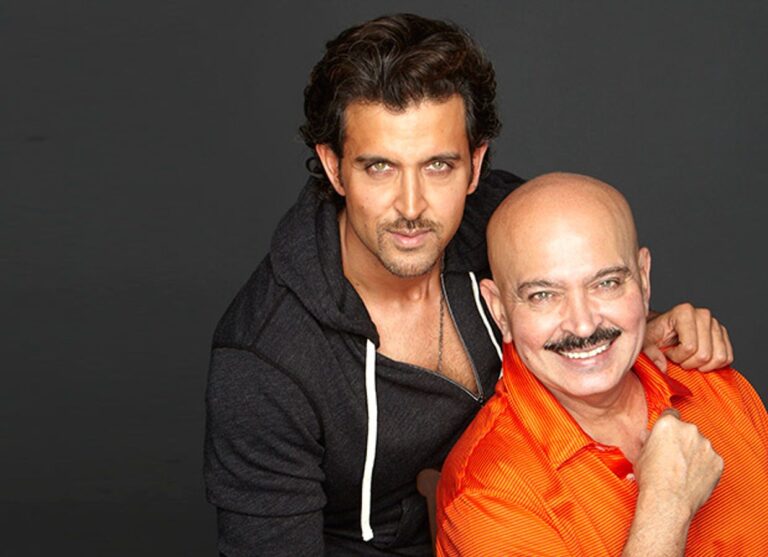
    Bollywood actor Hrithik Roshan has opened up about one of the most emotional periods in his family’s life, recalling the financial difficulties his father, filmmaker Rakesh Roshan, faced following the commercial disappointment of Shah Rukh Khan’s 1997 film Koyla. The 52-year-old actor recently spoke about his father’s struggles and revealed that there was a time when Rakesh Roshan lost a significant portion of the money he had earned throughout his career. According to Hrithik, the setback was severe enough to create financial difficulties for the family and left a lasting impression on him. Recalling the difficult period, Hrithik said he still remembers a particular morning when he saw his father with tears in his eyes for the first time. The actor explained that Rakesh Roshan had told him that he had lost all the money he had earned. For Hrithik, witnessing his father in such a vulnerable state was an experience he could never forget. He described the moment as extremely emotional because he had never previously seen his father so broken and distressed. Rakesh Roshan had produced Koyla under his production banner Filmkraft Productions. The action thriller featured Shah Rukh Khan and Madhuri Dixit in the lead roles, alongside Amrish Puri, Deepa Sahi, Ashok Saraf, Johnny Lever and several other prominent actors. Released in 1997, Koyla revolved around Shankar, played by Shah Rukh Khan, a mute and loyal coal miner who works in a coal mine. The film combined action, romance and drama and was one of the major productions associated with Rakesh Roshan’s production house at the time. Despite its scale and star-studded cast, the film failed to achieve the level of commercial success that had been expected. It was reportedly made on a budget of around Rs 12 crore and earned approximately Rs 28 crore worldwide. Although the film recovered a significant amount at the box office, its overall commercial performance was considered disappointing in relation to its investment and expectations. The experience became an important chapter in Hrithik Roshan’s understanding of his father’s professional and personal journey. Years later, the actor has established himself as one of Bollywood’s leading stars, while Rakesh Roshan has continued to remain an influential filmmaker and producer. The father-son duo is now preparing to return to the superhero franchise that has been closely associated with their careers. Hrithik and Rakesh Roshan are currently involved in preparations for Krrish 4, the next installment in the popular superhero series. Hrithik’s recent recollection offers a rare glimpse into the challenges his family faced behind the glamour of Bollywood and highlights the personal impact that professional setbacks can have, even on established filmmakers.

Leave a Reply

Your email address will not be published. Required fields are marked *