blake lively shares
| |

Blake Lively shares rare new moments with Ryan Reynolds

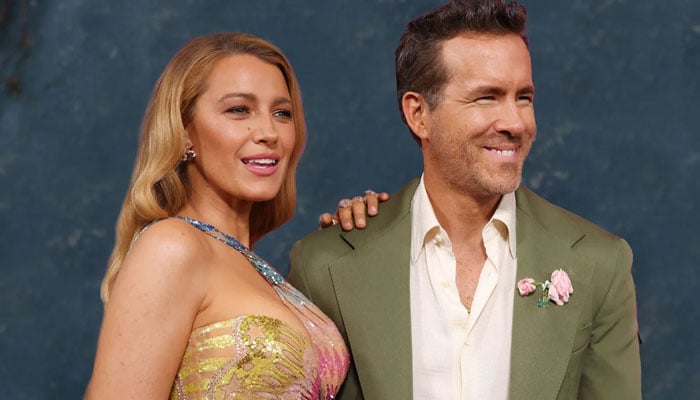
Blake Lively has given fans a glimpse into a special outing with husband Ryan Reynolds, sharing a fresh collection of photographs from their recent appearance at a football match.

The actress took to Instagram on Friday, August 7, to post several pictures from their July 30 visit to Yankee Stadium, where they watched Wrexham AFC take on Liverpool.

The new images feature the couple enjoying the event together, with Blake and Ryan seen smiling and posing alongside each other. One photograph shows them holding hands while standing together inside the stadium, while another captures Ryan enjoying the match from the crowd.

Blake also included pictures featuring friends who joined them for the occasion, giving followers a look at the group’s memorable evening.

Alongside the photographs, the actress reflected on the experience and described watching Wrexham play at the iconic stadium as one of the most unforgettable moments of their journey with the football club.

She also expressed gratitude to their friends, family and members of the Wrexham community who attended the match and supported the team.

Blake gave special recognition to longtime friend and photographer Guy Aroch, who accompanied the group and captured the moments featured in her Instagram post.

Aroch responded warmly to the post, expressing his affection for Blake and Ryan and recalling the experience as a memorable occasion spent with family and close friends.

The new photographs have attracted attention from fans, particularly because they offer a rare recent glimpse of Blake and Ryan together. The couple, who married in September 2012, have remained one of Hollywood’s most recognisable celebrity pairs.

Their appearance at the Wrexham-Liverpool match also highlights their continued connection with Wrexham AFC. Ryan Reynolds is a co-owner of the Welsh football club, which has gained significant international attention in recent years.

Blake’s latest post comes weeks after she shared a Father’s Day tribute for Ryan, making the new collection of photographs another affectionate public glimpse into their family life.

Similar Posts

  • |

    Kangana Ranaut sparks criticism after calling Gen Z ‘Generation Gutter’

    Bollywood actor and BJP Member of Parliament Kangana Ranaut has come under heavy criticism after making a series of controversial remarks about young people who participated in recent anti government protests in India. Her comments, shared on social media, quickly went viral and triggered strong reactions from politicians, activists, and social media users. The controversy began after a 36 day protest led by the Cockroach Janata Party along with students and civil society groups ended on July 25. The demonstrations concluded after the government accepted several key demands, including the resignation of then Union Education Minister Dharmendra Pradhan. A few days later, Ranaut posted on Instagram, where she strongly criticised videos from the protests held at Jantar Mantar. She described the footage as disturbing and accused participants of displaying behaviour that she considered offensive and lacking basic values. She questioned the conduct and language of the young protesters and claimed their actions reflected poorly on the country’s cultural traditions. In another post, Ranaut focused on young women who took part in the demonstrations. She argued that true independence comes through personal responsibility, career choices, and accountability rather than simply demanding freedom. Referring to the younger generation as “Generation Gutter,” she claimed many participants were promoting irresponsible lifestyles while depending on their families for financial support. The actor also suggested that independence must be earned through hard work and self reliance. She criticised what she described as a culture of entitlement among some young people and argued that freedom without responsibility leads to negative consequences. Ranaut continued defending her position in another social media post, saying that those who publicly express strong opinions should also be prepared to face criticism. She claimed that if protesters insult public leaders or damage public property, they should expect a response from people who support the government. Referring to Newton’s third law of motion, she argued that every action naturally brings an equal reaction. Her remarks immediately attracted widespread criticism online. Many users accused her of making disrespectful and insulting comments about an entire generation. Others argued that her statements distracted attention from the issues that motivated the protests in the first place. Congress leader Renuka Chowdhury criticised Ranaut’s language, saying it was disappointing for a sitting Member of Parliament to make such remarks about young citizens. She added that public representatives should communicate more responsibly and suggested that Ranaut could eventually face political consequences for her comments. Congress MP Imran Pratapgarhi also condemned the actor’s statements. He expressed confidence that India’s younger generation would respond through democratic means and reject the views she had expressed. Several social media users also pointed to Ranaut’s previous controversial remarks, including comments about actor Urmila Matondkar and participants in earlier protests such as the Shaheen Bagh and farmers’ demonstrations. Critics argued that her latest statements followed a pattern of using harsh language against those with opposing views. Others accused the actor of hypocrisy, saying she frequently criticises the tone of her opponents while overlooking aggressive language used by members of her own political camp. One user described her comments as deeply offensive and questioned why someone in a position of influence would use social media to attack young women instead of encouraging meaningful discussion. The debate has once again placed Ranaut at the centre of political and social controversy. While her supporters defended her right to express her opinions, critics argued that public figures should promote respectful dialogue, especially when discussing young people participating in democratic protests. The exchange has continued to fuel intense debate across social media platforms, reflecting the growing political divide over youth activism and freedom of expression in India.

  • |

    NewJeans’ fourth anniversary comeback sparks fan concern

    K-pop girl group NewJeans celebrated their fourth debut anniversary by releasing new promotional content, raising speculation about a possible four-member comeback after nearly two years away from the music scene. At midnight on July 22 (KST), the group unveiled a series of summer-themed videos and photos under the title “2026 Summer of NewJeans.” The newly released content featured Hanni, Haerin, Minji and Hyein, marking the group’s first official update together in a long time. The release also confirmed Minji’s return to group activities following months of uncertainty. However, Danielle was absent from the anniversary content after officially leaving the agency at the end of 2025. The cheerful summer concept has led many fans to believe that NewJeans may finally be preparing for a long-awaited musical comeback. Although no official announcement about a new album or single has been made, the timing of the promotional campaign has fuelled excitement across social media. Despite the anticipation surrounding the group’s return, the new photos and videos also sparked mixed reactions among fans. While many welcomed seeing the members together again, others expressed concern over their appearance and questioned whether the group was genuinely happy. Several fans claimed that the members looked unhappy in the promotional images, with some describing the content as rushed and lacking the group’s usual energy. Social media users shared comments suggesting the members appeared exhausted, while others said the videos did not reflect the bright and lively image NewJeans had been known for since their debut. The group’s activities have remained uncertain since the highly publicised legal dispute involving their agency, ADOR, and its former CEO Min Hee-jin. The conflict dominated headlines throughout 2025 and significantly affected NewJeans’ career, forcing the members to pause group promotions for an extended period. A major legal development came when a Seoul court ruled that the members’ exclusive contracts with ADOR remained legally valid. Following the ruling, Hanni, Haerin and Hyein gradually resumed activities with the agency, while discussions regarding Minji’s future also progressed positively before her eventual return. Danielle, however, officially ended her contract with the company and continues to face an ongoing legal dispute related to damages claimed by the agency. Soon after NewJeans released their anniversary content, Danielle shared a new post on Instagram that quickly attracted widespread attention. Alongside a selfie, she wrote an uplifting message about hope, resilience and staying grateful even during difficult times. Fans also noticed that Danielle was wearing a cap with the word “REVENGE” printed across it. The detail immediately sparked speculation online, with many wondering whether the choice of clothing carried a hidden message related to her former agency or the ongoing legal battle. However, Danielle has not commented on the meaning behind the cap, and there is no confirmation that it was intended as a reference to the dispute. As NewJeans celebrate four years since their debut, fans remain divided between excitement over the possibility of new music and concern about the challenges the members have faced. Until an official comeback announcement is made, speculation surrounding the group’s future is likely to continue.

  • | | |

    PM seeks broader JICA partnership in skills, miner…

    Prime Minister Shehbaz Sharif on Wednesday called for expanding Pakistan’s cooperation with the Japan International Cooperation Agency (JICA), identifying skills development, mineral exploration and support for small and medium-sized enterprises (SMEs) as key areas for future collaboration. The prime minister made the remarks during a meeting in Islamabad with a nine-member JICA delegation led by its President, Dr Tanaka Akihiko. He said Pakistan deeply values its decades-long partnership with Japan and expressed confidence that the latest engagement would further strengthen bilateral development ties. Highlighting the government’s economic agenda, Shehbaz said Pakistan had emerged from a challenging economic period through coordinated reforms and was now focused on achieving sustainable and inclusive growth. He noted that fiscal reforms had significantly improved revenue collection over the past three years, creating greater capacity for national development. The premier stressed that equipping young people with modern skills, expanding technical and vocational education, creating employment opportunities and empowering women remain among the government’s highest priorities. He said Pakistan is keen to benefit from JICA’s expertise in these sectors. Shehbaz also identified the country’s vast mineral resources as a major area of economic potential and invited JICA to provide technical assistance to help develop the sector and attract greater investment. Discussing support for businesses, the prime minister said reforms at the Small and Medium Enterprises Development Authority (SMEDA) had strengthened the institution. He expressed hope that enhanced cooperation with JICA would help improve SME productivity, encourage entrepreneurship and boost Pakistan’s exports. During the meeting, Shehbaz also conveyed condolences over the recent earthquake in Japan. Dr Tanaka thanked the prime minister for his message of sympathy and appreciated the warm hospitality extended to the Japanese delegation during its visit. The JICA president reaffirmed the agency’s commitment to expanding cooperation with Pakistan in healthcare, education, urban and rural development, industrial growth and technical training. He said future projects would be designed in line with the development priorities of both the federal and provincial governments. Dr Tanaka also acknowledged Pakistan’s efforts to promote peace and stability in the Middle East. Separately, Federal Minister for Economic Affairs Ahad Cheema met the JICA delegation to discuss future development initiatives. He invited the agency to participate in financing the Main Line-1 (ML-1) railway project alongside the Asian Development Bank and other development partners, describing the railway upgrade as vital for improving trade, transportation and industrial connectivity across the country. Cheema also sought JICA’s support for expanding internet connectivity in rural areas to promote freelancing and digital commerce. He requested technical assistance for feasibility studies of major infrastructure projects, an area in which JICA expressed readiness to cooperate.

  • |

    IMF-backed move to End EPZ local sales Quota sparks concerns over textile recycling, jobs

    KARACHI: A proposed move to withdraw the permission allowing factories operating in Pakistan’s Export Processing Zones (EPZs) to sell up to 20% of their output in the domestic market has triggered concerns among exporters, investors and international textile-recycling organisations, who fear the policy could disrupt investment, employment and a wider global circular-economy supply chain. The controversy has emerged after Pakistan committed to the International Monetary Fund (IMF) that it would amend the existing rules governing EPZs and prohibit sales from these zones into the domestic tariff area. According to the IMF’s latest programme review, Pakistan has committed to introduce amendments aimed at ending domestic sales by EPZ-based manufacturers. The report states that the amendments were to be placed before the federal cabinet for approval by September 2026. However, exporters and industry representatives have challenged the move, arguing that the existing 80:20 arrangement was part of the investment and regulatory framework under which many businesses established operations in the zones. Under the existing system, EPZ manufacturers can export 80% of their production while selling up to 20% in Pakistan after payment of applicable duties and taxes. Industry stakeholders say the domestic-sale provision is particularly important for products that have limited commercial demand in overseas markets. The proposed abolition has also attracted attention in the United States because American companies supply raw materials and used textiles to Pakistani businesses operating in the EPZs. The US-based Secondary Materials and Recycled Textiles Association (SMART) has approached IMF Mission Chief to Pakistan Iva Petrova, warning that eliminating the domestic-sales provision could have consequences extending beyond Pakistan’s industrial sector. The association has argued that Pakistan occupies an important position in the global textile circular economy, particularly in the sorting, grading, reuse and recycling of used textiles collected in North America and Europe. According to SMART, used clothing and textile materials collected in the United States, Canada and European countries are sent to Pakistan, where they are sorted and graded before being channelled into reuse, recycling, manufacturing and affordable consumer markets. The association has warned that ending the 80:20 mechanism could reduce demand for recovered textiles and place downward pressure on their prices. Such a development, it said, could weaken textile-collection programmes in North America and reduce the income generated by charitable organisations from donated clothing. Organisations including Goodwill, the Salvation Army and St Vincent de Paul depend partly on revenues generated from donated goods to finance a range of social programmes, including workforce training, employment assistance, food support, recovery services, youth programmes and housing assistance. SMART has therefore cautioned that a major disruption in Pakistan’s used-textile market could have financial consequences for charitable organisations in North America, with potential losses running into tens of millions of dollars. The association also warned that reduced demand for used textiles could ultimately result in a greater volume of reusable material being sent to landfills or incinerators rather than being recycled or reused. US exporters raise objections US exporters have also expressed concern over the proposed withdrawal of the 20% domestic-sale allowance. Their concerns are significant because American suppliers form part of the upstream supply chain that feeds Pakistani recycling and manufacturing units located in EPZs. Abid Iqbal, representing Nashmia Industries, said during Express News programme The Review that US exporters had communicated their concerns to Pakistani counterparts. According to Iqbal, US exporters had also been told informally that the IMF itself had not initiated the proposal to remove the 20% quota. The development has consequently raised questions within the industry about how the condition was incorporated into Pakistan’s commitments under the IMF programme and whether sufficient consultation took place with affected stakeholders. Industry representatives have also warned of possible legal and contractual disputes, maintaining that the 20% domestic-sales provision was part of the regulatory and investment framework under which businesses made their investment decisions. They argue that companies entered the zones with an understanding that they would be able to export the bulk of their production while disposing of a limited portion in the domestic market after meeting applicable tax and customs obligations. EPZ rules and proposed amendment The Export Processing Zones Authority (EPZA) operates under the legal framework established through the EPZ Act of 1980. The law enables the establishment of export processing zones with approval from the federal government. Under Rule 228(5) of the Customs Rules, EPZ-based factories have historically been allowed to sell up to 20% of their production in the domestic tariff area, subject to applicable duties and taxes. A higher limit of 30% had been applicable to the Resalpur area. EPZA has reportedly forwarded a proposal to the Federal Board of Revenue (FBR) to eliminate the 20% quota from October 1 in line with the IMF-related commitment. The proposal, however, has exposed differences within the government over the scope and interpretation of the IMF condition. Proceedings of the Senate Standing Committee on Industries held last month indicate that the Ministry of Industries and Production maintained that abolition of the 20% domestic-sales quota was not included in the original IMF agreement. According to the ministry’s position, the initial IMF requirement was restricted to preventing the introduction of new fiscal incentives, including tax concessions and subsidies, rather than immediately eliminating the existing domestic-sales mechanism. The ministry has reportedly argued that the later addition of the quota-related condition requires further clarification. Assessment of EPZs The issue is also linked to an assessment of Special Economic Zones (SEZs) and EPZs that Pakistan was required to undertake under the IMF programme. The government engaged consultancy firm AT Kearney to assess the zones and determine whether their operations were creating distortions in the domestic market. According to records presented before the Senate Standing Committee on Industries, the assessment completed last year concluded that EPZs were not creating significant market distortions. The report, according to the parliamentary proceedings, did not recommend withdrawing existing fiscal incentives. The issue has therefore become a point of discussion between government officials and the IMF as authorities seek to reconcile the lender’s programme requirements with

  • |

    Mustafa Zahid may return for ‘Awarapan 2’ remake track

    Nearly two decades after Tera Mera Rishta became one of the biggest hits from Awarapan, original singer Mustafa Zahid may be returning for the sequel. The Pakistani vocalist appears set to reunite with the franchise’s makers. According to a Mid-day report, the 41-year-old is reportedly in talks with producers Mukesh Bhatt and Vishesh Bhatt. The discussions center around a remake for Awarapan 2. The development is notable given Bollywood’s long-standing stance on Pakistani artistes since the 2016 Uri attack. That boycott was reaffirmed more recently, following the 2025 Pahalgam attack. Despite that backdrop, talks are reportedly moving forward. If the deal goes through, the song would reportedly be recorded in Dubai rather than India. A source close to the matter told the publication that this could mark one of the rare recent instances of a Pakistani playback singer working on a mainstream Hindi film. However, the track itself will not feature in Awarapan 2 directly, as its inclusion could create certification complications for the film. To work around that, the makers are said to be considering releasing the song exclusively through social media promotions, bypassing theatrical use entirely. Meanwhile, the film’s own trailer dropped on August 6, marking the franchise’s return after 19 years. Emraan Hashmi reprises his role as Shivam Pandit, now portrayed as older and more emotionally scarred. Disha Patani joins the cast as Zara, while Shabana Azmi takes on the role of antagonist Nafisa. The soundtrack brings together composers Mithoon, Jeet Gannguli and Amaal Malik, among others, with tracks like Ve Junoon and Yeh Awarapan already released. The trailer also includes a recreated version of Tera Mera Rishta, now sung by Saaj Bhatt and Subodhh Sharma. Original lyricist Sayeed Qadri has returned to pen the updated version of the track. Directed by Nitin Kakkar, Awarapan 2 is set for a worldwide release on August 14. The film will clash at the box office with Sunny Deol’s Batwara 1947, setting up a high-profile release-date showdown.

  • |

    Perez Hilton’s livestream prompts police response in Miami

    Celebrity gossip blogger Perez Hilton prompted widespread concern after police responded to his Miami home following a disturbing TikTok livestream in which he appeared to harm himself. Videos that quickly spread across social media showed the 48-year-old internet personality in an apparent state of distress. In the clips, Hilton appeared visibly agitated and was seen with blood on his body while repeatedly using an object to injure himself. The footage led viewers to contact emergency services, fearing for his safety. Authorities confirmed they received multiple reports from concerned members of the public regarding a person appearing to self-harm during a livestream. Deputies were dispatched to Hilton’s residence to assess the situation and ensure his well-being. After arriving at the property, officers determined that Hilton was alone inside his home. Law enforcement officials said they chose a de-escalation approach, avoiding direct confrontation while also communicating with members of his family. Officials explained that when responding to incidents involving an individual experiencing a mental health crisis, officers often prioritize creating time and distance to reduce tension. Crisis intervention strategies are commonly used in such situations to encourage communication while minimizing the risk of harm to the individual, responding officers, and the public. The incident has sparked renewed discussion online about mental health awareness, crisis intervention, and the emotional pressures faced by public figures whose personal struggles often unfold in front of large audiences. Hilton has previously spoken publicly about his health and emotional challenges. Earlier this year, he revealed that he had been hospitalized for nearly three weeks after what initially appeared to be a case of the flu developed into a series of serious medical complications. According to Hilton, his condition worsened significantly, leading to an ulcer, a perforation, and eventually sepsis, a life-threatening response to infection. He later described the experience as one of the most difficult periods of his life. Following his recovery and return home, Hilton shared that the ordeal had transformed his outlook on life and faith. He said the experience strengthened his spiritual beliefs and inspired him to reconnect with religion. The media personality explained that he believed the difficult experience brought him closer to God and encouraged him to begin attending church regularly with his children. He described the change as deeply personal and life-changing. In recent months, Hilton had also hinted at ongoing emotional struggles through social media. In one video shared earlier this year, he asked followers to pray for him, saying he felt he was facing intense personal challenges. Perez Hilton, whose real name is Mario Armando Lavandeira Jr., rose to fame in the mid-2000s through his celebrity gossip website, becoming one of the internet’s most recognizable entertainment bloggers. Over the years, he has remained active across various social media platforms while also focusing on raising his three children, all of whom were welcomed through surrogacy. The latest incident has prompted an outpouring of concern from fans and followers, many of whom expressed hope that Hilton receives the care and support he needs as he navigates this difficult period.

Leave a Reply

Your email address will not be published. Required fields are marked *