theories behind shakespeare8217s
| |

Theories behind Shakespeare’s true identity

For centuries, William Shakespeare has been indicated as the undisputed genius of Western literature. His masterworks, ranging from the tragedy of Hamlet to the romantic drama of Romeo and Juliet, form the bedrock of English theater. Yet, beneath the reverence lies one of the most persistent controversies in literary history. Did a provincial actor from Stratford-upon-Avon actually pen these legendary plays? Was Shakespeare merely a convenient alias for another genius working in the shadows?

The Paradox of the Bard’s Background

Doubts surrounding Shakespeare’s authorship stem largely from the sharp contrast between his known biography and the astonishing depth of his literary canon. Born in 1564, Shakespeare attended the local grammar school where he learned Latin and basic rhetoric. He never pursued higher education at a university, nor did he ever leave England.

In contrast, the plays attributed to him demonstrate an extraordinary mastery of complex subjects. They reveal intimate familiarity with international geography, continental languages, high-stakes royal politics, aristocratic court etiquette, and intricate legal doctrines. In an era before public libraries and widespread travel, skeptic scholars often called Anti-Stratfordians question how a man with limited schooling and exposure to foreign cultures could possess such erudition.

This discrepancy has led many to speculate that the real Shakespeare acted primarily as a public frontman. As an actor and shareholder in the Lord Chamberlain’s Men, Shakespeare was well-positioned in London’s theatrical community. High-born courtiers or politically vulnerable figures who wished to write plays may have utilized Shakespeare’s name to publish their works safely.

The Leading Candidates

Over years, prominent figures from Tudor and Jacobean society have emerged as alternatives for the true authorship.

Sir Francis Bacon: A brilliant philosopher, statesman, and pioneer of the scientific method. Bacon possessed the intellectual rigor and courtly insight required to craft the plays. Proponents argue that he’s Lord Chancellor and a government insider. So, Bacon couldn’t openly associate with public theater. It would’ve definitely ruined his political standing and risking royal disapproval.

Edward de Vere, Earl of Oxford: Educated at Cambridge, well-traveled throughout Europe, and a celebrated poet in his own right, de Vere fits the profile of an elite playwright. However, a major hurdle for the Oxfordian theory is that de Vere passed away in 1604 several years before iconic plays like The Tempest and Macbeth were produced.

Christopher Marlowe: Perhaps the most dramatic theory involves Shakespeare’s contemporary, Christopher Marlowe. A gifted Cambridge graduate and spy for the Tudor government, Marlowe officially died in a tavern brawl in 1593. Skeptics suggest he faked his death to escape charges of heresy and treason, subsequently continuing to write under the pen name William Shakespeare. Notably, the first publications under Shakespeare’s name appeared just weeks after Marlowe’s reported demise.

Was the Genius a Woman?

The authorship debate extends beyond male nobles to include extraordinary women of the Elizabethan court. Shakespeare’s plays are remarkable for their nuanced, highly capable female characters who defy traditional stereotypes of the era.

Two prominent women are frequently cited in authorship theories.

Mary Sidney, Countess of Pembroke: An accomplished writer, classical scholar, and major patron of the arts, Sidney hosted a renowned literary salon and authored closet dramas meant for private performance.

Emilia Bassano: Born to a family of Venetian court musicians believed to have Jewish heritage, Bassano possessed both international ties and formal education. Her background offers a compelling explanation for the Italian settings and Jewish themes present in works such as The Merchant of Venice.

An Enduring Literary Mystery

Mainstream academic consensus remains firmly with the man from Stratford-upon-Avon. They pointed to contemporary records, theatrical tributes and historical references. The debate surrounding the Bard’s identity continues to fascinate scholars and theater lovers alike. Whether created by a single self-made dramatist or a hidden collective of noble minds, the plays continue to inspire readers across the globe.

Similar Posts

  • | |

    Multimedia pioneer Cao Fei captures the human heart

    Among contemporary Asian creators, Beijing-based multimedia artist Cao Fei stands out as a defining narrative voice. Working across video, virtual reality, installation, and photography, her globally acclaimed career centers on a simple yet profound premise: amidst the whirlwind of rapid industrial advancement, hyper-capitalism, and sweeping technological change, art must always return to the core of the human condition. Born in 1978 in Guangzhou, Cao Fei grew up on the frontlines of staggering societal evolution. Watching the countryside surrender to megacities, factory complexes, and high-tech infrastructure gave her a unique point on the modern world. Rather than viewing this rapid transition with nostalgia or pessimism, her works connect reality and imaginative fantasy. A hallmark of Cao’s career is her fascination with the workplace, particularly automated logistics hubs and manufacturing floors. In iconic pieces like Whose Utopia and Asia One, she embeds her cameras inside functioning industrial facilities from textile plants to highly automated e-commerce distribution centers. Yet, instead of focusing solely on the cold efficiency of machinery or output metrics, she shifts her lens toward the individual laborers maneuvering through these vast, mechanized systems. Her films document the quiet desires, personal dreams, and unspoken emotional bonds of workers who navigate a world increasingly driven by algorithms and quotas. Parallel to her exploration of physical industry, Cao Fei has consistently operated on the cutting edge of digital frontiers. Long before the concept of the metaverse entered mainstream vocabulary, she was constructing RMB City within online platforms like Second Life, exploring how virtual avatars allow people to seek identity, escape, and community in digital environments. Her projects often feature young people engaging in subcultures like cosplay, stepping out of suburban construction sites and into elaborate alter egos. For Cao, these virtual realms are not merely frivolous distractions; they represent vital spaces of self-expression where individuals reclaim agency against the pressure of uniform urban life. Despite her focus on futuristic landscapes, automated networks, and virtual platforms, Cao Fei maintains that rootedness in heritage remains essential. Traditional culture, memory, and personal history act as indispensable anchors in a world constantly shifting beneath our feet. Whether reflecting on regional Cantonese roots, exploring local neighborhood history in Beijing, or depicting surreal futures, her work grounds high-tech environments in real human memory and emotion.   Ultimately, Cao Fei’s artistic vision offers a thoughtful, multi-layered reflection on modern life. By balancing documentation with surreal storytelling, her art reminds us that no matter how complex our machines, algorithms, or cities become, the central narrative of our time remains fundamentally human.

  • Too much salt? Try these simple tricks

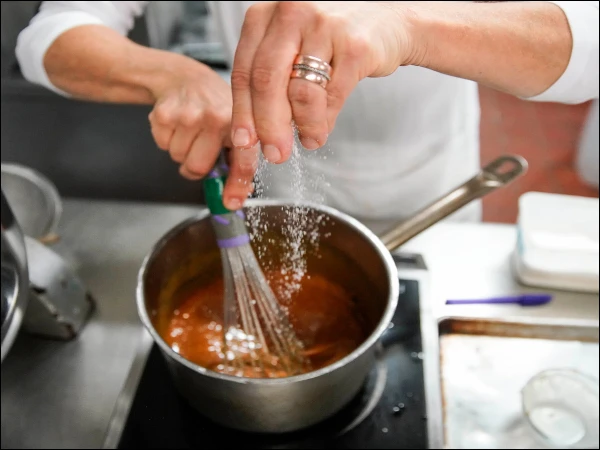
    Salt is one of the most important ingredients in cooking because it brings out the flavor of food.  A small change in spices may not make much difference but too little salt can make a dish taste bland while too much can ruin its flavor. Adding salt to food is easy when it is needed. But if you accidentally add too much salt you may think the whole dish is ruined.  Fortunately there are several simple kitchen tricks that can help reduce the strong salty taste and save your food. Add a Potato If your curry or another dish has too much salt take a raw potato cut it into two pieces and add it to the food. Let it cook for about 10 minutes and then remove it.  A boiled potato can also be used. If you prefer you can leave the potato in the curry and serve it with the dish. Use fresh cream Fresh cream can help make a salty dish taste milder. Add a small amount of cream to the curry or other suitable dishes and mix well.  It can reduce the strong salty taste while also making the food smoother and richer. Try a dough ball A small ball of flour dough is another traditional home method. Make a small dough ball and place it in the curry.  Leave it for around 15 minutes and then take it out. This may help reduce the salty taste of the dish. Add water or milk For dishes that can handle extra liquid adding a little water can reduce the salty taste.  Milk or cream can also work well in some recipes. Milk can make the flavor softer and more balanced. Use yogurt and fried onion Yogurt and fried onions can also help balance the taste especially in dishes such as meat curry karahi, or mixed vegetables. Grind some browned onions with yogurt and mix them into the dish. This can make the strong salty flavor less noticeable while adding extra taste. Add salt slowly The best way to avoid overly salty food is to add salt little by little while cooking. Taste the food before adding more.  This simple habit can help you control the amount of salt and keep your dishes flavorful. Using less salt overall is also better for general health. So instead of adding a large amount at once add small amounts gradually and adjust the taste as needed.

  • “A Glimpse After Twenty-One Days”

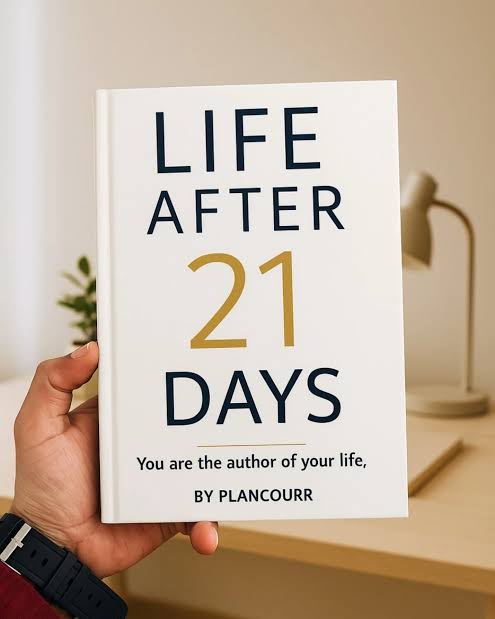
    By Amar Qawi If, someday, the entire sky were covered in darkness—without a moon, without stars, without even the faintest sparkle—would a lover whose heart glows like moonlight still be able to live beneath such a sky? That day, I sat on the rooftop of my house searching for the moon. But fate had something else in store. Instead of appearing in the heavens, the moon descended into the street below to grant me a glimpse after twenty-one long days. I did not dwell much on that radiance because something similar had happened to me earlier, on the fifteenth of July. Therefore, I took it as nothing more than an unfulfilled dream rather than believing that the moon belonged to me. In truth, even considering someone as one’s possession is itself a form of poverty. Since childhood, society has taught us that air, fire, and water are the necessities of life. Yet I feel sorry for those teachers who remain unaware of a deeper truth: human beings do not survive by air, fire, and water alone. Love, inspiration, and moonlight are equally essential for the soul to remain alive. A person may survive in this highly technical age amidst bombs and weapons, but without the sight of the beloved, the soul can never truly live. Just as air, fire, and water are essential to human existence, so too is the vision of the beloved. The truth is, I was not sitting on the rooftop in search of the moon in the sky. I was waiting for that moon from whom my moonbird-like heart had been separated for what felt like centuries. And yet, even when I found that moon, it was only within my dreams. Twenty-one days after the fifteenth of July, as I walked through that familiar street, she passed by me just as a shadow silently slips along a wall in the darkness. She is my shadow, and I am her reflection. She is my reflection, and I am her moonbird. She is the full moon to me. Whenever she shines like the full moon, my heart, like a restless chakor bird, longs to fly toward her and kiss her beauty. But alas, those delicate butterfly-like wings eventually grow weary from endless flights inspired by love. When I saw her in that street after twenty-one days, the fallen Taj Mahal of my imagination began to rebuild itself. The shy poet hidden within me blossomed with the spirit of Sheikh Ayaz’s immortal lines: “O moon! Who has stolen your sleep? Surely the chakor birds have enchanted you.” Just as Sheikh Ayaz expressed, something similar happened to me. When I first met her, I had no intention of falling in love. Yet I vividly remember that when we parted, dryness had settled upon our lips while tears embraced our eyes. It was as though the Urdu poet had written about our separation: “When we parted, my poem remained within her eyes— A poem that had never yet been recited to anyone.” When she passed beside me after twenty-one days, my eyes swore by the little golden nose ornament she wore and silently recalled the beautiful verse of Shah Abdul Latif: “Who says, my beloved, that you should walk gently? Place your feet upon my eyelashes without hesitation. Leave behind all fear of causing pain, For your passage itself is my greatest joy.” When even her tongue could not gather the courage to speak to me, my own eyes, too, denied themselves the permission of truly beholding her after those twenty-one days. Love is not dependent upon union; it longs for the meeting of souls. Therefore, for a lover like me, a glimpse after twenty-one days carries no real meaning if the beloved merely passes by like a silent shadow in the darkness. In the end, I wish to encourage the young people of our society who lose their dreams and their future while chasing someone who does not value their love. As an Urdu poet beautifully said: “If you have changed, then so be it. If not you, then someone else. And if not someone else, then another.” Thus, that glimpse after twenty-one days holds no value for me if it is wrapped in deception, falsehood, and unfaithfulness. To me, that meeting means nothing if pride and arrogance overshadow love. She merely appeared in the street and passed by like a shadow. Yet even today, I continue to wait for her, because my heart still loves that moon-like beloved with the devotion of a chakor bird. Even after twenty-one days, she remains steadfast in her pride. Still, the beloved’s pride is a matter of honor for the lover, for the beloved herself is both the lover’s pride and the most precious treasure he possesses. He can be reached at alikareemshaikh123@gmail.com

  • High sugar diet may harm people with asthma

    Eating too much sugar is widely known to increase the risk of type 2 diabetes and high blood pressure.  Now new research suggests that it may also make asthma symptoms worse. A study published in the journal Nutrients found that a high sugar diet can increase inflammation in the lungs making asthma attacks more likely in people with the condition. The research was carried out on mice. Scientists gave the animals their normal food along with sweetened milk. Within just two weeks the mice showed higher levels of lung inflammation. According to the researchers this is one of the first studies to show how quickly excess sugar can worsen inflammation linked to asthma. Asthma is a long term disease that affects the airways and makes breathing difficult.  Although there is no cure the condition can be managed with proper treatment and healthy lifestyle choices. During an asthma attack the airways become swollen and the muscles around them tighten. This can cause coughing wheezing chest tightness and shortness of breath making everyday activities harder. The researchers said that when children eat too much sugar people usually worry about tooth decay or weight gain but rarely think about its possible effects on asthma. They added that the findings support the idea of limiting sugar intake especially for people living with asthma. According to the researchers too much sugar may affect the immune system and trigger inflammation which can make asthma symptoms more severe.

  • Organic eggs may have higher environmental impact

    A new study by researchers at the University of Oxford suggests that producing organic and free range eggs may have a greater impact on the environment than eggs produced by hens kept in conventional cage systems. According to the research if all egg production switched to organic and free range farming carbon emissions could increase by about 60%. The amount of land needed for egg production would also nearly double. The researchers estimated that producing only organic and free range eggs would release around 2.316 million tonnes of carbon dioxide equivalent greenhouse gases. In comparison producing eggs only from caged hens would generate about 1.184 million tonnes. The study explains that while organic and free range systems are often considered better for animal welfare they require more hens to produce the same number of eggs.  This is because hens kept in cage systems generally lay eggs more efficiently. Researchers also warned that organic and free range farming may require more land and could have a greater impact on water pollution. The study’s lead author, Dr. Harriet Bartlett said that future decisions about egg production should carefully balance three important factors animal welfare environmental impact and the need to produce enough food.

Leave a Reply

Your email address will not be published. Required fields are marked *