restarting your workout

Restarting your workout? Avoid these common mistakes

If you stopped exercising for a long time because of work stress or other reasons and are now planning to return to the gym health experts advise against starting with your old workout routine right away.

After a long break the body needs time to get used to physical activity again. Starting with heavy or intense exercise too quickly can lead to muscle pain extreme tiredness and a higher risk of injury.

Why you should start slowly

Busy work schedules long meetings stress and personal responsibilities often cause people to stop exercising.  When they return to the gym many assume they can immediately exercise at the same level as before.

However staying inactive for a long time can reduce muscle strength flexibility and stamina.

The body needs time to rebuild these abilities so suddenly doing hard workouts can put too much pressure on the muscles and joints.

Begin with light exercise

Experts recommend starting with simple stretching exercises to prepare the muscles and reduce stiffness.  Light activities such as walking or easy cardio can then help the heart and lungs adjust while gradually improving stamina.

Light strength training is also useful because it helps build stronger muscles bones and joints.  Beginners should use manageable weights and focus on doing each exercise with the correct form.

Rest and nutrition matter

A safe return to exercise is not only about workouts. Eating a balanced diet drinking enough water and getting proper sleep can help the body recover and support muscle health. The key is to increase the intensity slowly instead of trying to make up for lost time with hard workouts.

Note

This information is for general awareness. Anyone with an existing health condition injury or other medical concern should consult a doctor before restarting exercise.

Similar Posts

  • Daily multivitamins may boost heart health in older adults

    A new medical study suggests that taking multivitamins every day may help older adults maintain better health as they age. As people grow older their physical and mental abilities naturally begin to decline. Researchers from Augusta University in the United States studied how daily multivitamin use affects the health of older people. The study analyzed data from more than 16,000 adults aged 60 and above. At the start of the research all participants were free from heart disease. They were divided into groups. one group received daily multivitamin supplements another received cocoa extract supplements a third used both and the fourth group received a placebo. The study continued for three years. During this time researchers regularly checked participants daily activities health conditions and signs of heart problems. After three years researchers found that people taking multivitamins showed better heart related health and had a lower risk of some serious health issues. The supplements were also linked with a reduced risk of narrowing in a major artery that carries blood from the neck to the brain. Scientists believe multivitamins may help by filling small gaps in essential minerals supporting cell functions and improving blood vessel health. Researchers said the findings suggest that daily multivitamin use may help older adults maintain heart health and improve their quality of life. However they also noted that more research is needed to understand the exact reasons behind these benefits. Multivitamins are widely used around the world especially by people who want to support fitness overall health and reduce the risk of long term diseases.

  • Don’t throw away coriander stems

    Many people use only the leaves of fresh coriander (cilantro) while cooking and throw away the stems. However food and nutrition experts say the stems are packed with flavor and nutrients and can be a valuable part of many meals. Coriander stems contain vitamins A, C and K along with fiber which helps support healthy digestion. They also contain natural plant compounds that may support heart health and help the body function properly as part of a balanced diet. Instead of throwing them away here are some easy ways to use coriander stems in your kitchen. Add them to curries. Finely chop the stems and cook them with onions garlic and spices. As they soften they blend into the gravy and give the dish a richer flavor and fresh aroma. •Use them in soups and broths Wash the stems well and add them to vegetable or chicken soup while it cooks. They add extra flavor and nutrients to the broth. •Mix them into lentils and vegetables Add chopped coriander stems to the tempering with cumin garlic and other spices. This simple step can make lentils and vegetable dishes taste even better. Use them in marinades Blend the stems with ginger, garlic yogurt and spices to make a marinade for chicken fish meat or paneer. They help add a fresh herbal taste to the food. •Add them to chutneys and yogurt dips Blend coriander stems with mint garlic yogurt or roasted chickpeas to make a thick and flavorful chutney or dip that goes well with snacks and meals. If you have extra coriander stems wash and dry them then chop and store them in an airtight container or freezer bag. They can stay fresh in the freezer for several weeks and can be added directly to cooked dishes whenever needed. Experts say using coriander stems is a simple way to reduce food waste save money and add more flavor and nutrients to everyday meals.

  • |

    Workers discover gold while replacing sewer line

    When a drainage or sewerage line is replaced, workers generally expect to find nothing more than waste and garbage inside it. However, during routine renovation work in Belgium, workers made an astonishing discovery: gold worth billions of Pakistani rupees. The incident took place in Sint-Gillis-Dendermonde, Belgium. Workers were replacing a sewer line during the renovation of a building. They removed part of the foundation to install new pipes when they noticed something shining underground. At first, they thought they had found one-euro coins but they soon realized that the objects were actually gold. According to Mario, the workers’ manager, “I looked carefully and picked up the gold. Then we dug further and found more coins and gold pieces. It was an incredible experience.” He said that in his 33 years of construction work, he had never experienced anything like this before. An 18-year-old student working with the team said that at first they could hardly believe what they had found because they had never expected to discover gold. After the treasure was examined, it was estimated to be worth around $14 million equivalent to more than Rs2.5 billion. Unfortunately for the workers, they were unable to keep the treasure and had to hand it over to the police. The treasure is currently being kept by a charitable organization.It is still unclear who originally owned the gold. However, the building was reportedly once owned by a wealthy family. Under Belgian law, the original owner can claim such a treasure within five years. If no claim is made during that period, the treasure will be divided between the person who discovered it and the owner of the property.

  • Too much salt? Try these simple tricks

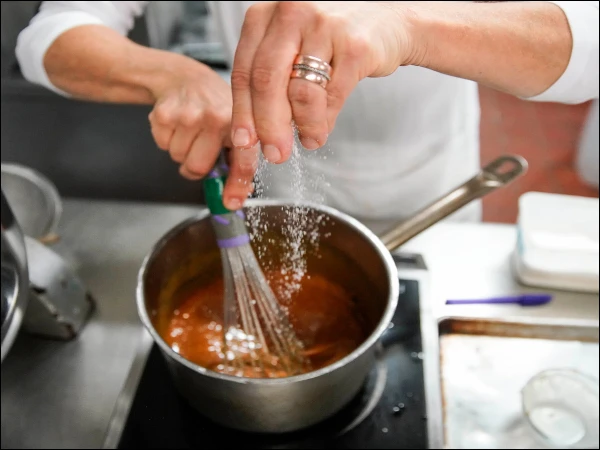
    Salt is one of the most important ingredients in cooking because it brings out the flavor of food.  A small change in spices may not make much difference but too little salt can make a dish taste bland while too much can ruin its flavor. Adding salt to food is easy when it is needed. But if you accidentally add too much salt you may think the whole dish is ruined.  Fortunately there are several simple kitchen tricks that can help reduce the strong salty taste and save your food. Add a Potato If your curry or another dish has too much salt take a raw potato cut it into two pieces and add it to the food. Let it cook for about 10 minutes and then remove it.  A boiled potato can also be used. If you prefer you can leave the potato in the curry and serve it with the dish. Use fresh cream Fresh cream can help make a salty dish taste milder. Add a small amount of cream to the curry or other suitable dishes and mix well.  It can reduce the strong salty taste while also making the food smoother and richer. Try a dough ball A small ball of flour dough is another traditional home method. Make a small dough ball and place it in the curry.  Leave it for around 15 minutes and then take it out. This may help reduce the salty taste of the dish. Add water or milk For dishes that can handle extra liquid adding a little water can reduce the salty taste.  Milk or cream can also work well in some recipes. Milk can make the flavor softer and more balanced. Use yogurt and fried onion Yogurt and fried onions can also help balance the taste especially in dishes such as meat curry karahi, or mixed vegetables. Grind some browned onions with yogurt and mix them into the dish. This can make the strong salty flavor less noticeable while adding extra taste. Add salt slowly The best way to avoid overly salty food is to add salt little by little while cooking. Taste the food before adding more.  This simple habit can help you control the amount of salt and keep your dishes flavorful. Using less salt overall is also better for general health. So instead of adding a large amount at once add small amounts gradually and adjust the taste as needed.

  • Easy ways to get rid of bed bugs

    Bed bugs can make it difficult to sleep and may leave red itchy marks on the skin. These tiny insects often hide in beds sofas clothes and other dark places during the day. At night they become active and feed on people. Even a few bed bugs can quickly turn into a bigger problem if they are not treated properly.  While many bed bug sprays are available in stores some people also try simple home methods to control them. Use hot air A hair dryer can be used to blow hot air into cracks corners and other places where bed bugs or their eggs may be hiding.  Heat can kill bed bugs but care is important. Never use a hair dryer near flammable materials. Try mint leaves Bed bugs may dislike strong smells such as mint. Fresh mint leaves can be placed near beds sofas or areas where bed bugs are found. However mint should not be considered a reliable way to kill bed bugs. It may only help make certain areas less attractive to them. Wash bedding in hot water Wash bedsheets pillow covers clothes and other washable items that may contain bed bugs in hot water.  After washing dry them thoroughly using high heat if the fabric allows it. Heat can help kill bed bugs and their eggs and reduce their numbers. Keep the area clean Baking soda is sometimes suggested as a home remedy for bed bugs but there is limited evidence that it can kill them.  Instead of relying on baking soda regularly vacuum mattresses sofas carpets and cracks where bed bugs may hide. If the infestation has become large home remedies may not be enough.  In such cases contacting a professional pest control service is usually a better option.

  • Fake it till you break it: inside the deepfake era

    Previously, I believed that if one could see something, it could be trusted because seeing is believing. A video was proof. A voice recording was evidence. That belief is gone, and I don’t think we have fully sat with the implications. There is an abnormal shift happening. AI-generated images, voice cloning, face-swapping apps, and similar tools were supposed to expand how people express themselves, but instead they have slowly chipped away at what matters most: the belief that people can express themselves through their images and their words. I attended a workshop under the project titled “Digital Trust and Free Expression in the AI Era” at Department of Media and Development Communication, University of the Punjab, supported by the U.S. Mission to Pakistan in partnership with the Pakistan-U.S. Alumni Network (PUAN) last week. During the discussions on digital trust. I took part in the discussion and shared my thoughts that we are now in a time where we must take this out of the realm of fun tech novelty and place it in the realm of a structural issue in how societies operate. Everyone says deepfakes are a “misinformation” issue, but this is not an adequate way to describe it. Misinformation is something that’s a false statement that can, in theory, be fact-checked. Deepfakes strike at the heart of video and audio credibility which have always been treated as vivid reality. When people realize that any clip can be fabricated, they stop trusting all clips, even real ones. This is what concerns me most. Fake things are believed and real things become deniable. Consider the implications of journalism, courts, political accountability, etc. If a politician is recorded saying something damaging, they can simply claim that it’s a “deepfake” and, depending on how much trust citizen have lost, people may believe them. We are creating a society in which it is possible to negotiate authenticity and in which negotiable authenticity is a gift for those who wish to avoid consequences. I also face a conflict here: I strongly believe in free speech, satire, parody, art and provocation even with synthetic media. The same technology behind de-aged actors, resurrected voices, dubbing, and experimental AI is extremely creative, yet it is all connected to malicious deepfakes. There is no way to ‘clean’ a tool of its worst use-case. A hammer can break windows or build houses. I do not think banning synthetic media is the answer, nor do I support pre-emptive censorship. That path harms legitimate satire, journalism and art under the pretense of ‘preserving truth’. History does not look kindly on institutions that decide what is a “fair” fake. Freedom of expression has never been of consequence or friction, and right now, deepfakes have almost no friction. The reality is there is no cost, disclosure, and accountability in using this technology deceptively. The issue is the imbalance. I believe the solution is not reducing synthetic tools but improving provenance. We need a digital watermarking, which cannot be “easily removed”: cryptographic signatures embedded into cameras, microphones and generative tools at the point of creation, so that the “unverified” label appears by default, not as an afterthought. Not to prohibit any content but to allow people to know what they are seeing before deciding whether to trust it. Platforms have been allowed to operate without responsibility for too long. Convincing fakes can reach millions before correction and corrections never travel as far. This asymmetry is not natural; it is a design choice. Platforms can mark, rate or tag synthetic content at the time of dissemination. Most simply haven’t had to! But, beyond platforms, we must change our own instincts as individuals. The old saying was “pics or it didn’t happen.” The new rule should be: “Who gains from believing this and can I verify it myself? A society that believes everything or worse, believes nothing is in danger. The deepfake age is not the age of AI; it is the consequences of a world where the cost of faking reality is near zero and the cost of establishing truth remains high. Freedom of expression should protect the most challenging and profound exchange of ideas, not the production of fake consent, fake evidence, or fake people. We can have creative freedom and still expect honesty about sources. These are not competing prioritie These are not different objectives/priorities. However, if we pretend it’s a content-moderation footnote, we must make sure we are not waking up in a world where “fake it till you make it” has become ‘fake it till you break it” and by that time, it won’t be just one video or one lie that will break. It will be our fundamental ability to reach a shared understanding of reality. The views, thoughts, and opinions expressed in this blog are solely those of the author and do not necessarily reflect the official policy or position of the U.S. Mission to Pakistan or USEFP/PUAN. The writer, Mahnoor Ashraf Wattoo, is a student of Media and Development Communication at University of the Punjab, Lahore 

Leave a Reply

Your email address will not be published. Required fields are marked *