iran says deal
|

Iran says deal on Strait of Hormuz is close but not enough to open the waterway

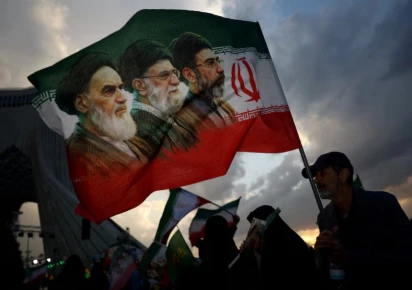
Iran said on Saturday, August 8 (August 9, Philippine time), that a deal with Oman on control of the Strait of Hormuz was close but would not be enough to free up the waterway, and the United Arab Emirates said Iran had hit another ship there.

Agreement between Iran and Oman over the strait, which separates the two countries, is seen as vital to a wider deal to end the war, which began with US and Israeli attacks on Iran on February 28 and led to Tehran establishing a chokehold over the major energy export route.

A US official, who declined to be identified, said on Friday that Washington anticipated an agreement soon between Iran and Oman, so normal oil traffic could resume.

Iranian Foreign Minister Abbas Araqchi said Iran and Oman were “very close” to an agreement on a new shipping route through the strait, but reopening it would depend on other conditions, including US compensation to Iran.

The secretary of Iran’s top national security body, Mohammad Baqer Zolqadr, listed other demands including ending US threats against Iran, stopping aggression against Iran and its Lebanese, Palestinian, Yemeni and Iraqi allies, lifting a blockade and sanctions on Iran and freeing Iranian assets.

Oman reports positive negotiations, condemns ship attacks

Oman condemned what it described as repeated attacks on vessels while transiting the strait, without assigning blame, and said that negotiations with Iran on arrangements for shipping through Hormuz were “positive and constructive”.

“Oman stresses the importance of avoiding any actions that could affect these negotiations and the progress achieved in a manner that takes into account the interests of all parties,” the foreign ministry said.

Araqchi said the previous shipping traffic separation scheme through the strait was no longer acceptable to Tehran and Iran was discussing a temporary route with Oman while technical and legal issues surrounding a permanent route were resolved.

Iran’s President Masoud Pezeshkian, a relative moderate, said he believed now was the best time for an agreement.

“There is cohesion, strength, and unity in the country, and as far as I know, Iran is considered victorious and powerful in this war,” Iranian news agencies quoted him as saying.

Iran has reacted to the US attacks by targeting US bases in Gulf states and Jordan as well as striking shipping in the narrow strait, which carried a fifth of the world’s oil and gas shipments before the war.

The UAE said on Saturday that Iran had attacked a carrier affiliated with the UAE’s state oil company with a missile as it transited the Strait of Hormuz. No injuries were reported in the latest attacks on shipping there.

The UK maritime trade monitor UKMTO said a vessel had caught fire after being hit by an unknown projectile but the fire was put out and there was no reported environmental impact.

There was no immediate comment from Iranian authorities.

In recent weeks, the Trump administration has repeatedly signaled that a deal to open the strait could be close, only to have Iran deny that talks are under way. It was unclear whether the latest flurry of negotiations would yield a more lasting arrangement.

“Once the deal is announced to restore commercial shipping without impediments, the United States will lift the blockade of Iranian ports,” the US official told Reuters on Friday. US actions would be tied to Iran’s implementation of its commitments, he said.

US Central Command said on Saturday it had allowed more than 30 ships through for humanitarian aid since the current blockade started. US forces have turned away 53 ships, disabled two vessels and boarded two others, Central Command said in a statement on social media.

Prices of food and other necessities have increased rapidly in Iran since the conflict began in February. At a news conference on Saturday, Pezeshkian blamed the US for causing difficulties in importing basic goods.

He did not mention any blockade exceptions for humanitarian aid.

Iran’s Revolutionary Guards, who have targeted the ships, also said on Saturday that reopening the strait depended on Washington accepting Iran’s conditions and was not related to the Iran-Oman negotiations.

“Whenever the United States accepts Iran’s conditions, the Strait of Hormuz will certainly be reopened,” said Guards spokesperson Hossein Mohebbi, according to Iran’s Tasnim news agency.

Sources said this week a deal would give Iran some control

A proposed deal between Iran and Oman to help end five months of war between Iran and the US would give Tehran control over ships entering the Gulf through the strait, a senior Iranian source and two regional officials told Reuters on Wednesday, one of the biggest concessions yet to Iran.

US officials have repeatedly said they would never agree to Iran controlling access to the world’s most important trade route for energy supplies. It was not clear whether they had sought to change the parameters of the deal.

Iran has used the hostilities to justify charging a toll on oil tankers. That, and the firing on ships that attempt to cross the strait without its permission, has badly disrupted global shipments, causing energy prices to surge and fueling inflation. – Rappler.com

Similar Posts

  • |

    South Korea investigates election officials over alleged vote turnout manipulation

    South Korean investigators have launched a major investigation into the National Election Commission after allegations that officials altered voter turnout figures during the June 3 local elections. Authorities searched the commission’s offices on Thursday as part of a widening probe into what could become one of the country’s most serious election controversies in recent years. The investigation follows widespread problems that disrupted voting on election day. Dozens of polling stations ran out of ballot papers, creating confusion for voters across the country. The shortages occurred during the first nationwide local elections held after President Lee Jae Myung took office last year. The incident sparked public criticism, street protests, and growing demands for greater transparency in the country’s election system. The controversy also forced National Election Commission chief Roh Tae-ak to resign. President Lee responded by ordering a full investigation into the failures that affected the election process. Since then, police and prosecutors have been examining whether the problems were caused by simple mistakes or deliberate misconduct. According to investigators, there is evidence that officials from both the National Election Commission and the Gyeonggi Provincial Election Commission entered false voter turnout figures into the election reporting system. Authorities believe some staff members changed numbers without following the commission’s official approval procedures. Investigators suspect the changes were made to fix earlier reporting mistakes while officials waited for accurate turnout data from polling stations. Instead of correcting the figures through the required process, they allegedly adjusted turnout numbers across several voting locations to make the overall totals appear consistent. Reports suggest one example involved a polling station where officials accidentally recorded 1,000 voters instead of the actual 100. Rather than immediately correcting the mistake, investigators believe the excess figures were temporarily distributed among other polling stations with the expectation that later voter turnout would balance the totals. Authorities are now examining whether similar adjustments were made elsewhere during the election. Under the commission’s regulations, any correction to turnout figures must receive formal approval before being entered into the system. Investigators believe those procedures may have been bypassed in several cases. Officials leading the investigation confirmed that two election workers have already been placed under formal investigation on suspicion of falsifying official electronic records. Authorities are now trying to determine whether the alleged actions were limited to lower level employees or whether senior officials knew about or approved the changes. Analysts say the case has drawn attention to long standing concerns about oversight within South Korea’s election commission. Because the commission operates as an independent constitutional body, critics argue that its internal monitoring and disciplinary systems have not always been strong enough to prevent misconduct. The ballot paper shortages also affected voters directly. Data provided by the commission to lawmakers showed that at least 90 people were unable to cast their ballots because voting papers were unavailable at their polling stations. The controversy has also fueled political tensions. Supporters of former president Yoon Suk Yeol, who is currently in jail while facing trial on insurrection charges, have renewed claims that the country’s elections require closer scrutiny. Some far right groups have repeated allegations of foreign interference despite the absence of verified evidence supporting those claims. In recent weeks, university students have joined demonstrations calling for a complete investigation into the election commission. Protesters are demanding stronger safeguards to protect voting rights and restore public confidence in South Korea’s democratic institutions. As the investigation continues, authorities say they will examine every level of the election process to determine whether any broader misconduct took place.

  • | | |

    Asif signals possible US-Iran deal amid Hormuz talks

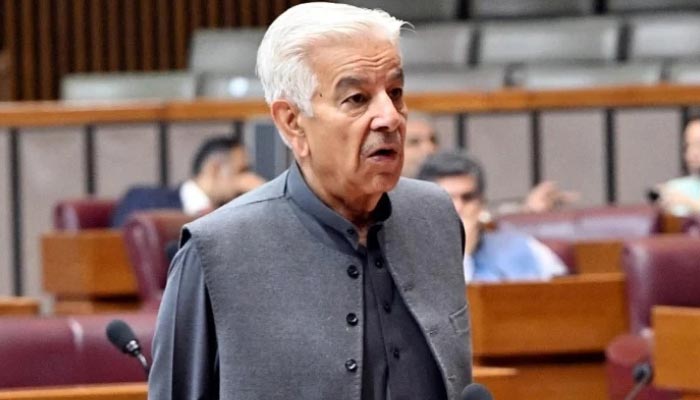
    ISLAMABAD: Defence Minister Khawaja Asif has said the United States and Iran may be moving closer to an agreement as diplomatic efforts continue to resolve the conflict and ease restrictions around the Strait of Hormuz. Speaking to Bloomberg, Asif said recent developments had created renewed hopes for a possible peace arrangement. He said signals over the past two to three days suggested that Washington and Tehran were approaching “some sort of an arrangement.” His comments came as Qatar said separate discussions between Oman and Iran regarding the management of the Strait of Hormuz had reached an advanced stage. The waterway remains at the centre of the crisis. It is a major route for global energy supplies, with a significant share of the world’s oil and liquefied natural gas shipments passing through it. Pakistan and Qatar have been involved in diplomatic efforts aimed at reducing tensions between Iran and the United States. Pakistan has continued contacts with Iranian officials as part of these mediation efforts. On Tuesday, Iranian Foreign Minister Abbas Araghchi met Pakistan’s Interior Minister Mohsin Naqvi in Tehran. Details of their discussion were not immediately disclosed, but the meeting came amid renewed diplomatic activity over the conflict. Iran has previously said it was working with Oman on arrangements for shipping through the Strait of Hormuz. Tehran has maintained that reopening the waterway fully would depend on the United States meeting several conditions. Those demands include compensation, an easing of sanctions and guarantees against further military action, according to Iranian officials. Araghchi has said Iran and the US are not holding direct negotiations. Messages are instead being exchanged through intermediaries. US President Donald Trump has also raised the issue of compensation. He said Washington would seek payments from Iran for damage and casualties allegedly caused over several decades. Despite the diplomatic activity, tensions remain high in regional waters. Four crew members were reportedly killed in a suspected attack on a cargo vessel near the Bab el-Mandeb Strait. The incident was blamed on Houthi forces, although the group had not immediately claimed responsibility. A separate container ship was also reportedly struck while sailing through the Gulf of Oman near Pakistan. Initial reports indicated that the incident may have involved US military action. The developments have increased concerns over the safety of commercial shipping in the region. Oil prices also remained elevated because of uncertainty surrounding the Strait of Hormuz. Prices eased on Tuesday after reaching a one-week high earlier in the session as investors responded to signs of possible diplomatic progress. The crisis has placed pressure on Washington and Tehran to find a political solution. Any agreement that reduces tensions and restores normal shipping through Hormuz could have a major impact on global energy markets.

  • |

    Indian activists challenge AI-powered police surveillance following student demonstrations

    Indian digital rights activists and student leaders are challenging Prime Minister Narendra Modi’s government in the Delhi High Court over the deployment of artificial intelligence-powered mass surveillance during recent youth protests in New Delhi. Student activist Aishe Ghosh filed a petition with the Delhi High Court seeking to declare the police’s mass surveillance of demonstrators unconstitutional. The lawsuit requests the immediate destruction of all personal and biometric data collected during the demonstrations and asks the court to establish clear binding guidelines governing the use of surveillance technologies at public gatherings. The controversy intensified after photographs circulated showing a mobile police surveillance unit, branded “Ikshana” and developed alongside security firm CP Plus, deployed at the main protest site. The vehicle featured telescopic masts providing 360-degree coverage, AI-powered cameras, and real-time facial recognition capabilities that displayed face accuracy metrics to match attendees against law enforcement databases. Furthermore, police officers were documented recording the social media handles of arriving participants. Digital rights organisations, including the Internet Freedom Foundation, have formally requested the Delhi Police Commissioner to delete all biometric data gathered during the events. Advocates emphasise that India currently lacks a dedicated legal framework governing police deployment of facial recognition systems, making such intrusive measures disproportionate and illegal. During court proceedings, Solicitor General Tushar Mehta defended law enforcement actions, arguing that expectations of privacy at a public gathering were misplaced and asserting that the security measures were absolutely necessary in the interest of public order. Delhi Police maintained that the technology was used solely to identify individuals with criminal histories and count crowd size without restricting freedoms. The court challenge continues despite the end of the student demonstrations, which were triggered by widespread examination paper leaks in national competitive tests. The protests culminated in the resignation of Union Education Minister Dharmendra Pradhan and the announcement of a government panel tasked with overhauling the national examination system.

  • |

    Ukraine submits peace proposals to US as Zelenskiy warns of autumn Russian draft

    Ukrainian President Volodymyr Zelenskiy announced that Kyiv has delivered fresh peace proposals to American negotiators aimed at ending the conflict with Moscow. He simultaneously warned that Russia intends to use its upcoming parliamentary elections to launch a new, large-scale military mobilisation. Speaking in his nightly address, Zelenskiy stated that the proposals handed to the United States focus on bolstering Ukraine’s defence capabilities, particularly air defence, while urging Washington to exert diplomatic and economic pressure on the Kremlin to halt the war. The movement in negotiations comes as U.S. envoys Steve Witkoff and Jared Kushner prepare for potential visits to both capitals, following a period where diplomatic efforts had largely stalled. Kyiv continues to press for an immediate ceasefire after nearly four and a half years of fighting, whereas Moscow insists any agreement require Ukraine to permanently cede four claimed regions. Zelenskiy also cited Ukrainian intelligence reports indicating that Russian President Vladimir Putin plans to exploit September’s parliamentary polls to orchestrate a rapid autumn draft. “They are preparing for mobilisation in the autumn, immediately after the imitation of parliamentary elections,” Zelenskiy said, estimating that Moscow aims to draft several hundred thousand additional personnel by the end of the year, alongside ongoing voluntary contract recruitment. The electoral warning follows a decision by Russia’s Supreme Court on Monday to bar the liberal Yabloko party, the country’s sole registered anti-war political group, from contesting the upcoming election. Kremlin officials have denied plans for a mandatory draft, pointing to 200,000 voluntary sign-ups recorded in the first half of the year.

  • | |

    IRGC warns UK of retaliation as US maintains naval…

    TEHRAN: Tensions between Iran and the United States have escalated further after Iran’s Islamic Revolutionary Guard Corps (IRGC) warned that any country assisting Washington in military operations against Tehran could become a legitimate target, while the US confirmed its naval blockade on Iran remains fully operational. An IRGC spokesperson, speaking to Iranian state media, warned that countries providing logistical or military support to the United States—including the United Kingdom—would face retaliation. The official alleged that US B-1 bombers had recently used British bases during strikes on Iran, claiming any nation involved in such operations would be treated as a direct participant in the conflict. The warning came as reports emerged that US President Donald Trump has temporarily suspended plans for additional strikes on Iran after nearly two weeks of continuous military operations. According to US media, the decision was influenced by concerns over dwindling missile defence stockpiles, the risk of wider regional escalation and the desire to allow more room for diplomatic efforts. Despite the pause in airstrikes, the United States Central Command (CENTCOM) said its naval blockade against Iran remains in force. US forces reported intercepting several commercial vessels suspected of attempting to breach the blockade, redirecting multiple ships, disabling one vessel that ignored repeated warnings and carrying out verification inspections on others before allowing them to continue their voyages. US officials said contingency plans remain in place should military operations resume, underscoring that Washington is maintaining pressure on Tehran while keeping diplomatic options open. Meanwhile, Iran’s latest warning has added to growing concerns that the confrontation could draw more regional and international actors into the crisis.

  • |

    Ro Khanna supports call to enforce ICC warrant against Netanyahu

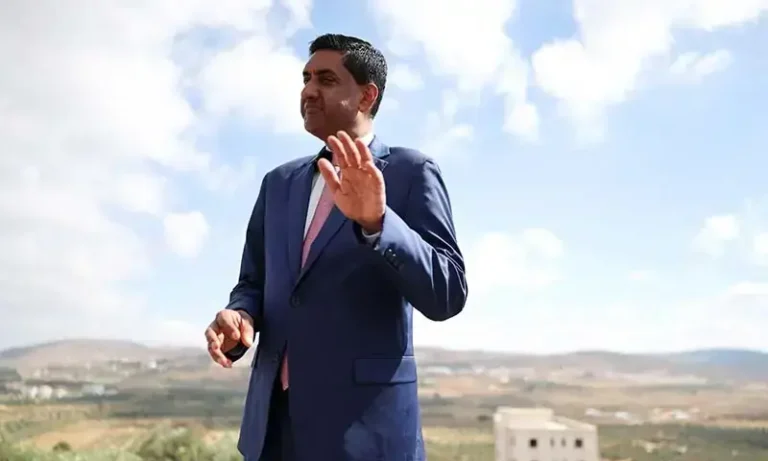
    US Democratic Congressman Ro Khanna has backed New York City Mayor Zohran Mamdani’s call for Israeli Prime Minister Benjamin Netanyahu to be arrested if he enters US jurisdiction under an arrest warrant issued by the International Criminal Court. Khanna said the United States should cooperate with the international court and uphold international law regardless of who is involved. Speaking during an interview on Capitol Hill, the California lawmaker said the US president should enforce ICC arrest warrants for any individual wanted by the court, including both Netanyahu and Russian President Vladimir Putin if they were to enter American jurisdiction. He argued that respecting international law is essential to protecting human rights and maintaining a rules based international order. According to Khanna, US authorities should act on such warrants rather than ignoring them. The International Criminal Court issued an arrest warrant for Netanyahu in 2024, accusing him of alleged war crimes and crimes against humanity connected to Israel’s military campaign in Gaza following the Hamas attack in October 2023. Israel has strongly rejected the accusations and criticized the court’s decision, maintaining that its military actions were carried out in self defense. Khanna’s remarks come after his recent visit to the occupied West Bank, where he said he was briefly detained by Israeli settlers and members of the Israeli military while visiting a Palestinian village. The congressman suggested the incident had strengthened his views on the importance of accountability and respect for international law. Khanna, who is considered a possible Democratic presidential candidate for the 2028 election, also joked that detaining potential future US presidents was unlikely to improve relations with Washington. New York City Mayor Zohran Mamdani has also been outspoken on the issue. He recently said he had explored whether city authorities could arrest Netanyahu if the Israeli leader visits New York for the United Nations General Assembly later this year. Mamdani later acknowledged that a city mayor does not have the legal authority to carry out such an arrest but argued that the federal government could take action if it chose to do so. Mamdani has publicly stated that he believes anyone facing charges before the International Criminal Court should be held accountable through legal proceedings. His comments have attracted significant attention in the United States, where debate over the Gaza conflict and Washington’s relationship with Israel remains deeply divided. President Donald Trump has firmly rejected any suggestion that Netanyahu could be arrested while visiting the United States. Earlier this week, Trump stated that the Israeli prime minister would not face arrest under any circumstances during his stay in the country, making clear that his administration would not enforce the ICC warrant. Khanna responded by accusing Trump of ignoring international law and failing to prioritize human rights. He argued that refusing to cooperate with the International Criminal Court damages America’s credibility and weakens the international legal system. He also suggested that enforcing the ICC warrant could strengthen Washington’s influence over Israel, particularly after reports that Netanyahu continued military operations in Lebanon despite US pressure to observe a ceasefire. According to Khanna, accountability should apply equally to all leaders regardless of their position or political alliances. He said individuals facing serious allegations before an international court should not expect to travel freely without legal consequences. Netanyahu is expected to travel to Washington next week for talks with President Trump. The meeting will be their first face to face discussion since the United States and Israel carried out joint military strikes against Iran earlier this year. During the visit, Netanyahu is also expected to attend the funeral of Republican Senator Lindsey Graham, who was widely regarded as one of Israel’s strongest supporters in the US Congress. The visit is likely to attract international attention as debate continues over the ICC warrant, the war in Gaza and the future of US policy toward Israel.

Leave a Reply

Your email address will not be published. Required fields are marked *