electricity crisis burden

Electricity Crisis: A Burden on the People

Through the pages of your newspaper, I would like to draw attention to the serious electricity crisis in our area. Frequent and prolonged power outages have made daily life extremely difficut for students, workers shopkeepers and ordinary families.

The lack of electricity affects education, businesses, hospitals and household activities. During hot weather the situation becomes even more difficult especially for children and elderly people.

The authorities should take immediate steps to reduce unnecessary load-shedding, improve the power supply system and repair faulty infrastructure. A proper and fair schedule should also be followed so that people can plan their daily activities.

Electricity is not a luxury

it is an essential need in modern life. The concerned authorities must take effective action to provide a reliable electricity supply to the public

Similar Posts

  • How Otto the Great created an Empire from the ashes of chaos

    In the tenth century, Central Europe was facing a state of political fragmentation and relentless conflict. This happened following the collapse of Charlemagne’s realm through the Treaty of Verdun in 843. Thus, the region split into warring territories. East Francia, the lands that would later form medieval Germany, was divided among powerful regional dukes who frequently clashed for supremacy. Amidst, a Saxon ruler emerged whose ambition, military prowess, and diplomatic intelligence changed a shattering kingdom into the Holy Roman Empire. He was Otto I! When King Henry I passed away in 936, he broke traditional Carolingian customs. He left the entire East Francian kingdom to a single heir: twenty-four-year-old son, Otto. Otto was crowned at Charlemagne’s ancient seat in Aachen. His reign began with a show of unity from the prominent dukes. However, that outward display of loyalty quickly dissolved into internal unrest. Otto’s early years on the throne were defined by bitter revolts. Rival nobles resented the monarchy’s growing authority. Otto’s own family members turned against him. His half-brother Thankmar and younger brother Henry repeatedly joined rebel factions. To tighten his grip on the realm, Otto appointed close relatives to head the kingdom’s core duchies. The names included Swabia, Bavaria, and Lotharingia. Yet this strategy proved double-edged. Familial rivalries simply migrated to the highest seats of power. The most dangerous challenge arose in 953 when Otto’s eldest son and heir, Liudolf, launched an open rebellion. Fearing that Otto’s second marriage to the Italian princess Adelheid would compromise his succession. Therefore, Liudolf rallied dissatisfied German lords and ousted royal loyalists across multiple regions. As civil war threatened to tear the kingdom apart, an external threat dramatically altered the course of history. In 954, nomadic Magyar raiders from the Eurasian steppes swept deep into East Francia. When rebel forces collaborated with the invaders, public sentiment shifted in Otto’s favor. The German nobility reconciled with their king rallied by a shared threat.  In August 955, Otto confronted the Magyar army at the Battle of Lechfeld near Augsburg. His victory was overwhelming and decisive. By crushing the invaders, Otto permanently ended nomadic incursions into Western Europe and solidified his reputation as the hero of Christendom. Internal rebellions vanished almost overnight. This victory gave Otto the absolute authority he needed to look southward toward Rome. Otto understood that true imperial legitimacy required papal endorsement. He had already secured the crown of Lombardy through his marriage to Adelheid. Otto now marched into Italy in 961 after Pope John XII requested military assistance against rival Italian lords. On February 2, 962, Pope John XII crowned Otto emperor in Rome. This occasion effectively birthed what historians consider the Holy Roman Empire. A dynamic entity had united German and Italian territories under a single imperial crown. Otto established firm oversight over papal elections. He negotiated a landmark diplomatic treaty with the Byzantine Empire, and secured his dynasty’s future before passing away in 973. Otto transformed a chaotic collection of duchies into a medieval superpower that shaped European history for centuries.  

  • |

    How translation reconstructs global literature

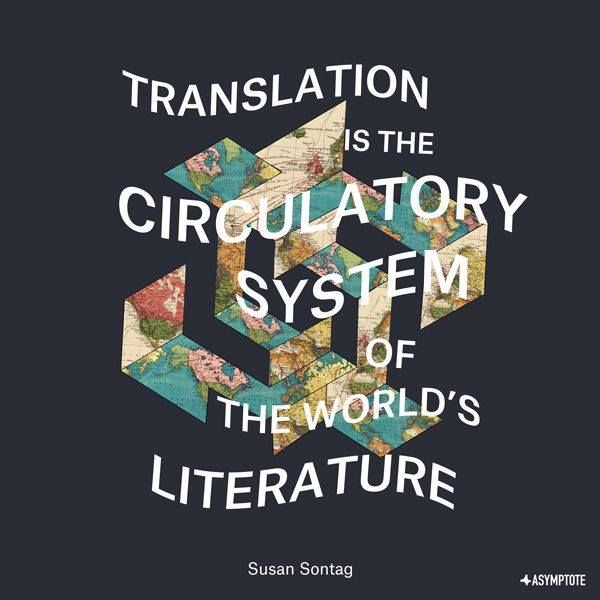
    For generations, the international publishing world operated around a narrow geographic axis. Books written in dominant English-speaking hubs dominated bookstore displays worldwide. Stories crafted in regional languages across Asia, Africa, South America, and Eastern Europe struggled to secure international distribution. When works were translated, the process was often viewed as a purely mechanical service. A utilitarian act of converting words from one dictionary to another. Today, a seismic cultural shift is redefining global literature. Translation is finally recognized as a sophisticated, creative art form that acts as the lifeblood of global storytelling. Recent publishing trends and prestigious accolades, such as the International Booker Prize, highlight this remarkable transformation. In 2026, the prize made history by awarding its top honor to Taiwan Travelogue by Yáng Shuāng-zǐ, brilliantly translated from Taiwanese Mandarin into English by Lin King. This historic win marking the first time a Taiwanese Mandarin work secured the award highlighted a broader reality. Global audiences are hungrier than ever for diverse, culturally distinct narratives. Over the past decade, sales of translated fiction have surged dramatically, proving that readers no longer seek comfort solely in familiar local settings. At the center of this movement is a fundamental re-evaluation of the translator’s role. Far from being invisible ghostwriters, translators are cultural ambassadors and literary artists in their own right. Translating a novel is rarely a matter of word-for-word substitution. Every language carries unique rhythms, idioms, historical baggage, and untranslatable social nuances. When a translator approaches a text, they must reconstruct its tone, preserve its emotional core, and decide how to navigate cultural concepts that have no direct equivalent in the target language. They rewrite the story from the inside out, ensuring it resonates authentically with a brand-new audience without stripping away its original soul. This evolving respect for translation has sparked important industry changes, such as the widely supported movement to print translators’ names directly on book covers alongside the author’s. Independent publishers are leading the charge, taking bold risks on works translated from lesser-represented languages, including Kannada, Taiwanese, Bulgarian, and Arabic. Digital distribution platforms have further accelerated this trend, allowing indie books to cross oceans instantly. Ultimately, translation is what prevents global literature from becoming an echo chamber. It dismantles geographical gatekeeping, fosters empathy across political divides, and allows readers to step directly into the lived experiences of people half a world away. The delicate craft of translation and the global literary community ensure that stories are no longer limited to by borders of the language in which they were born.  

  • Dad’s fake Ultrasound trick goes viral

    A father’s unusual way of helping his young daughter stop eating junk food has gone viral on social media. The video shows a Chinese father who was worried because his daughter loved junk food and would not stop eating it even after he asked her many times. https://www.instagram.com/reel/Dbalh_1AbcP/?igsh=NTV3MGpkcWpkang0 To teach her a lesson the father created a fake ultrasound video. In the video it looked like a worm was growing inside the girl’s stomach because of the junk food she was eating. The animation showed the worm happily eating ice cream and other unhealthy foods becoming bigger each time she ate them. According to the viral story the trick worked and the little girl completely gave up junk food. The video quickly spread across social media and received mixed reactions. Some people praised the father’s creative idea while others said it is better to explain the benefits of healthy eating instead of frightening children.

  • Vaping risks for young people

    A major review by the Royal College of Paediatrics and Child Health has raised concerns about the growing use of e-cigarettes among children and teenagers. Researchers reviewed thousands of studies looking at how vaping may affect the health of young people. Vaping has increased sharply According to the report vaping among young people has increased 10 times over the past decade.  Many teenagers are also starting to vape at a very young age, increasing concerns about long term health effects. Vaping may harm lung health The review linked vaping among young people with several breathing problems including: •Coughing •Wheezing •Symptoms of bronchitis Worsening asthma symptoms Experts also warn that young people who vape may be more likely to start smoking traditional cigarettes later. Other possible health effects The report also highlighted several other concerns linked to vaping including. Nicotine addiction •Poor oral and dental health •Anxiety •Depression •Suicidal thoughts •Possible sleep problems •Potential effects on eye health •Allergies Researchers say more studies are still needed to fully understand some of these effects. Experts warn parents and young people Professor Will Carroll a co-author of the report said vaping should not be viewed as a harmless part of growing up. The evidence shows clear links between vaping, breathing problems nicotine dependence and future cigarette use. Vaping may look less harmful than traditional smoking but experts warn that it can still pose serious risks for children and teenagers. Preventing young people from starting vaping could help protect their health both now and in the future.

  • Kids and healthy eating

    Fast food sugary drinks and packaged snacks have become a regular part of many children’s diets. As a result experts say more children are facing problems such as obesity poor nutrition weaker immunity and other  health issues. Health experts believe that instead of completely banning junk food parents should slowly encourage children to make healthier food choices. One of the best ways to do this is by setting a good example.  Children often copy their parents’ habits. When parents eat balanced meals choose fresh fruits and vegetables and enjoy homemade food instead of fast food children are more likely to do the same. Nutrition experts also suggest explaining why healthy food is important. Instead of simply saying “no” to junk food parents should help children understand that healthy meals support growth give them energy improve focus at school and help them stay active. Parents can also involve children in grocery shopping by letting them pick fruits and vegetables or help prepare simple meals. This makes healthy eating more fun and encourages better food choices. Keeping healthy snacks at home is another simple but effective step. Fresh fruit yogurt milk nuts salads boiled corn and healthy sandwiches are much better options than chips cookies or soft drinks. When healthy snacks are easy to find children are more likely to choose them. Experts also recommend limiting junk food instead of banning it completely. If fast food chocolate and sugary drinks are always available at home children will naturally want them more. Saving these treats for special occasions and serving them in small amounts can help create healthier eating habits. Physical activity is just as important as a healthy diet.  Parents should reduce children’s screen time and encourage them to play outside ride bicycles go for walks or take part in sports. Regular exercise improves overall health and can also reduce unhealthy snacking. Experts say that with patience consistency and a positive attitude parents can help children develop healthy eating habits that will benefit their health now and in the future.

  • Texter’s thumb warning signs

    Smartphones have become an important part of daily life but using them for long hours can put extra stress on your hands especially your thumbs. If you often spend hours typing chatting or scrolling through social media and notice pain stiffness numbness or a clicking feeling in your thumb wrist or hand don’t ignore these signs. Health experts say this condition is commonly known as “Texter’s Thumb.” It is a term used for hand and thumb problems caused by repeated smartphone use. Common symptoms include thumb joint pain stiff fingers swelling near the thumb and discomfort while moving it. Doctors warn that ignoring these symptoms can lead to more serious hand and wrist problems over time.  In the past people mainly used phones for calls and text messages. Today smartphones are used for social media online banking watching videos shopping gaming and many other daily tasks. This increase in screen time puts continuous pressure on the hands. Dr. Maureen O’Shaughnessy from the University of Kentucky HealthCare Hand Center says smartphones are now a permanent part of modern life so people should learn healthier ways to use them without putting unnecessary strain on their hands and body. Experts explain that holding a phone in the same position for hours or keeping the wrist and elbow in one position for too long can cause pain at the base of the thumb and in the wrist. Using only one hand for most phone activities can also tire the fingers. Many people notice their pain improves after spending a few days using their phones less. To reduce the risk experts recommend taking regular breaks from your phone. If you cannot avoid using it try changing how you hold it switch between your left and right hand and use different fingers instead of relying only on your thumbs. Reducing endless scrolling can also help. Using the phone’s voice to text feature is another simple way to reduce typing and lower stress on your hands. Increasing the font size can make the screen easier to read without holding the phone too close. Grip holders or phone rings attached to the back of the device can also improve comfort by spreading the phone’s weight across your hand and acting as a stand while watching videos. If your hands or thumbs feel sore after a long day of phone use spend a few minutes each day doing gentle stretches for your fingers and wrists. Experts say these simple exercises can relax the muscles improve blood flow and help prevent future hand and wrist problems.

Leave a Reply

Your email address will not be published. Required fields are marked *