imfbacked move end
|

IMF-backed move to End EPZ local sales Quota sparks concerns over textile recycling, jobs

KARACHI: A proposed move to withdraw the permission allowing factories operating in Pakistan’s Export Processing Zones (EPZs) to sell up to 20% of their output in the domestic market has triggered concerns among exporters, investors and international textile-recycling organisations, who fear the policy could disrupt investment, employment and a wider global circular-economy supply chain.

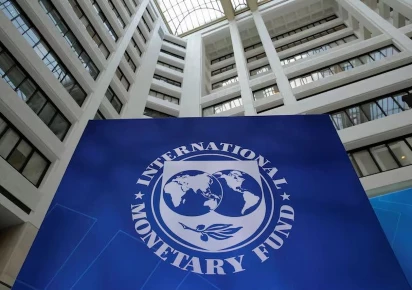
The controversy has emerged after Pakistan committed to the International Monetary Fund (IMF) that it would amend the existing rules governing EPZs and prohibit sales from these zones into the domestic tariff area.

According to the IMF’s latest programme review, Pakistan has committed to introduce amendments aimed at ending domestic sales by EPZ-based manufacturers. The report states that the amendments were to be placed before the federal cabinet for approval by September 2026.

However, exporters and industry representatives have challenged the move, arguing that the existing 80:20 arrangement was part of the investment and regulatory framework under which many businesses established operations in the zones.

Under the existing system, EPZ manufacturers can export 80% of their production while selling up to 20% in Pakistan after payment of applicable duties and taxes. Industry stakeholders say the domestic-sale provision is particularly important for products that have limited commercial demand in overseas markets.

The proposed abolition has also attracted attention in the United States because American companies supply raw materials and used textiles to Pakistani businesses operating in the EPZs.

The US-based Secondary Materials and Recycled Textiles Association (SMART) has approached IMF Mission Chief to Pakistan Iva Petrova, warning that eliminating the domestic-sales provision could have consequences extending beyond Pakistan’s industrial sector.

The association has argued that Pakistan occupies an important position in the global textile circular economy, particularly in the sorting, grading, reuse and recycling of used textiles collected in North America and Europe.

According to SMART, used clothing and textile materials collected in the United States, Canada and European countries are sent to Pakistan, where they are sorted and graded before being channelled into reuse, recycling, manufacturing and affordable consumer markets.

The association has warned that ending the 80:20 mechanism could reduce demand for recovered textiles and place downward pressure on their prices. Such a development, it said, could weaken textile-collection programmes in North America and reduce the income generated by charitable organisations from donated clothing.

Organisations including Goodwill, the Salvation Army and St Vincent de Paul depend partly on revenues generated from donated goods to finance a range of social programmes, including workforce training, employment assistance, food support, recovery services, youth programmes and housing assistance.

SMART has therefore cautioned that a major disruption in Pakistan’s used-textile market could have financial consequences for charitable organisations in North America, with potential losses running into tens of millions of dollars.

The association also warned that reduced demand for used textiles could ultimately result in a greater volume of reusable material being sent to landfills or incinerators rather than being recycled or reused.

US exporters raise objections

US exporters have also expressed concern over the proposed withdrawal of the 20% domestic-sale allowance. Their concerns are significant because American suppliers form part of the upstream supply chain that feeds Pakistani recycling and manufacturing units located in EPZs.

Abid Iqbal, representing Nashmia Industries, said during Express News programme The Review that US exporters had communicated their concerns to Pakistani counterparts.

According to Iqbal, US exporters had also been told informally that the IMF itself had not initiated the proposal to remove the 20% quota.

The development has consequently raised questions within the industry about how the condition was incorporated into Pakistan’s commitments under the IMF programme and whether sufficient consultation took place with affected stakeholders.

Industry representatives have also warned of possible legal and contractual disputes, maintaining that the 20% domestic-sales provision was part of the regulatory and investment framework under which businesses made their investment decisions.

They argue that companies entered the zones with an understanding that they would be able to export the bulk of their production while disposing of a limited portion in the domestic market after meeting applicable tax and customs obligations.

EPZ rules and proposed amendment

The Export Processing Zones Authority (EPZA) operates under the legal framework established through the EPZ Act of 1980. The law enables the establishment of export processing zones with approval from the federal government.

Under Rule 228(5) of the Customs Rules, EPZ-based factories have historically been allowed to sell up to 20% of their production in the domestic tariff area, subject to applicable duties and taxes. A higher limit of 30% had been applicable to the Resalpur area.

EPZA has reportedly forwarded a proposal to the Federal Board of Revenue (FBR) to eliminate the 20% quota from October 1 in line with the IMF-related commitment.

The proposal, however, has exposed differences within the government over the scope and interpretation of the IMF condition.

Proceedings of the Senate Standing Committee on Industries held last month indicate that the Ministry of Industries and Production maintained that abolition of the 20% domestic-sales quota was not included in the original IMF agreement.

According to the ministry’s position, the initial IMF requirement was restricted to preventing the introduction of new fiscal incentives, including tax concessions and subsidies, rather than immediately eliminating the existing domestic-sales mechanism.

The ministry has reportedly argued that the later addition of the quota-related condition requires further clarification.

Assessment of EPZs

The issue is also linked to an assessment of Special Economic Zones (SEZs) and EPZs that Pakistan was required to undertake under the IMF programme.

The government engaged consultancy firm AT Kearney to assess the zones and determine whether their operations were creating distortions in the domestic market.

According to records presented before the Senate Standing Committee on Industries, the assessment completed last year concluded that EPZs were not creating significant market distortions. The report, according to the parliamentary proceedings, did not recommend withdrawing existing fiscal incentives.

The issue has therefore become a point of discussion between government officials and the IMF as authorities seek to reconcile the lender’s programme requirements with Pakistan’s investment and export policies.

Last month, Special Assistant to the Prime Minister on Industries Haroon Akhtar Khan told a parliamentary committee that the Ministry of Industries was attempting to persuade the IMF to permit the establishment of additional EPZs.

The government’s position indicates that authorities continue to regard export processing zones as a potential instrument for attracting investment, generating employment and increasing exports.

Industry warns of investment and employment impact

Investors and industry representatives have strongly opposed the proposed removal of the 80:20 mechanism, saying the policy could undermine the commercial viability of some EPZ operations.

They argue that a portion of the goods sold in Pakistan consists of grades and materials for which the domestic market is effectively the only commercially viable destination.

According to industry stakeholders, these products may not have sufficient demand in international markets. Pakistani buyers, aware of their limited alternative marketability, often purchase such goods at or below cost.

Industry representatives contend that forcing manufacturers to export the entire output would therefore not necessarily increase exports in a meaningful way. Instead, they argue, some products could incur additional logistics costs without generating corresponding export earnings.

Under the existing arrangement, goods that are difficult to sell internationally can be disposed of within Pakistan after payment of applicable duties and taxes. Removing this option could require companies to transport such material outside the region.

Investors estimate that shipping these products away could add thousands of dollars in transportation, handling and related costs for every four or five containers processed at an EPZ facility.

They fear that such additional expenses could make some operations financially unviable and discourage future investment in export processing zones.

Concerns over exports and foreign exchange

Industry representatives have further argued that EPZ businesses have a distinct financial structure compared with many conventional exporters.

According to investors, EPZ companies do not depend on the State Bank of Pakistan’s foreign exchange reserves to finance imports of raw materials, machinery and other production inputs. Instead, they use their own foreign-currency resources for such imports.

They maintain that this arrangement means EPZ-based businesses can bring capital, machinery and raw materials into Pakistan without placing the same direct pressure on the country’s official foreign exchange reserves.

The industry has consequently warned that the proposed policy could have unintended consequences by discouraging existing investors, reducing employment opportunities and weakening export-oriented manufacturing.

SMART has similarly argued that eliminating the 80:20 framework could jeopardise investments, jobs, exports and foreign exchange earnings while disrupting an established international textile-recycling network.

The association has also raised legal and contractual questions, saying that the proposed change could affect companies that made investment decisions on the basis of the existing EPZ regulatory framework.

As the government moves towards implementing the IMF-linked reforms, industry stakeholders are seeking further consultation and clarification before the 20% domestic-sales facility is withdrawn.

The debate now centres on whether the government can meet its commitments under the IMF programme without undermining the investment incentives, recycling networks and commercial arrangements that have developed around Pakistan’s EPZs over several decades.
Similar Posts

  • | |

    Mir Raza’s DNA matches parents as probe team exp…

    The DNA of Karachi businessman Mir Raza has matched samples collected from his parents, officials said on Tuesday. The development is part of the ongoing investigation into his death. Authorities have also expanded the investigation team handling the case. A notification has been issued for the appointment of two additional officers. According to the notification, DSP Sirajuddin and Inspector Muhammad Ali have been included in the investigation team. Their addition has increased the strength of the team to seven members. The latest appointments come as investigators continue to examine different aspects of the case. Police are also reviewing the available evidence as part of the probe. Meanwhile, the former investigation officer appeared before the Judicial Magistrate East in connection with the case. He requested additional time to submit the investigation report. The former officer told the court that the investigation was still in progress. He also informed the court that senior authorities had changed the officer responsible for investigating the case. He said the newly appointed investigation officer would appear before the court at the next hearing. The officer is expected to continue the investigation and submit the required report. The court accepted the request for more time. It directed the former investigation officer to submit the report by August 15. The court proceedings took place as investigators continued their efforts to establish the circumstances surrounding Mir Raza’s death. The DNA match with his parents has also provided an important development in the investigation. Authorities are now expected to continue examining other evidence and findings linked to the case.

  • | |

    PTI can’t escape Mall Road attack: Talal

    Minister of State for Interior Talal Chaudhry has said that the Pakistan Tehreek-e-Insaf (PTI) leadership cannot distance itself from the recent shooting incident on Rawalpindi’s Mall Road. Addressing a press conference in Islamabad, Chaudhry said the incident was deeply regrettable and alleged that the man involved had links with the PTI and had remained in contact with the party’s leadership. According to the minister, the suspect had previously stayed at the Khyber Pakhtunkhwa House and had met members of the PTI leadership. He also allegedly carried the party’s flag and appeared in social media videos showing attacks on security forces. Chaudhry said a security personnel was injured when the attacker opened direct fire on Mall Road. He argued that the PTI leadership could not simply deny responsibility by claiming that the individual had no connection with the party or suffered from mental health problems. “If his mental condition was not stable, why did he attack a security official instead of his own family or a party leader?” Chaudhry asked. He questioned why the individual had allegedly been placed at the frontline of protests if the party had no association with him. The minister accused the PTI of promoting a political culture based on confrontation, violence and hatred. He said the government had repeatedly urged the party to avoid spreading hostility and unrest among young people. Chaudhry linked such politics to previous violent incidents, including the events of May 9 and November 26, and warned that continuing to promote hatred could lead to further incidents. He also criticised what he described as vandalism and arson carried out in the name of politics. He questioned what the PTI had achieved for the people of Khyber Pakhtunkhwa during its long period in power in the province. “Setting things on fire and creating disorder is not politics,” he said, adding that such actions neither served the party nor the province. Referring to future political activities, Chaudhry warned that similar incidents could occur again if party workers continued to be exposed to what he described as hateful and inflammatory rhetoric. He also criticised PTI founder Imran Khan’s statements and speeches, alleging that they had contributed to political polarisation and unrest. Chaudhry further accused PTI supporters of disrespecting security personnel and national heroes, including through social media posts targeting the country’s fallen soldiers. The minister said investigations into the Rawalpindi incident were progressing and that authorities were conducting a transparent inquiry. He assured that the findings would be made public once the investigation was completed. Chaudhry said the government would not allow Pakistan to be pushed into further political instability and warned that those involved in attacks would face legal consequences.

  • |

    Pakistan, Japan agree to expand development cooperation

    Pakistan and Japan have reaffirmed their commitment to strengthening long-standing development cooperation, with both sides agreeing to expand collaboration in economic reforms, mineral development, technical training, and human resource development during a high-level meeting in Islamabad. The understanding was reached during a meeting between Prime Minister Shehbaz Sharif and a nine-member delegation led by Japan International Cooperation Agency (JICA) President Dr. Tanaka Akihiko. Welcoming the delegation, Prime Minister Shehbaz Sharif described the seven-decade partnership between Pakistan and Japan as a cornerstone of bilateral relations, expressing confidence that the JICA president’s visit would inject fresh momentum into cooperation between the two countries. The prime minister highlighted the government’s ongoing economic reform agenda, stating that Pakistan had successfully navigated a challenging economic period through coordinated efforts and was now focused on achieving sustainable and inclusive economic growth. He said the government’s reform programme had produced encouraging results, noting that national revenues had doubled over the past three years. According to the prime minister, these improvements were creating greater fiscal space for investment in development priorities and public welfare. Shehbaz Sharif emphasized that equipping young people with modern skills and technical education remains one of the government’s foremost priorities. He said the administration is also committed to creating quality employment opportunities and promoting the economic empowerment of women as part of its broader development strategy. During the meeting, the prime minister welcomed JICA’s technical assistance in Pakistan’s minerals sector, describing the cooperation as timely given the country’s vast untapped mineral resources. He also appreciated JICA’s collaboration with the Small and Medium Industrial Development Authority (SMIDA), saying such partnerships would help strengthen industrial capacity, improve productivity, and boost Pakistan’s exports. The discussions also covered ways to broaden bilateral cooperation in areas including infrastructure development, capacity building, vocational training, and investment promotion. Both sides acknowledged the importance of expanding technical collaboration to support Pakistan’s long-term economic transformation. JICA President Dr. Tanaka Akihiko thanked Prime Minister Shehbaz Sharif for his warm welcome and appreciation, reaffirming Japan’s commitment to supporting Pakistan’s development journey. He noted that JICA and Pakistan share a long-standing partnership built on mutual trust and cooperation, adding that the agency remains ready to further expand its engagement across multiple sectors, including economic development, human resource development, and technical cooperation.

  • | |

    Jason Sudeikis praises Justin Bieber after memorab…

    Jason Sudeikis has nothing but admiration for Justin Bieber following the singer’s widely praised performance at the 2026 FIFA World Cup halftime show. The actor and comedian recently reflected on his surprise appearance as Ted Lasso, revealing that working with Bieber was an enjoyable experience and describing the pop star as “a very coachable young man.” Speaking during an episode of the A Lot More podcast, scheduled for release on August 8, Sudeikis looked back on his cameo in the halftime show, which blended music, comedy and the uplifting spirit of his beloved Ted Lasso character. The actor said he was thrilled to be part of such a global event and praised everyone involved in bringing the production together. (people.com⁠) During the interview, Sudeikis shared that he spent time working with Bieber before the performance, offering encouragement and a few lighthearted coaching moments inspired by Ted Lasso’s optimistic approach. While speaking about the experience, he said Bieber was eager to collaborate, listened carefully to creative ideas and embraced the process with humility. Sudeikis explained that Bieber’s willingness to take direction made rehearsals enjoyable. He joked that the singer was “very coachable,” adding that Bieber approached every suggestion with enthusiasm and professionalism. The actor noted that despite being one of the world’s biggest music stars, Bieber remained open to feedback and focused on delivering the best possible performance for fans. The 2026 FIFA World Cup halftime show attracted global attention, combining live music with special guest appearances that celebrated the tournament’s international appeal. Bieber’s energetic performance quickly became one of the event’s biggest talking points, with fans praising both the production and the surprise appearance by Sudeikis as Ted Lasso. The collaboration also delighted viewers because it brought together two widely admired figures from different areas of entertainment. Bieber, known for his chart-topping music career, and Sudeikis, celebrated for his Emmy-winning portrayal of Ted Lasso, shared a lighthearted chemistry that added warmth and humor to the spectacle. Sudeikis also spoke about the lasting popularity of Ted Lasso, saying he enjoys seeing how the character continues to inspire people through messages of kindness, teamwork and optimism. Bringing those qualities to one of the world’s biggest sporting events, he said, felt like a natural fit. Fans have responded positively to Sudeikis’ comments, with many appreciating his praise for Bieber’s work ethic and attitude. His remarks offered a behind-the-scenes look at the collaboration and highlighted the respect that developed between the two stars. As excitement surrounding the halftime show continues, Sudeikis’ reflections reinforce why the performance resonated with audiences worldwide. By combining entertainment, humor and heartfelt encouragement, the collaboration created a memorable moment that celebrated both music and sport while reminding fans that great performances are built on teamwork, preparation and mutual respect.

  • | |

    Ariana Grande to step back from public life after tour

    Pop superstar Ariana Grande has announced that she will take a break from public appearances after completing her Eternal Sunshine world tour next month, citing the constant public attention and scrutiny surrounding her personal life and appearance. According to her representatives, the singer has decided to step away from the spotlight to focus on her wellbeing after months of demanding performances and continuous media attention. They said Grande hopes to finish the tour in good health before taking a well-earned break from public-facing work. Her decision also means she will no longer appear in the upcoming London revival of Stephen Sondheim’s acclaimed musical Sunday in the Park with George, which is scheduled to open at the Barbican Theatre in 2027. The production company confirmed her withdrawal and expressed full support for her decision, saying it respects her choice and wishes her the very best. Grande was originally set to star alongside British actor Jonathan Bailey, her co-star in Wicked. Producers have confirmed that the production will continue as planned, although a replacement for her role has not yet been announced. The singer has faced growing public discussion about her appearance in recent years, with speculation intensifying following the release of her new album Petal and its promotional campaign. Her team emphasized that she remains healthy and continues to deliver physically demanding performances throughout her tour. Grande’s latest music video also appears to reflect the pressure she has experienced. In the video, she portrays a performer who is repeatedly criticized over her appearance and talent before ultimately confronting those judgments in a symbolic act against her critics. The final concert of the Eternal Sunshine tour is scheduled to take place in London on September 1. After that performance, Grande plans to step away from the public eye for an unspecified period to focus on her personal wellbeing and life away from constant media attention.

  • |

    Perez Hilton’s livestream prompts police response in Miami

    Celebrity gossip blogger Perez Hilton prompted widespread concern after police responded to his Miami home following a disturbing TikTok livestream in which he appeared to harm himself. Videos that quickly spread across social media showed the 48-year-old internet personality in an apparent state of distress. In the clips, Hilton appeared visibly agitated and was seen with blood on his body while repeatedly using an object to injure himself. The footage led viewers to contact emergency services, fearing for his safety. Authorities confirmed they received multiple reports from concerned members of the public regarding a person appearing to self-harm during a livestream. Deputies were dispatched to Hilton’s residence to assess the situation and ensure his well-being. After arriving at the property, officers determined that Hilton was alone inside his home. Law enforcement officials said they chose a de-escalation approach, avoiding direct confrontation while also communicating with members of his family. Officials explained that when responding to incidents involving an individual experiencing a mental health crisis, officers often prioritize creating time and distance to reduce tension. Crisis intervention strategies are commonly used in such situations to encourage communication while minimizing the risk of harm to the individual, responding officers, and the public. The incident has sparked renewed discussion online about mental health awareness, crisis intervention, and the emotional pressures faced by public figures whose personal struggles often unfold in front of large audiences. Hilton has previously spoken publicly about his health and emotional challenges. Earlier this year, he revealed that he had been hospitalized for nearly three weeks after what initially appeared to be a case of the flu developed into a series of serious medical complications. According to Hilton, his condition worsened significantly, leading to an ulcer, a perforation, and eventually sepsis, a life-threatening response to infection. He later described the experience as one of the most difficult periods of his life. Following his recovery and return home, Hilton shared that the ordeal had transformed his outlook on life and faith. He said the experience strengthened his spiritual beliefs and inspired him to reconnect with religion. The media personality explained that he believed the difficult experience brought him closer to God and encouraged him to begin attending church regularly with his children. He described the change as deeply personal and life-changing. In recent months, Hilton had also hinted at ongoing emotional struggles through social media. In one video shared earlier this year, he asked followers to pray for him, saying he felt he was facing intense personal challenges. Perez Hilton, whose real name is Mario Armando Lavandeira Jr., rose to fame in the mid-2000s through his celebrity gossip website, becoming one of the internet’s most recognizable entertainment bloggers. Over the years, he has remained active across various social media platforms while also focusing on raising his three children, all of whom were welcomed through surrogacy. The latest incident has prompted an outpouring of concern from fans and followers, many of whom expressed hope that Hilton receives the care and support he needs as he navigates this difficult period.

Leave a Reply

Your email address will not be published. Required fields are marked *