rs112 trillion tobacco
|

Rs1.12 trillion tobacco case sparks Senate probe

Islamabad: A Senate subcommittee investigating cigarette smuggling and tax exemption misuse has raised serious questions regarding the possible recovery of Rs 1.12 trillion from the tobacco industry, alleged leakage of Customs data to private media, corruption complaints against officials and incomplete records provided by government departments. The committee ordered strict action, sought bank and asset details, and demanded a full investigation into the possible misuse of tax exemptions and consumption certificates.

The committee strongly questioned how confidential Customs data reached private media organisations. Members observed that such information could not have been leaked without the involvement of Customs officials. The committee also questioned the conduct of media organisations regarding professional ethics.

Federal Board of Revenue officials told the committee that an investigation into the data leak was already underway. The convener directed the FBR to take strict action against any official involved in leaking Customs data to the media and to submit a complete report.

A major part of the meeting focused on the reported recovery of Rs 1.12 trillion linked to the tobacco industry’s consumption certificates. The committee questioned why complete details of consumption certificates issued for goods imported into tax exempt areas had not been provided.

Officials informed the committee that the Peshawar High Court had ordered an audit before consumption certificates could be issued and had also stopped Pakistan Customs from cashing security cheques. The convener urged the FBR to challenge the court order before the Federal Constitutional Court and report back to the committee.

The committee also reviewed the alleged misuse of tax exemptions by industries operating in tax exempt areas. Senator Talha Mahmood alleged that some industrialists were operating two or more factories, including one in a tax exempt area and another in a settled area.

He further alleged that some Customs officials helped such businesses take advantage of the system. The Federal Investigation Agency told the committee that a team had been formed to investigate the matter.

Senator Talha Mahmood said the FIA could help improve the process of issuing consumption certificates if the issue was handled seriously. He also recalled that Pakistan Customs had previously installed tracking chips on containers to check their movement and confirm whether goods reached their declared destinations.

He called for stronger tracking and monitoring systems to stop smuggling and misuse of tax exemptions. The committee directed authorities to send letters to all factories operating in tax exempt areas, demanding complete details of imported materials, materials used, brand names and taxes paid during the last two years.

Members were informed that Pakistan Customs had issued consumption certificates worth around Rs 378 billion. The committee also sought bank and account details of the companies in whose names those certificates were issued.

The Chair observed that anyone refusing to provide required records or information could face legal action. The committee also examined serious allegations of corruption and theft involving officials. Three investigating officers identified as Shahzaib Ali, Fakhar Gondal and Christopher were presented before the committee regarding corruption allegations.

The committee was informed that 22 people were allegedly involved in theft incidents and that 11 had been arrested. The committee directed authorities to provide details of assets allegedly beyond the known income of the accused officials.

It also sought forensic examination reports of their mobile phones. Senator Talha Mahmood recommended that the Senate Standing Committee on Interior also take up the corruption case. The committee further examined tobacco industry consumption data and asked departments to provide records from earlier years in addition to the data already submitted.

Officials briefed members about major raw materials imported by tobacco companies. The committee was told that around 20,002 metric tons of acetate tow had been imported. Around 97 percent of this quantity was reportedly used by two major companies, while the remaining 3 percent was linked to other companies.

Officials also reported the import of around 15,639 metric tons of tobacco paper. Of this amount, around 10,840 metric tons was imported by Pakistan Tobacco Company, while Philip Morris imported around 3,118 metric tons. Other companies imported the remaining quantity.

The committee was also told that around 533 metric tons of filter rods had been imported. Two major companies accounted for around 96 percent of this quantity, while other companies accounted for the remaining 4 percent. According to the briefing, Pakistan Tobacco Company and Philip Morris together accounted for around 94 percent of imported material consumed by the tobacco industry.

Local companies accounted for the remaining 6 percent. The Chair expressed concern that government departments had still failed to provide complete and combined information to the committee. Officials informed the committee that Pakistan Tobacco Company and Philip Morris did not fall under the jurisdiction of RTO Peshawar.

Pakistan Tobacco Company was under LTU Islamabad, while Philip Morris was under LTU Karachi. The committee directed the concerned tax offices to provide full details of taxes collected and imported material linked to both companies. The committee was also informed that four illegal cigarette manufacturing companies operating in Khyber Pakhtunkhwa had recently been sealed.

Authorities were directed to provide full details of all companies operating under RTO Peshawar. The convener also asked officials to provide the formula used to calculate taxes on cigarettes. Senator Bilal raised concerns that Balochistan was still not receiving enough industrial development.

He also complained that legal goods were sometimes being treated as smuggled items even when borders in Balochistan were sealed. Another controversy emerged over conflicting figures related to people arrested in theft cases. One briefing told the committee that 22 people were involved and 11 had been arrested.

However, the Inspector General of the National Highways and Motorway Police also reported that 11 people had been apprehended. The committee sought clarification over the figures and demanded one accurate and complete position. Members expressed serious concern over what they described as a misleading statement made before the committee.

The committee directed that a letter be sent to the Ministry of Communications and ordered that the matter also be referred to the Privileges Committee. The FBR representative told members that the department had taken several steps to control tax exemption abuse, smuggling and other illegal practices.

Similar Posts

  • | |

    Bilawal urges Kashmiris to shape their own future

    MUZAFFARABAD: Pakistan Peoples Party (PPP) Chairman Bilawal Bhutto Zardari has reiterated that the people of Azad Jammu and Kashmir (AJK) alone should have the authority to determine their government and future, as political campaigning intensifies ahead of the second phase of the AJK elections. In a video message focusing on the Kashmiri people’s right to self-governance, Bilawal said his party was committed to ensuring that the residents of Azad Kashmir enjoy the same democratic rights as every citizen of Pakistan. “I want the people of Kashmir to receive the same rights that every Pakistani citizen enjoys,” Bilawal said, adding that the most fundamental of these rights is the right to sovereignty through the power of the vote. Explaining his vision, the PPP chairman said the true meaning of sovereignty is that every vote should be respected and accurately reflected in the election results. According to him, the public mandate must remain free from outside influence so that the will of the people prevails. Bilawal also stressed the need for greater representation of Azad Kashmir in national decision-making institutions. He argued that whenever key decisions are made regarding the region’s water resources, electricity or budgetary matters, Kashmir should have its own seat and an effective voice at the table. He maintained that stronger institutional representation would ensure that the interests of the people of Azad Kashmir are protected while promoting more inclusive governance. As part of his election campaign, Bilawal urged voters to support the PPP in the upcoming polls, asking them to stamp the party’s traditional arrow symbol on August 2. He said the election represented an opportunity for the people to safeguard their democratic rights and send a clear message that the future of Kashmir should be determined by its own citizens. The PPP chairman’s remarks come as political parties intensify their campaigns across Azad Kashmir ahead of polling, with issues of governance, development, constitutional rights and public representation dominating election debates. The second phase of the Azad Kashmir elections is expected to draw significant voter participation, with major political parties competing for crucial seats. Political analysts believe voter turnout and public confidence in the electoral process will play a decisive role in shaping the region’s next government and its political direction in the years ahead.

  • | |

    Gohar rejects reports on Imran-Noreen meeting

    PTI Chairman Barrister Gohar Khan has rejected reports about the meeting between party founder Imran Khan and Noreen Niazi. He said several fabricated reports were being circulated about what was discussed during the meeting. Speaking about the matter, Barrister Gohar said he contacted Noreen Niazi by phone after her meeting with Imran Khan. However, he said she did not share details of the conversation or explain what had taken place during the meeting. According to Barrister Gohar, Noreen Niazi had made it clear that she would not discuss the meeting outside. She had also decided not to speak publicly about the details of her interaction with Imran Khan. Barrister Gohar said there was no truth in reports claiming that Imran Khan had spoken against PTI leadership. He specifically clarified that the PTI founder had not made any remarks against Sohail Afridi or other members of the party leadership. He said the reports being circulated about the meeting were misleading and should not be treated as factual. Barrister Gohar maintained that the details being attributed to the meeting did not reflect what had actually been discussed. The PTI chairman also said Noreen Niazi appeared to be happy after meeting Imran Khan. However, he noted that there were certain matters discussed during the meeting that could not be shared publicly. He said some information remained private because of the nature of the meeting. Barrister Gohar therefore urged people not to rely on unverified reports or speculation regarding the interaction between Imran Khan and Noreen Niazi.

  • | |

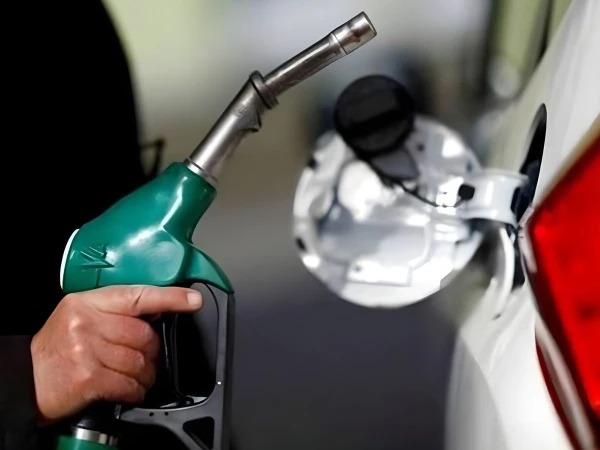
    Govt increases fuel prices as international oil ra…

    The Government of Pakistan has announced a fresh increase in petroleum prices, raising the price of petrol by Rs. 1.63 per litre and high-speed diesel (HSD) by Rs. 1.55 per litre. The revised prices will come into effect from July 29, according to a notification issued by the Petroleum Division. Following the latest revision, petrol will now cost Rs. 335.81 per litre, while high-speed diesel will be available at Rs. 388.38 per litre. Officials said the increase reflects fluctuations in international crude oil prices caused by renewed tensions in the Persian Gulf, which have affected global energy markets. The government continues to collect substantial taxes and duties on petroleum products. Consumers currently pay around Rs110 per litre in taxes and levies on petrol, while diesel carries approximately Rs96 per litre in taxes and duties. Fuel prices have remained volatile throughout the year. Diesel had previously reached a record Rs520.35 per litre in early April after rising sharply from Rs281 per litre during the escalation of the US-Iran conflict. Similarly, petrol climbed to a peak of Rs458.41 per litre after increasing from Rs266 per litre in early March. Petroleum Minister Ali Pervaiz Malik recently announced that fuel prices would now be reviewed daily instead of weekly. The decision aims to ensure domestic fuel prices better reflect international market trends, especially during periods of global uncertainty. Under the new policy, the Oil and Gas Regulatory Authority (Ogra) will determine daily fuel prices based on changes in international oil markets. However, the move has faced criticism from the All Pakistan Dealers Association, which has warned that it may launch protests against the daily pricing mechanism. Petrol is primarily used by private vehicle owners, motorcycles, rickshaws, and small transport operators. As a result, any increase directly impacts middle- and lower-income households. High-speed diesel is widely used in heavy transport, agriculture, power generation, and industrial sectors, meaning price hikes can also increase transportation and production costs, contributing to inflation. With monthly sales of 700,000 to 800,000 tonnes, petrol and diesel remain Pakistan’s largest petroleum products by consumption and are significant contributors to government revenue. As global oil prices continue to fluctuate, consumers should expect further adjustments in domestic fuel prices in the coming weeks.

  • Chiang Rai Railway Station Makes Steady Progress: Massive Rail Project Hits 66% Completion

    CHIANG RAI – The construction of the new Chiang Rai Railway Station is making excellent and steady progress. Located in the Wiang Chai district, this station serves as a major hub for the north. It now stands as a truly vital part of the brand-new Northern Double-Track Railway project. This exciting rail line will connect […]

  • | |

    Pakistan continues repatriation of undocumented Af…

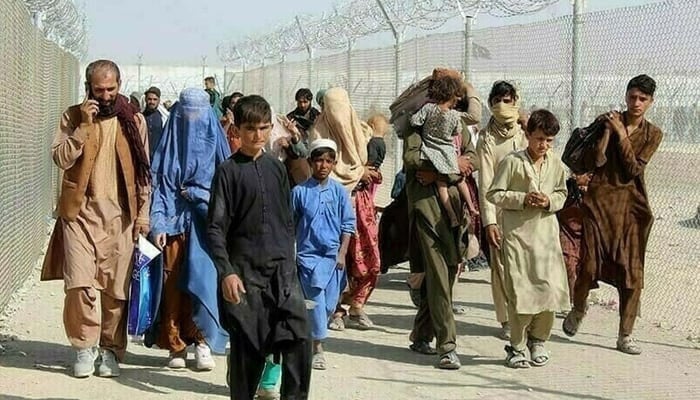
    Punjab authorities have stepped up action against Afghan nationals living in the province without valid documents. The Foreign National Security Cell of the Punjab Home Department is carrying out checks across the province. Officials are identifying Afghan nationals who are staying without acceptable visas. Those found to be residing illegally are being detained. They are then moved to designated holding centres before being repatriated to Afghanistan. A spokesperson for the Punjab Home Department said 2,689,295 Afghan nationals have so far been repatriated from Pakistan. The spokesperson said 140,468 undocumented Afghan nationals have been sent back from Punjab alone. Officials said the action is being carried out under the government’s existing policy. Under the policy, Afghan nationals without valid and acceptable visas are considered to be staying illegally in Pakistan. The crackdown is not limited to one area. Officials are conducting checks in residential neighbourhoods and commercial markets across Punjab. The authorities are also monitoring places where foreign nationals may be living or working. The purpose is to identify people who do not have the required legal documents. The department said detained Afghan nationals are transferred to holding centres. These facilities are being used to manage the repatriation process. There are currently 39 active holding centres across Punjab. According to the department, 188 Afghan nationals are currently staying in these centres. The provincial authorities have also directed action against people who rent properties to undocumented foreign nationals. Cases can be registered against property owners found violating the relevant rules. Officials said the enforcement drive will continue across the province. Authorities are maintaining checks in different areas as part of efforts to enforce immigration regulations.

Leave a Reply

Your email address will not be published. Required fields are marked *