meralco may absorb
| |

Meralco may absorb system loss, but ERC says its rates may need adjusting

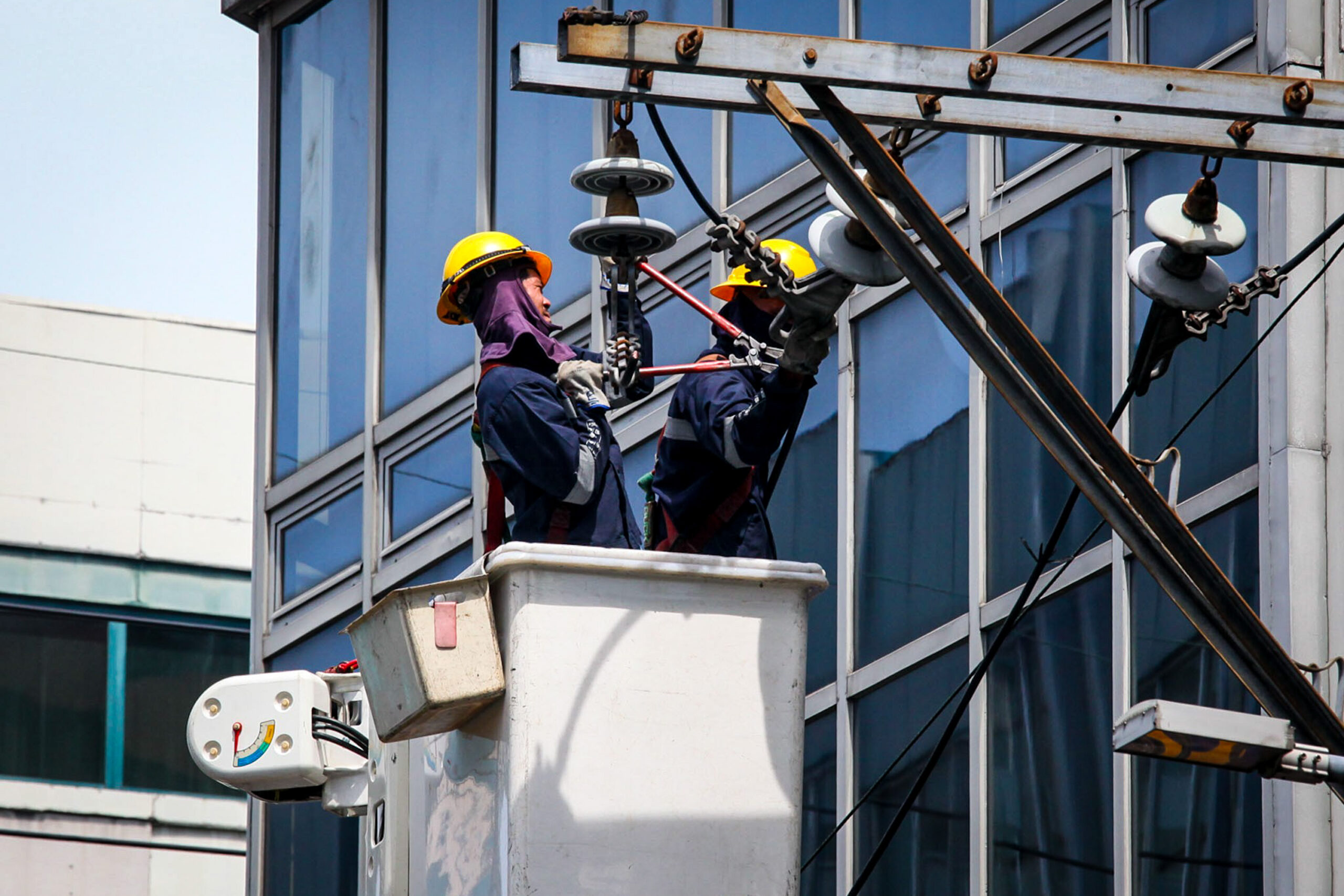
MANILA, Philippines – Meralco could be made to absorb more system loss costs, although regulators say some expenses needed to cut those losses may still end up reflecting in the rates consumers pay.

Energy Regulatory Commission (ERC) chair Francis Juan said the regulator is studying everything from a complete removal of system loss recovery, a phased approach, eliminating only nontechnical losses, or simply lowering the existing caps that determine how much utilities may pass on to customers.

“We’re looking at the impact of removal of system loss, whether total or phased in, whether just the nontechnical, whether there’s a lowering of the cap,” Juan said when asked by Rappler specifically how Meralco would be affected by measures to reduce system loss.

But moving the burden away from consumers and onto distribution utilities doesn’t automatically make the underlying losses disappear. Because of this, Juan said the ERC would have to consider the financial viability of Meralco and all other distribution utilities. 

If system loss is shifted from being a pass-through charge to a cost that utilities themselves have to bear, the regulator may also have to change the way their rates are calculated to recognize additional capital expenditures and other expenses needed to reduce those losses.

“If you will shift the cost, the burden to the utilities from the existing regulatory framework, where it is purely a pass-through to them, then you will have to also adjust certain things in terms of the rate-making methodologies for the distribution utilities so that they can adequately confront this cost and be able to operate more efficiently,” Juan said.

Must Watch

How much could you save if system loss charges are removed from your Meralco bill?


How much could you save if system loss charges are removed from your Meralco bill?

That leaves the government trying to strike a balance between giving utilities a stronger financial incentive to cut losses and avoiding a situation where distributors lack the money to make the investments needed to do so.

Energy Secretary Sharon Garin, however, has been clear that legitimate consumers should not continue paying for avoidable losses.

“Consumers should not be made to shoulder costs that can and should be addressed through greater efficiency and accountability,” Garin said.

Garin has ordered distribution utilities, including Meralco, to submit proposals on how they can minimize or eliminate system loss in their own areas.

Consumers could also get more immediate relief even before the larger system loss issue is settled. The ERC has separately proposed removing the 12% value-added tax on system loss charges.

Juan said the ERC hopes to finalize that resolution by the first week of September, subject to public consultation and coordination with the Bureau of Internal Revenue. 

For now, however, there is no final decision.

In a separate ambush interview, Juan reiterated that he was still meeting with representatives from Meralco and other distribution utilities to hash out a workable strategy. Pressed on whether he agreed with Meralco’s claim that they would be operating on a loss if asked to absorb system losses entirely, Juan smiled but kept his position to himself.

Meralco also has a long-pending rate reset, where the ERC determines the revenues and rates the utility is allowed to collect. Juan said the commission had hoped to take up the case in August, but staff are still completing their evaluation of the utility’s extensive submissions, with deliberations possibly slipping to September. He told Rappler, however, that any potential rate adjustments arising from changes to system loss rules would not yet be included in this reset.

Must Read

Meralco chair Pangilinan: Power industry ‘may not survive’ if asked to absorb system loss


Meralco chair Pangilinan: Power industry ‘may not survive’ if asked to absorb system loss

NEA: Most co-ops to operate at a loss if made to absorb nontechnical losses

Meanwhile, electric cooperatives could face the steepest consequences if they are suddenly required to absorb all system loss costs, with the National Electrification Administration (NEA) warning that dozens could be pushed into financial losses without government support.

NEA estimates that removing just 25% of recoverable nontechnical losses could leave 62 of the country’s 121 electric cooperatives suffering financial losses. A 50% removal could affect 71 cooperatives, while outright elimination could leave as many as 89 in the red.

The concern is particularly acute because part of system loss cannot simply be eliminated. Technical losses naturally occur as electricity passes through lines, transformers, and other equipment and, as NEA put it, are governed by the “law of physics.” Nontechnical losses, on the other hand, include electricity that is stolen or otherwise consumed without being properly recorded or paid for.

To help cooperatives shoulder the transition, NEA is proposing loans to finance better metering and other measures needed to bring losses down. It estimates it would need P3.5 billion in loan funds for a 25% reduction in recoverable nontechnical losses, P5.5 billion for a 50% cut, and P10 billion if recovery is eliminated entirely.

NEA stressed that the assistance would not be a subsidy, but financing that cooperatives would have to repay.

The agency argues that investments can produce results. Zamboanga City Electric Cooperative, for instance, brought its system loss rate down from around 20% in January to roughly 13% in July following interventions that included improvements in metering and collections, a model NEA is considering for other struggling cooperatives. – Rappler.com
Must Read

Cheaper PH electricity? Go beyond system loss; fix costly power contracts


Cheaper PH electricity? Go beyond system loss; fix costly power contracts

Similar Posts

  • | | | |

    Yuchengco tells SEC’s Lim: Fresh PSE blood is shareholders’ call

    (1st UPDATE) As Francis Lim pushes out the PSE board’s old guard with his new term limit rules, Vivian Yuchengco, the long-serving broker-director insists that ‘if shareholders want new directors, they can elect new directors’

  • |

    Pakistan reports major gas discovery in Sarani block

    ISLAMABAD: Pakistan has recorded a significant milestone in its hydrocarbon exploration sector with the discovery of high-quality gas from an exploration well in Sindh, marking the country’s first reported hydrocarbon find from the Jurassic-era Chiltan Formation of the Lower Indus Basin. Pakistan Petroleum Limited (PPL) announced that its exploration well Dolphin, drilled in the company-operated Sarani Block in District Sujawal, Sindh, has encountered a potentially commercially important gas accumulation. The company described the discovery as unique and strategically significant for Pakistan’s future exploration activities. According to PPL, the discovery confirms the existence of an active petroleum system in an area that had previously presented considerable exploration challenges. The find is particularly important because it demonstrates the hydrocarbon potential of the Jurassic-age Chiltan Formation, opening up new possibilities for further exploration in the region. The company said the Dolphin well has provided valuable geological evidence that could help redefine exploration prospects in the onshore swampy areas of the Lower Indus Basin, as well as their possible extensions into shallow marine zones. The discovery is being viewed as an important development for Pakistan, which continues to face a growing gap between domestic energy demand and local oil and gas production. New indigenous gas reserves could help reduce reliance on imported energy resources, although the commercial scale and recoverable reserves associated with the discovery would depend on further evaluation and development work. PPL’s latest find also highlights the potential of relatively underexplored geological formations in the country. The identification of hydrocarbons in the Chiltan Formation could encourage exploration companies to reassess nearby acreage and investigate similar geological structures. The Dolphin discovery is therefore significant not only because of the gas encountered but also because it may establish a new exploration play in the Lower Indus Basin. Further appraisal and technical studies will be required to determine the size, quality, production potential and commercial viability of the discovery. Industry experts have long emphasized the need for increased domestic exploration to strengthen Pakistan’s energy security. Successful discoveries such as Dolphin could support that objective by expanding the country’s indigenous resource base and creating opportunities for additional exploration and investment. PPL said the discovery has effectively opened a new exploration frontier, particularly in the swampy onshore terrain and potentially adjoining shallow marine areas. The company is expected to undertake further technical assessment to establish the full potential of the newly identified gas-bearing formation.

  • | | |

    Oil prices surges avove $91 as Iran war fuels Horm…

    Oil prices climbed on Tuesday, with Brent crude moving above $91 a barrel as stalled diplomacy over the Iran conflict raised fresh concerns about global energy supplies. Brent futures gained 27 cents, or 0.3%, to $91.14 a barrel, while US West Texas Intermediate rose 42 cents to $85.04. WTI had earlier reached $85.37, its highest level since July 31. Markets remained tense after Iran signalled a shift toward a more offensive military posture, while Washington ruled out extending a temporary ceasefire. Progress toward reopening the Strait of Hormuz to normal tanker traffic has also slowed, adding to fears of prolonged supply disruptions. Only a handful of commodity vessels crossed the strategic waterway over the weekend, sharply below normal traffic levels. Concerns were further heightened by attacks in the Red Sea, reinforcing fears over disruptions at both the Strait of Hormuz and Bab el-Mandeb. Despite the growing tensions, reports of possible back-channel contacts between the US and Iran offered a limited sign of hope for renewed diplomacy. Meanwhile, markets are also watching US crude inventories, which are expected to have declined last week. Earlier, Oil prices climbed on Monday as uncertainty over a possible diplomatic breakthrough between the United States and Iran increased, while a sharp slowdown in tanker movements through the Strait of Hormuz heightened concerns about disruptions to global crude supplies. Brent crude futures gained as much as 1% during early trading to reach $89.40 per barrel. The benchmark was later up 72 cents, or about 0.8%, at $89.20 a barrel by 0229 GMT. US West Texas Intermediate (WTI) crude also moved higher, rising 44 cents to $82.83 per barrel. Both international benchmarks posted gains of more than 5% last week after a series of attacks involving energy and shipping assets in and around the strategically important Strait of Hormuz. The incidents have intensified fears that further escalation could affect one of the world’s most important oil transit routes. Market sentiment was further affected by developments over the weekend, when Iranian Foreign Minister Abbas Araqchi said Tehran had yet to decide whether it would resume negotiations with Washington. US President Donald Trump, meanwhile, told Americans to prepare for somewhat higher gasoline prices as the conflict continues. Analysts said the renewed uncertainty had brought geopolitical risk back into crude markets after oil prices had previously come under pressure on expectations that diplomatic efforts could ease tensions. “Oil prices have now rebounded almost completely from the lows seen in early August, as hopes for a more permanent resolution between the US and Iran have faded and geopolitical risk premiums have returned to the market,” said Priyanka Sachdeva, head of market insights at Phillip Nova in Singapore. Sachdeva cautioned, however, that the rally could lose momentum unless there is evidence of a further deterioration in the situation. She said the market would need to see renewed aggression in the Strait of Hormuz, particularly significant damage to oil tankers or energy infrastructure, before prices were likely to move substantially higher. Hormuz shipping activity slows Concerns over physical supply disruptions increased after ship-tracking data showed a marked decline in vessel traffic through the Strait of Hormuz over the weekend. According to data from Kpler, only five commodity vessels crossed the strategic waterway on Saturday, while no such transits were recorded on Sunday. This compared with 31 commodity vessel crossings during the previous weekend. The slowdown is significant because the Strait of Hormuz is a critical route for international energy shipments. Any prolonged disruption could increase transportation risks, raise insurance costs and place additional upward pressure on crude prices. The United Arab Emirates also accused Iran of attacking another vessel operated by Abu Dhabi National Oil Company (ADNOC) while it was passing through the strait on Friday, according to the Emirati state news agency WAM. The UAE had earlier blamed Iran for two separate incidents involving ADNOC-operated vessels on Thursday evening. The latest incidents have added to concerns among traders that the conflict could increasingly affect commercial shipping and energy infrastructure, rather than remaining confined to military and diplomatic confrontation. The Strait of Hormuz remains particularly important to global oil markets because a substantial volume of crude and petroleum products moves through the waterway. Any sustained interruption could therefore have consequences well beyond the region. For now, traders are closely monitoring developments involving US-Iran diplomatic contacts, attacks on shipping and the movement of tankers through the strait. While the latest price gains reflect a higher geopolitical risk premium, analysts remain cautious about predicting a prolonged rally. If shipping activity resumes and diplomatic channels reopen, some of the premium built into crude prices could quickly unwind. Conversely, additional attacks on tankers, oil facilities or other critical infrastructure could trigger a stronger market reaction and push prices higher as traders reassess the security of regional supplies.

  • |

    Pakistan’s auto tax policy sparks industry divide over EV incentives

    LAHORE: Pakistan’s automobile industry is witnessing growing divisions over the government’s taxation policy for vehicles, with local manufacturers warning that the current framework unfairly benefits expensive imported and premium new energy vehicles (NEVs) while placing a heavier tax burden on affordable cars purchased by middle-income families. The controversy has intensified following the government’s decision to introduce a range of fiscal incentives for new energy vehicles, including battery electric vehicles (BEVs), plug-in hybrid electric vehicles (PHEVs) and range-extended electric vehicles (REEVs). While the policy is designed to accelerate Pakistan’s transition towards cleaner transportation and reduce reliance on fossil fuels, established local assemblers argue that the incentives are skewed in favour of luxury vehicle buyers instead of promoting affordable green mobility. Industry representatives say the taxation gap between conventional locally assembled vehicles and premium electric vehicles has widened considerably, raising concerns over fairness, competitiveness and the long-term sustainability of Pakistan’s domestic automobile manufacturing sector. According to industry estimates, a locally assembled Suzuki Alto—one of the country’s most affordable passenger vehicles priced at around Rs3 million—bears nearly Rs550,000 in taxes, including sales tax, federal excise duty (FED) and the recently introduced New Energy Vehicle (NEV) levy. In contrast, a premium REEV costing close to Rs10 million reportedly attracts sales tax of only around Rs100,000 while remaining exempt from both the federal excise duty and the NEV levy. The tax disparity has triggered criticism from domestic manufacturers, who argue that the current structure effectively penalises middle-income consumers while offering generous incentives to buyers of high-end imported vehicles. Local Assemblers Raise Concerns Pak Suzuki Motor Company spokesperson Ikhlaq Virk said the taxation framework has created an uneven competitive environment that disadvantages affordable vehicles widely used by Pakistani families. He said entry-level models such as the Alto and Cultus serve as essential transportation for the country’s middle class but receive no meaningful tax relief despite their affordability. Virk further noted that premium hybrid and electric vehicles, valued at nearly Rs10 million or more, continue to enjoy substantial concessions under the government’s clean mobility policy. He also pointed to reports suggesting that the sales tax on certain plug-in hybrid and hybrid electric vehicles could be reduced from 25 percent to 18 percent after changes introduced through the Finance Bill, arguing that such relief would primarily benefit affluent consumers rather than encouraging mass-market adoption. IMF Programme Adds Complexity The debate comes at a time when Pakistan remains under an International Monetary Fund (IMF) programme, which has required the government to increase tax revenues, rationalise subsidies and implement fiscal reforms to stabilise the economy. Against this backdrop, industry stakeholders argue that taxation policies should strike a balance between environmental objectives and economic realities, ensuring that clean energy initiatives do not disproportionately favour a small segment of wealthy consumers. The discussion has also reopened a broader policy debate over whether Pakistan’s green mobility strategy should focus solely on reducing emissions or also safeguard domestic manufacturing, employment and industrial investment. Analysts Call for Balanced Incentives Automobile industry experts believe Pakistan’s transition towards cleaner transportation is necessary, but they stress that government incentives should encourage widespread adoption instead of being concentrated in the luxury vehicle segment. Yousuf M. Farooq, Director Research at Chase Securities, said environmental goals should be pursued alongside industrial development and economic sustainability. He noted that while encouraging cleaner transportation is an important national objective, incentive programmes should also consider vehicle affordability, localisation, environmental benefits and the contribution of manufacturers to Pakistan’s economy. Farooq emphasised the need for a consistent taxation framework across all vehicle categories, including conventional internal combustion engine vehicles, hybrids, plug-in hybrids and range-extended electric vehicles, while maintaining adequate protection for local assembly operations and the domestic auto parts industry. He added that environmental incentives should not undermine the competitiveness of local manufacturers or threaten employment generated by Pakistan’s automotive sector. Local Industry Fears Investment Slowdown Pakistan’s automobile industry has invested billions of rupees over the past three decades in assembly plants, localisation programmes and vendor development. The sector supports hundreds of component manufacturers and provides employment to thousands of skilled workers across the country. Industry stakeholders warn that if imported premium electric vehicles continue to enjoy significantly lower taxation than locally assembled conventional vehicles, future investment in domestic manufacturing could slow, weakening Pakistan’s automotive supply chain and localisation efforts. Manufacturers believe a prolonged imbalance may discourage further expansion by existing assemblers while affecting the viability of local parts suppliers that have developed alongside the country’s automobile industry. Government’s Green Mobility Vision Supporters of the government’s policy argue that Pakistan cannot afford to lag behind the global transition towards electric mobility. Many countries are offering tax incentives, subsidies and policy support to encourage electric vehicle adoption, reduce dependence on imported petroleum products and lower carbon emissions. Pakistan, which spends billions of dollars annually on fuel imports, could also benefit from increased electrification of its transport sector by reducing its import bill and improving environmental sustainability over the long term. However, industry observers believe the core issue is not whether electric vehicles deserve policy support but how those incentives should be structured.

Leave a Reply

Your email address will not be published. Required fields are marked *