mohsin naqvi begins
| | | |

Mohsin Naqvi begins official visit to Iran


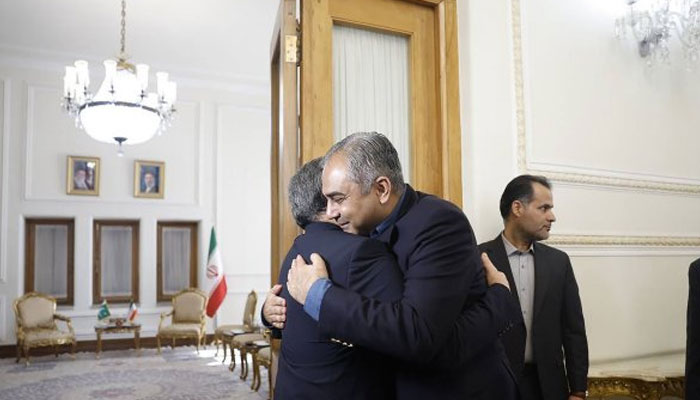
Federal Interior Minister Mohsin Naqvi has arrived in Iran on an official visit, where he is set to hold meetings with senior Iranian officials, according to Iranian media reports.

Naqvi’s visit is expected to focus on strengthening relations between Pakistan and Iran and improving coordination on issues of mutual interest. During his stay, the interior minister will meet high-ranking Iranian officials and exchange views on matters concerning the two neighbouring countries.

The visit comes amid continued diplomatic engagement between Islamabad and Tehran, with both sides seeking to enhance cooperation and maintain regular contact at the leadership and ministerial levels.

Discussions during Naqvi’s meetings are likely to cover bilateral relations as well as regional developments that have implications for both Pakistan and Iran. The two countries share a long border and have close historical, cultural and economic ties, making regular coordination between their governments important.

Pakistan and Iran have also been working to improve cooperation on border management and other issues affecting communities along their shared frontier. High-level visits and official meetings provide an opportunity for both sides to review progress, address outstanding concerns and explore new areas of cooperation.

Iranian media said Naqvi will meet senior officials during his visit, although further details about his schedule and the specific issues to be discussed were not immediately disclosed.

The minister’s visit is part of Pakistan’s broader efforts to maintain engagement with neighbouring countries and strengthen bilateral ties through diplomatic and official channels. His meetings in Tehran are expected to contribute to continued dialogue between the two countries and provide a platform for discussing matters of shared concern.

Similar Posts

  • |

    Shaheen, Naseem should play more domestic cricket, Usman Shinwari

    Former Pakistan fast bowler Usman Shinwari has urged Shaheen Shah Afridi and Naseem Shah to play more domestic and first-class cricket, arguing that regular competitive cricket can help the two premier pacers maintain their pace, fitness and longevity. Speaking to the media, Shinwari said Pakistan has traditionally placed too much emphasis on bowling speed, often overlooking the impact of workload and continuous cricket on a fast bowler’s body. “Even if your fitness is like Cristiano Ronaldo’s, bowling continuously can eventually affect your pace,” he said. Shinwari described Shaheen and Naseem as outstanding bowlers and said he was not in a position to offer them personal advice. However, he stressed that playing selected domestic cricket could help them retain their rhythm and speed while reducing the risk of injuries. The former pacer also discussed Pakistan’s upcoming challenges in England, saying tours of the country have historically been difficult for Pakistan. He believes the team can still produce a strong series if it carries its current momentum forward. Reflecting on Pakistan’s recent Test performances against the West Indies, Shinwari said the team’s first-match performance was disappointing but praised the side for making a strong comeback in the second Test. He emphasised the importance of consistency, saying better continuity within the team would ultimately produce better results. Shinwari also backed the decision to restore Babar Azam to the Test captaincy, describing it as a positive move and saying Babar has the ability to lead Pakistan in the longest format. Another major point raised by Shinwari was Pakistan’s approach to selecting players across different opponents. He argued that the same combination should not automatically be used against teams with vastly different playing conditions and strengths. Discussing Mohammad Abbas, Shinwari questioned the excessive focus on speed. He noted that Abbas had taken eight wickets at around 125kph in a recent match, arguing that the pacer’s best years were affected because too much importance had been attached to increasing his pace. “Speed is important, but it should not be given excessive importance,” he said. On Ihsanullah, Shinwari said the fast bowler had expressed grievances and suggested that his disciplinary issues should be addressed. Despite his experience, Shinwari made it clear that he has no plans to become Pakistan’s national team coach. He argued that coaches, like players, should progress through a structured system rather than being appointed directly to the national side. His comments have once again highlighted the debate over workload management, pace, domestic cricket and long-term planning in Pakistan’s fast-bowling system.

  • | |

    PTA blocks over 1.5 million URLs over prohibited c…

    The Pakistan Telecommunication Authority (PTA) has blocked more than 1.54 million URLs linked to prohibited and unlawful content on social media platforms, according to official documents. The documents show that 1,065,671 URLs related to immoral content have been blocked. Another 563 URLs in the same category are under review, while 9,528 have been rejected. In the terrorism-related category, 179,285 URLs were referred for blocking, of which 141,897 URLs have been blocked. A further 23,241 URLs are currently under review. The documents also reveal that 136,891 URLs related to content deemed against the sanctity of Islam were processed by the authority. Similarly, 125,427 URLs concerning content considered against Pakistan’s security and defence were processed. Of these, 74,059 URLs were blocked. The PTA also processed 76,526 URLs under the category of sectarian and hate speech. In the proxy category, the authority processed 10,319 URLs, blocking 10,318 of them. Under the defamation and impersonation category, 44,200 URLs were processed, while 17,356 URLs were blocked. According to the documents, a total of 1,542,800 URLs across various categories have been blocked. Meanwhile, 76,874 URLs remain under review, while 106,629 URLs have been rejected. The figures reflect the PTA’s ongoing efforts to monitor and restrict online content that falls under Pakistan’s prohibited-content regulations.

  • |

    Martha Stewart row leaves Meghan Markle facing fresh backlash

    Meghan Markle continues to face intense media scrutiny following her return to England with Prince Harry. Much of the latest controversy stems from comments made by Martha Stewart. The lifestyle icon claimed Meghan discussed her recent trip at an LA dinner party. Stewart also made pointed remarks about Meghan’s career shift from actress to princess to lifestyle personality. The controversy prompted TalkTV host Kevin O’Sullivan to sit down with commentator Kinsey Schofield to unpack where the story likely originated. Schofield suggested Stewart may not have realised her comments would create problems for Meghan. She described the moment as appearing to be a genuine, unplanned remark from Stewart. According to Schofield, it seems more suspicious that an anonymous source later contacted People magazine specifically to dispute parts of the story. She questioned why someone claiming to have hosted the dinner party would rush to correct the narrative while insisting on staying anonymous. The timing and motive behind that pushback struck her as unusual. O’Sullivan added his own take, acknowledging much of this remains speculation rather than confirmed fact. Still, he said it’s hard to imagine anyone other than Meghan herself being invested enough to want the story corrected. He suggested Stewart likely is not preoccupied with Meghan at all, given her own established status. However, he believed she may feel mildly annoyed by someone stepping into territory she’s long considered her own. O’Sullivan pointed out that Stewart spent decades building her reputation around cooking and home economics expertise. He argued that reputation makes her uniquely qualified in the eyes of the public. He then referenced Meghan’s Netflix series, “With Love, Meghan,” suggesting it revealed gaps in her lifestyle expertise once viewers actually watched it. According to O’Sullivan, that contrast is likely what mildly irritates Stewart the most. The commentary adds another layer to the ongoing public discourse surrounding Meghan’s post-royal career and public image. With opinions sharply divided, the story shows no signs of fading from tabloid coverage anytime soon.

  • | |

    Brittany Cartwright speaks out on Jax Taylor’s new romance

    LOS ANGELES: Reality television star Brittany Cartwright has shared her thoughts on former husband Jax Taylor’s new relationship, saying she is now focused on protecting her peace and raising their son following their separation. In a recent interview, Cartwright addressed Taylor’s reported romance with their former publicist, Lori Krebs. While commenting on the relationship, she said she does not wish harm on anyone but suggested the pair may not be happy together. The television personality also criticised her former husband, claiming he relies heavily on others for support. She further questioned the public role played by Krebs, saying she had never seen a publicist seek so much attention. Cartwright said she has more to say about the situation but is choosing the right time to speak publicly. She explained that her priority remains her personal well-being and the welfare of her young son. Speaking on her podcast, she said she intends to share her side of the story when she feels ready. Until then, she wants to focus on her family and maintain a peaceful environment for her child. The reality star added that many people already have an idea of what has happened, but she prefers not to discuss further details at this stage. Cartwright and Taylor ended their five-year marriage in February 2024 after a long relationship that was widely followed by fans of reality television. The former couple share a five-year-old son and have continued to co-parent following their separation.

  • |

    US fuel opens a capitalist crack in Cuba

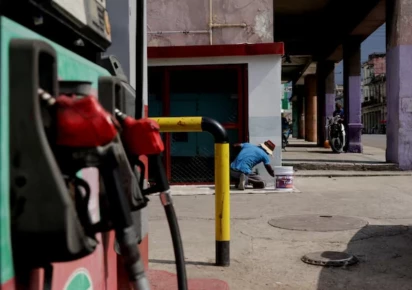
    HAVANA: Gasoline selling for as much as $38 a gallon, diesel advertised on social media and fuel stored inside cramped apartments are offering an unusual glimpse of private enterprise in communist Cuba, where the energy sector has long remained firmly under state control. A US policy allowing American companies to export fuel to private Cuban businesses has triggered an unexpected transformation. As Cuba struggles with shortages, blackouts and a weakened public transport system, imported fuel is creating a growing private market — while also exposing a sharp divide between those who can afford it and millions who cannot. The change follows the collapse of Cuba’s traditional fuel supplies from Venezuela and Mexico after the United States removed Venezuelan President Nicolas Maduro in January. With sanctions discouraging tankers from sailing toward the island, fuel shortages have increasingly affected transport, hospitals, schools and other essential services. Under an exception to Washington’s oil restrictions, however, private Cuban restaurants, retailers, taxi operators and other businesses have been allowed to import fuel. The impact has been striking. Between February and May, around 900,000 barrels of US fuel entered Cuba — enough to meet only about nine days of the country’s energy requirements. Yet those relatively small shipments have helped create a new network of legal wholesalers, private buyers and illegal resellers. Gasoline becomes a luxury For ordinary Cubans, the new fuel market has often brought frustration rather than relief. On a July afternoon in Havana, 53-year-old Amarilis Sanchez waited for hours at a bus stop after attending her daughter’s birthday celebration. Public buses, which normally cost only two pesos, were unreliable. Nearby, taxi drivers offered rides in vintage cars, but one driver quoted Sanchez 1,000 pesos for the journey — roughly 500 times the price of a bus ride. Unable to afford it, Sanchez considered spending the night at her daughter’s home and trying again for a bus the following day. Her experience illustrates how Cuba’s fuel crisis is creating two very different realities: one for people with access to private vehicles and imported fuel, and another for those dependent on the country’s struggling public transport network. Black-market gasoline prices reportedly reached $10 per litre, or about $38 per gallon, during the spring before falling as imports increased. Social media fuels a new market The emerging trade is increasingly visible online. WhatsApp groups and Facebook pages advertise gasoline and diesel, while some sellers store fuel in apartments and small shops despite the dangers posed by fire, explosions and toxic fumes. At one Havana convenience store, a shopkeeper reportedly kept around a dozen 20-litre fuel containers in a backroom, selling gasoline for approximately $5 per litre. Private companies are also moving into the newly emerging legal wholesale market. By late July, almost 200 Cuban businesses had received permission to distribute fuel wholesale to other private companies. One company, A Granel, advertises diesel through social media and charges $2.50 per litre for a 940-litre tank. The promotion reportedly features a model walking through a warehouse of diesel containers while Daddy Yankee’s famous song Gasolina plays in the background — an unusually flashy image for a country where the energy industry has historically been dominated by the state. Are Cuban gas stations next? The transformation could go further. Cuban lawmakers approved a broad package of economic reforms in June aimed at opening the energy sector to private and foreign investment. Prime Minister Manuel Marrero Cruz later announced that Cuba had approved its first foreign investment project focused on importing and selling fuel, although he did not name the company. The reforms have raised the possibility that private operators could eventually take control of some of Cuba’s familiar state-run Cupet petrol stations. For now, however, retail fuel sales remain largely under state control. Some state-owned stations are storing imported fuel but can distribute it only to vehicles belonging to authorised private businesses. Cuban authorities have defended the reforms while rejecting the idea that they represent a move toward large-scale privatisation. President Miguel Diaz-Canel has accused Washington of imposing a “genocidal siege” on Cuba and said economic changes were not being introduced to satisfy the United States. A lifeline with a heavy price The new fuel market has helped prevent some businesses from shutting down completely. During recent power outages, restaurants and shops with generators powered by imported fuel remained illuminated while much of Havana was plunged into darkness. But experts warn that the emerging system could deepen inequality. With the average government salary reportedly around $10 a month, imported gasoline remains unaffordable for most of Cuba’s roughly nine million residents. Cuban sociologist Mayra Espina said the limited fuel supplies had helped prevent “complete paralysis” but warned that the benefits were overwhelmingly concentrated among those able to pay. The result is an extraordinary contradiction: a small opening toward private enterprise is helping Cuba keep parts of its economy running, while simultaneously making access to basic mobility and energy increasingly dependent on wealth. For a country that has spent decades keeping fuel firmly within the state system, Cuba’s new gasoline economy may therefore prove to be more than a temporary response to shortage. It could become an early test of how far Havana is prepared to let capitalism into one of its most tightly controlled sectors.

Leave a Reply

Your email address will not be published. Required fields are marked *