poetry power 038

Poetry, Power & Humanity—V  Waris Shah: Wh…

Our discussion of Bulleh Shah in Part IV concluded with a question: Who are we when power can no longer name us? Bulleh Shah dismantled the identities imposed upon the human person by lineage, orthodoxy and social hierarchy. Waris Shah takes the inquiry into the institutions governing everyday life. He shows what happens when two human beings attempt to live according to the freedom Bulleh imagined.

Heer is celebrated as Punjab’s greatest love story. To describe it merely as a romance, however, is to conceal its intellectual achievement. Earlier poets narrated the sufferings of Heer and Ranjha; Waris Shah’s classic poetic work Heeer (1766) placed an entire social order on trial. Shafqat Tanvir Mirza rightly observed that Waris treated the story through the “politics, economy and cultural values” lived by the people of his period. His poem contains a devastating criticism of poor governance, institutional corruption, religious exploitation, arrogance of the wealthy and misery of those without power.

Love provides the narrative, but power determines its outcome. Waris Shah wrote against the background of eighteenth-century political disintegration. Invasions, weakening imperial authority, struggles among local forces and economic insecurity had destabilised Punjab.

Waris Shah was not attached to a royal court capable of insulating him from ordinary suffering. His Heer therefore became more than a reconstruction of an old legend. It preserved Punjab’s speech, customs and collective memory while exposing the institutions through which privilege protected itself.

Heer is central to this achievement because she is not a passive beloved. She recognises Ranjha, brings him into her father’s household as a herdsman, arranges opportunities to meet him and openly asserts her choice when the relationship is discovered. She possesses intelligence, desire and moral agency. Her freedom is tolerated only while it remains invisible and does not threaten the authority of the family.

The moment Heer chooses her own future, affection turns into surveillance. Her body becomes the bearer of family honour, and marriage becomes the means through which that honour is restored.

Heer does not ask permission to feel. She declares a commitment already formed through conscience and love. Her language is especially significant. She does not present Ranjha as an object she wishes to acquire. She has offered her own life and accepted responsibility for that choice. In a society where marriage joins families, properties and status groups, such self-determination is revolutionary.

The dispute is not simply between one prospective husband and another. Ranjha represents Heer’s autonomous choice; the Kheras represent the settlement arranged for her by others. Her family treats marriage as a transaction carrying consequences for lineage, reputation and power. Heer insists upon treating it as a union requiring the will of the persons whose lives it determines.

میں تاں منگ رنجھیٹے دی ہو چکی
اساں منگ درگاہ تھیں لیا رانجھا
Main tāṅ mang Ranjheṭe dī ho chukkī
Asāṅ mang dargāh thīṅ liyā Rānjhā
I have already been pledged to Ranjha;
from the divine court itself I received him.
اساں جان رانجھیٹے دے پیش کیتی
لکھ کھیڑیاں نوں چا گھولدی ہے
Asāṅ jān Ranjheṭe de pesh kītī
Lakkh Kheṛiāṅ nūṅ chā gholdī hai
I have laid my life before Ranjha;
I would sacrifice a hundred thousand Kheras for him.

This is the political economy hidden within the romance. Property is not limited to land, cattle and wealth. Patriarchal authority extends the idea of ownership to women. A daughter may be cherished as long as she accepts the future selected for her. Once she claims ownership of her own will, love within the family becomes conditional. Research on Heer similarly identifies the family, property, mosque, qazi, feudal hierarchy and ruling elite as interconnected institutions shaped by economic interest.

Kaido is the most visible agent of this system, though he should not be dismissed as a solitary villain. He represents social surveillance: the resentful custodian of conformity who observes, reports and converts private happiness into public scandal. Power does not survive through rulers alone. It recruits relatives, neighbours and self-appointed guardians of morality who internalise its prohibitions and enforce them upon others.

Kaido’s triumph begins when Heer and Ranjha’s love is no longer treated as a human relationship but as an offence against collective honour. The family then requires an institution capable of turning its demand into a lawful and religious command. The qazi enters at precisely this point.

Waris Shah does not attack faith. He exposes the appropriation of faith by those serving property and patriarchy. The qazi is called because parental pressure has failed to secure Heer’s consent. Religious vocabulary is employed to present submission as virtue and resistance as sin.

Heer answers him from within the moral tradition he claims to represent. She insists that genuine faith cannot be separated from truth, and that her union with Ranjha possesses a reality no ceremonial decree can erase. The surviving text presents an extended confrontation in which the qazi invokes authority while Heer asserts conscience and consent. Unable to persuade her, institutional power reveals its coercive core. The qazi threatens punishment and demands that she accept the Khera marriage.

قاضی بنھ نکاح تے گھت ڈولی
نال کھیڑیاں دے دِتی تور میاں
Qāzī bannh nikāh te ghat ḍolī
Nāl Kheṛiāṅ de dittī tor miyāṅ
The qazi bound the marriage and placed her in the palanquin;
she was sent away with the Kheras.
ہیر کھیڑیاں نال نہ تُرے مولے پیا
پِنڈ دے وچ ہے شور میاں
Hīr Kheṛiāṅ nāl na ture, maulā piyā
Piṇḍ de vich hai shor miyāṅ
Heer would not willingly go with the Kheras;
an uproar filled the village.
کھیڑے گھن کے ہیر نوں رواں ہوئے
جویں مال نوں لے وَگے چور میاں
Kheṛe ghin ke Hīr nūṅ ravāṅ hoe
Jiveṅ māl nūṅ lai vagge chor miyāṅ
The Kheras took Heer and moved away,
like thieves driving stolen cattle.

The comparison is Waris Shah’s own and is among the most revealing images in the poem. The final line strips the ceremony of its respectable appearance. There has been a qazi, a marriage procession, jewellery, property and public ritual. Waris nevertheless compares the removal of Heer to thieves taking away cattle. Religious form cannot transform coercion into justice. Ceremony cannot manufacture consent.

The description also reveals the economic imagination underlying patriarchy. Heer is transported like property from one household to another. Wealth, ornaments, livestock and the bride appear within the same ceremonial transaction. Her refusal does not stop the procession because the institutions surrounding her recognise the claims of families more readily than the will of a woman.

Erich Fromm’s distinction between having and being again becomes relevant. Heer’s family operates within the mode of having: having status, having honour, having alliances and having authority over a daughter. Heer and Ranjha seek the mode of being, in which relationship arises from recognition rather than possession. Their love becomes intolerable because it refuses to function as property.

The tragedy is completed when every major institution fails them. The family protects honour rather than the child. The community protects conformity rather than truth. The qazi validates power rather than consent. Kinship becomes surveillance, marriage becomes transfer and religion becomes enforcement.

Heer’s eventual poisoning is thus not an accidental ending added to create emotional intensity. It is the final response of an order that cannot accommodate autonomous choice. When shame, persuasion, forced separation, arranged marriage and religious sanction fail to extinguish her commitment, physical elimination restores collective control. The victory is hollow.

The families survive, but their moral world is condemned. Kaido succeeds within the plot, while history remembers him only as the embodiment of envy and coercion. The Kheras obtain the marriage ceremony, but not Heer’s consent. The qazi pronounces the required words, but cannot make falsehood true. Heer and Ranjha die, though Punjab grants them the immortality denied to those who destroyed them.

The continuing thread of our inquiry is now clearer. Shah Hussain crossed the narrow passage from attachment towards freedom. Bulleh Shah removed the labels through which society imprisons the self. Waris Shah shows what organised society does when that liberated self claims the right to choose.

The institutions portrayed in Heer have not disappeared. Forced marriages, denial of women’s inheritance, biradari (clan) restrictions, honour crimes, clerical legitimisation of patriarchy and the use of family reputation to silence consent remain part of our social reality. Their language has changed; their central claim remains that family, property and status possess rights superior to the human person.

Bulleh Shah asked what remains when inherited identities fall away. Waris Shah explains why society fears the answer. Heer ceases to be property when she names her own beloved. Ranjha ceases to be obedient when he rejects the future assigned to him. Their love becomes political because it asserts that a human being belongs first to herself or himself—not to lineage, wealth, clergy or collective honour.

The lovers are killed, but power does not secure the final word. Punjab remembers Heer and Ranjha. It remembers their destroyers only as instruments of injustice.

[To be continued]

________________________________________________________________

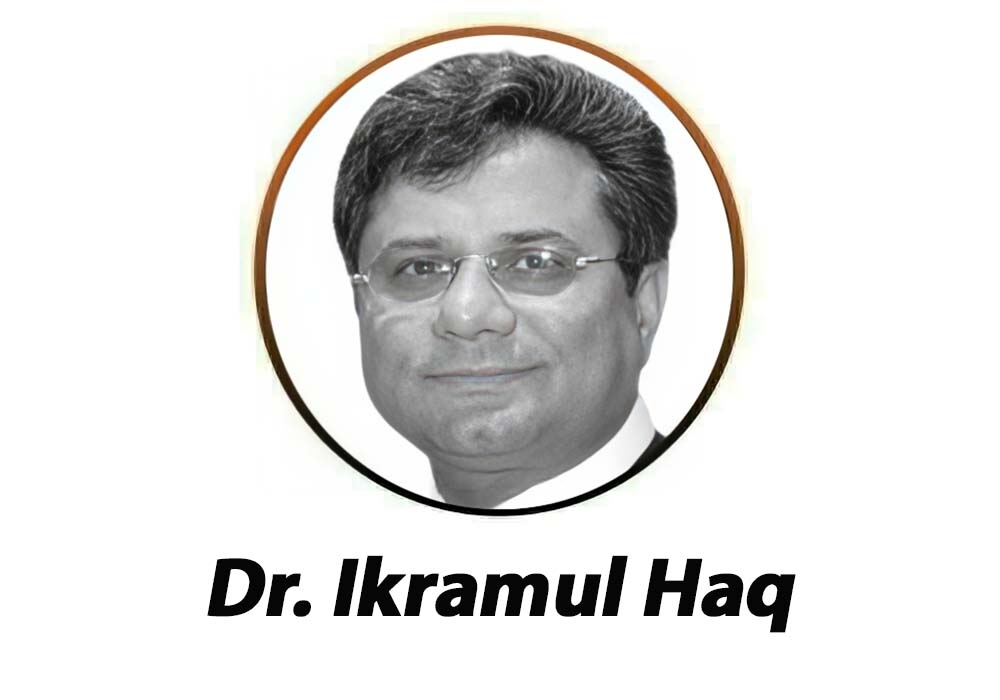
Dr. Ikramul Haq, Advocate Supreme Court, writer, literary critic, Adjunct Faculty at Lahore University of Management Sciences (LUMS), member Advisory Board and Visiting Senior Fellow of Pakistan Institute of Development Economics (PIDE), holds an LLD in tax laws. He was full-time journalist from 1979 to 1984 with Viewpoint and Dawn. He also served Civil Services of Pakistan from 1984 to 1996.


Similar Posts

  • The hands that clean Karachi

    KARACHI: Before the city wakes up, thousands of sanitation workers are already at work. They sweep roads, collect household waste, clean neighbourhoods and, in some cases, enter sewer lines and manholes to clear blockages. Among them are many workers from Christian and Hindu communities who perform some of Karachi’s most difficult and hazardous jobs. On August 11, Pakistan observes National Minorities Day. The occasion is usually marked with messages about equality, tolerance and the contribution of minority communities to the country. But for many minority sanitation workers in Karachi, the day will be no different from any other: they will be out cleaning the city, often while facing low wages, insecure employment, inadequate safety equipment and social discrimination. Their problems extend beyond poverty. They include workplace safety, access to healthcare, employment benefits and the stigma attached to the occupation itself. There is no reliable and up-to-date official figure showing exactly how many Christian and Hindu sanitation workers are currently employed in Karachi. A World Bank-linked environmental and social assessment, however, recorded around 11,400 sweepers and sanitary workers employed by the city’s district authorities. It also noted additional workers employed through SSWMB contractors and a large informal workforce involved in door-to-door waste collection and material recovery. The 11,400 figure therefore does not represent Karachi’s entire sanitation workforce. The actual number is considerably broader once outsourced, daily-wage and informal workers are included. Sanitation work in Pakistan has for decades been disproportionately associated with religious minorities. Research by Amnesty International has documented the concentration of Christians and Hindus in sanitation work and found evidence of discrimination in recruitment, employment and working conditions. The issue therefore begins well before a worker picks up a broom. It is also about whether people from particular religious and social backgrounds are being denied opportunities to enter other occupations. The question of wages is equally important. The Sindh government has announced a minimum monthly wage of Rs43,000 with effect from July 1, 2026. While the announcement is significant for low-paid workers, the more important question for sanitation workers is whether the amount actually reaches them. A substantial part of Karachi’s sanitation work is performed through contractors, outsourcing arrangements and daily-wage employment. Previous reporting has documented workers employed through SSWMB contractors receiving wages below the applicable minimum wage. In one reported case, a minor working for an SSWMB contractor was receiving Rs15,000 a month when the minimum wage for unskilled workers was Rs32,000. The new Rs43,000 minimum wage therefore requires more than a government notification. It requires effective enforcement and monitoring, particularly where public sanitation services are outsourced. If a worker performs essential public work through a contractor, there must be clarity about who is responsible for ensuring that he receives the legally prescribed wage and other employment rights. For sanitation workers, however, low wages are not the only concern. The nature of the work itself can be fatal. In September 2025, three sanitation workers died in Karachi’s Usmanabad area after inhaling toxic gases while cleaning a manhole. The victims were identified as 22-year-old Vishal, 19-year-old Shahir and 42-year-old George. A fourth worker survived after being rescued. The deaths were followed by further fatalities. In October 2025, The Express Tribune reported that six sanitation workers had died from suffocation while cleaning sewers in Karachi in just over a month. The deaths occurred in Sohrab Goth, Garden and Landhi. According to the report, the victims were privately hired daily-wage workers who lacked adequate safety equipment and training. On April 17, 2026, three private sanitation workers died in Surjani Town after inhaling toxic fumes while cleaning a choked sewerage line. Police identified the deceased as Wilson, Waqas and Nazeer and said all three belonged to the Christian community. Such incidents follow a familiar pattern. A worker enters a sewer to clear a blockage. Toxic gases overcome him. Another worker may enter in an attempt to rescue him and can suffer the same fate. Without proper protective equipment, gas detection devices, training and rescue arrangements, a routine cleaning operation can quickly turn into multiple deaths. The exact number of sanitation workers who have died in Karachi is difficult to establish because there is no comprehensive publicly available official database covering municipal, private, contracted and informal workers. In October 2025, activist Naeem Sadiq told Arab News that approximately 100 manual scavengers die every year in Pakistan, including around 30 in Karachi. He also warned that the actual number could be higher because of underreporting. The figure is an activist estimate rather than an official government statistic, but it illustrates the scale of the concern. At the national level, Amnesty International documented 80 sanitation workers who died in 50 manhole incidents between 2011 and 2023. Of these, 40 were Christians, 22 Muslims and 18 Hindus. Most of the deaths were associated with poisonous gases and asphyxiation. The figures highlight a wider concern: minority workers are disproportionately represented in some of the most hazardous sanitation jobs, while also facing social and economic disadvantages. A survey by the National Commission for Human Rights of 42 sanitation workers in Karachi provides further evidence of poor working conditions. Thirty-three workers, or 78.6 per cent, said they had never been provided personal protective equipment. Twenty-four, or 57.1 per cent, reported workplace injuries. The same number reported verbal or physical abuse, threats, non-payment or other forms of discrimination. These findings raise a basic question about Karachi’s sanitation system: the issue is not only who will clean the city, but under what conditions the people cleaning it are expected to work. Another study involving 400 sewerage and sanitary workers in Karachi found that 228, or 57 per cent, were sweepers and 172, or 43 per cent, were sewerage workers. The study found that 96.5 per cent had not been immunised against typhoid, hepatitis and tetanus, while 91 per cent were not using safety equipment at work. For workers exposed daily to sewage, waste and potentially toxic environments, protective clothing, gloves, boots, masks, vaccination, health examinations and emergency support should not

  • Why Trump welcomed Makkah pact?

    The signing of the Mecca Joint Defence Agreement by Pakistan, Saudi Arabia and Türkiye on August 7 has opened a new and potentially consequential chapter in the security architecture of Asia and the Gulf. The agreement states that an armed attack against any one of the three countries will be regarded as an attack against all three, while envisaging deeper military coordination, joint exercises, intelligence cooperation and collaboration in areas including drones, electronic warfare, artificial intelligence and defence production. Türkiye has also indicated that the framework could eventually be expanded to other countries. What makes the development particularly significant is not simply the agreement itself, but the reaction from Washington. President Donald Trump has welcomed the pact as a “big, bold, important first step” towards regional countries being able to defend themselves more meaningfully. His words raise a larger strategic question, is the United States beginning to transfer a greater share of the burden of confronting Iran to regional powers, particularly the Gulf and Asian countries? Or making this region as its main combatant force against Iran? And what are the possible next steps? The answer is more complicated than a simple American withdrawal. Washington is unlikely to abandon the Middle East, its military assets, intelligence networks, diplomatic influence or relationships with Gulf states. What appears to be changing is the distribution of responsibility. The Trump administration’s broader philosophy of burden-sharing suggests that countries possessing substantial financial, military and strategic resources should assume greater responsibility for their own security rather than expecting Washington to carry the entire cost. In that sense, America may not be handing over the war against Iran, but it may be regionalising the consequences of that war. The distinction is crucial. A regionalised conflict can become much more dangerous because the number of actors involved increases. At the same time, regional ownership of security could eventually create a framework in which regional states themselves negotiate a new balance rather than remaining permanently dependent on an external power. The Pakistan-Saudi relationship provides the foundation for this transformation. The two countries signed their Strategic Mutual Defence Agreement in September 2025, committing themselves to collective security. The new Mecca agreement effectively brings Türkiye into a much broader strategic framework. Each country brings a different strategic asset. Saudi Arabia possesses enormous financial resources, energy influence and geographical importance. Türkiye brings one of the region’s most capable conventional militaries, a rapidly developing indigenous defence industry, drone technology and NATO experience. Pakistan brings a large and experienced military establishment and, uniquely among Muslim-majority states, a nuclear deterrent. The combination therefore has significance beyond its three signatories. It links the Gulf, South Asia and the eastern Mediterranean in a single security conversation. For Saudi Arabia, the agreement represents strategic insurance. Riyadh has increasingly understood that sophisticated American weapons alone cannot eliminate vulnerabilities created by missiles, drones, cyberwarfare and attacks on energy infrastructure. Diversifying its security relationships allows Saudi Arabia to maintain its partnership with Washington while simultaneously developing alternative sources of military capability. For Türkiye, the pact fits into Ankara’s long-standing ambition to exercise greater strategic autonomy. Türkiye remains a NATO member, but it has increasingly demonstrated that it does not want its foreign policy to be dictated by any single great power. A defence relationship stretching from Türkiye through Saudi Arabia to Pakistan expands Ankara’s influence across two strategically vital regions. For Pakistan, however, the equation is much more delicate. Pakistan has the opportunity to emerge as an important security bridge between South Asia and the Gulf, but it also has a geographical reality that cannot be ignored, it shares a border with Iran. Islamabad cannot afford to treat Tehran simply as an enemy without exposing itself to enormous security, economic and diplomatic risks. Pakistan therefore faces the most difficult balancing act of the three. Its relationship with Saudi Arabia is strategically important. Its relationship with Türkiye is deepening. Its partnership with China remains fundamental. Its relationship with the United States is economically and strategically significant. Yet Iran is its immediate western neighbour, with which it shares a long border and important diplomatic and economic interests. This makes Pakistan potentially more valuable as a mediator than as a frontline combatant. If Islamabad can defend Saudi Arabia while simultaneously maintaining communication with Tehran, it could acquire an extraordinary diplomatic role. Pakistan could become one of the few countries capable of speaking to the Gulf, Iran, Türkiye, China and Washington at the same time. That possibility is already visible in Pakistan’s efforts to maintain diplomatic engagement with Iran while navigating its defence commitments to Saudi Arabia. The Iranian response will be critical. Although the three countries have described the agreement as defensive rather than an alliance directed against a particular state, Tehran will inevitably examine its military implications. A coordinated Saudi-Turkish-Pakistani security structure potentially means improved intelligence, air defence, military exercises, drone capabilities and defence-industrial cooperation around Iran’s strategic neighbourhood. But this could produce two very different outcomes. The first is escalation. Iran could interpret the emerging architecture as an attempt to encircle it and respond by strengthening its missile forces, regional partnerships and asymmetric capabilities. The Gulf could then become increasingly militarised, with every defensive measure interpreted by the other side as preparation for aggression. The second possibility is deterrence leading eventually to diplomacy. If Iran concludes that it cannot achieve regional dominance through military pressure, while Saudi Arabia and other Gulf states conclude that permanent dependence on American protection is neither sufficient nor sustainable, both sides may eventually have an incentive to negotiate a regional security arrangement. That would be the more constructive outcome. The danger, however, is that the emerging alliance could be interpreted through a sectarian lens. Saudi Arabia, Türkiye and Pakistan are all Sunni-majority states, while Iran is the region’s principal Shia power. If the new security architecture becomes identified as a Sunni military bloc confronting Shia Iran, it could revive precisely the sectarian competition that has destabilised the Middle East for decades. Pakistan should be particularly careful

  • The Transferability Paradox: Skills, Borders and t…

    We often speak of professional skills as though they were assets that can be packed into a suitcase and carried effortlessly across borders. In reality, skills do not all travel in the same way. A computer language remains a computer language whether one works in Pakistan, Singapore, the United Kingdom or the United States. Engineering principles, mathematics, manufacturing techniques and many scientific disciplines retain much of their relevance regardless of geography. The environment may change, but the fundamental language of the profession remains largely intact. The situation becomes more complicated with professions that operate within national regulatory and institutional frameworks. Accounting principles may be broadly understood internationally, but taxation, reporting requirements and corporate regulations can differ substantially between jurisdictions. The same is true of law and medicine. A lawyer who has spent decades mastering one country’s legal system cannot simply assume that the same statutes, procedures and precedents apply elsewhere. A doctor may possess years of clinical experience yet still be required to pass examinations and satisfy licensing requirements before being permitted to practise in another country. The knowledge has not disappeared. What has changed is the framework within which that knowledge is recognised and allowed to operate. This distinction is important because we sometimes confuse the transferability of skills with the transferability of credentials. They are not the same thing. A seasoned CFO does not forget how to evaluate risk, allocate capital, establish financial controls or understand a balance sheet upon crossing an international border. A doctor does not lose diagnostic ability at immigration, nor does a lawyer suddenly lose the capacity for legal reasoning. Yet the receiving country’s institutions may place conditions on recognising those abilities. What is being restricted is often not the skill itself, but the right, opportunity or credibility required to exercise it. For C suite professionals, however, there is another layer to the problem. As people rise through organisations, their professional value increasingly consists of much more than technical competence. Over twenty or thirty years, an executive accumulates reputation, relationships, cultural understanding, institutional knowledge and credibility. He or she learns how decisions are actually made, which relationships matter, how regulators think, how capital moves and how to navigate the unwritten rules of a particular business environment. This social and institutional capital can become as important as the technical skills that originally built the career. Crossing a border can dramatically alter the value of that accumulated capital. A CEO, CFO or senior executive who is well known and respected in one country may arrive in another market where few people recognise the organisations he or she worked for, understand the scale of previous responsibilities or appreciate the complexity of the environment in which those responsibilities were exercised. The person has not become less capable, but the ecosystem that validated that capability has been left behind. This is perhaps one of the least discussed dilemmas of international mobility at senior levels. The higher one climbs within a particular ecosystem, the more deeply one’s professional identity may become connected with that ecosystem. A young engineer may be assessed largely on technical competence and therefore move relatively easily between markets. A senior executive is assessed on a much broader collection of attributes, many of which are difficult to demonstrate on a CV. Reputation, networks, judgement and influence cannot always be exported as easily as qualifications. Then there is the uncomfortable issue of regional bias. Professional experience is not always evaluated purely on merit. Employers and institutions can consciously or unconsciously attach different values to experience depending on where it was acquired. A senior position in one part of the world may not automatically be regarded as equivalent to a similar position in another. Accent, nationality, familiarity with local business culture and perceptions about the sophistication of the previous market can all affect how a professional is judged. Regulation can create a formal wall, while perception can create an invisible one. Perhaps professional capital should therefore be thought of in three forms. There is skill capital, meaning what a person actually knows and can do. There is credential capital, meaning what institutions formally recognise or permit that person to do. Finally, there is social capital, meaning the network of people and institutions that know, trust and are prepared to place responsibility in that person’s hands. Skill capital can often travel. Credential capital may require rebuilding. Social capital can sometimes have to be recreated almost from the beginning. This brings me to the question that I find much harder to answer. If a country’s most capable professionals conclude that their talents will produce greater opportunities elsewhere, should they leave? Or should they remain and use their abilities, experience and influence to improve the environment that is encouraging them to leave in the first place? There is an obvious argument for mobility. A professional has a responsibility to his or her own life and family and cannot reasonably be expected to sacrifice decades waiting for institutions to improve. Talent naturally seeks environments where it can grow, where merit is recognised and where opportunities allow ability to compound. If those conditions exist elsewhere, moving may be entirely rational. Yet there is an equally uncomfortable consequence. When capable professionals, entrepreneurs, academics and executives continually leave weaker institutional environments for stronger ones, the countries they leave behind lose precisely the human capital that might have helped strengthen those institutions. Weak systems cause talent to leave, and the departure of talent can make those systems even harder to improve. We then arrive at something resembling the old question of the chicken and the egg. Do strong institutions create successful people, or do successful people create strong institutions? Do countries first need better systems to retain talent, or must talented people remain long enough to build those systems? If everyone waits for the environment to improve before contributing to it, who creates the improvement? But if individuals spend their lives fighting systems that are resistant to change, what happens to their own potential? Perhaps the

  • From Aspiration to Reintegration: Rethinking Pakis…

    By Tahseen Ullah  For millions of Pakistanis, migration is a journey of hope and opportunity. Its success depends not simply on departure, but on informed decisions, relevant skills, ethical recruitment and proper preparation. Labour migration is a continuum—from reliable information and guidance, authentic career planning through skills development, documentation, overseas employment, work-visa processing, registration and Pre departure orientation at Protectorate of Emigrants, worker protection, and return and reintegration. For Pakistan, strengthening every stage of this cycle is essential to making labour mobility safe, regular, skills-oriented and rights-based. A well-managed migration system can protect workers, reduce exploitation and irregular migration, enhance employability, and transform migration from a response to unemployment into a strategic investment in human capital, economic resilience and sustainable national growth. The journey begins with one critical step: making an informed decision about whether, where and how to migrate Planning for Informed Migration: Skills, Choices and Readiness The migration journey begins with access to reliable information and informed decisions about overseas labour markets, occupations, wages, destinations, costs, legal pathways and potential risks. Once the decision to migrate is made, preparation should focus on employability and readiness through relevant technical skills, recognised certifications, language proficiency, digital literacy, financial awareness, and knowledge of employment contracts and workers’ rights. Aligning skills and qualifications with the evolving demands of destination-country labour markets can help prospective migrants pursue safe, regular and sustainable employment opportunities. Recruitment, Work Visa and Pre-Departure: Safe Pathways Recruitment is a critical stage of the migration cycle and a key point of vulnerability. Pakistani workers can access overseas employment through licensed Overseas Employment Promoters, the Overseas Employment Corporation, or direct employment. Verified employers, transparent contracts, fair recruitment costs and accessible grievance mechanisms help prevent fraud and exploitation. The process also includes obtaining the required work visa through the relevant diplomatic mission, completing emigration clearance and registration for protection, and attending Pre-Departure Orientation at the Protectorate of Emigrants (PoE) offices, equipping migrants with essential knowledge of their rights, responsibilities, workplace safety and available support services. Post-Arrival: Protection and Productivity The migration journey continues after arrival. Migrants may face contract violations, wage disputes, unsafe working conditions, language barriers, discrimination or limited access to support. Effective labour protection, employer compliance, consular assistance and accessible referral mechanisms are essential. Well-protected migrants are more likely to remain productive and successfully integrate into the workplace. Return and Sustainable Reintegration: Turning Experience into Opportunity Return marks an important transition in the migration cycle, particularly for workers completing their contracts and returning to Pakistan. A planned return and reintegration strategy can help returnees make productive use of their savings, skills, experience and professional networks. Access to psychosocial, legal, financial and employment support, along with skills recognition, entrepreneurship opportunities and further training, can facilitate sustainable reintegration. With the right support, returnees can turn their overseas experience into productive livelihoods and contribute to local economic development. Challenges and Opportunities Pakistan’s migration system faces persistent challenges, including information gaps, fraudulent recruitment, irregular migration, high recruitment costs, low skills levels, limited recognition of qualifications, inadequate protection and weak reintegration mechanisms. Fragmented coordination across institutions can further reduce the effectiveness of the migration process. At the same time, significant opportunities exist. Pakistan’s young population, expanding skills base and growing international demand for workers in healthcare, construction, engineering, IT, caregiving, manufacturing and green sectors provide a strong foundation for expanding regular labour mobility. The opportunity is to move from a labour-export model to a human-capital and talent-mobility model—through demand-driven skills development, international certification, language training, ethical recruitment, stronger bilateral labour mobility agreements and effective protection across the migration cycle. The Way Forward Pakistan’s National Emigration and Welfare Policy 2026 provide a framework for managing migration through a whole-of-cycle approach, covering safe and regular migration, skills development, worker protection, welfare, and return and reintegration. Its success will depend on effective implementation through clear short-, medium- and long-term strategies, strong institutional coordination and measurable outcomes. Relevant organisations, including Migrant Resource Centres, can complement these efforts through awareness-raising, guidance and information on legal pathways, referrals, Pre departure orientation, reintegration of returnees to helping migrants make informed decisions and avoid fraud, exploitation and irregular migration. Going forward, the priority should be to translate policy commitments into practical outcomes for migrants and their families. This requires sustained institutional coordination, responsive services and a system that remains connected to changing labour-market needs and the realities faced by workers throughout the migration journey. If managed effectively, migration can go beyond providing overseas employment and remittances to become a pathway for skills transfer, productive return and improved economic opportunities—contributing to a more resilient and prosperous Pakistan. Tahseen Ullah is a development and migration sector practitioner specializing in labour mobility, migration governance, education and child protection. He can be reached at tahseenanthro@gmail.com  LinkedIn: Tahseen Ullah

  • Beyond Riba: Reconstruction of Just Financial Orde…

    Pakistan has debated the elimination of riba—a Quranic term subjected to judicial interpretation and theological discourse but still lacking a precise statutory definition—for decades. Judicial decisions have been delivered, commissions constituted, reports prepared, appeals filed and withdrawn, deadlines announced and Islamic banking expanded. The central intellectual and legislative task, however, remains incomplete. We have not developed a precise, comprehensive and operational definition of the economic practices that must be prohibited. This omission is not merely academic. No financial system can be reconstructed around a prohibition that is expressed only as a moral declaration. A law [Who will draft Riba Prohibition Law? Minute Mirror, April 7, 2026] must identify the transaction, the prohibited increment, the parties affected, the substance to be examined and the consequences of violation. It must also distinguish an unlawful return on money from lawful earnings arising from trade, labour, services, ownership and commercial risk. The first requirement of a serious programme for the elimination of riba is clarity. Riba is commonly translated as interest/usury. This translation is useful but incomplete. Modern interest is one of its most important manifestations, particularly where a lender advances money and contractually claims an additional amount merely because the borrower is allowed time to repay. The prohibition, however, cannot be confined to instruments carrying the label “interest”. Nor can every commercial gain, deferred price or fixed payment be declared riba. The distinction lies in the legal and economic substance of the transaction. Where money is advanced as a loan and the lender is guaranteed an increase over the principal, the return does not arise from ownership of a productive asset, provision of a service, participation in business or exposure to commercial loss. It arises from the loan itself and the passage of time. The borrower must pay the increase whether the borrowed funds generate profit, produce loss, meet a medical emergency or finance bare survival. This asymmetry lies at the heart of the problem. Capital is protected; return is predetermined; risk is shifted to the borrower. Trade operates differently. A trader purchases or produces an asset, assumes the risks of ownership, incurs costs, faces the possibility of loss and sells the asset at a profit. The profit is not earned merely because money has been unavailable to another person for a period. It is connected with property, exchange, enterprise and market risk. Lease income also rests upon a different foundation. An owner permits another person to use an asset while retaining the liabilities associated with ownership. Rent represents consideration for the use of the asset. The arrangement becomes questionable when the supposed owner bears no meaningful ownership risk and the entire structure is merely a cash loan disguised through documents. Partnership profit has another character. Partners combine capital, work, expertise or enterprise. Profit is divided according to an agreed formula permitted by the applicable juristic principles, while financial loss follows the capital placed at risk. A partner cannot lawfully guarantee himself a fixed return upon capital and compel the other partner to bear every commercial loss. These distinctions are recognised, with variations, across the major Muslim schools. They differ on matters such as the permissible relationship between capital contribution and profit-sharing ratios, conditions attached to contracts, possession, agency and the allocation of particular risks. They do not treat every profit as riba. Nor do they permit a partner to convert genuine risk participation into a guaranteed return on money. A modern Prohibition of Riba law must preserve these distinctions. The difficulty is that contemporary finance has developed techniques through which a loan can be divided into several formally separate contracts. An institution may purchase an asset for a few moments, sell it to the customer at a marked-up price, obtain comprehensive security, transfer every economic risk to the customer and calculate its return by reference to the prevailing interest rate. The transaction may satisfy documentary requirements while reproducing the economic substance of conventional lending. The institution receives a predetermined return; the customer bears the commercial risk; and the institution’s temporary ownership exists mainly to legitimise the financing charge. This does not mean that murabaha, ijarah or diminishing musharakah are inherently invalid. Each can serve a legitimate commercial purpose. Murabaha can facilitate an actual purchase where the financier genuinely acquires and assumes responsibility for the asset before selling it. Ijarah can finance the use of an asset where the lessor retains real ownership obligations. Diminishing musharakah can support home ownership where the parties genuinely share ownership and the customer gradually acquires the financier’s units. The problem arises when these contracts are treated as legal devices for guaranteeing the same return that would have been received under an interest-bearing loan. A workable definition must therefore contain both a formal and a substantive test. The formal test will examine the legal category of the contract. The substantive test will determine whether the financier has provided an asset, service or productive participation and whether it has assumed a genuine risk corresponding to its return. This test should not be misunderstood as hostility towards fixed prices. A lawful sale price may be fixed. Rent may be determined in advance. A service fee may be agreed. The existence of a fixed amount does not by itself establish riba. The decisive question is what the payment represents. A fee charged for maintaining an account, transferring funds, valuing property, arranging documentation or providing an identifiable professional service may be legitimate. A “service fee” calculated as a percentage of a loan, increasing with time and unrelated to the actual cost or nature of the service may be interest under another name. The same care is required in relation to delayed payment. A seller, who supplies goods on deferred payment, may charge a price higher than the immediate cash price, provided one price is finally agreed when the contract is concluded. Once the debt has been created, however, an additional amount cannot ordinarily be imposed merely because the debtor requires more time. This is where many modern systems institutionalise exploitation. A

  • Young People Are Not the Future, They Are the Pres…

    The United Nations General Assembly settled 12 August as International Youth Day in 1999, following a recommendation of the World Conference of Ministers Responsible for Youth. The first International Youth Day was observed in 2000. Since then, every year on 12 August, the world observes International Youth Day. This day recognizes the contribution of young people and brings the challenges they face into public and policy discussions. Young people must have meaningful opportunities to participate in decisions that affect their education, employment, communities and future. The United Nations defines youth, for statistical purposes, as persons between 15 and 24 years of age. There are around 1.2 billion young people in this age group worldwide, representing approximately 16 percent of the global population. By 2030, their number is projected to reach nearly 1.3 billion. These figures tell an important story. The success of our development policies will depend significantly on whether this generation has access to quality education, decent employment, skills, justice, equality and meaningful participation. Young people are entering adulthood at a time of extraordinary change. Artificial intelligence and digital technologies are transforming education and employment. Climate change is reshaping economies and communities. Conflicts and displacement continue to affect millions. At the same time, young people themselves are developing new ideas, businesses, technologies and social movements to respond to these challenges. The question is not what governments can do for youth, but what governments and institutions can achieve with youth. The international approach towards youth has gradually evolved. Participation, development and peace have been central themes of the UN’s work on youth for decades. In 2015, the UN Security Council unanimously adopted Resolution 2250 on Youth, Peace and Security, recognizing the important role young people can play in preventing violence and building peace. This recognition is significant because youth participation should go beyond inviting young people to conferences, consultations or ceremonial events. Meaningful participation means providing them with a genuine opportunity to influence policies and institutions. One of the strongest messages emerging from recent International Youth Day discussions is the importance of local youth action. The UN’s 2025 theme, “Local Youth Actions for the SDGs and Beyond,” emphasized that global development commitments ultimately have to produce results in communities. The UN noted that more than 65 percent of Sustainable Development Goal targets are linked to local governance, making youth participation at the local level particularly important. The Sustainable Development Goals may be global, but many of the problems they address are experienced locally. A young person experiences unemployment in a household, not in an international conference. A girl experiences barriers to education in her community. Climate change may appear in the form of floods, drought, extreme heat or disappearing livelihoods. Discrimination, violence and exclusion are similarly experienced in everyday life. This is why youth participation must reach local government, educational institutions, community organizations and development programmes. Young people should have opportunities not only to identify problems but also to help design and implement solutions. The theme of International Youth Day 2026 is “Different Contexts, Common Aspirations,”. The theme explains that though young people live in very different social, economic, and geographic circumstances, they share common hopes for dignity, quality education, decent work, meaningful participation, equal opportunity, and a sustainable future. These aspirations are particularly important for youth in Least Developed Countries, Landlocked Developing Countries, and Small Island Developing States, where poverty, climate change, geographic isolation, digital inequality, and limited opportunities often create additional barriers. Yet young people are not simply recipients of development; they are leaders, innovators, and co-creators of change. Equipping them with future-ready skills can enable them to turn shared challenges into shared solutions. Education systems therefore cannot remain focused only on degrees and examinations. Young people need critical thinking, communication, creativity, digital literacy, problem-solving and the ability to continuously learn. At the same time, access must remain central. Opportunities created by technology mean little if large numbers of young people lack quality education, internet access, training or pathways into decent employment. Young people’s role is equally important in strengthening justice and peaceful societies. When young people feel excluded from institutions and decision-making, the distance between citizens and the State can increase. Conversely, meaningful civic participation can strengthen trust, social cohesion and accountability. Young people should therefore have space in discussions about the rule of law, access to justice, gender equality, climate justice, human rights and peacebuilding. Their participation should extend from community initiatives to national policymaking. The scale of Pakistan’s youth population makes these challenges even more significant. The 2023 census recorded 67 percent of Pakistan’s population as below the age of 30, while around 63 million people, or 26 percent of the population, were between 15 and 29. Yet demographic strength contrasts sharply with socioeconomic reality: around 27 percent of young people are illiterate, while World Bank estimates indicate that 37 percent of those aged 15-24 are not in employment, education or training. At the same time, this is an increasingly connected generation that uses digital technology and social media to express its opinions, aspirations and frustrations. Young Pakistanis want to be heard and to have a meaningful role in policymaking, but many perceive traditional political structures as disconnected from their concerns. Their disengagement from conventional politics should therefore not necessarily be interpreted as political apathy; it may instead reflect disillusionment with institutions that they believe do not adequately represent them. A particularly serious challenge is the growing sense of frustration among Pakistan’s young people. When young people see limited space for participation in political decision-making, few opportunities for economic advancement, and an education system that does not sufficiently encourage critical and independent thinking, frustration can gradually turn into hopelessness. 829,000 Pakistanis registered for employment abroad in 2022 as an indication of the desire to seek opportunities elsewhere. The larger lesson is that Pakistan cannot treat its youth merely as a population statistic; young people need meaningful inclusion in political, economic and intellectual life. International Youth Day should encourage governments, universities, civil society, development organizations

Leave a Reply

Your email address will not be published. Required fields are marked *