pakistan moves revive
|

Pakistan moves to revive Steel Mills after earlier liquidation decision

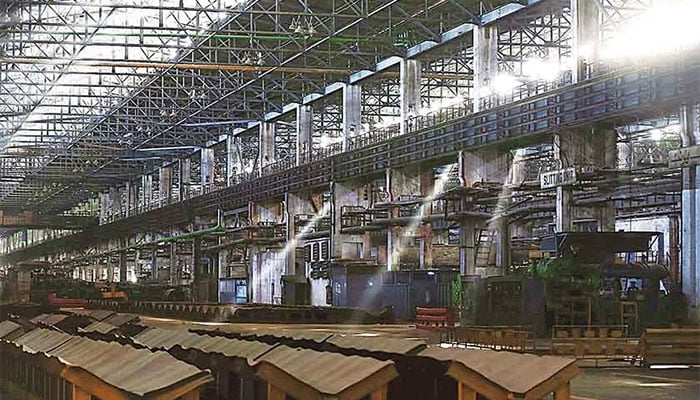
The federal government has revived plans to restore Pakistan Steel Mills (PSM), signaling a major policy shift after previously deciding to wind up the loss-making state-owned enterprise.

The development follows renewed interest from international parties in bringing the dormant steel producer back into operation, with Russian company Industrial Engineering LLC emerging as a key potential partner for the revival, modernisation and restructuring of the mill.

Well-informed sources said the government has initiated consultations with the Russian firm to assess the technical, financial and operational requirements for restoring PSM’s production capacity.

Two protocols have already been signed between Industrial Engineering LLC and Pakistan Steel Mills under the Ministry of Industries and Production.

The first agreement was signed in Moscow on July 10, 2025, and provides a framework for cooperation on the revival, modernisation and restructuring of PSM. The second protocol was signed on November 26, 2025, during the 10th session of the Pakistan-Russia Intergovernmental Commission.

The second agreement focuses on assessing the operational and capital expenditure required to restart manufacturing activities at the steel mill.

Feasibility assessment under way

According to sources, the authorities have also carried out an exercise to calculate production costs and evaluate the commercial viability of restarting PSM.

The assessment is expected to help determine whether the mill can operate sustainably and compete in the domestic and international steel markets after years of inactivity.

The findings will form the basis for recommendations to the government before a final decision is taken on the future structure and operations of the enterprise.

Sources said the relevant authority would submit recommendations to the Cabinet Committee on State-Owned Enterprises (CCoSOEs), seeking an end to the liquidation process and approval to pursue the revival option with the participation of international investors.

The move represents a reversal of the government’s earlier policy.

Government had approved liquidation

In May 2024, the Special Investment Facilitation Council (SIFC) had decided to scrap Pakistan Steel Mills after efforts to find a buyer failed to produce a viable offer.

The Cabinet Committee on Rightsizing subsequently approved the liquidation of the existing mill in August 2024.

However, the government has now shifted its focus towards rehabilitation, apparently encouraged by renewed international interest and the possibility of securing foreign technical and financial support.

A formal summary regarding the proposed policy shift has been submitted to the Ministry of Industries and Production for consideration, sources said.

A parliamentary secretary also indicated that the government’s policy direction had changed and that efforts were now being made to restore PSM to operational status.

He said the timeline agreed upon with the Russian company would be followed, with the relevant departments expected to take further steps after completion of the ongoing assessments.

Power minister signals renewed revival efforts

Separately, Minister for Power Sardar Awais Leghari said recommendations for reviving Pakistan’s dormant steel giant would soon be presented to policymakers, reinforcing indications that the government is seriously reconsidering the future of PSM.

Speaking at a webinar titled “Pakistan-Russia: Strengthening Trade, Education and Energy Collaboration,” jointly organised by the University of World Civilizations Moscow (UWCM) and the Institute of Regional Studies (IRS), Leghari highlighted the growing momentum in Pakistan-Russia relations.

He said bilateral ties had strengthened over the past two decades on the basis of mutual trust, respect and a shared interest in regional stability.

The minister’s remarks come as Pakistan explores greater Russian involvement in key economic and industrial sectors, including the possible rehabilitation of PSM.

Financial burden remains a challenge

Pakistan Steel Mills has remained largely dormant for years, creating a continuing financial burden for the government.

Following the earlier decision to wind up the enterprise, the government has continued to bear the salaries and other expenses of its remaining employees. Meanwhile, some of the mill’s liabilities and operating costs have been met through proceeds generated from the sale of scrap.

The proposed revival could therefore provide an opportunity to turn the idle industrial asset into a productive enterprise while reducing the recurring financial burden on the national exchequer.

However, the government is expected to carefully evaluate the mill’s outstanding liabilities, infrastructure requirements, production costs, technology needs and long-term market prospects before committing substantial public resources.

If the revival plan moves forward with foreign participation, the project could also open the door to new investment, technology transfer and employment opportunities in Pakistan’s steel and related industrial sectors.


Similar Posts

  • | |

    Netflix finally unveils Pakistan’s biggest series

    Pakistan’s first original Netflix series, “Jo Bachay Hain Sang Samait Lo,” is reportedly set to premiere by the end of 2026 after facing repeated delays that left fans uncertain about its future. The series is based on the bestselling novel of the same name by acclaimed writer Farhat Ishtiaq. First published as a serialized story in 2009, the novel later appeared in book form in 2013 and became one of Pakistan’s most popular contemporary romance novels. The project marks a major milestone for Pakistan’s entertainment industry as it is the country’s first original production created specifically for Netflix. Unlike several Pakistani television dramas that were added to the streaming platform after airing locally, this series was developed exclusively as a Netflix original. The drama features one of the biggest ensemble casts in Pakistani television. It stars Mahira Khan, Fawad Khan, Bilal Ashraf, Hamza Ali Abbasi, Hania Aamir, Iqra Aziz, Sanam Saeed, Ahad Raza Mir, Nadia Khan, along with several other well-known actors. The series has been directed and produced by Momina Duraid. The project was initially expected to debut in 2025, but its release was postponed without any official explanation. The delay led to widespread speculation among viewers, with many questioning whether the series would ever reach the streaming platform. Fresh reports now suggest that post-production work is nearing completion. The final editing process is said to be underway, while promotional activities involving the cast are expected to begin in the coming weeks ahead of the planned release. Despite the latest update, many fans remain cautious after the long wait. Social media users have expressed excitement about the possibility of finally watching the series but say they will believe the release only when Netflix officially announces the premiere date and makes the episodes available. If released as expected, “Jo Bachay Hain Sang Samait Lo” is likely to become one of Pakistan’s biggest digital entertainment launches, introducing local storytelling to a wider international audience through one of the world’s leading streaming platforms.

  • | |

    Shein turns to China as Hong Kong IPO nears

    Fast-fashion giant Shein is preparing to make its stock market debut in Hong Kong after years of efforts to list in the United States and Britain, marking a significant shift in how the company presents its relationship with China. The company is expected to raise around $1.7 billion through its Hong Kong initial public offering, with a valuation of about $26.5 billion. That figure is considerably below the company’s valuation in 2022. Shein had previously sought to establish itself as a global company. It moved its headquarters to Singapore in 2021 and promoted plans to expand manufacturing and operations in countries including Brazil, Türkiye and parts of Europe. However, its attempts to secure a Western listing faced regulatory and political obstacles. Chinese authorities were also reportedly involved in blocking earlier efforts to list in New York and London. After shifting its focus to Hong Kong in 2025, Shein founder Sky Xu increased his engagement with Chinese officials and became more involved in regulatory and capital-market discussions inside the country, according to people familiar with the matter. Xu also made a rare public appearance at a business forum in Guangdong earlier this year, where he announced plans for Shein to invest $1.5 billion in the province. He said the company would deepen its presence in Guangdong and develop its smart supply-chain system while contributing to the region’s fashion industry. Shein also opened a research and development centre in Nanjing, the eastern Chinese city where the company was founded in 2012. These moves helped reinforce the company’s economic links with China at a time when Beijing has been paying close attention to companies with major overseas operations. Officials in Guangdong also reportedly highlighted Shein’s contribution to employment and domestic economic activity when engaging with central authorities. The company has sought to emphasise that its main business is overseas rather than in China. Shein does not market its extremely low-priced products to Chinese consumers, allowing it to distance itself from the intense competition among domestic e-commerce platforms. Shein has instead argued that its international operations benefit China by generating foreign currency and supporting Chinese manufacturing and supply chains. The company’s Hong Kong prospectus describes China as the foundation of its global logistics and fulfilment network. Nearly 80 per cent of Shein’s workforce is based in mainland China. The shift comes after growing difficulties in Western markets. In the United States, lawmakers raised concerns over Shein’s supply chains and called for stronger assurances that its products were not linked to forced labour. The company has also faced scrutiny in Europe over competition, product safety and items offered through its online marketplace. At the same time, changes to low-value import rules in the US and Europe have created additional challenges for Shein’s business model, which relies heavily on inexpensive shipments directly to consumers. Analysts say the company’s experience demonstrates how geopolitical tensions are increasingly influencing corporate decisions and stock-market listings.

  • |

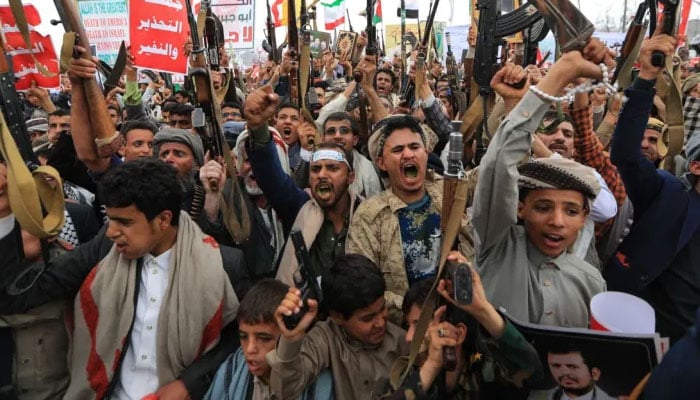
    Saudi airstrikes on Hodeidah trigger Houthi warning, raising regional tensions

    Saudi Arabia’s airstrikes on the Houthi-controlled Yemeni city of Hodeidah have triggered a strong response from the group, with the Houthis warning that the attacks could have serious consequences and further escalate tensions in the region. According to Arab media reports, Houthi officials said Saudi-led forces targeted telecommunications facilities in Hodeidah as well as Kamaran Island. A woman was reportedly injured in the strike on Kamaran Island. Witnesses also reported hearing explosions near Hodeidah port. However, the Saudi-led military coalition denied targeting the port itself. The coalition said its operations were aimed at Houthi military positions in Hodeidah. Hodeidah port is a major commercial and humanitarian gateway for northern Yemen. The port plays an important role in bringing essential goods and humanitarian supplies into areas controlled by the Houthis. The latest strikes followed growing tensions in the Red Sea. Saudi-led coalition spokesman Turki al-Malki had described recent Houthi activities in the area as irresponsible and provocative. He warned that the coalition would take further military action if Houthi attacks continued. The Houthis recently claimed responsibility for attacks on Saudi oil tankers in the Red Sea. The group said the vessels had violated a naval blockade it had announced against Saudi Arabia. The Houthis declared the blockade on July 20. They described it as a response to an attack on Sanaa International Airport a week earlier. The internationally recognised Yemeni government, which is backed by Saudi Arabia, claimed responsibility for the airport attack. It said the strike was carried out after an Iranian aircraft allegedly arrived at the airport without authorisation. Following the latest escalation, concerns are growing over the impact on commercial shipping and global trade. Two Chinese oil tankers carrying Saudi crude reportedly crossed the Bab el-Mandeb Strait safely despite the heightened tensions. The Red Sea is a crucial international shipping route. It handles a significant share of global container trade and connects major markets between Asia, Europe and the Middle East. Any prolonged disruption to shipping in the Red Sea could increase transportation costs and put further pressure on global supply chains. The situation is particularly sensitive because the Strait of Hormuz is also facing serious disruption amid the wider regional conflict. Houthi spokesman Mohammed Abdulsalam said the group’s naval blockade does not amount to a complete closure of the Bab el-Mandeb Strait. He said the measure is specifically focused on maritime activity linked to Saudi Arabia. According to the Houthi position, the blockade is intended as a response to what the group describes as the continued blockade of Yemen. The latest exchange of airstrikes, threats and attacks on shipping has increased fears that the conflict could spread further across the region.

  • |

    Pakistan’s exports post strong growth at start of FY2026-27, rising over 31% in July

    Pakistan recorded a strong increase in exports at the start of the new fiscal year, providing a positive signal for the country’s external trade performance despite continued regional uncertainty and global economic challenges. According to the latest trade data released by the Pakistan Bureau of Statistics (PBS), the country’s exports witnessed a sharp month-on-month increase during July 2026, reflecting improved demand for Pakistani products in international markets and stronger export activity across key sectors. The official figures show that exports reached $2.939 billion in July 2026, compared with $2.242 billion in June 2026, representing a 31.09% increase on a monthly basis. The substantial rise marks a promising beginning to the fiscal year 2026-27 and is being viewed as an encouraging development for the country’s economy. On a year-on-year basis, exports also recorded healthy growth. Compared with July of the previous year, Pakistan’s exports increased by 9.54%, indicating sustained improvement in export performance despite geopolitical tensions and volatility in international markets. Economic observers believe the rise in exports reflects the impact of government efforts to support exporters, improve industrial production, and expand access to international markets. Higher shipments from sectors such as textiles, food products, leather goods, sports equipment, surgical instruments, and information technology services are expected to have contributed to the overall increase. The latest trade figures are likely to strengthen the government’s confidence in its export-led growth strategy, which aims to reduce the trade deficit, improve foreign exchange earnings, and support macroeconomic stability. However, analysts caution that maintaining this momentum will require continued policy support, competitive energy prices, stable exchange rate management, and greater diversification of export products and destinations.

  • | |

    IHC seeks answers over delay in judicial appointme…

    ISLAMABAD: The Islamabad High Court (IHC) has asked the federal government to explain the constitutional implications of keeping Prime Minister Shehbaz Sharif’s advice on judicial appointments pending with President Asif Ali Zardari. Justice Arbab Muhammad Tahir issued notices to the president, the federal government and the attorney general on Monday while hearing a petition challenging the delay in approving appointments to the superior courts. The court also directed the respondents to submit separate concise reports detailing when the prime minister’s advice was sent to the president and what action had been taken on it. The case has been fixed for hearing on August 11. The petition was filed by lawyer Luqman Zafar through his counsel Zahid Asif Chaudhry, who questioned the prolonged delay in completing the constitutional process for judicial appointments. The Judicial Commission of Pakistan, headed by Chief Justice Yahya Afridi, had recommended 19 additional judges and the confirmation of five judges for the high courts during meetings held on July 20 and 21. The recommendations were subsequently forwarded by the prime minister to President Zardari for approval under Article 48 of the Constitution. During Monday’s proceedings, the petitioner’s lawyer argued that the use of the word “shall” in Article 48(1) placed a constitutional duty on the president to act on the prime minister’s advice. He maintained that although the president could return the advice for reconsideration within the prescribed period, the Constitution did not permit an indefinite delay. The counsel further argued that the delay was affecting the administration of justice at a time when the superior courts were already struggling with a growing backlog of cases. According to the petitioner, prolonged vacancies could also undermine the public’s constitutional right to timely access to justice. Justice Tahir directed that notices be served through all available modes. Additional Attorney General Rashid Hafeez was also asked to ensure that the respondents provide the court with clear timelines regarding the submission and handling of the judicial appointments summary. The presidential delay has already had consequences for the high courts. Four additional judges of the Peshawar High Court whose confirmation had been recommended by the Judicial Commission ceased to hold office on August 4 after their terms expired without formal notifications. A similar situation arose in the Sindh High Court, where an additional judge left office after his extended tenure ended on July 29. The oath-taking ceremony for the newly recommended judges had originally been scheduled for July 27 but was postponed indefinitely after the president neither approved the summary nor returned it for reconsideration. With the matter now coming under judicial scrutiny, the Islamabad High Court is set to examine whether the continued delay in acting on the prime minister’s advice is constitutionally permissible.

  • | |

    Shifa specialists join Imran’s eye assessment

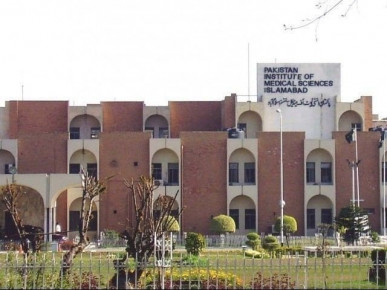
    The Pakistan Institute of Medical Sciences (PIMS) has confirmed that two specialists from Shifa International Hospital were involved in the eye examination of former prime minister and PTI founder Imran Khan. According to a statement issued by PIMS on Saturday, Imran Khan was brought to the Islamabad hospital during the night between August 20 and 21 for a medical examination and treatment. The institute said the ophthalmological assessment was carried out with the participation of two Shifa International specialists. Other required examinations were conducted by doctors at PIMS. PIMS said the findings from the eye assessment were reviewed alongside the results of investigations conducted by its own medical specialists. A medical board consisting of PIMS doctors subsequently compiled the overall medical fitness report. However, the institute said it would not make the contents of the medical report public. PIMS cited patient confidentiality as well as directions issued by the Supreme Court of Pakistan for withholding the details of the report. The clarification comes amid controversy over the treatment and medical care being provided to Imran Khan, who is currently detained at Adiala Jail. Earlier this week, the Supreme Court had directed that Imran Khan be shifted to Shifa International Hospital for treatment for several days. The court also ordered the government to facilitate weekly meetings between him and his family. The Supreme Court further directed authorities to provide access to Imran’s personal physician, Dr Faisal Sultan. It ordered the formation of a medical board that would include an ophthalmologist, general physician and cardiologist, along with Dr Sultan. The government subsequently filed a review petition against the court’s order, describing the decision as discriminatory. Confusion arose later when reports suggested that Imran Khan was being moved from Adiala Jail to Shifa International Hospital. Information Minister Attaullah Tarar later said that the former prime minister had instead been taken to PIMS because of security concerns surrounding Shifa Hospital and the route leading to it. Tarar said doctors from Shifa International were also present during the medical examination at PIMS. After the examination, Imran Khan was declared medically fit and taken back to Adiala Jail. The development has drawn further attention from PTI and Imran Khan’s family, who have repeatedly raised concerns about his health and medical treatment. Imran Khan’s sister, Dr Uzma Khan, also spoke publicly after meeting him and alleged that he was facing severe injustice and mistreatment.

Leave a Reply

Your email address will not be published. Required fields are marked *