shifa specialists join
| |

Shifa specialists join Imran’s eye assessment

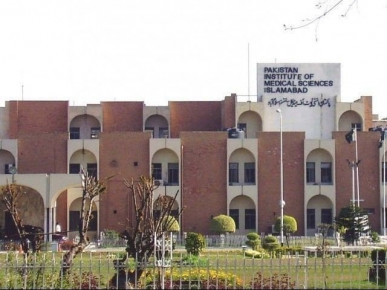
The Pakistan Institute of Medical Sciences (PIMS) has confirmed that two specialists from Shifa International Hospital were involved in the eye examination of former prime minister and PTI founder Imran Khan.

According to a statement issued by PIMS on Saturday, Imran Khan was brought to the Islamabad hospital during the night between August 20 and 21 for a medical examination and treatment.

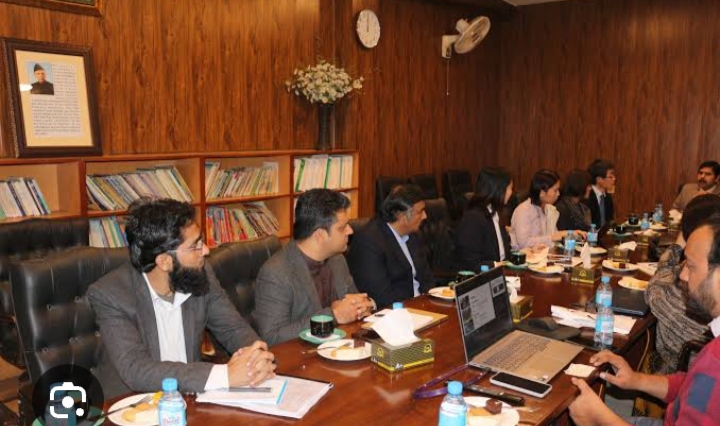
The institute said the ophthalmological assessment was carried out with the participation of two Shifa International specialists. Other required examinations were conducted by doctors at PIMS.

PIMS said the findings from the eye assessment were reviewed alongside the results of investigations conducted by its own medical specialists. A medical board consisting of PIMS doctors subsequently compiled the overall medical fitness report.

However, the institute said it would not make the contents of the medical report public.

PIMS cited patient confidentiality as well as directions issued by the Supreme Court of Pakistan for withholding the details of the report.

The clarification comes amid controversy over the treatment and medical care being provided to Imran Khan, who is currently detained at Adiala Jail.

Earlier this week, the Supreme Court had directed that Imran Khan be shifted to Shifa International Hospital for treatment for several days. The court also ordered the government to facilitate weekly meetings between him and his family.

The Supreme Court further directed authorities to provide access to Imran’s personal physician, Dr Faisal Sultan. It ordered the formation of a medical board that would include an ophthalmologist, general physician and cardiologist, along with Dr Sultan.

The government subsequently filed a review petition against the court’s order, describing the decision as discriminatory.

Confusion arose later when reports suggested that Imran Khan was being moved from Adiala Jail to Shifa International Hospital. Information Minister Attaullah Tarar later said that the former prime minister had instead been taken to PIMS because of security concerns surrounding Shifa Hospital and the route leading to it.

Tarar said doctors from Shifa International were also present during the medical examination at PIMS. After the examination, Imran Khan was declared medically fit and taken back to Adiala Jail.

The development has drawn further attention from PTI and Imran Khan’s family, who have repeatedly raised concerns about his health and medical treatment.

Imran Khan’s sister, Dr Uzma Khan, also spoke publicly after meeting him and alleged that he was facing severe injustice and mistreatment.

Similar Posts

  • | | |

    Karachi murder case: husband and wife arrested in …

    Police have arrested a husband and wife in Punjab’s Layyah district in connection with a Karachi murder case involving the killing and burning of a man’s body. According to police, the Keamari Investigation Police arrested the alleged main suspects during an operation in Layyah. The case relates to the murder of Faizan alias Faizi in the Mochko area of Karachi in April. Police said the victim was allegedly killed and his body was set on fire. The remains were completely burned and were later identified as those of Faizan. A case had initially been registered against unidentified suspects at the Mochko police station. A special investigation team was formed to investigate the incident. Using technical investigation methods, police had previously arrested two suspects identified as Akram, the victim’s father-in-law, and his son, Ataullah. Police said the alleged main suspects, identified as security institution employee Joon Abbas and his wife, Samreen, had fled and remained in hiding following the incident. The investigation team reportedly traced the couple through technical means and arrested them in Layyah. Further investigation is currently underway to determine the circumstances surrounding the murder and the alleged burning of the body.

  • |

    Govinda hits back at wife Sunita over ‘sugar daddy’ claims

    Govinda has finally responded after wife Sunita Ahuja publicly accused him of having an affair with his “Roopa” co-star, Komal Rani Swarnkar. Sunita had reportedly called him a “sugar daddy” in connection with the actress. The 62-year-old actor addressed his wife’s remarks at length, saying they were actively damaging both his reputation and his career. He pointed out that Sunita had once relied on his help for her own shows during the lockdown period. Now that he has begun work on a new film, Govinda claimed his wife seems determined to make sure he loses public goodwill or faces professional setbacks. He said her comments felt deliberately aimed at hurting his business. The actor also spoke more broadly about people from modest backgrounds entering the film industry. He said such newcomers shouldn’t be humiliated to the point where they feel scared enough to walk away from their careers entirely. Addressing the age-gap criticism surrounding his pairing with Komal, Govinda noted that several senior actors have worked alongside younger co-stars while still appearing youthful on screen. He suggested his wife seemed unwilling to accept that he could still look youthful himself. He further claimed that a specific group was actively working to damage his public image. Govinda appealed directly to Sunita, asking her to show some restraint and stop making public statements about the matter. He also criticised his wife for using abusive language in her recent comments. Govinda warned that young fans following her online could end up imitating that kind of behaviour if it continues. The controversy comes as Govinda and Komal have been making joint public appearances recently while promoting “Roopa.” The two were first spotted together at Mumbai airport, months after Sunita had hinted that the woman allegedly involved with her husband was a newcomer to the industry. They were seen together again on Friday, reigniting public interest in the ongoing dispute. As of now, Sunita has not issued a fresh public response to her husband’s latest remarks.

  • |

    Ananya Raj dies at 27 after year-long health struggle

    Indian actress Ananya Raj, known for her roles in films including 7 Hours to Go, The Final Exit and Ghost, has died at the age of 27. She passed away on July 15, with her family confirming the news several weeks later through a statement shared on her official Instagram account. According to the statement, Ananya had been experiencing physical and mental health difficulties for more than a year. Despite the challenges, her family said she continued to face her struggles with strength and determination. She died peacefully in her sleep during the early hours of July 15. “With great pain, we have to announce that Ananya passed away in the wee hours of 15th July. She passed away peacefully in sleep,” her family said in the statement. The family described Ananya as a strong and determined person who continued fighting through the difficulties she faced. They said she had spent more than a year dealing with physical and mental discomfort but remained committed to overcoming the problems. Remembering her personality and spirit, her family wrote that she was a strong-spirited girl who lived life like a queen. They also expressed how deeply her absence would be felt by those who loved her. Ananya began her acting career in Hindi cinema and made her Bollywood debut with 7 Hours to Go in 2016. The film marked her entry into the industry and was followed by appearances in other projects. In 2017, she featured in The Final Exit, further establishing herself as a young performer in the Hindi film industry. She later appeared in the 2019 film Ghost, adding another notable project to her acting credits. Beyond Bollywood, Ananya also explored regional cinema and worked across different film industries. Her credits included the trilingual movie Madrasi Gang, reflecting her involvement in both Hindi and regional productions. Although her career was still developing, Ananya had already built a body of work across multiple projects. Her death at such a young age has brought renewed attention to her acting journey and the films in which she appeared. In their statement, Ananya’s family requested privacy as they come to terms with their loss. They asked people to respect their need for peace and quiet during what they described as a difficult period. The family also appealed to fans, friends and well-wishers to remember Ananya and pray for her soul. They expressed gratitude for the love and support surrounding her memory while requesting privacy during the grieving process. Ananya’s death, confirmed weeks after she passed away, has left her family, friends and admirers mourning the loss of a young actress whose career spanned Hindi and regional cinema.

  • |

    Senate questions $387 million ADB water project allocation

    Islamabad: The Senate Standing Committee on Economic Affairs raised serious concerns over inequities in the allocation of foreign funded development projects across Khyber Pakhtunkhwa, revealing that flood affected districts have been largely bypassed while relatively unaffected areas received more infrastructure funding. The meeting, chaired by Senator Saifullah Abro, highlighted discrepancies in road and irrigation project implementation, questioned external pressures from international lenders, and warned that mismanagement could exacerbate Pakistan’s mounting national debt, which has soared from Rs40 trillion in 2022 to approximately Rs90 trillion today. During the session, committee members expressed alarm that districts most devastated by floods, including Upper Dir, Lower Dir, and Chitral, received fewer road reconstruction projects compared to Mardan, which saw 16 roads built despite experiencing minimal flood damage. In Dir, only 12 kilometres of road were reconstructed despite extensive damage. Similarly, nine roads were completed in Peshawar, a city that did not face flood related destruction. Senator Rubina Khalid termed this “inequitable allocation” and warned that such disparities hinder balanced regional development, while Senator Waqar Mehdi questioned whether donor agencies were being misled about project priorities. The committee also scrutinized the financial management of foreign funded schemes. Officials reported that 770 kilometres of roads were constructed at a total cost of Rs69 billion, with an additional Rs43 billion spent on bridges and related infrastructure. Each kilometre of road cost approximately Rs70 million. The Asian Development Bank supported KP Road Rehabilitation and Upgradation Project, covering 249.5 kilometres, was completed ahead of schedule at a cost of $146.2 million. Similarly, $387 million in ADB funded water projects and $295 million from the World Bank are being implemented in irrigation and flood protection schemes across Khyber Pakhtunkhwa. While project completion rates were impressive, reaching 100 percent for most schemes, the committee raised concerns about undue interference by external entities. Chairman Saifullah Abro questioned the role of the World Bank’s local representative in the Sindh Water and Agriculture Transmission Project, noting that the lender should only finance and recover loans, not dictate project execution. He estimated that resisting unnecessary external pressures could save Sindh around Rs14 billion and cited previous instances where committee intervention prevented $890 million in unwarranted costs on the Peshawar Torkham project. The committee underscored the need for transparency, calling for a clear distinction between grants and loans and insisting that provincial authorities ensure funds are spent only for their approved purposes. Senator Hidayatullah stressed that provinces receiving loans must allocate them to the intended projects to benefit local populations, while Senator Kamil Ali Agha urged planning for infrastructure that accounts for emerging climatic challenges, including improved stormwater drainage systems. Senator Abro also criticized the concentration of contracts among a few large construction firms in Khyber Pakhtunkhwa, directing officials to provide detailed information on the Notice Inviting Tender process to ensure competitive bidding. While district road projects were reportedly nearing completion across Swat, Peshawar, Mardan, and Nowshera, the committee emphasized that project selection criteria and equitable distribution remained critical issues. The meeting concluded with a clear warning that Pakistan’s growing reliance on foreign loans, coupled with misallocated resources, could have serious economic repercussions. Senator Abro noted that while international assistance is vital, the country must maintain ownership and control over project execution to ensure accountability, prevent cost escalation, and deliver tangible benefits to the communities most in need.

  • |

    JICA delegation visits Literacy Centres in Lahore

    LAHORE: A high-level delegation from the Japan International Cooperation Agency (JICA) visited Middle-Tech Literacy Centres in Lahore following an invitation from Literacy and Non-Formal Education Secretary Syed Haider Iqbal. The delegation included JICA President Dr. Akihiro Tanaka, Ambassador of Japan to Pakistan Shuichi Akamatsu, and JICA Pakistan Chief Representative Yusuke Shinozaki. During the visit, the officials toured literacy centres in Fatah Garh and Tajpura, reviewed the facilities available to students, and observed the teaching and learning activities. The delegation also interacted with students and distributed gifts among them. JICA representatives further handed over Package E textbooks to students who had completed Package D, enabling them to continue their education and move on to the next stage of their learning journey. During the visit, Secretary Literacy Syed Haider Iqbal briefed the Japanese delegation on the department’s ongoing initiatives for non-formal education. He highlighted projects being implemented with JICA’s support, along with other programmes aimed at improving access to education for children and young people who remain outside the formal schooling system. The secretary also outlined the department’s future plans and targets for expanding literacy, strengthening non-formal education and promoting skills development across Punjab. The JICA delegation appreciated the efforts of the Literacy and Non-Formal Education Department to improve literacy rates and provide educational opportunities to underserved communities across the province. The officials also acknowledged the department’s efforts to equip learners with skills that can contribute to their personal development and future economic opportunities. The meeting also focused on strengthening cooperation between the Literacy Department and JICA to expand educational opportunities for out-of-school children. Both sides discussed ways to enhance their partnership and explore further areas of collaboration to bring more children into the education system. The visit underscored the importance of international cooperation in addressing educational challenges and expanding access to learning opportunities, particularly for children who have been unable to attend mainstream schools.

  • |

    Vaneeza Ahmed reveals menopause impact on her marriage life

    Vaneeza Ahmed, one of Pakistan’s most celebrated former models and actresses, has opened up about her personal experience with menopause and the significant impact it had on her physical and emotional well-being. The former top model enjoyed a successful career in the fashion industry before making a strong mark in acting. Over the years, she appeared in several popular dramas, including Tum Se Mil Ker, Zanjeer, Na Janay Kia Hoga and Tum Hi To Ho. In recent years, she continued to impress audiences with her performances in acclaimed projects such as Ehd-e-Wafa and Kuch Ankahi. Now 55, Vaneeza is married and is a mother of two daughters. She has also become increasingly vocal about women’s health, particularly the physical and emotional challenges women can experience during menopause. During a recent appearance on Nida Yasir’s morning show, Vaneeza spoke candidly about how menopause affected her personality, emotions and relationship with her husband. She explained that she experienced significant changes in her body and struggled with frequent mood swings and irritability. According to Vaneeza, she initially did not understand why she was suddenly reacting differently to situations that she had previously tolerated. Her emotional changes also began creating tension in her marriage. She said her husband questioned what had happened to her, while the lack of understanding about menopause contributed to emotional distance between them. The actress explained that hormonal changes during menopause can affect women’s emotions and responses. She noted that women may suddenly find themselves less willing to tolerate things they previously ignored, which can sometimes lead others to describe them as rude, stubborn or difficult. Vaneeza stressed that women and their families need greater awareness about menopause so these changes are not misunderstood. She also highlighted the importance of paying attention to mental health during this stage of life. Sharing advice with married women, Vaneeza encouraged them not to neglect themselves while managing their family responsibilities. She clarified that prioritizing personal well-being does not mean abandoning relationships, but rather making health a priority. She recommended maintaining a healthy routine, exercising regularly and making time for activities that bring happiness and relaxation. Vaneeza also encouraged women to reconnect with simple activities they enjoyed during childhood. With a lighthearted suggestion, she advised women to turn on their favorite music, dance and simply enjoy the moment. Her message focused on self-care, movement and giving women permission to take time for themselves. Vaneeza’s candid discussion has highlighted the importance of understanding menopause as a natural stage of life rather than treating its emotional and physical effects as a personal failing. Her experience also serves as a reminder that greater awareness and communication can help women and their families navigate this transition with more empathy and understanding.

Leave a Reply

Your email address will not be published. Required fields are marked *