afghan women report
|

7 in 10 Afghan women report poor mental health

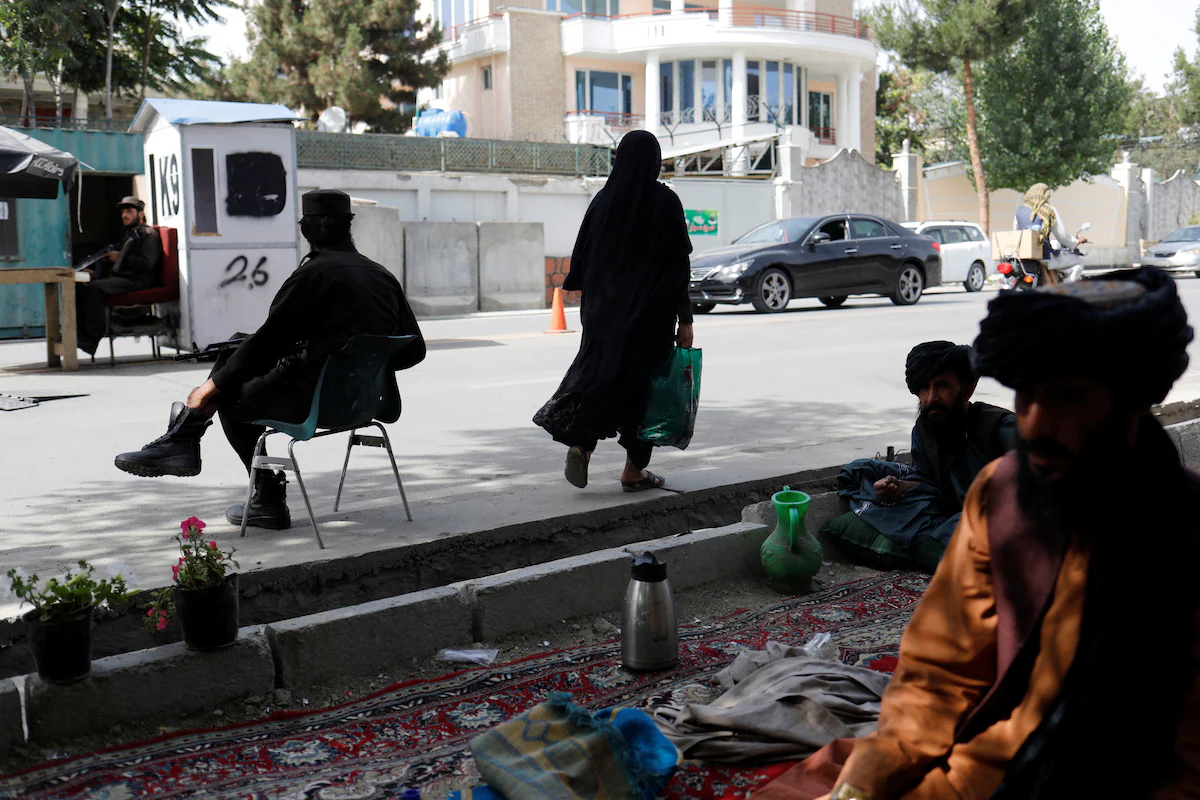
Restrictions imposed on women and girls in Afghanistan have sharply reduced their participation in public life, with more than half of surveyed women saying they now leave their homes only once or twice a month, according to a new UN Women assessment.

The findings were released as Afghanistan approaches the fifth anniversary of the Taliban’s return to power in August 2021.

UN Women said Afghanistan remains the only country where girls are barred from secondary education and women are prohibited from attending universities.

The agency said the restrictions have increasingly affected women’s freedom of movement, education, employment and access to public life.

More than half of the women surveyed reported leaving home no more than twice a month. Nearly three-quarters said they did not feel safe going outside without a male guardian, commonly referred to as a mahram.

UN Women said the restrictions have also contributed to growing concerns about women’s mental health.

Around seven out of 10 women surveyed described their mental health as either “bad” or “very bad”. Respondents cited social isolation, reduced opportunities and limited access to support networks among the factors affecting their wellbeing.

The UN agency said Taliban authorities have introduced more than 100 decrees affecting women and girls since returning to power. It described the measures as creating a system of discrimination and said Afghanistan had become an extreme global example of restrictions on women’s rights.

The Taliban maintain that their policies respect women’s rights under their interpretation of Islamic law and Afghan culture.

Education remains heavily restricted

The restrictions on education have affected millions of Afghan girls.

UNESCO estimated that about 2.4 million girls have been prevented from attending secondary school since the Taliban returned to power.

Women and girls have also been excluded from university education, limiting their opportunities to pursue professional careers and higher education.

UN Women said recent measures had further weakened legal protections available to women.

According to the agency, rules introduced this year reduced legal equality between men and women, strengthened the authority of men within marriage and created additional difficulties for women seeking divorce.

Women largely excluded from workforce

Economic participation remains another major challenge.

UN Women reported that only about 7% of Afghan women are employed, compared with approximately 84% of men.

The agency said the restrictions on education and employment were limiting women’s ability to earn income, develop careers and contribute to the country’s economy.

The findings were based on a door-to-door survey involving 2,190 people conducted between February and March 2025. The agency also conducted telephone interviews with 2,811 people between April and May 2025.

UN Women warned that continued restrictions could further isolate women and deepen the social and economic consequences of excluding half of Afghanistan’s population from public life.

The Taliban government has not immediately responded to requests for comment on the latest findings.

Similar Posts

  • | |

    President, PM vow action after Swat suicide blast

    ISLAMABAD: President Asif Ali Zardari and Prime Minister Shehbaz Sharif on Sunday strongly condemned the deadly suicide bombing in Kabal, Swat, expressing grief over the loss of lives and reaffirming the government’s commitment to eliminating terrorism. In separate statements, both leaders extended heartfelt condolences to the families of those killed in the attack and prayed for the departed souls. They also asked Allah Almighty to grant patience and strength to the bereaved families during this difficult time. President Zardari expressed deep sorrow over the tragedy and prayed for the speedy recovery of those injured in the explosion. He directed the relevant authorities to ensure that all injured victims receive the best possible medical treatment without delay. The president said terrorists would never succeed in weakening Pakistan’s peace, national unity or the writ of the state. He praised the sacrifices of Khyber Pakhtunkhwa Police and other law enforcement agencies, describing their bravery and commitment as a source of pride for the nation. He further called for a comprehensive investigation into the incident and directed authorities to identify those responsible for planning and carrying out the attack. He stressed that all perpetrators and their facilitators must be brought to justice. Prime Minister Shehbaz Sharif also condemned the suicide bombing and expressed profound grief over the loss of precious lives. He conveyed his sympathies to the families of the victims and prayed for the elevation of the martyrs’ ranks. The prime minister also wished a speedy recovery for those injured and instructed the relevant departments to provide them with the highest standard of medical care. Reaffirming the government’s resolve against militancy, Shehbaz Sharif said Pakistan’s fight against terrorism would continue until the menace was completely eradicated. He said those seeking to destabilise the country through acts of violence would not be allowed to succeed.

  • |

    Sonu Nigam opens up on being banned by music companies over copyright fight

    Sonu Nigam recently revisited one of the most controversial chapters of his career. He spoke about it during a candid conversation on the YouTube show Game Changers with Komal Nahta. The topic centered on the time music companies banned him after he raised his voice on copyright issues. Nigam began by looking back at how well his career was going before the controversy started. He said albums kept releasing one after another during that time. Audiences loved his work, and everything seemed to be going smoothly. That changed the moment he raised concerns over copyright. Several music companies responded by cutting ties with him entirely. He recalled how people within the industry began labelling him an activist at the time. The tone behind that label, he noted, was often dismissive rather than respectful. Looking back now, he finds it ironic that those same companies eventually started paying him royalties. He added that representatives from these companies now visit his home as guests. Nigam also explained his reasoning behind taking such a bold stand at the time. He said someone had to take the risk, comparing his decision to belling the cat. According to him, he felt he was meant for something bigger than just singing. He believed he was destined to carry forward a movement that legendary singer Lata Mangeshkar had once started. That movement, he said, had never reached its logical conclusion. When asked whether he felt scared during that turbulent period, Nigam said fear was not something he experienced. He admitted he never expected to actually get banned in the first place. He initially believed things would eventually work out on their own. However, as the situation kept worsening and more doors closed around him, he found strength through his live performances instead. He felt confident that nobody could stop him once he stepped on stage. Nigam went on to describe how his relationship with music companies gradually improved over time. He credited changing laws, along with the industry’s eventual realization that his stance had been justified. According to him, this shift slowly repaired his equation with these companies. Today, he said, their interactions feel warm and almost familial in nature. Reflecting on the entire journey, Nigam suggested that everyone involved likely needed to go through that difficult phase for real change to happen. He noted that any bitterness or resentment that once existed between him and the industry has since completely faded away, leaving behind a much healthier relationship.

  • |

    ICC confirms 12 host venues for Cricket World Cup 2027

    The International Cricket Council (ICC) has officially confirmed the 12 venues that will host matches during the ICC Men’s Cricket World Cup 2027, taking a major step forward in preparations for the prestigious tournament. The host cities were unveiled during a launch event in Johannesburg, where tournament officials also introduced the event’s official branding, theme and slogan. South Africa will host the majority of the matches across eight venues, while Zimbabwe will stage fixtures at three venues. Namibia will make history by hosting Cricket World Cup matches for the first time, with games scheduled to be played in its capital, Windhoek. The launch ceremony featured several prominent cricket personalities, including former South Africa captain Graeme Smith, legendary fast bowler Makhaya Ntini, batting great Hashim Amla, current Proteas captain Temba Bavuma and fast bowler Kagiso Rabada. Former Zimbabwe captain Hamilton Masakadza and Namibia representative Rudolf Jansen van Vuuren also attended the event, highlighting the partnership between the three host nations. The 2027 edition will mark the return of the men’s 50-over Cricket World Cup to Africa for the first time since 2003, when South Africa, Zimbabwe and Kenya jointly hosted the tournament. A total of 14 teams will compete in the expanded competition, offering more matches and greater opportunities for emerging cricketing nations to participate on the global stage. Tournament organizers also revealed the official theme, “Three Nations, One Heartbeat,” representing the unity and shared vision of South Africa, Namibia and Zimbabwe as co-hosts. The tournament’s visual identity is inspired by the African philosophy of Ubuntu, which emphasizes humanity, togetherness and collective strength. Often expressed through the phrase, “I am because we are,” Ubuntu reflects the spirit of unity the hosts hope to showcase throughout the event. Organizers also introduced the official slogan, “Make the Circle Bigger,” symbolizing inclusivity, community and the ambition to welcome more people into the global cricket family. With the venues confirmed and the tournament identity officially launched, preparations for the ICC Men’s Cricket World Cup 2027 are set to gather pace as the three host nations prepare to welcome teams and fans from around the world.

  • | |

    US military depletes long-range missile stockpile …

    The United States has burned through nearly all of its long-range precision missiles during five months of fighting in Iran, according to three people familiar with internal defense data, fueling concern inside Washington about military readiness for future crises. The weapons in question are primarily the Army’s ground launched systems, the Army Tactical Missile System and the newer Precision Strike Missile. Two of the sources said the military has expended virtually its entire supply of both. These munitions let forces strike targets accurately from a safe distance and have already proven vital in Ukraine, where American supplied versions allowed Ukrainian troops to hit targets deep inside Russian territory. The Precision Strike Missile represents a more advanced generation designed to eventually replace the shorter range ATACMS. Defense analysts note that such long-range munitions, each costing more than a million dollars, would also play a central role in any future confrontation with China. The sources declined to specify exact remaining quantities of either weapon. President Donald Trump launched the joint offensive against Iran alongside Israel in February, initially predicting a brief campaign. Instead, the conflict has stretched on for months, and the three sources said they worry that shrinking missile reserves could weaken the country’s ability to deter rivals such as Russia and China going forward. A fourth person familiar with the matter said Central Command, which oversees American forces across the Middle East, has nearly exhausted the land based missiles it held before the war started, though it has managed to replenish supplies by drawing from military stockpiles based elsewhere around the world. All four sources spoke on condition of anonymity. Asked to respond to the stockpile figures, the White House shared a statement from Trump asserting the country holds “far more munitions than anyone in the world” and more than it currently requires. He added that American defense manufacturers are producing at record volumes while also expanding factory capacity. Analysts largely agree that certain categories of weapons, including artillery shells and select missile types, are rolling off production lines at historic rates. Still, they caution that overall output may fall well short of what a prolonged conflict would demand. Lockheed Martin, which manufactures both the ATACMS and the Precision Strike Missile along with the THAAD missile defense system, did not respond to questions about the stockpile figures or the president’s remarks. Raytheon, maker of the Tomahawk cruise missile and the Patriot interceptor, also did not respond to inquiries. Chief Pentagon spokesperson Sean Parnell defended the state of American readiness, saying the military maintains a deep arsenal capable of protecting national interests and has carried out multiple successful operations across combatant commands. Internal debate over munitions The stockpile figures have circulated through federal government channels over the past week amid tense internal discussions about how much longer American forces can keep striking Iranian targets without depleting reserves needed to respond to crises elsewhere in the world. One source said the drawdown in ATACMS and Precision Strike Missile inventories reflects a deliberate choice by the administration to avoid riskier tactics, such as sending piloted aircraft to drop bombs directly over Iranian territory. Because these missiles allow strikes from a distance, analysts consider them especially valuable against an adversary with sophisticated air defenses, a category that includes China. A March assessment from the Center for Strategic and International Studies noted that these weapons have already been used against targets inside Iran. That same assessment found that Precision Strike Missile stocks started the conflict relatively low, since the weapon is still new to the arsenal, though the Army has placed large orders set for delivery in 2027. Military officials have said ATACMS production is winding down as manufacturing shifts toward the newer missile system. Military leaders have spent weeks warning the president that stocks of defensive weapons, including the Patriot interceptor system effective against ballistic missiles, are running low, according to two of the sources. Several news outlets reported last week that Trump opted against launching another large scale offensive inside Iran partly because military advisers raised concerns about dwindling supplies. A separate US official disputed that account, saying the president held off due to pressure from Gulf states rather than munitions concerns. The extended campaign has also reignited debate over the scope of presidential war powers, since no formal declaration of war or authorization for the use of military force has gone before Congress. Defensive systems also strained A separate assessment published last week by the Center for Strategic and International Studies estimated that the military used roughly 65 percent of its Patriot interceptor stock between February and July, while THAAD interceptor supplies fell by at least 38 percent compared with pre war levels. Two of the sources said those figures align with internal government data, though the underlying numbers could not be independently verified. The military has also used up close to half of its worldwide Tomahawk cruise missile inventory since fighting began, according to one source, a figure that likewise could not be independently confirmed. The Tomahawk, typically launched from Navy destroyers, cruisers and submarines, has long served as the primary tool for striking heavily defended targets without exposing pilots to risk. Raytheon, now part of RTX, has reached a preliminary multi year deal with the Pentagon to expand Tomahawk output alongside other munitions as officials work to rebuild depleted stockpiles amid the ongoing conflict.

  • | |

    UN condemns Swat blast as Pakistan warns of Afghan…

    UNITED NATIONS: The United Nations Security Council has strongly condemned the deadly suicide bombing in Swat, describing the attack as “heinous and cowardly” as Pakistan renewed its warning that terrorist groups continue to operate from alleged safe havens inside Afghanistan. The attack took place outside a police station in Kabal, Swat, on August 2, killing at least 16 Pakistani nationals, mostly civilians, and leaving dozens injured, according to the UN statement cited by Pakistan’s Dawn. The Tehreek-i-Taliban Pakistan (TTP) claimed responsibility for the bombing. In a statement issued through the office of the UN secretary general’s spokesperson, Security Council members expressed deep sympathy to the families of those killed and wished the injured a speedy recovery. The council also stressed that those behind the attack must be held accountable, calling for perpetrators, organisers, financiers and sponsors of terrorism to be brought to justice. The UN body reiterated its longstanding position that terrorism, regardless of its motivation, location or perpetrators, remains a serious threat to international peace and security. It also urged member states to cooperate with Pakistan in accordance with international law and relevant Security Council resolutions. Pakistan Raises Alarm Over Afghan Sanctuaries The condemnation came shortly after Pakistan raised concerns at a UNSC briefing over what it described as the growing threat from terrorist organisations operating from Afghan territory. Pakistan’s Permanent Representative to the UN, Ambassador Asim Iftikhar, said several groups continue to maintain safe havens inside Afghanistan and pose an increasing threat to Pakistan and regional security. He specifically named the banned TTP, Balochistan Liberation Army (BLA) and its Majeed Brigade, Islamic State Khorasan (IS-K), East Turkistan Islamic Movement (ETIM), and Al Qaeda affiliates. Pakistan urged the international community to ensure that Afghan soil is not used to launch terrorist attacks against neighbouring countries, while calling for stronger international cooperation to counter cross-border terrorism. The latest developments have added fresh pressure to an already sensitive security relationship between Pakistan and Afghanistan. They also came after the fourth US-Pakistan Counterterrorism Dialogue in Washington, where officials from both countries reaffirmed their commitment to combating terrorist organisations. For Pakistan, the UNSC condemnation provides international recognition of the seriousness of the Swat attack, while Islamabad continues to push for stronger action against militant networks it says operate across its western border.

  • |

    Former Cambridge professor Jason Arday found dead following plagiarism controversy

    Jason Arday, a former University of Cambridge professor who recently resigned following a high-profile plagiarism row, has died aged 41. Emergency services discovered him unresponsive at an address in Battersea, south London, on Friday afternoon, with the Metropolitan Police treating the death as unexpected but non-suspicious. Arday resigned from his post as professor of sociology of education last week amidst allegations of plagiarism first raised by academic Nathan Cofnas. Whilst Arday denied plagiarism, he acknowledged errors in early work, explaining that his autism led him to rely on mimicry to process information, and noted that the intense public scrutiny had taken an unsustainable personal toll. His family expressed shock at his death, stating that a campaign of misinformation proved too much for him. In 2023, Arday made history as Cambridge’s youngest Black professor at age 37. Following his resignation, Cambridge initiated an independent review into his appointment, while former employers including the University of Glasgow launched investigations into his co-authored research. Public figures, politicians, and academic colleagues have paid tribute to Arday, whilst raising broader concerns regarding the media pressure and duty of care owed to prominent scholars.

Leave a Reply

Your email address will not be published. Required fields are marked *