kallar syedan hospitals

Kallar Syedan Hospital’s anesthesia services continue uninterrupted

Kallar Syedan – Anesthesia facility continues at Kallar Syedan Hospital, process for alternate appointment started after one doctor’s resignation. Two specialist doctors performing duties in morning and evening shifts, three doctors have submitted applications for NOC, appointment of 10 doctors on lump sum basis also reached final stages.

Regarding the news published about the Anesthesia department at Tehsil Headquarters Hospital Kallar Syedan, the hospital administration has clarified that the anesthesia facility is continuing as before and despite the resignation of one doctor, there has been no interruption in the provision of necessary surgical facilities including operations to patients.

The doctor who resigned did so due to personal reasons, while the process for the alternate appointment of a specialist doctor to the vacant post has been started.

According to the hospital administration, two specialist doctors are still performing duties in the Anesthesia department. Dr. Abdul Qayyum is performing his duties in the morning shift while Dr. Zaid bin Saif, Anesthesia Specialist, is performing his duties in the evening shift, due to which the series of operations and other necessary surgical facilities in the hospital are continuing as usual.

The administration stated that after the resignation of one doctor, three doctors have so far submitted applications to obtain NOC for appointment to the vacant post, and appointment orders are expected soon. According to the administration, until the new doctor is appointed, the provision of necessary medical facilities to patients is being ensured through the current specialists.

The hospital administration further stated that the appointment of 10 doctors on a lump sum basis at THQ Hospital Kallar Syedan is also in its final stages, and the completion of this process will help fulfill the shortage of medical staff at the hospital and provide better medical facilities to patients.

Regarding the ENT department, the administration stated that the said post has been vacant for the past two years, however progress has also started in this regard. Dr. Hassan Arsalan, ENT Specialist, has submitted an application to obtain NOC for appointment at the hospital, after which his appointment process will be taken forward.

The hospital administration clarified that all necessary operations, treatment and other medical facilities are continuing uninterrupted at the hospital and no patient is being deprived of necessary medical or surgical facility. All necessary arrangements are being made to maintain the continuity of medical services through the available medical staff.

The administration said that contact with the relevant authorities is ongoing for the appointment of specialist doctors to the vacant posts, and as soon as the NOC process is completed, appointment orders for new recruitments are expected to be issued. The hospital administration expressed its commitment that every possible step will continue to ensure timely, quality and uninterrupted medical facilities for patients.
Similar Posts

  • |

    MQM-P calls for administrative units based on popu…

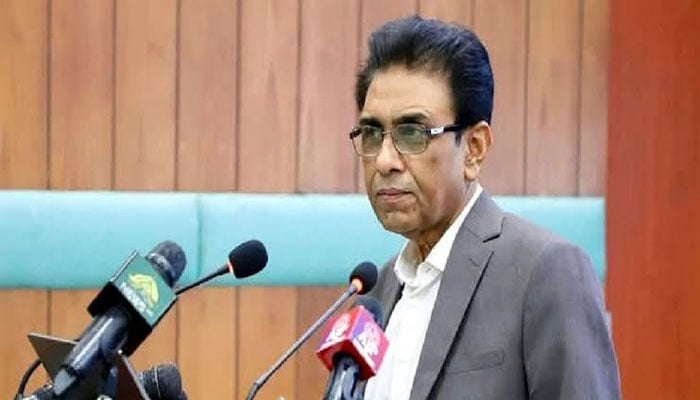
    Muttahida Qaumi Movement-Pakistan (MQM-P) Chairman Dr Khalid Maqbool Siddiqui has called for the creation of new administrative units across Pakistan based on population size, arguing that the country needs a more effective system of governance to meet the needs of its growing population. Speaking at a press conference in Karachi, Siddiqui said the business community across the country had also raised concerns similar to those voiced by his party regarding the existing administrative structure. He argued that Pakistan’s administrative system needed reforms to ensure better governance and a more balanced distribution of resources. Siddiqui said the provincial structure had changed after the abolition of the One Unit system, but the country had failed to restore an administrative framework that fully addressed the needs of its population. He stressed that his party’s demand for new administrative units did not target the country’s territorial integrity or seek to undermine the existing provinces. “We demand the creation of administrative units in Pakistan according to the population,” Siddiqui said, emphasizing that the objective was to improve administration and ensure that people received better public services. Addressing concerns over the boundaries of potential new administrative units, the MQM-P chief said his party had never called for a debate over the division of Pakistan’s territory. He described Pakistan as the “motherland” and said all four provinces remained an integral part of the country. Siddiqui maintained that the country itself was indivisible, while the Constitution allowed for changes in the administrative structure. He said the Constitution provided a mechanism for altering provincial boundaries and creating new administrative arrangements, although he believed the existing procedure had become impractical under current circumstances. The MQM-P chairman also pointed to the significance of August 1, the beginning of Pakistan’s independence month. He said the month carried a strong ideological connection with the creation of Pakistan and should encourage political leaders to discuss reforms aimed at strengthening the country. Siddiqui further revealed that his party had already introduced a constitutional amendment in the National Assembly to address the issue. He argued that Pakistan needed to revisit its administrative framework and consider reforms that could make governance more efficient and bring government closer to the people. The MQM-P has repeatedly advocated the creation of additional administrative units, maintaining that a more decentralized system could improve governance, facilitate service delivery and ensure a fairer distribution of resources. The demand, however, remains a politically sensitive issue, particularly in the context of debates over provincial boundaries and autonomy.

  • | |

    Heavy rains trigger NDMA flood warning for multipl…

    The National Disaster Management Authority (NDMA) has issued a nationwide flood alert, warning that rising river levels and continued monsoon rainfall could lead to flooding in several parts of Pakistan through Sunday. The authority has urged citizens to remain vigilant and avoid unnecessary travel to flood-prone areas. According to the NDMA, the Indus River is currently experiencing moderate flooding at Guddu, while low flood conditions persist at Kalabagh, Chashma, and Sukkur. The Chenab River is also expected to witness moderate to high water flows at Marala, with low to moderate flows forecast at Khanki and Qadirabad. The authority further stated that the Jhelum, Ravi, and Kabul rivers, along with their tributaries, are expected to experience low to moderate flows. However, water levels in streams and tributaries connected to the Jhelum, Chenab, and Ravi rivers are likely to increase significantly due to ongoing rainfall. Hill torrents in Dera Ghazi Khan and Rajanpur are also expected to experience heavy water flows, raising the risk of flash flooding. Similar conditions are forecast for rain-fed streams and nullahs in central and southern districts of Khyber Pakhtunkhwa and northern Balochistan. The NDMA warned that districts including Mohmand, Bajaur, Buner, Mardan, Kurram, South Waziristan, Shangla, and Peshawar in Khyber Pakhtunkhwa could experience flooding in streams and nullahs. In northern Balochistan, the Nari, Bolan, Kangri, and Lehri rivers are also at risk of flash flooding. Urban flooding is expected in several Punjab districts, including Rawalpindi, Jhelum, Gujranwala, Sargodha, Mandi Bahauddin, Sialkot, Gujrat, Narowal, Lahore, Okara, Sahiwal, and Faisalabad. Similar conditions may affect Sindh districts such as Sukkur, Hyderabad, Shaheed Benazirabad, Thatta, Badin, Sanghar, Khairpur, Mirpurkhas, Umerkot, Tando Muhammad Khan, Tando Allahyar, Tharparkar, and Nawabshah. Cities including Peshawar, Nowshera, Charsadda, and Mardan may also experience urban flooding. The NDMA has advised the public to avoid crossing flooded roads, rivers, and streams, particularly in mountainous areas where landslides, debris flows, and flash floods are more likely during the monsoon season. Travelers are encouraged to carry emergency supplies, including drinking water, dry food, a flashlight, a first-aid kit, a power bank, and emergency contact numbers. Citizens have also been urged to stay informed through the official Pak NDMA Disaster Alert mobile application and follow instructions issued by local authorities to ensure their safety during the ongoing monsoon season.

  • | |

    Kashmir Exploitation Day, Pakistan’s leaders uni…

    ISLAMABAD: Pakistan observed Kashmir Exploitation Day on Wednesday with political leaders across party lines renewing their support for the people of Indian-administered Jammu and Kashmir, while condemning India’s constitutional changes of August 5, 2019, as unlawful and contrary to international law and United Nations resolutions. Messages of solidarity were issued by senior government officials, provincial leaders, parliamentarians and political parties, all reiterating Pakistan’s commitment to supporting the Kashmiri people’s right to self-determination. Rallies, public gatherings and awareness events were also held in different parts of the country to mark the occasion. Deputy Prime Minister and Foreign Minister Ishaq Dar Deputy Prime Minister and Foreign Minister Ishaq Dar said Pakistan would continue extending its political, diplomatic and moral support to the Kashmiri people until they were able to exercise their internationally recognised right to self-determination. He described India’s unilateral decisions of August 5, 2019, as illegal and urged New Delhi to reverse all measures that altered the disputed territory’s constitutional status. Pakistan’s Foreign Office Pakistan’s Foreign Office also reaffirmed the country’s unwavering support for Kashmiris, paying tribute to what it described as their courage, resilience and sacrifices. A spokesperson said Pakistan would continue highlighting the Kashmir issue at regional and international forums and called on the global community to uphold international law and relevant UN Security Council resolutions. Punjab Chief Minister Maryam Nawaz Punjab Chief Minister Maryam Nawaz paid tribute to the families of those who lost their lives during the Kashmir conflict and appealed to the United Nations and international human rights organisations to take notice of alleged human rights violations in the region. She said August 5, 2019, represented an attack on the identity and rights of the Kashmiri people and maintained that Pakistan would continue raising its voice on their behalf. Sindh Chief Minister Murad Ali Shah Sindh Chief Minister Murad Ali Shah also termed India’s constitutional changes a violation of UN Security Council resolutions. He urged the international community to play an effective role in ensuring the protection of human rights in Indian-administered Kashmir. Chairman Senate Yousaf Raza Gilani Chairman Senate Yousaf Raza Gilani strongly criticised India’s actions, saying attempts to alter the demographic composition of the disputed territory and undermine the identity of the Kashmiri people were unacceptable. He stressed that the Kashmir dispute should be resolved in accordance with the aspirations of its people and relevant UN resolutions. Governor Faisal Karim Kundi In Peshawar, a solidarity rally led by Governor Faisal Karim Kundi marched from the Civil Secretariat to the Governor House. Government employees, civil society representatives and citizens participated in the event, carrying Pakistani and Kashmiri flags while expressing support for the Kashmiri cause. Addressing participants, Kundi said Pakistan would continue standing with Kashmiris and expressed confidence that the people of the region would eventually determine their own future according to their wishes. Sindh Interior and Law Minister Zia-ul-Hassan Lanjar Sindh Interior and Law Minister Zia-ul-Hassan Lanjar said force and restrictions could not suppress the desire for freedom among Kashmiris. He alleged that India had violated international law and reiterated Pakistan’s solidarity with the people of Kashmir. Sindh Assembly Speaker Awais Qadir Shah Sindh Assembly Speaker Awais Qadir Shah also urged the United Nations to play a more active role, saying Kashmiris had been facing serious human rights challenges for several years. Jamaat-e-Islami chief Hafiz Naeem ur Rehman Jamaat-e-Islami chief Hafiz Naeem ur Rehman said the Kashmiri freedom movement would continue until the dispute was resolved in line with United Nations resolutions. He described the revocation of Kashmir’s special constitutional status as a challenge to international law and the UN system. Senator Sherry Rehman Senator Sherry Rehman praised the determination and resilience of the Kashmiri people, saying their struggle had continued despite years of political uncertainty. She maintained that India’s constitutional changes were aimed at ending the region’s special status. Federal Minister Amir Muqam At a separate rally in Islamabad, Federal Minister Amir Muqam said Pakistan marks August 5 every year to express solidarity with Kashmiris and condemn India’s actions. He alleged that demographic changes were being introduced in the disputed territory through settlement policies. PPP Parliamentarians Secretary General Nayyar Bukhari Meanwhile, Pakistan Peoples Party Parliamentarians Secretary General Nayyar Bukhari said the revocation of Kashmir’s special status had failed to weaken the freedom movement. He warned that policies pursued by the Indian government could further undermine regional peace and stability. The observance of Kashmir Exploitation Day concluded with renewed calls from Pakistan’s political leadership for greater international engagement on the Kashmir dispute. Leaders urged the United Nations and the global community to work towards a peaceful resolution of the issue in accordance with international law and the wishes of the Kashmiri people.

  • | | | |

    Makkah pact cements Pakistan-Türkiye-Saudi defenc…

    The newly signed defence agreement between Pakistan, Saudi Arabia and Türkiye marks a significant step towards formalising their longstanding security and strategic cooperation, while establishing a framework focused on collective defence and regional stability. The trilateral partnership brings together three countries with strong historical, political, economic and defence ties. Their cooperation has grown over decades and is now being shaped into a more structured security framework amid a rapidly changing regional environment. The agreement comes as conflicts, emerging security threats and evolving forms of warfare continue to reshape the strategic landscape. Supporters of the pact say closer coordination among the three countries can contribute to regional stability and strengthen their ability to respond collectively to security challenges. Focus on defence and deterrence The agreement has been described as defensive rather than offensive. Its central principle is collective security, under which an armed attack against one member is considered a threat to all three. The arrangement is aimed at strengthening deterrence and reducing the possibility of conflict by demonstrating that aggression against one country could trigger a coordinated response from the other two. The framework is not intended to target any particular country, according to the explanation of the agreement. Instead, it seeks to promote peace, stability and security through stronger defence cooperation. Complementary strengths Pakistan, Saudi Arabia and Türkiye bring different strategic capabilities to the partnership. Pakistan contributes extensive military experience and defence expertise, including experience in managing complex security challenges. Saudi Arabia brings its strategic position in the region, economic strength and political influence. Türkiye contributes advanced defence technology, a growing defence industry and substantial industrial capabilities. Together, these capabilities could provide the three countries with a broader platform for strategic coordination and defence preparedness. The partnership could also encourage greater cooperation in areas such as military coordination, intelligence sharing, defence technology and strategic planning. Pakistan’s regional role The agreement also highlights Pakistan’s expanding engagement with different regional and global actors. Islamabad maintains strategic and diplomatic relations with Saudi Arabia and Türkiye while also engaging Iran, China, the United States and other international partners. This network of relationships could allow Pakistan to play a constructive role in regional diplomacy and help facilitate communication among countries with differing interests. The effectiveness of the trilateral framework, however, will depend on how consistently the three countries translate the agreement into practical cooperation. Not a NATO-style alliance The partnership has also been described as not a Muslim NATO and not a mechanism for providing nuclear protection to its members. Instead, it is presented as a defensive arrangement designed to strengthen collective deterrence and security cooperation while supporting regional peace. The agreement effectively formalises much of the strategic cooperation that Pakistan, Saudi Arabia and Türkiye have developed over the years.

  • | |

    Punjab Governor ends 19-year UAF research officers…

    FAISALABAD: In a landmark decision expected to reshape the service structure of the University of Agriculture Faisalabad (UAF), Punjab Governor and UAF Chancellor Sardar Saleem Haider Khan has ordered the upgradation of the post of Research Officer with retrospective effect from April 25, 2007, bringing an end to what many describe as nearly two decades of discrimination against the university’s research cadre. The decision came after the Chancellor accepted a representation filed by Muzaffar Hussain Salik, a Research Officer at the Office of University Books and Magazines (OUBM). Besides approving the upgradation, the Chancellor declared the post of Research Officer a “Teacher of the University,” making its holders eligible for all related service, financial, seniority and pensionary benefits in accordance with the law. The dispute dates back to the implementation of the UAF Amended Service Statutes, 2007, introduced after the federal government’s policy to upgrade university teachers and teaching-equivalent positions with the concurrence of the Higher Education Commission (HEC). While several teaching and equivalent posts received the approved benefits, Research Officers and Senior Research Officers were allegedly left out despite performing comparable academic and research responsibilities. According to the representation, the exclusion created a longstanding disparity, depriving the affected employees of promotions, financial benefits, and equal treatment under the approved statutory framework. It argued that the selective implementation of the service statutes resulted in years of professional and financial disadvantage for members of the research cadre. After reviewing the legal and administrative record, the Chancellor ruled that the benefit of upgradation should be extended to Research Officers from the same effective date as Lecturers — April 25, 2007. The order effectively places the research cadre on par with other teaching-equivalent positions that had already been upgraded under the 2007 amendments. University officials and academic observers believe the decision will benefit around 66 Research Officers, Senior Research Officers and other teaching-equivalent employees, providing them with long-awaited financial relief, revised seniority, pensionary benefits and formal recognition within the university’s teaching community. The ruling has been widely welcomed by researchers, academics and legal experts, who describe it as one of the most significant service-related decisions in UAF’s recent history. They say the order reinforces the principles of equality, transparency and uniform implementation of statutory rights while setting an important precedent for public sector universities across Pakistan. For petitioner Muzaffar Hussain Salik, the decision marks the successful conclusion of a long legal and constitutional struggle. Beneficiaries have hailed the ruling as a collective victory for justice, merit and the rule of law, expressing hope that similar disparities in higher education institutions will now be addressed through fair and consistent implementation of service statutes.

  • | |

    Security forces eliminate 32 terrorists in counter…

    ISLAMABAD: Pakistan’s security forces killed 32 terrorists during two intelligence-based operations in Khyber Pakhtunkhwa and Balochistan over the past 24 hours, the military’s media wing said on Wednesday, describing the raids as part of an intensified campaign against militant groups operating in the country. According to the Inter-Services Public Relations (ISPR), 24 militants were killed during a series of targeted operations in Khyber district, while another eight were eliminated in separate operations in Nushki district of Balochistan. The operations were launched following recent terrorist attacks in both provinces and were carried out to dismantle militant networks and their support infrastructure. The military said security forces conducted multiple intelligence-driven raids in Khyber during the night of July 28–29, successfully engaging terrorist hideouts and neutralising militants identified as members of the banned Tehreek-e-Taliban Pakistan (TTP), referred to by the state as Fitna al-Khawarij. In Balochistan’s Nushki district, security personnel launched coordinated operations against militants linked to the banned Balochistan Liberation Army (BLA), referred to officially as Fitna al-Hindustan. After an intense exchange of fire, eight militants were killed, while weapons, ammunition and improvised explosive devices were recovered and destroyed. The ISPR said clearance operations were continuing in both regions to ensure that any remaining militants or facilitators were eliminated. It reaffirmed that Pakistan’s nationwide counterterrorism campaign under the Azm-e-Istehkam strategy would continue with full force to eradicate terrorism and restore lasting peace. Prime Minister Shehbaz Sharif praised the security forces for the successful operations, commending their professionalism and determination. He reiterated the government’s resolve to continue the fight against terrorism until the threat is completely eliminated, adding that the nation stands united with the armed forces in defending the country’s security. The operations come amid a renewed surge in terrorist violence, particularly in Khyber Pakhtunkhwa and Balochistan. Just a day earlier, separate attacks in Balochistan claimed the lives of a deputy superintendent of police and two others, while labourers were abducted and several vehicles were set ablaze. International reports have also highlighted the growing security challenge. Recent United Nations assessments noted an increase in attacks by the TTP and BLA, with concerns over improved coordination among militant groups and access to advanced weapons through cross-border networks. Pakistan has continued to intensify intelligence-based operations to curb the escalating threat and dismantle terrorist infrastructure across the country.

Leave a Reply

Your email address will not be published. Required fields are marked *