afghan women report
|

7 in 10 Afghan women report poor mental health

Restrictions imposed on women and girls in Afghanistan have sharply reduced their participation in public life, with more than half of surveyed women saying they now leave their homes only once or twice a month, according to a new UN Women assessment.

The findings were released as Afghanistan approaches the fifth anniversary of the Taliban’s return to power in August 2021.

UN Women said Afghanistan remains the only country where girls are barred from secondary education and women are prohibited from attending universities.

The agency said the restrictions have increasingly affected women’s freedom of movement, education, employment and access to public life.

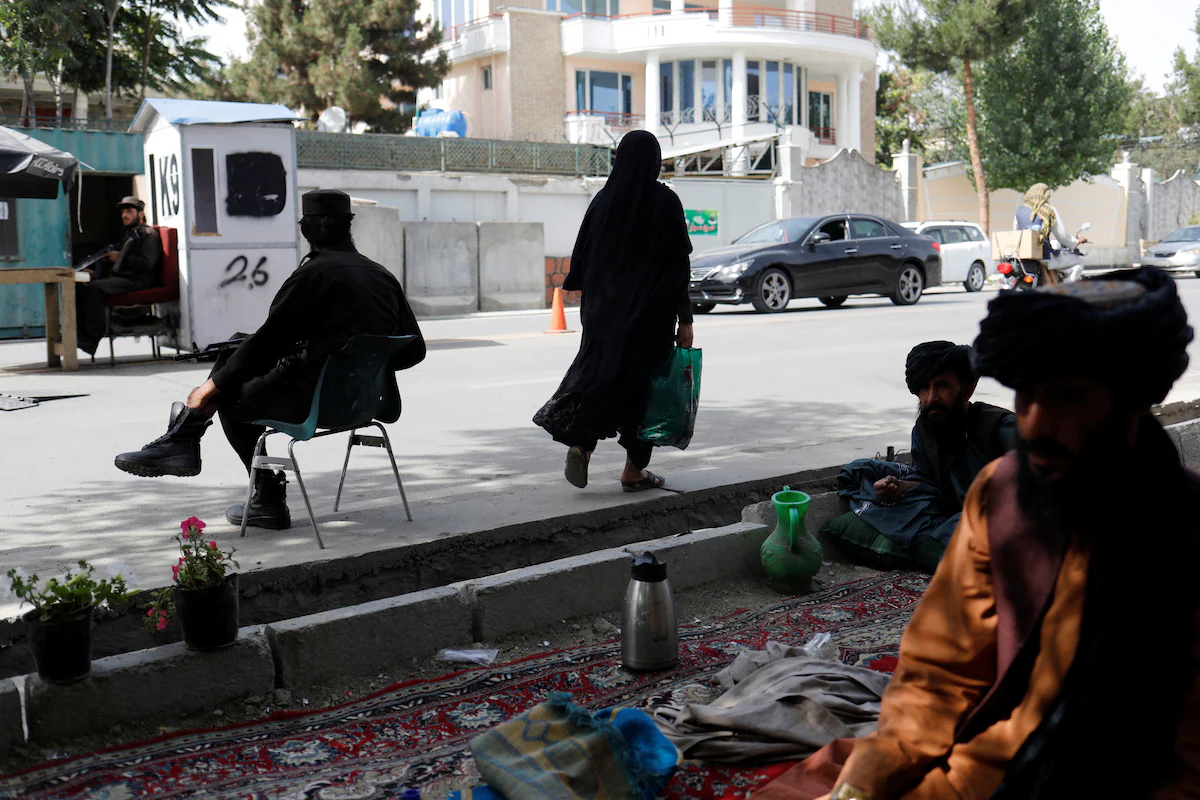
More than half of the women surveyed reported leaving home no more than twice a month. Nearly three-quarters said they did not feel safe going outside without a male guardian, commonly referred to as a mahram.

UN Women said the restrictions have also contributed to growing concerns about women’s mental health.

Around seven out of 10 women surveyed described their mental health as either “bad” or “very bad”. Respondents cited social isolation, reduced opportunities and limited access to support networks among the factors affecting their wellbeing.

The UN agency said Taliban authorities have introduced more than 100 decrees affecting women and girls since returning to power. It described the measures as creating a system of discrimination and said Afghanistan had become an extreme global example of restrictions on women’s rights.

The Taliban maintain that their policies respect women’s rights under their interpretation of Islamic law and Afghan culture.

Education remains heavily restricted

The restrictions on education have affected millions of Afghan girls.

UNESCO estimated that about 2.4 million girls have been prevented from attending secondary school since the Taliban returned to power.

Women and girls have also been excluded from university education, limiting their opportunities to pursue professional careers and higher education.

UN Women said recent measures had further weakened legal protections available to women.

According to the agency, rules introduced this year reduced legal equality between men and women, strengthened the authority of men within marriage and created additional difficulties for women seeking divorce.

Women largely excluded from workforce

Economic participation remains another major challenge.

UN Women reported that only about 7% of Afghan women are employed, compared with approximately 84% of men.

The agency said the restrictions on education and employment were limiting women’s ability to earn income, develop careers and contribute to the country’s economy.

The findings were based on a door-to-door survey involving 2,190 people conducted between February and March 2025. The agency also conducted telephone interviews with 2,811 people between April and May 2025.

UN Women warned that continued restrictions could further isolate women and deepen the social and economic consequences of excluding half of Afghanistan’s population from public life.

The Taliban government has not immediately responded to requests for comment on the latest findings.

Similar Posts

  • |

    Russia issues arrest request for Telegram founder Pavel Durov

    Russian authorities have announced that they are seeking the arrest of Telegram founder Pavel Durov, accusing him of allowing the messaging platform to be used for activities linked to terrorism. The move marks the latest escalation in Moscow’s long running dispute with the tech entrepreneur, who has repeatedly clashed with Russian officials over internet freedom and user privacy. Russia’s Federal Security Service, known as the FSB, said it had launched international search proceedings against Durov, alleging that Telegram was being used by Ukraine’s security services to recruit Russian citizens for sabotage and other attacks. The agency claimed that Durov failed to remove a dating bot that it says played a central role in these recruitment efforts. According to the FSB, an international wanted notice has been issued for Durov, who serves as Telegram’s chief executive. However, Russian authorities did not clarify the type of notice issued or whether foreign governments or international law enforcement agencies would recognise or act on the request. Durov’s legal representatives declined to comment on the allegations, while Telegram said the company would not make any public statement at this stage. The FSB alleged that a bot known as Leo Match Bot, which is banned in Russia, was used by individuals posing as young women to contact Russian teenagers and young adults. Authorities claimed these fake identities were created by Ukrainian intelligence agents to persuade users to attack police officers and carry out acts of sabotage against transport and energy infrastructure. Russian officials said that since July 2025, 46 people between the ages of 12 and 22 have been arrested in connection with attacks allegedly organised through the messaging bot. Ukraine has not publicly responded to these specific accusations. Since the beginning of the war, both Russia and Ukraine have accused each other of using online platforms and social media to recruit supporters and gather intelligence. The internet has become an increasingly important part of the conflict, with governments closely monitoring digital communication and online activity. Durov, who was born in Saint Petersburg, left Russia years ago and now holds French and United Arab Emirates citizenship. He first gained prominence after creating VKontakte, Russia’s largest social networking platform, before losing control of the company as government pressure increased. He later founded Telegram, which has grown into one of the world’s most widely used encrypted messaging services. Telegram has remained especially popular in Russia despite repeated attempts by the government to restrict access to the platform. Officials have long criticised the company for refusing to provide user data and have encouraged citizens to use state backed communication services instead. Durov also faced legal challenges in France last year, when he was arrested as part of an investigation into the distribution of illegal content through Telegram. He was later released on bail, and French authorities eventually lifted restrictions on his travel, allowing him to leave the country. The latest action by Russia comes as state controlled social media company VK continues promoting its government backed messaging application Max as an alternative to Telegram and WhatsApp. Russian authorities have increasingly supported domestic digital platforms as part of broader efforts to strengthen control over online communications. The announcement adds another chapter to the long standing conflict between the Russian government and Durov, whose commitment to encrypted communication and user privacy has repeatedly placed him at odds with Moscow’s efforts to regulate internet platforms. The outcome of Russia’s international arrest request remains uncertain, particularly given Durov’s residence outside the country and his foreign citizenship.

  • | |

    Eight bodies recovered after Broad Peak avalanche

    Rescue teams have recovered the bodies of eight mountaineers following the devastating avalanche on Broad Peak, while the search continues for two missing climbers. Another victim has been identified, but the body remains trapped in an area that rescuers have so far been unable to reach. Speaking to the media, the President of the Alpine Club of Pakistan described the incident as one of the deadliest accidents in the history of Broad Peak. He said a total of 11 climbers are believed to have been caught in the avalanche, triggering a large-scale rescue operation. He said the first phase of the operation began immediately after the incident. On the opening day, rescuers recovered the bodies of two climbers and also found partial human remains believed to belong to another victim. According to the Alpine Club, the first two recovered victims were a Nepalese mountaineer and a female climber from Oman. Rescue operations were carried out under extremely difficult weather and terrain conditions at high altitude. The Pakistan Army assisted the mission by providing helicopters to transport rescue teams and airlift the recovered bodies from the remote mountain. The aerial support played a key role in speeding up the recovery process. The Alpine Club president said that during the latest phase of the operation, the bodies of four Nepalese climbers and one Chinese mountaineer were successfully recovered and transported from the mountain. He added that rescuers have also identified another climber’s body. However, it is located in an inaccessible area, making immediate recovery impossible because of dangerous terrain and the continued risk of avalanches. Search teams are still looking for the remaining two missing climbers. Rescue officials said every effort is being made to locate them despite severe weather, snow-covered slopes and difficult mountain conditions. The tragedy has shocked Pakistan’s mountaineering community and highlighted the dangers faced by climbers attempting to scale some of the world’s highest peaks. Broad Peak, located in the Karakoram mountain range, is one of Pakistan’s tallest mountains and attracts climbers from around the world each year.

  • |

    Monsoon rains trigger flood warnings across Pakistan

    Persistent monsoon rains continued to lash several parts of Pakistan on Tuesday, triggering fresh flood alerts, increasing river flows, and prompting disaster management authorities to remain on high alert as another spell of rain is expected over the next 24 to 48 hours. According to the Pakistan Meteorological Department (PMD), weak monsoon currents are currently affecting the country’s upper and eastern regions, while a westerly weather system continues to influence northwestern areas. The department has forecast humid weather across much of Pakistan, with rain and thunderstorms likely in Kashmir, Gilgit-Baltistan, Khyber Pakhtunkhwa, and upper Punjab through Wednesday. The Flood Forecasting Division (FFD) reported that the Indus River remains in a low flood situation at Kalabagh and Chashma, while water levels in all other major rivers are currently within normal limits or below the low-flood threshold. Authorities believe the overall hydrological situation is expected to remain stable over the next 24 hours, although scattered rainfall in the upper catchments may slightly increase river flows. Chenab River Under Close Watch Officials are closely monitoring the Chenab River after India released additional water from the Baglihar Dam following heavy rainfall in the upper catchment of the river. According to available reports, three spillway gates of the dam were opened on Monday, adding to the two spillways that had already been opened several days earlier, resulting in higher downstream water flows. In response, the FFD has issued a low to medium flood alert for Head Marala during the next 24 hours. The latest hydrological data shows inflows of approximately 93,900 cusecs, while outflows stand at around 76,200 cusecs. Forecasts indicate inflows may range between 80,000 and 100,000 cusecs, with the river expected to remain in the low flood category. Heavy Rainfall Recorded Across the Country During the last 24 hours, widespread rainfall was reported in Khyber Pakhtunkhwa, Punjab, Balochistan, Gilgit-Baltistan, and Azad Kashmir. Among the highest rainfall recorded by the PMD, Saidu Sharif received 86 millimetres, Kakul 71 millimetres, and Faisalabad 77 millimetres. Meanwhile, Sibbi remained the hottest city in the country with a maximum temperature of 44 degrees Celsius. The FFD’s rainfall monitoring system recorded exceptionally heavy downpours in Faisalabad, where Ghulam Muhammad Abad Water Works received 126 millimetres of rain, while the WASA Head Office recorded 123 millimetres. Significant rainfall was also reported in Lahore, Sialkot, Gujrat, and several surrounding areas. PDMA Warns of Urban Flooding and Landslides Punjab’s Provincial Disaster Management Authority (PDMA) stated that monsoon rains affected most districts of the province over the past day. The authority said advance planning, timely deployment of drainage machinery, and emergency response teams helped clear accumulated rainwater from urban areas despite the heavy showers. The PDMA warned that the current monsoon spell is likely to continue until August 5, with additional rainfall in upper catchment areas expected to increase water levels in eastern rivers and seasonal streams. Authorities have cautioned that urban flooding remains a significant risk in Lahore, Rawalpindi, Gujranwala, Gujrat, Sialkot, Faisalabad, and Multan. At the same time, the possibility of landslides persists in Murree, Galliyat, and other mountainous regions due to continuous rainfall. Authorities Urge Public to Take Precautions Disaster management authorities have established flood relief camps in vulnerable districts to facilitate emergency response if required. Residents living near riverbanks, seasonal streams, and flood-prone areas have been advised to relocate to safer locations as a precaution.

  • | | |

    Government assures uninterrupted fuel supply amid …

    Sources in Pakistan’s Petroleum Division have stated that the government is committed to ensuring the uninterrupted supply of petroleum products across the country. The assurance comes amid ongoing discussions with representatives of the Pakistan Petrol Pump Owners Association regarding fuel pricing and dealers’ profit margins. According to official sources, the government is working to determine petroleum product prices through a transparent and fair mechanism. Officials emphasized that the Ministry of Petroleum remains open to hearing constructive and practical suggestions from all stakeholders involved in the petroleum sector. They stressed that maintaining transparency in the pricing process is a key priority and that the government welcomes proposals that can contribute to a balanced and sustainable policy. Sources further revealed that the Federal Minister for Petroleum held a meeting with office-bearers of the Petrol Pump Owners Association, during which he listened carefully to their concerns and demands. The minister reportedly gave the representatives ample time to present their viewpoints and assured them that the government was willing to consider reasonable proposals in the interest of both consumers and fuel dealers. However, according to Petroleum Division sources, the discussions failed to produce the desired outcome because representatives of the association allegedly adopted an uncompromising approach during the meeting. Officials claimed that the association’s leadership insisted on having its demands accepted without presenting convincing arguments or practical justification. The sources stated that despite the government’s willingness to engage in dialogue, the association remained firm on its position and showed little flexibility in the negotiations. The Petroleum Division also said that the representatives of the Petrol Pump Owners Association eventually walked out of the meeting on their own before the discussions had been concluded. Officials maintained that the government had not ended the talks and was still prepared to continue negotiations in order to resolve outstanding issues through mutual understanding. According to the sources, the Petroleum Minister has already assured petrol pump dealers that the government is prepared to review their profit margins. The minister acknowledged that the concerns of fuel retailers deserve careful consideration and indicated that the issue of dealer commissions would be examined as part of the ongoing consultation process. Government officials reiterated that while they are open to discussions with all stakeholders, any decision regarding fuel prices or dealer margins must be made in the broader public interest. They emphasized that ensuring a stable supply of petroleum products remains the government’s top priority and that consumers should not face unnecessary disruptions because of disagreements between authorities and industry representatives. The Petroleum Division further noted that transparent policymaking requires consultation with all parties, including oil marketing companies, petrol pump owners, and other industry stakeholders. Officials expressed hope that future meetings would take place in a more constructive atmosphere and lead to a mutually acceptable solution. The ongoing discussions come at a time when petroleum prices remain a matter of significant public concern due to their impact on transportation costs, inflation, and the overall economy. Fuel dealers have repeatedly called for higher profit margins, arguing that rising operational costs have made it increasingly difficult to run their businesses profitably. Despite the differences that emerged during the latest meeting, government sources insisted that dialogue remains the preferred way forward. They reaffirmed the government’s commitment to maintaining an uninterrupted fuel supply, ensuring transparency in the pricing mechanism, and continuing consultations with petrol pump owners until an acceptable solution is reached that protects both consumers and businesses.

  • |

    Bank of Punjab Board approves Up to Rs30bn equity injection by Punjab government

    LAHORE: The Board of Directors of The Bank of Punjab (BOP) has approved a proposal for an equity injection of up to Rs30 billion by the Government of Punjab, a move aimed at strengthening the bank’s capital position and supporting its next phase of expansion. The decision was taken at a board meeting held on August 7, 2026. Under the proposal, the Punjab government will subscribe to ordinary shares to be issued by the bank through a mechanism other than a rights issue. The proposed transaction will not take effect immediately and remains conditional on obtaining all required statutory, corporate, shareholder and regulatory approvals. According to the bank, the planned capital injection is an important step in its broader transformation strategy and will provide additional financial capacity to support sustainable growth across its key business segments. Share issuance price The ordinary shares will initially be issued at Rs38.20 per share. However, if the market price of BOP shares is higher than this amount at the time of issuance, the shares will be issued at the prevailing market price plus a premium of 5 percent. As a result, Rs38.20 will serve as the minimum or floor price for the proposed share issuance. The transaction is expected to reinforce the bank’s capital base and provide greater flexibility to manage balance-sheet expansion while maintaining prudent financial and risk-management standards. BOP expands its market presence The Bank of Punjab has undergone significant changes in recent years, with the institution expanding its balance sheet, improving financial performance and strengthening its position across several sectors of Pakistan’s economy. The bank has developed a strong presence in areas including small and medium-sized enterprise (SME) financing, agricultural lending, affordable housing, digital banking and credit cards. It has also increased its focus on women’s participation and leadership in banking and financial services. BOP is further expanding its activities in commercial and corporate banking, particularly in areas linked to export-oriented businesses. The bank said these business segments have positioned it as an important participant in supporting economic activity, employment creation and financial inclusion across the country. Capital requirements rise with expansion Despite the bank’s growth, the rapid expansion of its operations has increased pressure on its existing capital base. BOP said its capital position has historically remained relatively limited compared with the size of its operations and the growth opportunities available to the institution. The proposed Rs30 billion injection is therefore expected to provide the bank with additional capacity to expand its core businesses while maintaining financial resilience. The additional capital could also enable BOP to increase its low-cost deposit base and grow lending operations without facing the same level of capital constraints. The bank said strengthening its capital position would allow it to pursue growth while maintaining a balanced and prudent approach to balance-sheet management. Strong financial performance The proposed capital injection comes as BOP continues to report strong underlying financial performance. During 2025, the bank recorded revenue growth of around 29 percent, while its earnings increased by more than 40 percent year on year. The bank also witnessed significant appreciation in the value of its shares during the period. According to the bank, the proposed capital raise should therefore be viewed primarily as growth capital rather than a measure aimed at addressing immediate financial weakness. The additional equity is expected to provide the financial foundation required for BOP to continue expanding its operations and investing in new business opportunities. International expansion in focus Another important component of the bank’s future strategy is its international expansion. The capital injection is expected to support the next phase of BOP’s growth, including an international venture that has recently received approval from the State Bank of Pakistan. The move could provide the bank with an opportunity to broaden its geographical footprint and develop new sources of business and revenue. With the proposed equity injection, BOP aims to strengthen its financial position, support expansion in priority sectors and improve its ability to serve businesses, consumers and other customers as demand for banking and financial services continues to grow.

  • | | |

    PM Shehbaz, Field Marshal Munir begin Saudi visit

    Prime Minister Shehbaz Sharif and Chief of Defence Forces and Chief of Army Staff Field Marshal Asim Munir will pay an official visit to Saudi Arabia from August 6 to 8 to hold high-level talks aimed at strengthening bilateral ties and discussing key regional developments. According to the Foreign Office, Deputy Prime Minister and Foreign Minister Ishaq Dar will also join the delegation after completing his visit to Jordan. During the visit, Prime Minister Shehbaz is scheduled to meet Saudi Crown Prince Mohammed bin Salman. The discussions will focus on expanding cooperation between the two countries, enhancing strategic relations and reviewing regional and international issues of mutual interest. The Foreign Office said the visit reflects the deep-rooted relationship between Pakistan and Saudi Arabia, built on decades of close cooperation, mutual trust and strong brotherly ties. Officials said the high-level engagements are expected to further strengthen political, economic and strategic cooperation between the two countries. Both sides are also likely to discuss ways to improve coordination on regional security and international affairs. The visit comes at a time of heightened tensions in the Gulf region, giving the meetings added diplomatic significance. However, Pakistani officials said the agenda extends beyond the current regional situation and is aimed at reinforcing the long-term strategic partnership between Islamabad and Riyadh. The Foreign Office added that the visit will help deepen bilateral relations, expand cooperation in areas of shared interest and enhance collaboration at multilateral forums. Prime Minister Shehbaz last visited Saudi Arabia in April, where he held meetings with the kingdom’s top leadership to discuss bilateral cooperation and regional developments.

Leave a Reply

Your email address will not be published. Required fields are marked *