iran agree extend
| | | |

US and Iran agree to extend 60-day ceasefire

ISLAMABAD: The United States and Iran have agreed in principle to extend their 60-day ceasefire, according to a Turkish news agency report citing Pakistani government sources.

The report said both Washington and Tehran had informed mediators of their willingness to prolong the truce.

The two sides are also exchanging messages to determine the length of the proposed extension, according to the report.

The current ceasefire is due to expire on August 17. Mediators have been informed that both countries are prepared to continue the pause in hostilities.

According to international media reports, the United States and Iran signed a 14-point memorandum of understanding on June 17. The agreement established a 60-day period for maintaining the ceasefire and completing negotiations aimed at bringing a permanent end to the conflict.

The memorandum also included arrangements for keeping the Strait of Hormuz open to commercial shipping during the ceasefire.

However, disagreements over the interpretation of several provisions have continued to create tensions between Washington and Tehran.

Both sides have repeatedly accused each other of violating the terms or spirit of the understanding.

The proposed extension could provide additional time for diplomatic efforts and negotiations aimed at addressing the outstanding issues between the two countries.

Mediators are expected to remain engaged as Washington and Tehran work to settle the duration and other details of the extended ceasefire.

Similar Posts

  • | |

    Musadik Malik calls for smarter water management

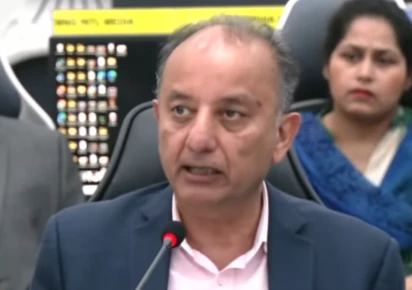
    Climate Minister Musadik Malik has called for a major shift in Pakistan’s water management strategy, saying the country must focus not only on storing water but also on regulating its supply throughout the year. Speaking at a briefing at the National Disaster Management Authority (NDMA), Malik said effective water management was essential for protecting food supplies, supporting agriculture and reducing the impact of climate-related disasters. His remarks came as Pakistan faces another difficult monsoon season. At least 107 people have died and 297 others have been injured since the current rainy season began on June 26, according to disaster management authorities. The Pakistan Meteorological Department has forecast another strong spell of monsoon rains from July 29. Heavy rainfall could trigger urban flooding, flash floods and landslides in several parts of the country. Malik said Pakistan needed different climate strategies for different regions instead of relying on a single nationwide approach. Plans are being developed for cities facing extreme heat, northern areas vulnerable to floods and landslides, and agricultural regions where changing weather patterns are threatening food production. He stressed that water must be available when farmers need it during the Rabi and Kharif seasons. According to the minister, simply allowing large quantities of floodwater to escape without regulating or storing it creates serious risks for agriculture and food security. Malik described water infrastructure as a national security issue. He said the government would focus on improving water regulation, telemetry and storage systems. It would also work with provincial governments to improve zoning and construction standards in disaster-prone areas. National Food Security Minister Rana Tanveer Hussain said Pakistan would require greater water storage capacity in the coming years. He said the country faced two linked challenges: controlling floods and dealing with water shortages. Tanveer said climate change was already changing crop cultivation and sowing patterns. He stressed that agriculture would need to adapt to shifting weather conditions to protect food supplies. The minister said Pakistan was among the countries most vulnerable to climate change, with agriculture facing some of the strongest impacts. He recalled the huge economic losses caused by the 2022 floods but said the country’s disaster response capabilities had improved since then. He said the government had started modifying crop cycles and cultivation patterns in response to changing climatic conditions. Authorities are also working on a broader strategy to strengthen agricultural resilience. Tanveer highlighted several major water projects. He said the Diamer-Bhasha Dam would provide around 6.4 million acre-feet of additional storage capacity, while the Mohmand Dam would add nearly one million acre-feet. He also mentioned progress on the Dasu project and expressed hope that the K-IV water supply project for Karachi would be completed by the end of this year or early next year. Finance Minister Muhammad Aurangzeb described climate change and population growth as major long-term challenges for Pakistan. He called for a coordinated response involving all parts of the government. Aurangzeb said the country was now better prepared financially to respond to natural disasters. He said the government had decided to use domestic resources for rescue and relief operations instead of relying primarily on international assistance. He said Pakistan had launched a $2 billion programme aimed at strengthening climate resilience and reducing environmental risks. Around $700 million annually has also been allocated for disaster management, vulnerability reduction and protection of lives and infrastructure. The finance minister said Pakistan’s disaster financing approach had changed significantly since the 2022 floods. The country had previously relied heavily on international commitments, but authorities are now increasing domestic funding for climate adaptation and emergency response. Information Minister Attaullah Tarar said preparations for the current monsoon season had started before the rains arrived. He credited NDMA’s National Emergencies Operation Centre (NEOC) with improving forecasting and early warning capabilities. Tarar said the system had helped authorities issue timely alerts about dangerous weather events. He urged citizens to follow official warnings and take precautions during periods of heavy rainfall. Meanwhile, flooding continues in parts of Punjab and other regions. The Provincial Disaster Management Authority said water levels in the Chenab River had shown some improvement, while low-level flooding persisted at several locations along the Indus.

  • |

    Nicaraguan President Daniel Ortega proposes extending presidential terms to seven years

    Nicaraguan President Daniel Ortega has submitted a proposed constitutional reform to the country’s government-controlled National Assembly that would extend presidential terms from six to seven years. The legislative body is expected to formally approve the changes in September, further cementing the rule of the 80-year-old leader, who has governed the Central American nation continuously since 2007. The proposed constitutional overhaul also includes explicit provisions to disqualify opposition figures whom the regime labels as “traitors” or “coup plotters” from seeking public office. The move follows previous constitutional amendments passed by the assembly, including the elimination of presidential term limits in 2014 and the extension of terms from five to six years in 2024. That same year, the legislature formally designated Ortega’s wife and vice-president, Rosario Murillo, as “co-president”, establishing a direct path of succession in the event of Ortega’s permanent absence. Human rights organisations and international bodies, including the United Nations, continue to raise alarms over the steady dismantling of democratic institutions in Nicaragua. Following anti-government protests in 2018 that resulted in more than 300 deaths at the hands of security forces, the regime carried out widespread arrests ahead of the November 2021 presidential election. Dozens of potential opposition candidates were detained, forced into exile, or stripped of their Nicaraguan citizenship and property, leaving Ortega to secure re-election without viable political competition.

  • |

    Iran prepares for possible major war as tensions with US and Israel escalate

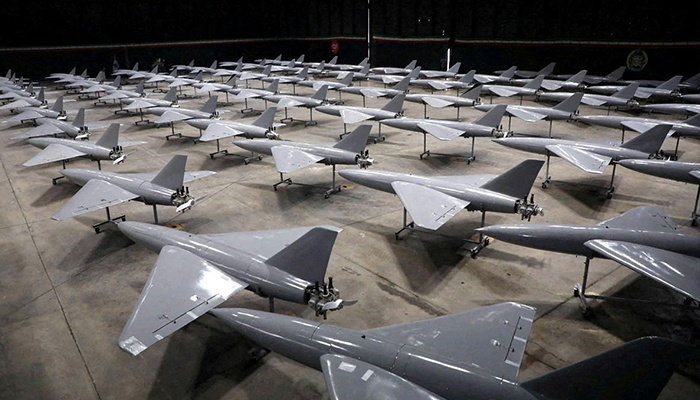
        WASHINGTON: Iran’s hardline leadership has reportedly spent the past two months preparing for a possible major war. The preparations allegedly began after the signing of an Islamabad memorandum of understanding in mid-June. According to the report, Iran’s Islamic Revolutionary Guard Corps (IRGC) was given greater control over the country’s regular military, while officers with experience in the Iran-Iraq War and previous domestic crackdowns were appointed to key positions.   At the same time, Iran expanded its internal counterintelligence operations and accelerated the production of missiles and drones. Iranian leaders also reportedly moved quickly to strengthen their control over the Strait of Hormuz by targeting ships and expanding the potential battlefield toward the Red Sea.   US officials said Arab intelligence agencies had obtained evidence suggesting that Iran’s hardline leadership was pursuing a strategy aimed at expanding the conflict and creating greater difficulties for the United States.   The developments have reportedly caused concern among Gulf countries such as Kuwait. Iranian leaders have increasingly spoken about offensive operations against enemy territory, with the stated objective of inflicting significant damage and preventing a repeat of the attacks Iran experienced during last year’s 12-day war and the current conflict. Mohammad Hassan Sangtarash, a defense analyst considered close to the Iranian government, said there is a widespread view in Iran that “the real war has not started yet.” He described the events so far as limited and gradual escalation intended to weaken the enemy’s capabilities before a potentially larger attack.   Israeli officials are concerned that Iran is rebuilding its infrastructure and restoring access to missile bases much faster than expected. The report claimed that Iran has successfully targeted US bases and retains enough firepower to threaten commercial shipping and energy infrastructure in the Gulf. Iran had been pursuing a dual-track policy. While its diplomats were attempting to negotiate a peace agreement with the United States, Supreme Leader Mojtaba Khamenei was reportedly taking steps to prepare security institutions for a major confrontation that Tehran itself could potentially initiate. Arab intelligence reports cited by the newspaper reportedly indicated that, during the period following the signing of the memorandum, the IRGC sent advisers to allied groups in Iraq, Yemen and Lebanon to help prepare for potentially intensified attacks. The IRGC also allegedly supervised the deployment of missiles, naval weapons and drone launchers at locations overlooking the Red Sea. Officials claimed that Iranian forces provided Yemeni militants with intelligence and lists of potential targets, including Saudi ports and energy facilities, while also offering advice on avoiding Saudi retaliation. The newspaper further reported that the IRGC had warned Gulf states that if the United States attacked Iranian energy facilities, Iran could retaliate against their energy infrastructure. Iranian officials allegedly provided Arab counterparts with detailed lists of individual potential targets. IRGC spokesman Brigadier General Hossein Mohebbi reportedly acknowledged in a July interview with Tasnim News Agency that Iran had used the ceasefire period to strengthen its capabilities, accelerate missile production and improve missile accuracy. Meanwhile, sources close to senior Iranian negotiators reportedly warned that the current peace talks could merely represent a temporary pause before a larger conflict. Mehdi Mohammadi, a strategic adviser to Iran’s chief negotiator, described the current stalemate as the “calm before the storm.” In an earlier statement, Mohammadi also said that Iran still had many scores to settle with US President Donald Trump and claimed that the country was fully prepared for a major confrontation.

  • |

    Pakistan tops FTR medal table at F-Class World Championship in UK

    LONDON: Pakistan has produced a historic performance at the 7th F-Class World Championship in the United Kingdom, emerging as the highest medal-winning nation in the FTR category after securing 4 gold, 4 silver and 5 bronze medals during the opening individual competitions. The championship, being held at the renowned Bisley National Shooting Centre, began on 12 August and has brought together 207 elite long-range shooters from 24 countries. The first phase featured individual matches over distances of 800, 900 and 1,000 yards. Competing with a modest contingent of just 12 shooters, Team Pakistan outperformed much larger international teams, underlining the country’s rapid rise in long-range target shooting. The achievement comes only three years after Pakistan entered the international F-Class arena, making its emergence as a major force all the more remarkable. The standout performer was Lieutenant Colonel Junaid Ali, who delivered a world-class performance to claim the coveted Individual FTR World Champion title. He won three gold, one silver and one bronze medal, finishing ahead of all 207 competitors through exceptional consistency across all three shooting distances. His triumph marks the biggest individual achievement in Pakistan’s F-Class shooting history. Sepoy Muhammad Waleed added another gold and a bronze medal to Pakistan’s tally, while Huzaifa Gill excelled in the Under-25 category with three silver and two bronze medals. Ahsan Gill also secured a bronze medal. Pakistan’s impressive depth was reflected in the overall standings, with seven shooters—Lt Col Junaid Ali, Muhammad Waleed, Obaid, Qasim, Huzaifa Gill, Junaid Waqas and Ahsan Gulrez—finishing among the championship’s top 100 competitors. The latest success follows another outstanding performance at the F-Class British Open 2026, held at Bisley earlier this month, where Pakistan won seven gold, two silver and four bronze medals, signalling the country’s growing stature in international long-range shooting. Attention now turns to the prestigious 16-member World Championship Team Match, scheduled for 15–16 August, where Pakistan will compete across 800, 900 and 1,000 yards with hopes of adding to its remarkable medal haul. Pakistan’s performances at Bisley have established the national team as one of the fastest-rising forces in world F-Class shooting and brought considerable pride to the country on the international stage.

  • | | |

    Initial report suggests Mir Raza Ali was shot from…

    KARACHI: An initial medical report has reportedly indicated that businessman Mir Raza Ali sustained a gunshot wound from behind, while several signs of physical violence were also found on his body following his exhumation for a fresh post-mortem examination. According to investigation sources, the preliminary report has addressed all 14 questions raised by police surgeon Dr Summaiya Syed during the medical examination. The findings reportedly include a gunshot injury to the rear of the body, fractured ribs and multiple injuries to Ali’s head and face. The report also noted marks of violence on different parts of the deceased’s body. However, investigators have yet to officially receive the medical findings. SSP SIU Samiullah Somroo, who is leading the police investigation, said the investigation team had not been informed about the report or its findings. The exhumation process lasted around three hours and was conducted under the supervision of forensic experts. During the procedure, 17 samples were collected from the body for further examination. Four samples were preserved for DNA testing, while the remaining samples were collected for chemical analysis. Two additional reference samples were obtained from Ali’s parents to assist with DNA matching. Investigators said the collected samples have been preserved and will be submitted to the forensic laboratory at the University of Karachi on Monday. The chemical and DNA examination reports are expected to be available within three to four days. Ali’s body was exhumed earlier as part of efforts to determine the circumstances surrounding his death. After the medical examination was completed, his remains were reburied at a graveyard near Tariq Road. Ali, an IBA graduate and businessman, had returned home from his shop on the night of July 28. He later left the house again, telling his family that he would return within 10 minutes. He did not return, and his body was subsequently recovered from Gulistan-e-Jauhar. His father, Mir Hussain, has maintained that his son was murdered and rejected suggestions that he died by suicide. During the latest proceedings, members of the medical board collected various samples from Ali’s grave as part of the renewed examination. His family members and their lawyer, Jibran Nasir, were present at the graveyard, while a heavy police contingent was deployed to maintain security. The authorities had restored the original eight-member medical board responsible for supervising the exhumation after the family objected to the replacement of the panel with a five-member board. The disagreement had earlier prevented officials from carrying out the scheduled exhumation. Mir Hussain later said he was satisfied with the latest proceedings. He expressed hope that the fresh examination would provide clarity about what happened to his son. The family has also alleged that a fake audio recording attributed to Ali was circulated in an attempt to influence the case and create confusion around the circumstances of his death. The family’s lawyer had earlier raised concerns about changes to the medical board and questioned the decision to replace the original panel. He later said the family was satisfied with the renewed proceedings, which were conducted in the presence of the judicial magistrate, investigation officer and members of the medical team.

  • | | |

    Weekly inflation rises 0.15%, annual rate reaches …

    ISLAMABAD: Weekly inflation in Pakistan increased by 0.15% during the latest week, taking the overall annual inflation rate to 9.11%, according to data released by the Pakistan Bureau of Statistics (PBS). The statistics agency issued its weekly inflation report, showing mixed price trends for essential commodities. According to the report, prices of 20 essential items increased during the week, while nine items became cheaper. Prices of 22 commodities remained unchanged. Onion recorded the sharpest increase, with its price rising by 24.68% in one week. The price of gram lentils also increased by 3.35%. Chicken became 2.45% more expensive during the week. Prices of several other household essentials, including yogurt, garlic and tea, also recorded increases. The report showed that some major commodities became cheaper. Tomato prices declined by 1.26% during the week. Petroleum prices also decreased. Petrol became 2.35% cheaper, while diesel prices fell by 0.29%. The prices of sugar, eggs and potatoes also recorded declines during the week. The latest figures indicate continued fluctuations in the prices of essential commodities. While several food items became more expensive, reductions in petroleum prices and some food products provided some relief to consumers. The weekly inflation figures are closely monitored as they reflect short-term changes in the prices of goods commonly purchased by households. The annual inflation rate, meanwhile, provides a broader picture of price increases across the economy.

Leave a Reply

Your email address will not be published. Required fields are marked *