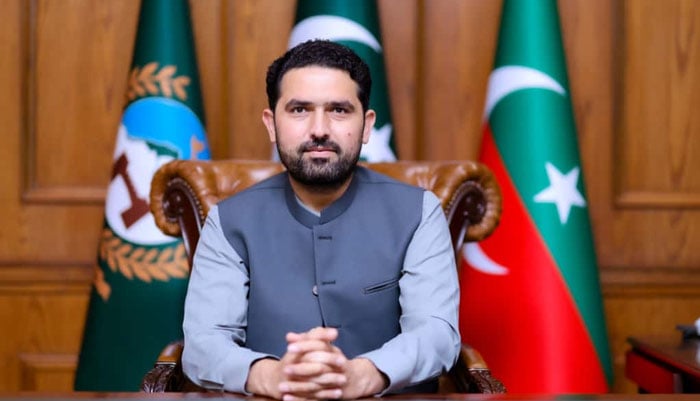
musadik malik calls
| |

Musadik Malik calls for smarter water management

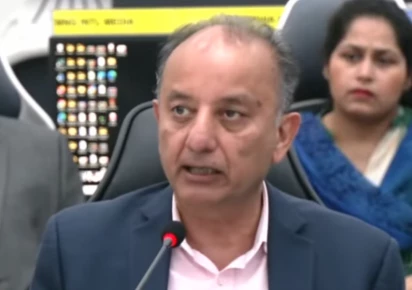
Climate Minister Musadik Malik has called for a major shift in Pakistan’s water management strategy, saying the country must focus not only on storing water but also on regulating its supply throughout the year.

Speaking at a briefing at the National Disaster Management Authority (NDMA), Malik said effective water management was essential for protecting food supplies, supporting agriculture and reducing the impact of climate-related disasters.

His remarks came as Pakistan faces another difficult monsoon season. At least 107 people have died and 297 others have been injured since the current rainy season began on June 26, according to disaster management authorities.

The Pakistan Meteorological Department has forecast another strong spell of monsoon rains from July 29. Heavy rainfall could trigger urban flooding, flash floods and landslides in several parts of the country.

Malik said Pakistan needed different climate strategies for different regions instead of relying on a single nationwide approach. Plans are being developed for cities facing extreme heat, northern areas vulnerable to floods and landslides, and agricultural regions where changing weather patterns are threatening food production.

He stressed that water must be available when farmers need it during the Rabi and Kharif seasons. According to the minister, simply allowing large quantities of floodwater to escape without regulating or storing it creates serious risks for agriculture and food security.

Malik described water infrastructure as a national security issue. He said the government would focus on improving water regulation, telemetry and storage systems. It would also work with provincial governments to improve zoning and construction standards in disaster-prone areas.

National Food Security Minister Rana Tanveer Hussain said Pakistan would require greater water storage capacity in the coming years. He said the country faced two linked challenges: controlling floods and dealing with water shortages.

Tanveer said climate change was already changing crop cultivation and sowing patterns. He stressed that agriculture would need to adapt to shifting weather conditions to protect food supplies.

The minister said Pakistan was among the countries most vulnerable to climate change, with agriculture facing some of the strongest impacts. He recalled the huge economic losses caused by the 2022 floods but said the country’s disaster response capabilities had improved since then.

He said the government had started modifying crop cycles and cultivation patterns in response to changing climatic conditions. Authorities are also working on a broader strategy to strengthen agricultural resilience.

Tanveer highlighted several major water projects. He said the Diamer-Bhasha Dam would provide around 6.4 million acre-feet of additional storage capacity, while the Mohmand Dam would add nearly one million acre-feet. He also mentioned progress on the Dasu project and expressed hope that the K-IV water supply project for Karachi would be completed by the end of this year or early next year.

Finance Minister Muhammad Aurangzeb described climate change and population growth as major long-term challenges for Pakistan. He called for a coordinated response involving all parts of the government.

Aurangzeb said the country was now better prepared financially to respond to natural disasters. He said the government had decided to use domestic resources for rescue and relief operations instead of relying primarily on international assistance.

He said Pakistan had launched a $2 billion programme aimed at strengthening climate resilience and reducing environmental risks. Around $700 million annually has also been allocated for disaster management, vulnerability reduction and protection of lives and infrastructure.

The finance minister said Pakistan’s disaster financing approach had changed significantly since the 2022 floods. The country had previously relied heavily on international commitments, but authorities are now increasing domestic funding for climate adaptation and emergency response.

Information Minister Attaullah Tarar said preparations for the current monsoon season had started before the rains arrived. He credited NDMA’s National Emergencies Operation Centre (NEOC) with improving forecasting and early warning capabilities.

Tarar said the system had helped authorities issue timely alerts about dangerous weather events. He urged citizens to follow official warnings and take precautions during periods of heavy rainfall.

Meanwhile, flooding continues in parts of Punjab and other regions. The Provincial Disaster Management Authority said water levels in the Chenab River had shown some improvement, while low-level flooding persisted at several locations along the Indus.

Similar Posts

  • |

    West Bank village mourns lost harvest as violence halts annual fig festival

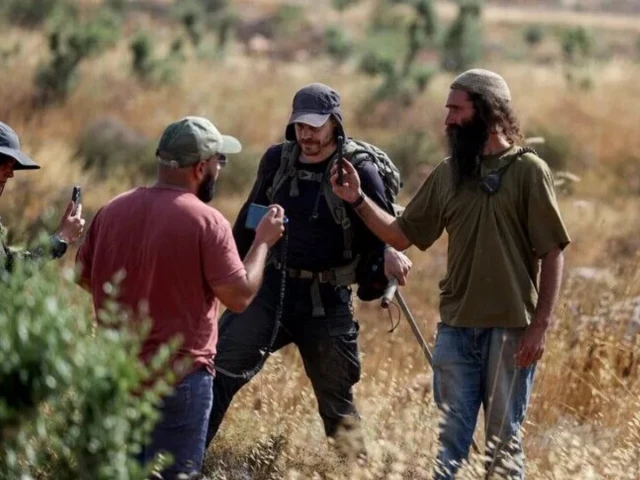
    The Palestinian village of Tel in the northern occupied West Bank should have been celebrating one of its busiest and most cherished times of the year. Residents had spent weeks preparing for the annual fig harvest and a festival expected to attract visitors from across the region. Instead, the village has been left grieving after a deadly confrontation forced organizers to cancel the event and replaced the festive atmosphere with mourning. The violence erupted after an attack involving Israeli settlers last week. The clashes that followed resulted in the deaths of four Palestinians and two Israeli settlers, leaving the community in shock. Black flags now hang where festival decorations were meant to be displayed, while many orchards remain out of reach because of an increased Israeli military presence and ongoing restrictions in the area. Tel village council head Walid Zaidan said the tragedy has deeply affected the community of around 7,000 people. According to him, the village has lost its usual energy and sense of joy after the deaths of four young residents in a single day. He said the emotional impact is visible throughout the village, where families continue to cope with grief and uncertainty. Zaidan said residents had not been seeking confrontation but were trying to protect their homes after repeated attacks by Israeli settlers. He recalled an earlier incident in which the home of a local resident, Sohaib Ramadan, was set on fire. The family managed to escape only moments before the house was completely destroyed. He said many villagers feared another similar attack and went out to defend their neighborhood when violence broke out again. The damage has extended beyond the loss of life. Zaidan said Israeli bulldozers entered farmland and cleared large sections of agricultural land. Initial estimates suggest that around 2,000 dunams, or roughly 500 acres, have been affected. Local officials have been unable to inspect the full extent of the destruction because access to the area remains restricted by Israeli forces and settlers. Residents also claim that a new settlement outpost is being established on the land. At the same time, Israeli forces have carried out arrests and questioned dozens of Palestinians in the village, adding to growing tensions. For the people of Tel, farming is more than an economic activity. Fig trees, olive groves and prickly pear plants have long been central to the village’s identity and way of life. Tel is known throughout the occupied West Bank for producing several varieties of figs, drawing visitors each harvest season to buy fresh fruit and locally made products. Plans for a three day festival featuring figs, dairy products, cheeses and other local goods were abandoned after the violence. Farmers who own nearby livestock and poultry farms have also struggled to reach their animals because roads remain blocked, raising concerns about the welfare of their livestock. Local resident Omar Ishtayeh said the village has depended on agriculture for generations, but increasing restrictions and repeated settler attacks have made farming more difficult. He said orchards that once represented prosperity now reflect the hardships facing local families. With the fig season already underway, many farmers fear the fruit will spoil before they are able to safely return to their land. Palestinian officials argue that the events in Tel are part of a wider rise in settler violence across the occupied West Bank. According to the Palestinian Colonisation and Wall Resistance Commission, thousands of attacks targeting Palestinians and their property were recorded during the first half of 2026. These incidents included assaults on civilians, arson attacks, damage to farmland, restrictions on access to agricultural areas and the expansion of settlement outposts. The United Nations considers Israeli settlements in the occupied Palestinian territories illegal under international law. Palestinians say the continued expansion of settlements is reducing hopes for the creation of an independent Palestinian state and making everyday life increasingly difficult for communities that rely on their land for survival.

  • | | | |

    NYC Mayor urges US to enforce ICC arrest warrant a…

    NEW YORK: New York City Mayor Zohran Mamdani has said the city does not have the legal authority to enforce the International Criminal Court’s (ICC) arrest warrant against Israeli Prime Minister Benjamin Netanyahu, while urging the US federal government to take action if Netanyahu visits the United States. In a video statement posted on social media, Mamdani said his administration had carefully reviewed whether New York City could execute the ICC warrant under existing laws. After examining all available legal options, he concluded that municipal authorities lack the power to carry out such an arrest. “The federal government, however, does,” Mamdani said, calling on US officials to cooperate with the ICC and enforce the warrant if the opportunity arises. The New York mayor also sharply criticized Netanyahu, describing him as “a war criminal” and accusing him of being responsible for what he called “a horrific genocide against the Palestinian people.” Mamdani added that he supports the ICC’s position, saying that anyone charged by the court should face legal proceedings regardless of their office or nationality. “I agree with the ICC that Benjamin Netanyahu should be arrested and tried for his crimes,” he said. The ICC, based in The Hague, announced in 2024 that it had found reasonable grounds to believe Netanyahu bore responsibility for alleged war crimes and crimes against humanity linked to Israel’s military campaign in Gaza following Hamas’ October 7, 2023 cross-border attack on Israel. The remarks come just a day after US President Donald Trump declared that Netanyahu would not face arrest if he attends the United Nations General Assembly in New York this September. Trump’s comments highlighted the gap between the US administration’s position and the ICC’s legal proceedings. Netanyahu’s office swiftly rejected Mamdani’s remarks, dismissing the ICC as a “kangaroo court” and reiterating Israel’s long-standing position that the tribunal lacks jurisdiction over Israeli officials. The issue has reignited debate over the role of international justice, the authority of the ICC and the legal obligations of countries when individuals facing international arrest warrants travel abroad. While the United States is not a member of the ICC and does not formally recognise its jurisdiction, the controversy has drawn renewed international attention as legal, diplomatic and political questions continue to surround Netanyahu’s potential foreign visits. The latest exchange underscores the deep divisions over the Gaza conflict and the growing debate about accountability, international law and the limits of local and federal authority in the United States.

  • | |

    Fake DAP fertiliser worth over Rs20m seized in Guj…

    GUJRAT: The Agriculture (Extension) Department has seized counterfeit DAP fertiliser worth more than Rs20 million during a raid at Hasan Rice Mills in Mouza Mohla, Gujrat, in what officials described as a major crackdown on the illegal fertiliser trade. The operation was conducted under the supervision of Director Agriculture (Extension) Gujrat Division Dr Irfanullah Warraich by Assistant Director Agriculture (Extension) and Assistant Controller Fertilizer Muhammad Athar Latif. During the raid, officials inspected the premises and collected samples of suspected DAP fertiliser for laboratory testing. They also sealed 1,140 bags of fertiliser, each weighing 50 kilograms, with an estimated value of Rs18.24 million. According to the Agriculture Department, laboratory analysis later confirmed that the fertiliser was counterfeit. Officials said subsequent investigations revealed that a total of 1,270 bags of fake DAP fertiliser, worth approximately Rs20.32 million, were linked to the operation. Out of these, 1,244 bags were taken into police custody as case property. A case has been registered against Muhammad Azmat and other suspects under the Punjab Fertilizer Control Act, 2025. Police also arrested Ghulam Hussain, the in-charge of Hasan Rice Mills, during the raid. The department said the crackdown was aimed at protecting farmers from substandard agricultural inputs that could adversely affect crop production and cause financial losses. Officials added that counterfeit fertilisers not only reduce crop yields but also undermine farmers’ confidence in certified agricultural products. They urged growers to purchase fertilisers only from authorised dealers and to report any suspicious products or illegal storage facilities to the Agriculture Department. The department said further investigations are underway to trace the source of the counterfeit fertiliser, identify other individuals involved in its manufacture and distribution, and determine whether similar consignments had been supplied to other markets in the region. Agriculture officials reaffirmed their commitment to continuing strict enforcement against the production, storage and sale of fake fertilisers to safeguard farmers’ interests and ensure the availability of quality agricultural inputs across Punjab.

  • |

    US Navy begins testing 2,000-nautical-mile underwa…

    WASHINGTON: The US Navy has begun testing a new low-cost unmanned underwater vehicle designed to travel more than 2,000 nautical miles, marking another step in the development of long-endurance autonomous maritime technology. According to US media reports, the new underwater drone, known as HADALUS, has been developed for missions that require long periods of operation without a crew on board. Its developers say the system could offer a lower-cost alternative to other vehicles in the same category. The 34-foot-long vehicle features a carbon-fibre outer structure and has a cross-section of about six feet. It is equipped with sonar and other electronic systems intended to support underwater operations and data collection. The reported range of more than 2,000 nautical miles is among the system’s most notable features. Such endurance could allow an unmanned vehicle to operate over considerable distances before returning to its launch area or requiring further support. The US Navy has increasingly explored unmanned maritime systems as a way to expand underwater surveillance and other capabilities while reducing the need to place personnel directly in potentially hazardous environments. The HADALUS trials will help assess how the vehicle performs in real-world conditions, including its endurance, navigation, communications and onboard systems. Developers say keeping the platform relatively inexpensive is another key objective. If testing proves successful, the technology could become part of a broader effort to deploy larger numbers of autonomous underwater vehicles for extended maritime missions. The latest trial highlights the growing competition among major military powers to develop longer-range, more capable and cost-effective unmanned systems beneath the sea.

  • | |

    KP rejects Rs6.4bn proposed cut in federal transfe…

    PESHAWAR: The Khyber Pakhtunkhwa government has rejected a proposed deduction of Rs6.4 billion from the province’s federal financial transfers. Chief Minister Sohail Afridi said the federal government had sought an additional amount from Khyber Pakhtunkhwa before the provincial budget. The provincial government had linked the release of the additional funds to a meeting with PTI founder Imran Khan and his approval. Afridi said the KP government neither approved nor agreed to the proposed deduction of Rs6.4 billion. He said the additional federal grant had also not been included in the provincial budget for the 2026-27 financial year. The chief minister said the matter was not merely a political dispute but concerned the province’s constitutional and financial rights. He maintained that Article 164 of the Constitution does not give the federal government the authority to unilaterally deduct money payable to a province. According to Afridi, any such deduction requires a clear constitutional or legal basis as well as the consent of the provincial government. He said the Finance Department had clearly conveyed its disagreement with the proposed deduction in a letter issued on August 13. Written instructions were also issued that no deduction should be made without the province’s consent. Afridi said Finance Adviser Muzammil Aslam immediately met the relevant officials of the Accountant General KP. The Accountant General of Pakistan Revenues was also directed not to record or implement any transaction without the clear consent of the provincial government. The chief minister said the provincial government had decided to prepare a summary and ordinance under the 7th National Finance Commission (NFC) after the province did not receive its share for six months. He said the provincial government did not sign the memorandum of understanding concerning the additional amount because a meeting with the PTI founder was not arranged. Afridi said the KP government had already approached the Federal Constitutional Court to seek its constitutional rights under the National Finance Commission. He made it clear that the provincial government would not compromise on its NFC rights. The chief minister further said the federal government had no authority to unilaterally deduct money on the basis of an unapproved memorandum of understanding. He vowed that the provincial government would use every legal and constitutional avenue to protect its rights and defend every rupee of its financial share. Afridi also said that if the Federal Board of Revenue (FBR) achieved its Rs15.26 trillion tax collection target, Khyber Pakhtunkhwa’s share would amount to approximately Rs175 billion. He added that providing the merged districts with their rightful share under the 11th NFC was also one of the provincial government’s conditions.

  • |

    Mohammad Amir blames workload for Shaheen Afridi’s struggles

    Former Pakistan fast bowler Mohammad Amir believes Shaheen Shah Afridi’s recent decline in form is largely the result of poor workload management, arguing that the left-arm pacer was overburdened during the early years of his international career. Amir made the remarks after Shaheen was left out of Pakistan’s Test squad for the ongoing series against the West Indies, a decision that has sparked fresh debate over the fast bowler’s form, fitness, and future in the longest format of the game. Shaheen was once considered Pakistan’s premier fast bowler across all three formats, but his performances in Test cricket have dipped since returning from a serious knee injury in 2023. Although he remains a key figure in Pakistan’s white-ball plans, his red-ball performances have raised concerns among former players and cricket experts. Since making his comeback, Shaheen has taken 27 wickets in 16 Test innings at an average of 40.11, with a strike rate of 67.6. His performances during Pakistan’s 2-0 home Test series defeat to Bangladesh also came under criticism, particularly because of a noticeable drop in bowling speed. The left-arm pacer, who previously relied on consistently high pace, was often clocked in the mid-120 km/h range during the series. Speaking on The Scoop by Wisden, Amir said he had predicted such challenges years ago, warning that excessive cricket without proper workload management could eventually take a toll on Shaheen’s body and performance. According to Amir, fast bowlers require careful planning throughout their careers, especially when they are expected to play regularly across all formats. He said failing to manage a pacer’s workload can affect pace, rhythm, consistency, and overall fitness over time. Amir recalled giving an interview in either 2020 or 2021 in which he expressed concern about the amount of cricket Shaheen was playing. Drawing from his own experience as a fast bowler, Amir said he warned that continuous cricket without adequate rest would eventually lead to physical and performance-related struggles. He added that the warning appears to have become reality, as Shaheen is now facing issues with pace, consistency, and fitness despite still being relatively young. Amir stressed that a player of Shaheen’s age should ideally be at the peak of his career, but the current situation suggests that something has gone wrong in his development. He maintained that poor workload management remains the biggest factor behind the left-arm pacer’s struggles. The statistics support Amir’s concerns about Shaheen’s workload before his injury. Between making his international debut and suffering a knee injury in July 2022, Shaheen bowled 809.4 overs in Test cricket, more than any other Pakistan bowler during that period. Former leg-spinner Yasir Shah ranked second with 606.2 overs, while Hasan Ali was the next-highest fast bowler with 427.3 overs. The figures highlight the significant responsibility placed on Shaheen as the leader of Pakistan’s pace attack, with many now questioning whether better workload management could have helped preserve his fitness and long-term effectiveness.

Leave a Reply

Your email address will not be published. Required fields are marked *