tanweer ahmed urges
| |

Tanweer Ahmed urges AI skills, MicroCerts for yout…

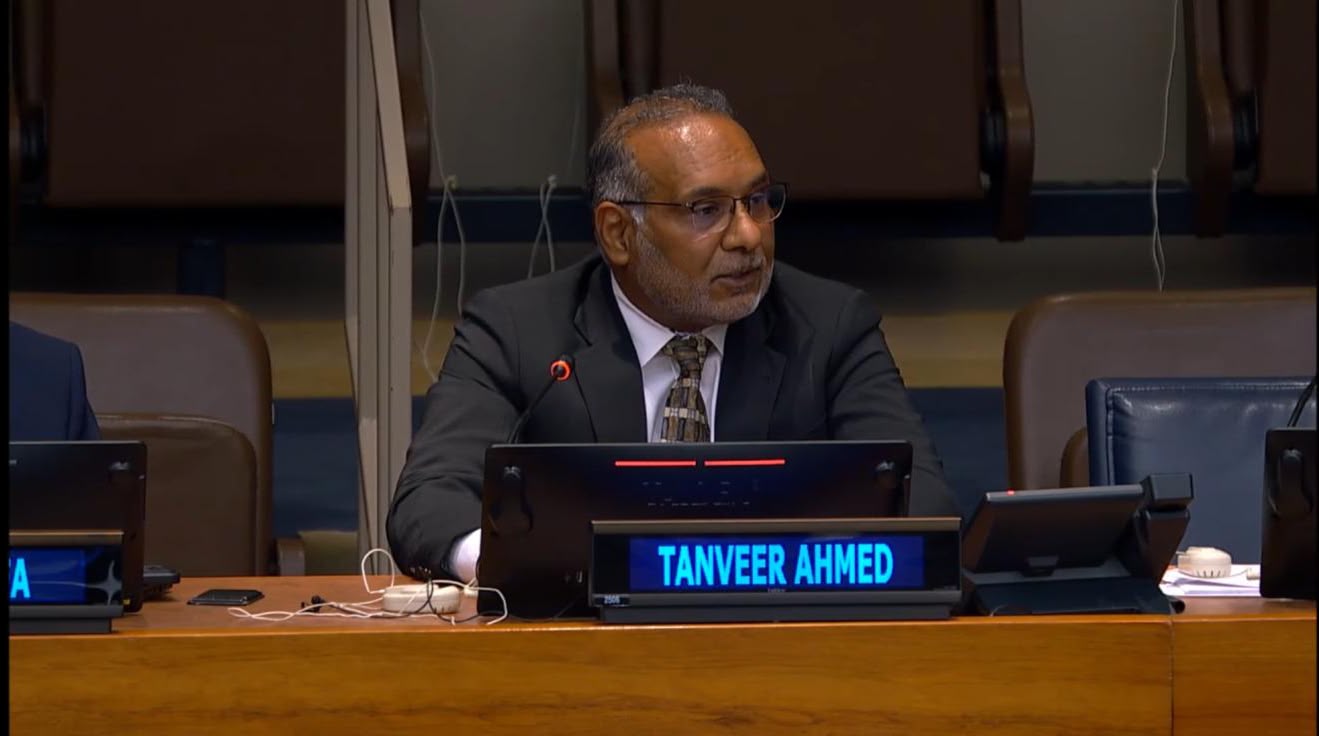
On International Youth Day 2026, American-Pakistani businessman and analyst Tanweer Ahmed called for greater investment in young people and highlighted ACT AI and MicroCerts as key initiatives for preparing Pakistan’s youth for an artificial intelligence-driven global economy.

Addressing a Youth and AI Summit at the United Nations, Ahmed said artificial intelligence was transforming education, employment, entrepreneurship, healthcare, public services and almost every aspect of modern economies.

He stressed that young people should not be treated merely as beneficiaries of development but as innovators, decision-makers, entrepreneurs and leaders capable of shaping the future.

“Talent is everywhere. Opportunity is not,” Ahmed said, emphasising the need to close the gap between young people who have access to advanced technology and those who remain excluded from the digital economy.

ACT AI initiative

Ahmed placed particular emphasis on ACT AI — Awareness, Competency and Tools Training for Artificial Intelligence — describing it as an important effort to expand practical AI capabilities among Pakistani youth.

He said the initiative, associated with the state-owned enterprise AXI, focuses on areas including generative AI, agentic AI systems, AI-powered productivity tools, automation and sector-specific applications.

According to Ahmed, one of the initiative’s major strengths is accessibility. Young people from different academic backgrounds can develop AI-related capabilities without necessarily having prior programming or artificial intelligence experience.

He said making AI education accessible and free of cost could help ensure that Pakistani students and young professionals are not left behind as the global economy rapidly adopts AI.

Ahmed argued that young people should acquire the ability not only to use artificial intelligence but also to understand, question, develop and responsibly apply the technology.

MicroCerts to strengthen youth credentials

Ahmed also placed strong emphasis on MicroCerts, describing micro-certifications as an important complement to traditional university degrees.

He said rapidly changing technology means education can no longer end when a student completes a conventional degree. Young people need flexible opportunities to continuously acquire and demonstrate new, market-relevant skills.

According to Ahmed, MicroCerts can provide focused credentials that demonstrate specific competencies and potentially create pathways into employment, freelancing, entrepreneurship, higher education and lifelong learning.

He highlighted the importance of making such credentials accessible to young people facing financial or geographical barriers.

“The future should not belong only to those who can afford opportunity,” Ahmed said, stressing that skills and credentials should be available to talented young people regardless of where they live or their economic circumstances.

From AI users to AI creators

Ahmed called for a shift from preparing young people simply to consume AI tools toward enabling them to become AI creators, innovators and responsible leaders.

He said technology must be combined with human judgment, ethics and responsibility, warning that artificial intelligence cannot replace compassion, character or the human responsibility to determine the kind of society people want to build.

He also called for stronger international cooperation between governments, universities, businesses, technology companies and international organisations to expand AI education and establish credible skills and certification systems.

Ahmed said Pakistan could contribute to this global effort through initiatives such as ACT AI and MicroCerts, which he described as mechanisms for developing practical AI capabilities and recognised skills among the country’s youth.

He further stressed that the expansion of AI infrastructure must be accompanied by environmental responsibility because data centres, cloud computing and AI systems require significant energy and resources.

Addressing young people around the world, Ahmed urged them to learn and question emerging technologies, use AI to solve real-world problems and build businesses and communities with a clear sense of purpose.
Similar Posts

  • | | |

    Iraq orders investigation into alleged drone attac…

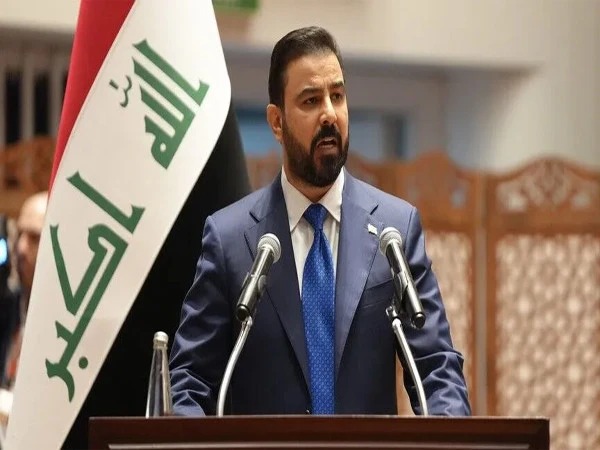
    The Iraqi government has launched an official investigation into allegations that drones used in attacks on Saudi Arabia were launched from Iraqi territory. The move follows information shared by Saudi authorities and reflects Baghdad’s commitment to ensuring its land is not used to threaten neighboring countries. According to a statement issued by the office of the Iraqi prime minister, Prime Minister Ali Al-Zaidi, who also serves as the Commander-in-Chief of the Iraqi Armed Forces, has instructed the relevant security agencies to conduct a comprehensive investigation into the reported drone incidents. The government said the investigation will examine all evidence and information provided by Saudi Arabia to determine whether Iraqi territory was used in planning or carrying out the attacks. Officials emphasized that the inquiry will be conducted thoroughly and that any individuals or groups found responsible will face legal action in accordance with Iraqi law. Baghdad reiterated its constitutional commitment to maintaining good relations with neighboring countries and stressed that it does not permit its territory to be used for attacks against friendly or brotherly nations. The statement underlined Iraq’s policy of respecting the sovereignty and security of regional partners while working to preserve stability across the Middle East. The Iraqi government also described its relationship with Saudi Arabia as strong and based on mutual respect and cooperation. Officials said they are determined to protect these ties and will not allow any actions that could damage bilateral relations or create unnecessary regional tensions. The investigation comes at a time when security concerns remain high across the Middle East. Governments in the region continue to cooperate on intelligence sharing and border security to address threats posed by cross-border attacks and other security challenges. By launching the investigation promptly, Iraqi authorities aim to clarify the circumstances surrounding the alleged drone attacks and demonstrate their commitment to accountability. The government has pledged to take appropriate legal measures if the investigation confirms that Iraqi territory was misused for hostile activities. The latest development also highlights the importance of regional cooperation in addressing shared security concerns. Iraq has reaffirmed that maintaining peaceful relations with neighboring states remains a key priority and that it will continue working with Saudi Arabia and other regional partners to promote stability, strengthen diplomatic ties, and prevent incidents that could escalate tensions in the region. The move follows information shared by Saudi authorities and reflects Baghdad’s commitment to ensuring its land is not used to threaten neighboring countries. According to a statement issued by the office of the Iraqi prime minister, Prime Minister Ali Al-Zaidi, who also serves as the Commander-in-Chief of the Iraqi Armed Forces, has instructed the relevant security agencies to conduct a comprehensive investigation into the reported drone incidents. The government said the investigation will examine all evidence and information provided by Saudi Arabia to determine whether Iraqi territory was used in planning or carrying out the attacks. Officials emphasized that the inquiry will be conducted thoroughly and that any individuals or groups found responsible will face legal action in accordance with Iraqi law. Baghdad reiterated its constitutional commitment to maintaining good relations with neighboring countries and stressed that it does not permit its territory to be used for attacks against friendly or brotherly nations. The statement underlined Iraq’s policy of respecting the sovereignty and security of regional partners while working to preserve stability across the Middle East. The Iraqi government also described its relationship with Saudi Arabia as strong and based on mutual respect and cooperation. Officials said they are determined to protect these ties and will not allow any actions that could damage bilateral relations or create unnecessary regional tensions. The investigation comes at a time when security concerns remain high across the Middle East. Governments in the region continue to cooperate on intelligence sharing and border security to address threats posed by cross-border attacks and other security challenges. By launching the investigation promptly, Iraqi authorities aim to clarify the circumstances surrounding the alleged drone attacks and demonstrate their commitment to accountability. The government has pledged to take appropriate legal measures if the investigation confirms that Iraqi territory was misused for hostile activities. The latest development also highlights the importance of regional cooperation in addressing shared security concerns. Iraq has reaffirmed that maintaining peaceful relations with neighboring states remains a key priority and that it will continue working with Saudi Arabia and other regional partners to promote stability, strengthen diplomatic ties, and prevent incidents that could escalate tensions in the region.

  • |

    Manjrekar slams ‘lenient’ punishment for Jaiswal, Vaibhav

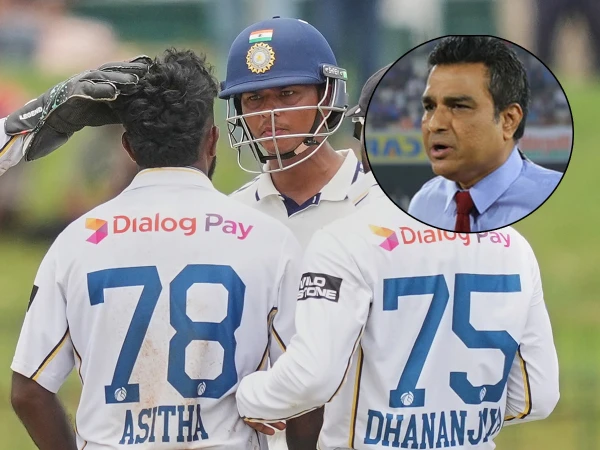
    MUMBAI: Former India batter Sanjay Manjrekar has criticised the International Cricket Council (ICC) for what he described as lenient disciplinary action against Yashasvi Jaiswal and Vaibhav Suryavanshi following separate incidents involving the young Indian players. Manjrekar expressed his frustration on social media after the ICC sanctioned Jaiswal and Sri Lankan fast bowler Asitha Fernando following an on-field confrontation during the Galle Test. Jaiswal and Fernando were involved in a heated exchange after the Indian batter was dismissed. The situation escalated when the two players moved towards each other and their heads made contact, prompting teammates and officials to intervene before the confrontation could develop further. The ICC found both players guilty of breaching its code of conduct and imposed a fine of 25 per cent of their match fees, along with one demerit point each. Manjrekar questioned whether the punishment was strong enough given the nature of the incident. He argued that the authorities should have taken a firmer position on conduct that could potentially undermine discipline and sportsmanship in international cricket. The former India international also referred to an earlier incident involving 15-year-old Vaibhav Suryavanshi, expressing disappointment that the youngster had received only a 50 per cent match-fee fine. His comments have renewed discussion about whether disciplinary measures in cricket are consistent across players and incidents, particularly when young cricketers are involved. The Jaiswal-Fernando confrontation attracted considerable attention because it occurred during a Test match, where players are expected to maintain discipline despite the intense pressure of international competition. The involvement of teammates in separating the two players prevented the incident from becoming more serious. The ICC’s decision means both Jaiswal and Fernando will carry a demerit point on their disciplinary records, although neither player received a suspension. Manjrekar’s criticism adds to the wider debate over how cricket’s governing bodies should respond to confrontations on the field. While fines are intended to punish misconduct, some former players believe stronger sanctions are necessary when physical contact occurs. The controversy also highlights the challenge faced by cricket authorities in balancing firm discipline with proportionate punishment. For now, the ICC decision stands, but Manjrekar’s comments are likely to keep the debate alive over whether international cricket needs tougher penalties for on-field clashes.

  • |

    Tom Holland and Zendaya celebrate exclusive post-wedding event

    Hollywood stars Zendaya and Tom Holland have reportedly celebrated their marriage once again with an intimate wedding ceremony in England, months after quietly tying the knot earlier this year. The couple, who have remained one of the entertainment industry’s most private pairs, reportedly took a break from their demanding work schedules and international press commitments to mark the special occasion with a close circle of family members and friends. The private celebration was held at the luxurious Beaverbrook Hotel in Surrey, located near Kingston-upon-Thames in southwest London, an area closely connected to Holland’s upbringing. The exclusive venue, known for its historic charm and scenic surroundings, was reserved exclusively for the couple and their guests for the special event. The lavish Victorian estate spans approximately 370 acres and has welcomed numerous high-profile visitors over the years. Its rich history and secluded location made it an ideal setting for the couple’s intimate celebration away from the public eye. To maintain complete privacy, strict security measures were reportedly put in place throughout the event. Guests and staff members were required to follow a no-phone policy, ensuring that no photographs or videos from the ceremony were shared publicly. The precaution reflected the couple’s long-standing commitment to keeping their personal lives out of the spotlight. According to reports, the wedding celebration was designed to remain entirely confidential, with organizers taking significant steps to prevent any details from leaking before or after the event. The ceremony allowed the newlyweds to celebrate their relationship in a relaxed and private atmosphere surrounded by their closest loved ones. Zendaya and Holland’s romance began after the two met while filming Marvel’s Spider-Man: Homecoming in 2016. Although speculation about their relationship circulated for years, they largely kept their romance private and rarely discussed it publicly. Their relationship continued to grow over the years, and the pair reportedly became engaged in 2024. Fans have closely followed their journey ever since, with the couple frequently earning praise for balancing their successful careers while maintaining a low-profile personal life. Earlier this year, speculation about their marriage intensified after Zendaya’s longtime stylist, Law Roach, publicly indicated that the pair had already exchanged vows. While neither Zendaya nor Holland has officially shared details of their wedding, reports of the private ceremony in England have further fueled excitement among fans around the world. Despite their global fame, the couple continue to prioritize privacy, choosing intimate celebrations over highly publicized events as they begin the next chapter of their life together.

  • | |

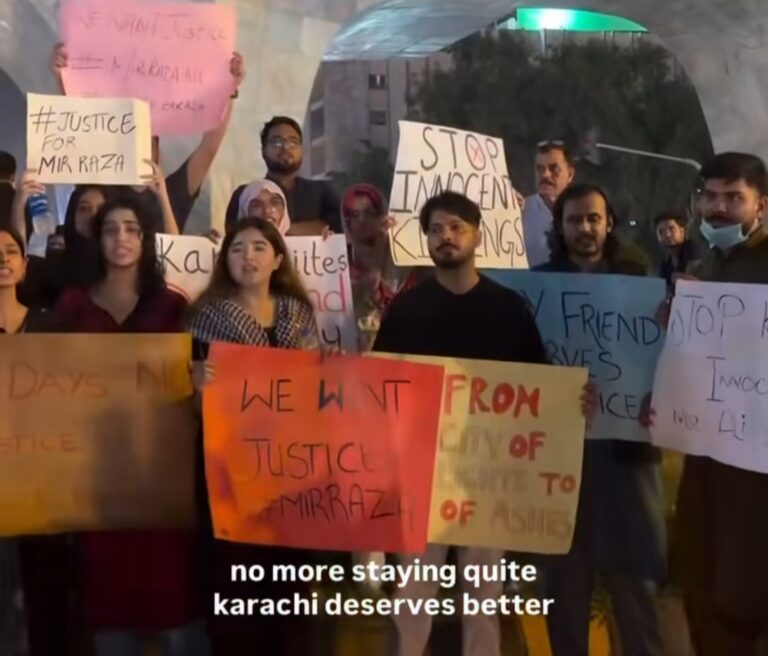
    Police probe deepens into Mir Raza Ali Khan’…

    Police have intensified their investigation into the death of 25-year-old former Institute of Business Administration (IBA) student and aspiring entrepreneur Mir Raza Ali Khan, saying several pieces of evidence point toward the possibility of suicide. However, investigators have not ruled out other possibilities as key questions remain unanswered. The young businessman was found dead with a gunshot wound to his chest in bushes near Shahi Qila in Gulistan-i-Jauhar, opposite the University of Karachi. His body was recovered two days after he was reported missing from his residence in PECHS. According to investigators, Raza had returned home after closing his business in Bahadurabad before leaving again after collecting a pistol from his office. Before departing, he reportedly left the keys to his house and car, along with his wristwatch and some cash for his mother. Police also found that all data on his iPhone had been deleted before his disappearance. The investigation revealed that he booked an online ride to Gulistan-i-Jauhar. The cab driver told police that Raza requested his favourite song during the journey and paid more than the required fare. CCTV footage reviewed by investigators showed him walking alone after being dropped off, with no one seen accompanying him. Police later recovered his mobile phone after tracing it to a person who inserted a SIM card into the device. The individual was detained, and investigators recovered the phone for forensic examination. Authorities also found the holster of Raza’s pistol hanging from a tree near the location where his body was discovered. However, the firearm used in the incident has not yet been recovered. Investigators believe it may have been taken away by someone passing through the area after the incident. The investigation has further revealed that Raza had been facing significant financial difficulties. Police said he had suffered losses worth millions of rupees through business investments and was under pressure to repay investors. Investigators also learned that he had sought a loan of Rs30 million from one investor, but the request was declined. According to statements recorded by police, the investor claimed Raza had spoken about experiencing disturbing thoughts before his death. His fiancée also told investigators that he had become deeply focused on cryptocurrency investments, particularly Bitcoin. She said she sent him a message on the night of his disappearance, but it was never delivered because his phone had already gone offline. Despite the evidence gathered so far, investigators say three major questions remain unresolved. They are trying to determine why Raza chose the isolated location where his body was found, where the missing pistol is, and why forensic experts did not detect gunshot residue on his hands despite the bullet being fired from close range. Officials noted that the body’s partial decomposition may have affected forensic findings.

  • | |

    Parliament approves sweeping defence command chang…

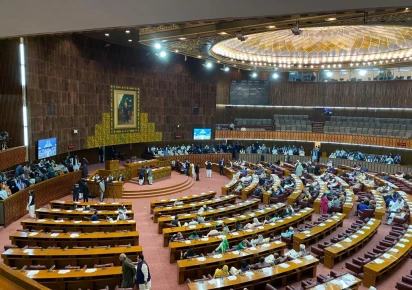
    Pakistan’s Parliament has approved legislation aimed at establishing a new legal framework for the country’s military command structure. The National Assembly and Senate passed the Defence Forces Act 2026 and amendments to the National Command Authority Act 2010 on Thursday. The legislation was approved despite strong opposition from opposition lawmakers, who objected to the speed at which the bills were brought before the Houses. Prime Minister Shehbaz Sharif attended the National Assembly session. The opposition later boycotted the voting process and walked out of the chamber in protest. The new Defence Forces Act provides a legal structure for the Defence Forces Headquarters. The headquarters will serve as a central institution for matters concerning national security, defence policy and coordination among the armed forces. Under the new framework, the Chief of Defence Forces will exercise operational command and control over the armed forces. The CDF will remain accountable to the federal government for matters related to command and control. The legislation also gives the CDF powers to improve coordination and integration among the Army, Navy and Air Force. The office will oversee joint operations, coordination and other matters involving the armed forces. The CDF will also have authority under relevant laws regarding the retirement, release and dismissal of military personnel, subject to constitutional provisions. The office will also be able to approve or reject resignations and retain personnel in service where permitted under the law. The federal government will frame rules and regulations needed to implement the new legislation. The CDF will also be authorised to issue orders and directions required to enforce the provisions of the Act. Parliament also approved amendments to the National Command Authority Act 2010. The changes replace references to the Chairman Joint Chiefs of Staff Committee with references to the Chief of Army Staff and Chief of Defence Forces. The legislation gives retrospective effect to key provisions from November 2025. The new laws are linked to changes introduced through the 27th Constitutional Amendment, which significantly altered Pakistan’s military command structure. Under the revised system, the Chief of Army Staff also serves as the Chief of Defence Forces. The office of Chairman Joint Chiefs of Staff Committee has been abolished under the new framework. The opposition strongly objected to the legislation being placed on the supplementary agenda. Opposition lawmakers said they had not been given sufficient time to examine the bills. Opposition Leader Allama Raja Nasir Abbas questioned the urgency of the legislation and called for more time for lawmakers to study the proposed changes. Mahmood Khan Achakzai also demanded that lawmakers be given at least a few days to review and debate the bills before voting. The government defended the procedure, saying parliamentary rules allow supplementary legislation to be introduced. Law Minister Azam Nazeer Tarar argued that the bills had already been examined and approved by the National Assembly. The cabinet had approved the draft legislation earlier in the day during a meeting chaired by Prime Minister Shehbaz Sharif in Islamabad. According to the government, the Defence Forces Act was necessary to provide administrative and legal arrangements for the office of the Chief of Defence Forces and its headquarters. The new framework also establishes the position of Commander of the National Strategic Command following the abolition of the CJCSC post. The commander is appointed by the prime minister on the recommendation of the army chief and CDF. The position carries a three-year term, with the possibility of another three-year term under the prescribed procedure.

  • | |

    Rain alert as low-level flooding persists

    Rain is expected in several parts of Punjab, upper Khyber Pakhtunkhwa and Kashmir today, according to the latest weather and flood forecast. The Flood Forecasting Division in Lahore said water levels remain elevated at several points along the Indus River. Low-level flooding is still being reported at Kalabagh, Taunsa and Guddu barrages. Authorities are continuing to monitor the situation as river flows remain higher than normal at these locations. The flooding at these barrages is currently classified as low-level. Relevant departments are keeping a close watch on water levels and river flows. Meanwhile, the situation at Chashma Barrage has returned to normal. No low-level flooding is currently being reported there. The possibility of rain in parts of Punjab, upper Khyber Pakhtunkhwa and Kashmir could affect water levels in some areas. Authorities are expected to remain alert, particularly in areas located near rivers and other waterways. Residents in vulnerable areas have been advised to stay informed about weather and flood updates and follow instructions issued by local authorities.

Leave a Reply

Your email address will not be published. Required fields are marked *