pakkay dost season
| |

Pakkay dost season 4: Bilal Maqsood brings educati…

Singer and songwriter Bilal Maqsood has announced the fourth season of his popular children’s programme Pakkay Dost, promising a fresh mix of educational songs, entertainment and Urdu-language learning for young audiences.

The new season of Pakkay Dost is set to premiere on YouTube on August 22. Maqsood shared the announcement on Instagram, expressing excitement about bringing the programme back with more engaging content for children and families.

Maqsood explained that the main idea behind Pakkay Dost is to create healthy and wholesome entertainment in Urdu while making the language feel fun, modern and relevant to children.

The upcoming season will continue using music as a way to teach children about different subjects. The programme will explore topics including Urdu, physical fitness, kindness towards animals, vegetables and the human body.

One of the performances features actor Syra Yousuf, who can be seen dancing to a song about the history of the Urdu language. The performance introduces children to vocabulary influenced by languages such as Arabic and Turkish while making language learning entertaining.

The new educational songs will also teach children about exercise and healthy habits. Other songs will introduce the names of vegetables as well as bones and joints in the human body.

According to Maqsood, Pakkay Dost now has more than 50 songs covering a wide variety of subjects and facts. He has encouraged parents to watch the programme with their children, emphasizing that the show has been created to entertain adults as well as young viewers.

The singer also said that enjoying the music himself is an important part of his creative process. His approach combines catchy songs with educational themes, allowing children to learn without making lessons feel like traditional classroom activities.

With Pakkay Dost Season 4 arriving on YouTube on August 22, Bilal Maqsood is continuing his effort to introduce children to Urdu through music, humour and wholesome entertainment.

The new season is expected to appeal to families looking for educational content that can keep children entertained while helping them learn about language, health, nature and their own bodies.

Similar Posts

  • |

    South Korea investigates election officials over alleged vote turnout manipulation

    South Korean investigators have launched a major investigation into the National Election Commission after allegations that officials altered voter turnout figures during the June 3 local elections. Authorities searched the commission’s offices on Thursday as part of a widening probe into what could become one of the country’s most serious election controversies in recent years. The investigation follows widespread problems that disrupted voting on election day. Dozens of polling stations ran out of ballot papers, creating confusion for voters across the country. The shortages occurred during the first nationwide local elections held after President Lee Jae Myung took office last year. The incident sparked public criticism, street protests, and growing demands for greater transparency in the country’s election system. The controversy also forced National Election Commission chief Roh Tae-ak to resign. President Lee responded by ordering a full investigation into the failures that affected the election process. Since then, police and prosecutors have been examining whether the problems were caused by simple mistakes or deliberate misconduct. According to investigators, there is evidence that officials from both the National Election Commission and the Gyeonggi Provincial Election Commission entered false voter turnout figures into the election reporting system. Authorities believe some staff members changed numbers without following the commission’s official approval procedures. Investigators suspect the changes were made to fix earlier reporting mistakes while officials waited for accurate turnout data from polling stations. Instead of correcting the figures through the required process, they allegedly adjusted turnout numbers across several voting locations to make the overall totals appear consistent. Reports suggest one example involved a polling station where officials accidentally recorded 1,000 voters instead of the actual 100. Rather than immediately correcting the mistake, investigators believe the excess figures were temporarily distributed among other polling stations with the expectation that later voter turnout would balance the totals. Authorities are now examining whether similar adjustments were made elsewhere during the election. Under the commission’s regulations, any correction to turnout figures must receive formal approval before being entered into the system. Investigators believe those procedures may have been bypassed in several cases. Officials leading the investigation confirmed that two election workers have already been placed under formal investigation on suspicion of falsifying official electronic records. Authorities are now trying to determine whether the alleged actions were limited to lower level employees or whether senior officials knew about or approved the changes. Analysts say the case has drawn attention to long standing concerns about oversight within South Korea’s election commission. Because the commission operates as an independent constitutional body, critics argue that its internal monitoring and disciplinary systems have not always been strong enough to prevent misconduct. The ballot paper shortages also affected voters directly. Data provided by the commission to lawmakers showed that at least 90 people were unable to cast their ballots because voting papers were unavailable at their polling stations. The controversy has also fueled political tensions. Supporters of former president Yoon Suk Yeol, who is currently in jail while facing trial on insurrection charges, have renewed claims that the country’s elections require closer scrutiny. Some far right groups have repeated allegations of foreign interference despite the absence of verified evidence supporting those claims. In recent weeks, university students have joined demonstrations calling for a complete investigation into the election commission. Protesters are demanding stronger safeguards to protect voting rights and restore public confidence in South Korea’s democratic institutions. As the investigation continues, authorities say they will examine every level of the election process to determine whether any broader misconduct took place.

  • |

    YouTubers receive legal notices over negative Toxic reviews

    Yash’s much-awaited film Toxic: A Fairy Tale for Grown-Ups has found itself at the centre of a legal controversy shortly after its theatrical release. While the film has been receiving mixed to negative reactions from audiences and critics, several YouTubers and social media influencers who posted critical reviews have reportedly received legal notices from representatives of the film’s production team. The controversy comes just days after the makers obtained an ex-parte interim injunction from a Bengaluru court. The order restricts the publication and circulation of content that is considered false or defamatory against the film. The development has now drawn attention to the difference between a legal notice and an actual court order, particularly as reviewers continue to discuss their experiences online. One of the reviewers who publicly revealed receiving a notice is YouTuber Suraj Kumar. He shared a screenshot of the legal communication on social media. The notice was issued by Bengaluru-based Aiplex Software, which stated that it was acting on behalf of KVN-Monster Mind Creations LLP, the production company behind Toxic. The notice reportedly referred to a review uploaded by Suraj on the day the film was released. It alleged that his review had been published, circulated, shared, posted or otherwise communicated online. Despite receiving the notice, Suraj did not remove his review. Instead, he shared the legal notice with his followers and responded with a sarcastic caption thanking the Toxic team for taking legal action over his review. Another reviewer who has spoken about receiving a similar notice is Tamil YouTuber Prashanth Rangaswamy. He also took to social media to reveal that he had received a legal notice concerning his review of the film. His post expressed disappointment over the development and questioned the decision to take legal action against reviewers who had expressed negative opinions about the movie. Reports also suggest that an influencer on X received a similar notice after uploading a negative review in Tamil. The notices appear to have been sent as part of the production team’s wider effort to address online content surrounding the film. According to the legal communication, Aiplex has been authorised to represent the producers for a specific period, from July 13 through September 26. During this period, the company can reportedly issue takedown requests and approach online platforms, internet service providers and search engines regarding allegedly objectionable material connected to the film. However, receiving a legal notice does not automatically mean that a reviewer has been found guilty of defamation. The court order is a separate matter. The interim injunction was granted on August 22 by Bengaluru’s Additional City Civil and Sessions Court and specifically concerns content alleged to be false or defamatory. The order is temporary and is expected to remain in force until the next hearing, scheduled for September 28. This is not the first time Aiplex has been involved in disputes concerning online film reviews. Telugu YouTuber Sushant had previously accused the company of using copyright-related strikes against critical movie reviews during opening weekends, adding another layer to the ongoing discussion about how film criticism is handled online. Meanwhile, Toxic, directed by Geetu Mohandas, features Yash in the lead role alongside Kiara Advani, Nayanthara and other prominent actors. The film had generated considerable anticipation before its release, but its reception has reportedly been largely negative. The film’s box-office performance has also shown a significant decline after its opening day. Toxic reportedly earned around Rs 101 crore on its first day, while its collection fell sharply to approximately Rs 36 crore on the second day. The legal notices issued to reviewers have therefore become a major talking point alongside the film’s performance. As the court proceedings continue, the controversy has raised broader questions about the boundaries between film criticism, online opinions and allegedly defamatory content.

  • | |

    Mandy Moore reveals if she wants to expand her fam…

    Mandy Moore has officially answered the question of whether she and her husband, Taylor Goldsmith, plan to expand their family. The This Is Us star, 42, already shares three children with Goldsmith: sons August “Gus,” 5, and Oscar “Ozzie,” 3, and daughter Louise “Lou,” who is 23 months old. In a recent interview, Moore made it clear that their family of five is now complete. (Us⁠) “We are absolutely done and so grateful for our family,” Moore said, explaining that she and Goldsmith are enjoying this stage of parenthood and trying to savor the small moments. Moore admitted that seeing pregnancy announcements on social media can still bring up complicated feelings. She joked that her Instagram feed now seems filled with pregnant people, which makes her realize that pregnancy will not be part of her future again. At the same time, she said she is simply too tired to imagine starting over with another baby. After having three children in three and a half years, Moore appears ready to embrace a new chapter rather than return to the newborn stage. For the actress, there is also something bittersweet about watching her youngest child, Lou, grow up. She recently reflected on reaching milestones that signal the end of the baby years, including moving away from diapers, bottles and a crib. Moore described the transition as exciting but emotional. Her family is entering what she called “uncharted territory,” as the children become more independent and develop their own personalities. (E! Online⁠) The actress has also been candid about the physical and emotional impact of having three children so close together. Earlier this year, she shared an honest look at her postpartum body, acknowledging the changes that came after three pregnancies in just three and a half years. (People.com⁠) Moore previously revealed that she had undergone an unsuccessful round of IVF before unexpectedly becoming pregnant naturally with Lou. She had considered IVF partly because she wanted the possibility of creating more space between pregnancies as she got older. (The Express Tribune⁠) Now, however, Moore appears confident that she and Goldsmith have reached the right place for their family. Rather than focusing on having another baby, the actress is choosing to appreciate the children she already has. With Gus, Ozzie and Lou growing quickly, Moore is embracing the next stage of motherhood with gratitude. For Moore and Goldsmith, the baby chapter may be closing—but their family story is continuing to grow in new ways.

  • | |

    Pakistan’s HIV crisis deepens as child infection…

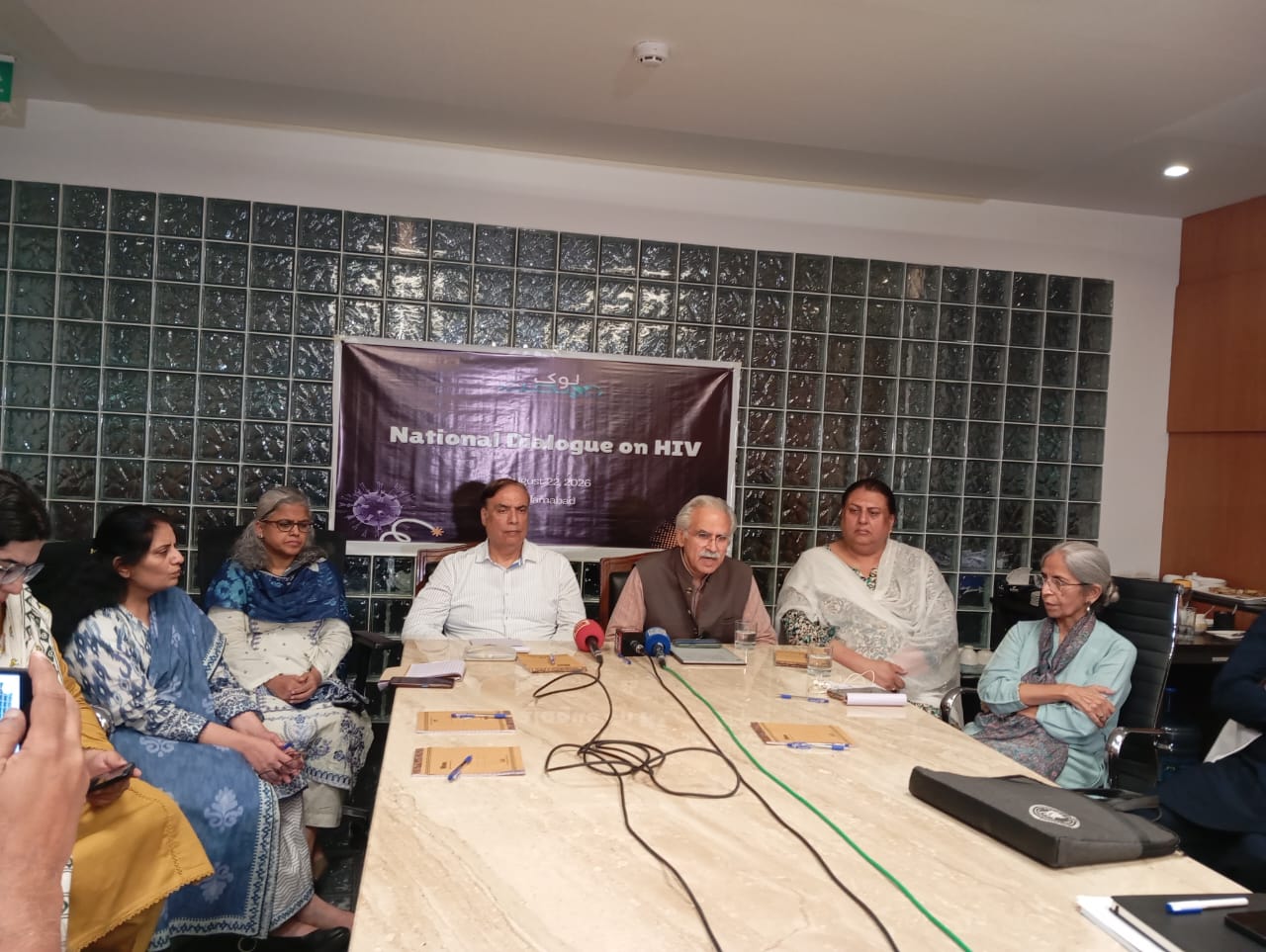
      Islamabad: Pakistan is facing a growing HIV crisis, with an estimated 369,000 people living with the virus while only about 84,400 cases are formally registered, according to a government Task Force report. Health experts and concerned citizens have warned that the real situation may be much worse because the country still lacks reliable and complete disease data. The warning came during a National Dialogue on HIV and AIDS organised by Lok Sehat, where doctors, public health experts, medical organisations, civil society groups and representatives of communities affected by HIV discussed the growing problem. Lok Sehat Convener Dr Zafar Mirza said the government must stop trying to control the disease by controlling or hiding data. He demanded that reliable information about HIV and other blood-borne diseases should be made available and that the government should take greater financial responsibility for HIV, tuberculosis, and malaria instead of depending heavily on international donors. The issue has become more serious because HIV infections are increasingly being reported among children and people outside the groups traditionally considered at higher risk. The Task Force report estimates that 369,000 people are living with HIV in Pakistan, but only around 84,400 cases are formally registered and about 60,789 people are receiving antiretroviral treatment. The report says the recent appearance of HIV among children in low-risk rural communities points to serious weaknesses in infection control, blood safety, healthcare regulation, and medical management. The situation in Taunsa Tehsil of Dera Ghazi Khan has raised particular concern. The Task Force report says 127 children were confirmed to have HIV during a five-month period between December 2024 and April 2025. Around 79 percent of those children were below five years of age, with the median age only three years. Investigations largely ruled out transmission from mothers because nearly all mothers of the infected children tested negative for HIV. The report identified unsafe blood transfusions and contaminated injection practices as major drivers of the Taunsa outbreak. It also found problems involving blood donor screening, unregulated healthcare providers, reuse of disposable syringes, excessive use of injections, poor sterilisation and weak infection prevention systems. Dr Zafar Mirza said repeated use of syringes and needles was a major suspected route of HIV transmission among people receiving healthcare. He called for proper training of healthcare workers and public awareness so patients and families understand the importance of using new syringes and needles. He also urged doctors to avoid unnecessary injections when oral medicines are medically suitable. The problem is not limited to one area. Former National AIDS Control Programme and IHRA chief Dr Quaid Saeed said 13 HIV outbreaks had been reported in Pakistan during the last 18 years, but only two, including the outbreaks in Jalalpur Jattan and Ratodero, had been extensively investigated. He called for proper investigations into every outbreak. The Task Force report also says the Ratodero outbreak in Sindh in 2019 affected more than 1,000 people, most of them children under 12. Investigations linked the outbreak to contaminated syringes, unsafe injections, unregulated blood transfusions, quackery and serious weaknesses in infection prevention and control. Experts also raised concerns about the treatment of people living with HIV. Dr Zafar Mirza said stigma remains a serious problem, including within parts of the medical profession. He said there had been cases where doctors refused to treat patients after learning that they had HIV. He stressed that HIV does not spread through ordinary contact such as shaking hands or being near an infected person. He called for stronger public awareness through television, newspapers and social media to correct false beliefs and reduce discrimination against patients. In Islamabad, infectious diseases expert Dr. Naseem Akhtar said many of the HIV cases seen at her centre involved people who inject drugs, deportees, transgender persons, men who have sex with men, and female sex workers. She said some cases had also been found among children. Dr Asma Naseem said the situation in Karachi was also worrying, particularly because of a rise in HIV cases among children. She said children with HIV were being brought to the Sindh Institute of Urology and Transplantation with kidney failure, describing the trend as highly concerning. The experts said weak regulation of healthcare facilities was another major part of the problem. Dr. Zafar Mirza called for stronger healthcare commissions, blood transfusion authorities, and other regulators, along with better funding, trained staff, and modern technology. The government Task Force has recommended nationwide surveillance of syringes, stronger regulation of medical devices, and a phased move towards auto-disable syringes. It has also proposed tougher action against unsafe medical practices. Another major recommendation is the creation of a national real-time HIV surveillance dashboard. The system would collect information from treatment centres, blood transfusion centres, provincial disease surveillance units and other health facilities so that new cases could be reported quickly at the national level. The Task Force has also proposed stronger testing and care for children, including early infant diagnosis, trained counsellors and paediatric HIV specialists in areas facing outbreaks. It has recommended social protection for children living with HIV, including support for medicines, nutrition, education, transport and psychological care. The proposed reforms also include stronger laws, mandatory reporting of HIV cases and outbreaks, better sharing of health data between provinces and agencies, and accountability for public and private healthcare providers where negligence contributes to disease transmission. The government report says a high-level National HIV Technical Working Group is also proposed, with experts including Maj. Gen. (R) Dr. Azhar Mehmood Kayani, Dr. Zafar Mirza, Dr. Abdul Wali Khan, Dr. Amjad Mahmood, Dr. Adnan Khan, Dr. Huma Qureshi, Dr. Hasan Abbas Zaheer, Brig. Dr. Nuzhat Mushahid, Dr. Saira Afzal, Dr. Fatima Mir, Dr. Saba Jamal, Dr. Rana Jawad Asghar and Dr. Khalid Rehman. Dr Zafar Mirza also raised concern over Pakistan’s dependence on international funding. During the briefing, he said that around 90 percent of spending on HIV, tuberculosis and malaria over the previous five years had come through the Global Fund. He argued that Pakistan should gradually take full


  • |

    Pakistan Stock Exchange ends week lower as KSE-100 falls 1,325 points

    The Pakistan Stock Exchange (PSX) witnessed a relatively volatile trading week, with the benchmark KSE-100 Index ending lower after losing 1,325 points over the five trading sessions. The benchmark index settled at 180,104 points at the close of the week, compared with its previous level, reflecting a decline in investor sentiment and selling pressure across the market. During the week, the KSE-100 Index moved within a range of 2,568 points. The index touched a weekly high of 182,347 points, while its lowest level stood at 179,778 points, highlighting fluctuations in trading activity throughout the period. Despite the overall decline in the benchmark, trading activity remained substantial. A total of approximately 3.41 billion shares changed hands during the week, with the combined traded value reaching around Rs152 billion. The market’s overall capitalization also came under pressure during the reporting period. According to the weekly market data, total market capitalization declined by approximately Rs107 billion, falling to Rs20.13 trillion. Market participants continued to monitor developments affecting domestic economic conditions, investor confidence and broader market sentiment. The movement in the benchmark index reflected a cautious approach among investors, with fluctuations in buying and selling activity contributing to the week’s overall performance. The decline in the KSE-100 Index comes despite continued interest in equities, as investors assessed market valuations and economic indicators while keeping a close watch on developments that could influence the direction of the stock market in the coming sessions.

  • | | |

    Petrol, Diesel prices rise as govt announces fresh…

    ISLAMABAD: The federal government has increased prices of both petrol and high-speed diesel (HSD), citing adjustments under the country’s petroleum pricing mechanism. According to a notification issued by the Petroleum Division of the Ministry of Energy, the price of petrol has gone up by 45 paisa per litre, while high-speed diesel has become Rs1.16 more expensive per litre. Following the latest revision, petrol will now cost Rs325.43 per litre, compared with the previous rate of Rs324.98. The price of high-speed diesel has risen from Rs382.79 to Rs383.95 per litre. The revised rates were determined after the Oil and Gas Regulatory Authority (OGRA) reviewed petroleum product prices in line with the government’s pricing framework, which takes international oil market movements and other relevant costs into account. The latest increase comes shortly after the previous price review, when the government raised the HSD rate by 54 paisa per litre while reducing petrol prices by 94 paisa per litre. The new prices will apply from Friday, August 14, as the government continues its periodic adjustments to petroleum rates in response to changes in global energy markets and domestic cost factors.

Leave a Reply

Your email address will not be published. Required fields are marked *