| |

South Indian actress Shakeela undergoes neck surgery after excessive phone use


South Indian actress Shakeela has revealed that her excessive use of mobile phones left her with a serious neck problem that eventually required surgery costing around Rs300,000 Indian rupees. The 53-year-old actress shared her experience in a video posted on her YouTube channel and urged people, especially parents, to limit unnecessary mobile phone use.

Shakeela, who has worked in Malayalam, Tamil, Kannada and Telugu films, said her habit of playing games and watching videos on her phone for several hours caused significant damage to her neck. She explained that she would often lie on her side in bed for long periods while using her phone.

“I used to play games on my phone continuously for four hours while lying on my side in bed,” Shakeela said. She added that she would only get up occasionally to have tea or coffee before returning to her phone. After playing games, she would spend hours watching reels on YouTube and Instagram.

According to the actress, maintaining an incorrect posture while using her phone, combined with prolonged screen time, affected important blood vessels in her neck and eventually led to serious health complications. She underwent surgery in Chennai and said that a titanium screw was also used during the procedure.

After returning home, doctors advised Shakeela to wear a neck collar until she recovered. She said that following the surgery, she has needed assistance even with basic activities such as getting out of bed and eating.

Shakeela stressed that mobile phones are useful devices when used responsibly, but excessive use can have serious consequences. She advised people not to spend unnecessary hours watching videos or playing games, even if the content is entertaining.

She also issued a warning to parents, urging them to avoid giving mobile phones to children unnecessarily. According to her, children should use phones only for essential activities and educational or useful content rather than spending long periods watching short videos and playing games.

The actress said that people could end up paying a heavy financial and physical price for excessive phone use, adding that her own experience had cost her around Rs300,000 and caused considerable pain and difficulty.

Shakeela Begum was born in Chennai. Her mother, Chand Bee, was from Andhra Pradesh, while her father, Chand Basha, was from Tamil Nadu. She began her acting career with a Tamil film in 1995. However, she gained widespread recognition after appearing in the Malayalam film Kinnarathumbikal, released in 2000.

Over the years, Shakeela became a well-known name in South Indian cinema, particularly for her work in Malayalam films. Her latest health experience has now prompted her to use her public platform to raise awareness about responsible mobile phone use and the potential health risks associated with prolonged screen time and poor posture.

Similar Posts

  • Health Officials Monitor Arsenic Exposure Risks in Chiang Rai Waterways

    CHIANG RAI – Thailand’s Department of Disease Control (DDC) is expanding its health surveillance program to protect residents living near arsenic-contaminated waterways in Chiang Rai province. Health officials are focusing on individuals facing moderate to high risks of chemical exposure along the Kok, Sai, Ruak, and tributary rivers. This second-year campaign now spans 18 districts […]

  • |

    Italy joins Tunisia’s wildfire fight

    An Italian firefighting aircraft has joined efforts to contain two major wildfires in Tunisia’s western Kef province, as authorities continue a large-scale operation to prevent the flames from spreading through forested and mountainous areas. The Italian Embassy in Tunis announced on Friday that Italy had sent a Canadair firefighting aircraft to assist Tunisian emergency teams. The aircraft collected water from the Mellegue Dam and repeatedly dropped it over areas affected by the fires, according to footage broadcast by Tunisia’s national radio. Khalil Mechri, head of operations and monitoring at Tunisia’s Civil Protection Directorate, said firefighting teams continued their work throughout Friday evening to bring both blazes under control. He said the fires began several days earlier in Jebel Touila and Jebel Takrouna, two mountainous areas in the Kef province. The wildfires have already scorched hundreds of hectares of forests and vegetation, Mechri told Tunisia’s state news agency TAP. Around 22 fire engines and large numbers of civil protection personnel remain engaged in the operation, while several government ministries and local authorities have provided additional equipment and logistical support. Tunisia’s Defense Ministry has also contributed to the response by deploying military aircraft to provide aerial assistance in the firefighting operation. The latest fires come amid a sharp rise in wildfire damage across Tunisia this summer. According to figures released by Tunisian authorities, wildfires have destroyed around 4,400 hectares (10,873 acres) of land since the beginning of May. Mohamed Noufel Ben Haha, director general of forests at the Agriculture Ministry, said fires recorded between May 1 and July 23 had burned approximately 4,400 hectares. The figure represents a significant increase from the 2,705 hectares affected by wildfires during the same period in 2025, marking a rise of nearly 63 percent. Authorities continue to monitor the situation as firefighters work to contain the remaining flames and protect nearby forests and communities from further damage.

  • |

    South Korea records highest-ever temperature as extreme heatwave intensifies

    South Korea has experienced its hottest day since national weather records began more than 100 years ago, as an intense heatwave continues to grip the country and raise concerns over the growing impact of climate change. According to reports, the southeastern city of Yangsan recorded a temperature of 42.5 degrees Celsius (108.5 degrees Fahrenheit) at 1:26 p.m. local time on Sunday, setting a new national record. The Korea Meteorological Administration (KMA) confirmed that the reading surpassed all previously recorded temperatures since the country began maintaining official weather data more than a century ago. The latest milestone comes amid a prolonged period of extreme heat across South Korea. Yangsan has now recorded temperatures above 40 degrees Celsius (104 degrees Fahrenheit) for five consecutive days, highlighting the severity of the current heatwave. Weather officials have warned that the scorching conditions are expected to continue, with temperatures in many parts of the country remaining well above seasonal averages. Heatwave warnings remain in place across much of South Korea, where daytime temperatures have climbed into the upper 30s Celsius in numerous cities. More than 20 regions were placed under emergency heatwave alerts on Sunday, reflecting the widespread nature of the dangerous weather conditions. The emergency heatwave warning is the highest level of heat alert introduced by South Korean authorities this year to better respond to increasingly intense summer temperatures. The alert is issued when weather forecasts predict either a perceived temperature of at least 38 degrees Celsius (100.4 degrees Fahrenheit) or an actual air temperature of 39 degrees Celsius (102.2 degrees Fahrenheit) or higher, even if only for a single day. Meteorological data also indicates that South Korea has experienced a dramatic rise in the frequency of extreme heat over recent decades. According to the KMA, the average number of annual heatwave days has more than doubled over the past five years, increasing to 19 days compared with an average of just eight days during the 1970s. The weather agency defines a heatwave day as one in which the highest daytime temperature reaches at least 33 degrees Celsius (91.4 degrees Fahrenheit). It also classifies a tropical night as one in which overnight temperatures remain above 25 degrees Celsius (77 degrees Fahrenheit), preventing residents from receiving relief from the daytime heat. Climate scientists have repeatedly warned that human-driven climate change is increasing the frequency, intensity, and duration of heatwaves around the world. Rising global temperatures are contributing to more severe weather events, placing additional pressure on public health systems, infrastructure, agriculture, and energy supplies.South Korea’s record-breaking temperatures come during a year marked by numerous climate-related disasters across the globe. Several countries have experienced devastating droughts, destructive wildfires, severe flooding, and powerful storms, underscoring the growing challenges posed by extreme weather. Elsewhere, Europe continues to battle its own climate-related emergencies. Wildfires fueled by scorching temperatures and strong winds have spread across parts of Greece, forcing authorities to evacuate residents from threatened communities. Meanwhile, Spain and France remain under hot and dry conditions, increasing the risk of additional wildfires as firefighters remain on high alert. Experts say the latest record in South Korea serves as another reminder of the urgent need to address climate change and strengthen preparedness for increasingly frequent and intense extreme weather events.

  • | | |

    Mrunal Thakur warns of legal action over deepfake …

    Bollywood actress Mrunal Thakur has strongly condemned the misuse of artificial intelligence to create fake videos and images using her identity. Expressing serious concern over the growing circulation of AI-generated deep fake content on social media, the actress warned that she will pursue legal action against anyone involved in creating or sharing such material. According to Indian media reports, several deepfake videos and manipulated images featuring Mrunal Thakur have recently appeared across social media platforms. The actress described the unauthorized use of her face and identity through AI technology as unacceptable and called for an immediate end to the practice. Taking to her Instagram Stories, Mrunal Thakur issued a clear warning to individuals responsible for generating or distributing fake AI content using her name or likeness. She urged them to stop immediately, stating that continued misuse of her identity would leave her with no choice but to take legal action against those involved. Deepfake technology, powered by artificial intelligence, allows users to create highly realistic but fabricated videos, images, and audio recordings. While the technology has legitimate applications in entertainment and education, it has increasingly been misused to spread misinformation, damage reputations, and violate personal privacy. Mrunal Thakur’s statement has once again highlighted the growing concerns surrounding the ethical and legal challenges posed by deepfake technology. Experts warn that AI-generated fake content can seriously affect an individual’s reputation, personal life, and professional career. In many cases, victims may also face emotional distress and legal complications as a result of manipulated media circulating online. The issue has become increasingly significant in the entertainment industry, where celebrities are frequent targets of AI-generated fake content. Actors, musicians, and public figures across the world have raised concerns about the unauthorized use of their identities and have called for stronger legal protections against digital impersonation. Governments and technology companies are also working to address the misuse of artificial intelligence by introducing stricter regulations, improving content detection systems, and developing tools to identify manipulated media. However, experts believe that public awareness and responsible use of AI remain equally important in tackling the problem. Mrunal Thakur’s strong response reflects the growing determination among celebrities to protect their privacy and digital identity. Her warning serves as a reminder that while artificial intelligence offers remarkable technological advancements, its misuse can have serious legal, ethical, and social consequences. As deep fake technology continues to evolve, stronger safeguards and greater accountability will be essential to prevent its abuse.

  • |

    Myanmar offensive clears path for Russia-backed po…

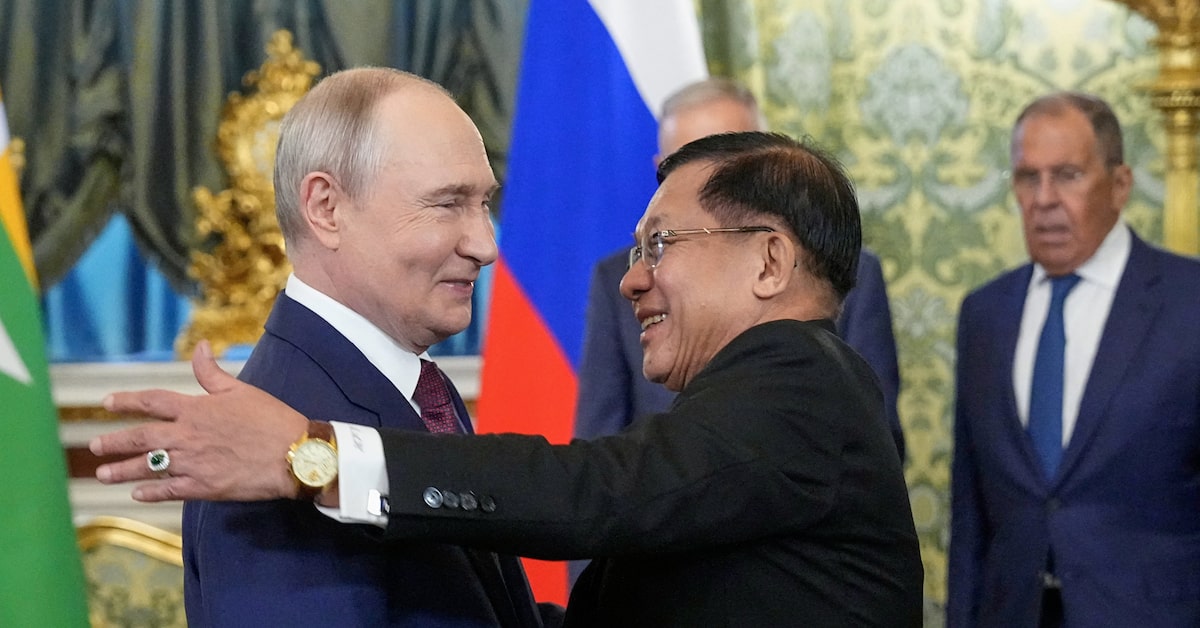
    DAWEI, Myanmar: Myanmar’s military has deployed hundreds of troops into the country’s southern Tanintharyi region in an offensive aimed at clearing areas earmarked for a Russia-backed special economic zone, according to resistance fighters and a local activist familiar with developments in the area. The campaign around the Dawei Special Economic Zone (SEZ), which includes plans for a deep-sea port and power plant on the Andaman Sea, represents one of the clearest signs yet that Myanmar’s military-backed government is prepared to use force to revive a long-delayed project seen as a potential alternative trade route to the Strait of Malacca. The offensive also comes as Myanmar’s leadership intensifies diplomatic efforts to attract foreign investment. Junta chief-turned-President Min Aung Hlaing promoted the Dawei project during a recent visit to Thailand and discussed its prospects again this week during talks with Russian President Vladimir Putin in Moscow. Villages Caught in Military Push Since July, hundreds of soldiers have reportedly moved into Tanintharyi, a region bordering Thailand where the Dawei project is located. Their advance has triggered repeated clashes with local resistance groups, according to two sources. “The military is advancing its columns and conducting area-clearance operations. Some villages and homes have been burned down,” Saw Dah Ko of the Tanintharyi Region People’s Defence Force told Reuters. A second resistance fighter, operating with the Dawei District No.1 battalion under the shadow National Unity Government, said troops had burned homes in at least three villages and killed three aid workers helping displaced communities. The civil society group MAGGA Initiative said the three aid workers were detained and killed after encountering a military column in Yebyu Township on July 9. Reuters was unable to independently verify the accounts. Myanmar’s government and Russia’s embassy in Myanmar did not respond to requests for comment. Conflict monitor ACLED said the offensive had involved a column of about 700 soldiers advancing into surrounding areas, with raids on villages and reports of civilian deaths. The military’s campaign has reportedly been supported by air and naval attacks, according to local sources, putting pressure on loosely organised resistance groups. “They enter the region, and once reinforced by the navy, they launch offensives into the villages situated within the deep sea port project area,” said Min Lwin Oo of the Democracy Movement Strike Committee. A Strategic Project The push around Dawei is part of the military’s wider effort to regain territory and strategic border areas lost to opposition groups following the 2021 coup that plunged Myanmar into civil war. The conflict has killed an estimated 100,000 people and displaced more than 3.5 million, according to humanitarian and conflict assessments. The military-backed government has sought to strengthen its control while pursuing projects that could bring investment and strategic partnerships. The Dawei SEZ is among the most ambitious. Originally launched in 2008 as a joint venture with Thailand, the project was intended to create a major industrial and transport hub linking Southeast Asia with markets in East and West Asia. However, construction stalled in 2013 amid local opposition and funding difficulties. In early 2021, shortly before the military takeover, authorities moved to terminate agreements covering nine projects in the initial construction phase and said they would seek new partners. Russia has now emerged as a key potential supporter. Russia Sees Gateway to Asia At a business forum in Moscow this week, Tanintharyi Chief Minister Zaw Naing Oo promoted Dawei as a faster route for regional trade. State media quoted him as saying cargo could reach its destinations four to six days faster through Dawei than by travelling through the Strait of Malacca. The proposed port is also around 45 kilometres from Myanmar’s major offshore gas fields, adding to its strategic appeal. Russian Prime Minister Mikhail Mishustin said Russian companies were interested in working with the Dawei SEZ, potentially expanding trade and creating employment opportunities for small and medium-sized businesses. For Moscow, the project could offer more than commercial returns. A person familiar with Russian thinking said the port could provide Russia with greater access to Southeast Asian markets and a foothold in the Indian Ocean region. But the source cautioned that Myanmar remains a high-risk investment destination. “The risk in Myanmar is still very high,” the source said, adding that Russian investment would need strong connectivity with Thailand for the project to make economic sense. A Project With High Stakes The Dawei development could reshape trade routes across the region if it is successfully revived. Its location on the Andaman Sea offers a potential route that could reduce reliance on the heavily used Strait of Malacca. For Myanmar’s military leadership, restoring control over the surrounding territory is therefore closely linked to its ambitions for the project. For local communities, however, the military advance has brought renewed fear and displacement. The fate of Dawei now rests on a difficult balance between geopolitics, investment and security — with the proposed port’s future increasingly tied to the outcome of Myanmar’s continuing civil war.

Leave a Reply

Your email address will not be published. Required fields are marked *