drone attack damages
| | |

Drone attack damages oil tanker in Strait of Hormuz

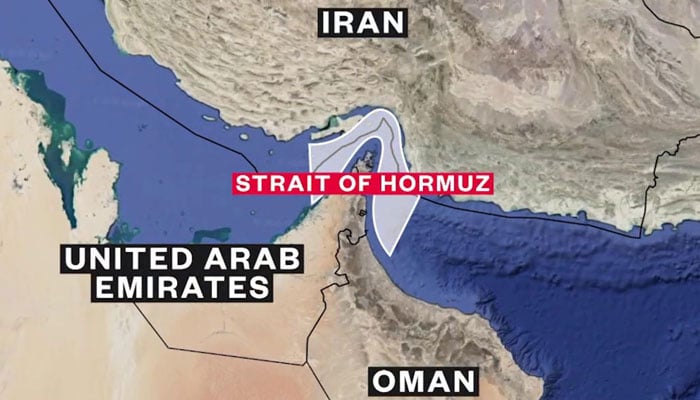
A drone attack targeted an oil tanker in the Strait of Hormuz, causing minor damage to the vessel but leaving all members of the crew safe, according to the United Kingdom Maritime Trade Operations (UKMTO).

The maritime security agency said the incident took place as the tanker was navigating the strategically important waterway. The drone strike caused limited damage to the vessel, but authorities reported no casualties or injuries among the crew.

UKMTO also said the incident did not result in any environmental damage. There were no reports of an oil spill, leakage or other pollution following the attack, easing concerns about a possible impact on the marine environment.

The Strait of Hormuz remains one of the world’s most important shipping routes, particularly for global energy supplies. Large volumes of crude oil and petroleum products pass through the narrow waterway every day, linking major oil-producing countries in the Gulf with international markets.

The latest attack has once again highlighted security concerns surrounding commercial shipping in the region. Any disruption or attack involving an oil tanker in the Strait of Hormuz can raise concerns about the safety of maritime traffic, insurance costs and the uninterrupted movement of energy supplies.

Authorities continue to monitor the situation and advise commercial vessels operating in the area to remain alert to potential security threats.

Similar Posts

  • |

    Kuwait introduces new regulations to strengthen e commerce sector

    Kuwait has introduced a comprehensive set of regulations for e commerce platforms aimed at improving consumer protection, increasing transparency and creating a unified legal framework for the country’s rapidly expanding digital marketplace. The new rules were issued by the Ministry of Commerce and Industry under Ministerial Resolution No. 109 of 2026 and came into effect on July 8. They apply to all online platforms involved in selling, ordering and delivering goods and services across Kuwait. Officials said the regulations were introduced to address the rapid growth of online shopping while clearly defining the responsibilities of digital platforms, merchants, delivery companies and consumers. The measures are also intended to encourage investment and promote fair competition within the sector. Under the new framework, companies operating electronic platforms must obtain the required licences and comply with existing commercial laws. They are also required to strengthen cybersecurity measures to protect their digital systems and safeguard customer data from misuse or cyberattacks. The regulations require platforms to display complete pricing information before customers confirm their purchases. This includes product prices, delivery charges, commissions and any additional fees. Platforms must also provide accurate information about merchants, publish clear terms and conditions and ensure that product descriptions are truthful and up to date. Businesses are now required to establish transparent policies for returns, exchanges and refunds. They must also create complaint handling systems that resolve customer issues within specified time limits while protecting consumers’ personal information. In addition, platforms must maintain proper records of electronic transactions and payments. The new rules also place responsibilities on delivery service providers to ensure goods are transported safely and delivered efficiently. Online platforms will be expected to supervise delivery operations and coordinate closely with merchants and delivery companies throughout the process. To prevent excessive charges, the ministry has introduced limits on service commissions. Platforms may charge a maximum commission of 17 percent when they provide delivery services and 10 percent when deliveries are handled directly by merchants. Consumer delivery fees have also been capped at one Kuwaiti dinar per order, with businesses prohibited from charging more than that amount. The Ministry of Commerce and Industry has been given authority to monitor compliance with the regulations. Officials will be able to inspect businesses, request information and impose administrative penalties on companies that fail to follow the new requirements. Existing licensed platform operators must also update their registered business activity to reflect the category of managing delivery services through electronic platforms. The ministry said an implementation guide will be issued to help businesses, delivery companies and consumers understand the new compliance requirements. According to the explanatory memorandum accompanying the regulations, the reforms are designed to address problems that emerged with the rapid expansion of e commerce, including inconsistent commission rates, high delivery charges and unclear commercial practices. Officials believe the new framework will improve service quality, strengthen consumer confidence and support the continued growth of Kuwait’s digital economy.

  • |

    Protests erupt in Bologna after man’s death during police restraint

    Thousands of people marched through the Italian city of Bologna after the death of a Moroccan born man who died while being restrained by police, prompting a criminal investigation and violent clashes that left dozens of officers injured. The protests were held in memory of Abderrahim Fakir, whose death on Sunday has sparked widespread public anger and renewed debate over police conduct in Italy. Demonstrators gathered to demand justice before a smaller group broke away from the main rally and clashed with riot police late into the night. Authorities said 64 police officers were injured during the unrest as protesters threw objects, confronted security forces and set two vehicles on fire. Police eventually brought the situation under control. The incident that led to the demonstrations began after officers responded to reports of a man behaving erratically in Bologna’s Pilastro neighbourhood. According to police, Fakir was seen kicking garage doors before officers attempted to calm him. They later used pepper spray during the confrontation. A video widely shared by Italian media shows two police officers holding Fakir face down on the ground while another man restrains his legs. Emergency medical workers are also visible nearby. In the footage, Fakir can be heard asking the officers to stop before he gradually stops moving. After he became unresponsive, officers handcuffed him and attempted to wake him before medical staff intervened. Prosecutors have opened a manslaughter investigation involving the police officers and emergency workers who were present at the scene. The inquiry will examine whether the restraint methods or medical response contributed to Fakir’s death. Several witnesses told local media that although Fakir appeared distressed, he was unarmed and did not pose a threat to anyone nearby. His sister, Khadija Fakir, called for a full investigation and said the family wanted answers about how he died while in police custody. Bologna Mayor Matteo Lepore also expressed shock after watching the video and organised Monday’s public demonstration in support of Fakir’s family. During the rally, Fakir’s niece addressed the crowd, describing her uncle as a caring and respected member of the community. She said he deserved compassion, dignity and help rather than the outcome that followed. Although the main demonstration remained peaceful, officials said a small number of protesters later turned violent. Mayor Lepore condemned the unrest while drawing a distinction between peaceful demonstrators and those who resorted to violence. The police union defended the officers’ actions and argued that the available video showed they had acted appropriately under difficult circumstances. Union representatives said the officers immediately handed over body camera footage to investigators and insisted the use of force was justified because officers faced resistance during the incident. Prime Minister Giorgia Meloni called for a thorough investigation into Fakir’s death while strongly condemning the violence that followed. She said determining the truth about the incident was essential but stressed that attacks on law enforcement could not be justified. Fakir’s death has drawn comparisons with previous high profile cases involving deaths in police custody in Italy. Opposition politicians have criticised the government’s strong support for police, while human rights advocates say the investigation must establish whether officers followed proper procedures during the arrest. The case has intensified public discussion over policing practices and accountability across the country.

  • |

    South Korea investigates election officials over alleged vote turnout manipulation

    South Korean investigators have launched a major investigation into the National Election Commission after allegations that officials altered voter turnout figures during the June 3 local elections. Authorities searched the commission’s offices on Thursday as part of a widening probe into what could become one of the country’s most serious election controversies in recent years. The investigation follows widespread problems that disrupted voting on election day. Dozens of polling stations ran out of ballot papers, creating confusion for voters across the country. The shortages occurred during the first nationwide local elections held after President Lee Jae Myung took office last year. The incident sparked public criticism, street protests, and growing demands for greater transparency in the country’s election system. The controversy also forced National Election Commission chief Roh Tae-ak to resign. President Lee responded by ordering a full investigation into the failures that affected the election process. Since then, police and prosecutors have been examining whether the problems were caused by simple mistakes or deliberate misconduct. According to investigators, there is evidence that officials from both the National Election Commission and the Gyeonggi Provincial Election Commission entered false voter turnout figures into the election reporting system. Authorities believe some staff members changed numbers without following the commission’s official approval procedures. Investigators suspect the changes were made to fix earlier reporting mistakes while officials waited for accurate turnout data from polling stations. Instead of correcting the figures through the required process, they allegedly adjusted turnout numbers across several voting locations to make the overall totals appear consistent. Reports suggest one example involved a polling station where officials accidentally recorded 1,000 voters instead of the actual 100. Rather than immediately correcting the mistake, investigators believe the excess figures were temporarily distributed among other polling stations with the expectation that later voter turnout would balance the totals. Authorities are now examining whether similar adjustments were made elsewhere during the election. Under the commission’s regulations, any correction to turnout figures must receive formal approval before being entered into the system. Investigators believe those procedures may have been bypassed in several cases. Officials leading the investigation confirmed that two election workers have already been placed under formal investigation on suspicion of falsifying official electronic records. Authorities are now trying to determine whether the alleged actions were limited to lower level employees or whether senior officials knew about or approved the changes. Analysts say the case has drawn attention to long standing concerns about oversight within South Korea’s election commission. Because the commission operates as an independent constitutional body, critics argue that its internal monitoring and disciplinary systems have not always been strong enough to prevent misconduct. The ballot paper shortages also affected voters directly. Data provided by the commission to lawmakers showed that at least 90 people were unable to cast their ballots because voting papers were unavailable at their polling stations. The controversy has also fueled political tensions. Supporters of former president Yoon Suk Yeol, who is currently in jail while facing trial on insurrection charges, have renewed claims that the country’s elections require closer scrutiny. Some far right groups have repeated allegations of foreign interference despite the absence of verified evidence supporting those claims. In recent weeks, university students have joined demonstrations calling for a complete investigation into the election commission. Protesters are demanding stronger safeguards to protect voting rights and restore public confidence in South Korea’s democratic institutions. As the investigation continues, authorities say they will examine every level of the election process to determine whether any broader misconduct took place.

  • |

    CNN report says Pentagon delayed reporting US troop injuries during Iran conflict

    The Pentagon has been criticised for delaying the public release of information about US military casualties during the ongoing conflict with Iran, with a CNN report claiming that injury figures have often been disclosed days or even weeks after incidents occurred. According to the report, US Central Command initially provided regular updates on troop injuries during the early stages of the conflict but has since stopped routinely announcing non fatal casualties. As a result, the Defence Casualty Analysis System has become the main official source for casualty information, although its updates have reportedly lagged behind events. A Pentagon official told CNN that documenting military injuries can take several days or even weeks because cases must go through medical evaluations and administrative reviews before being entered into official records. The official maintained that the casualty database is updated regularly despite the delays. The report said that since the United States and Iran signed a memorandum of understanding in mid June, the database initially recorded one new military death and 14 wounded personnel. The fatality was identified as Navy Commander Gabriel Edwards, a helicopter pilot who was lost at sea in the Arabian Sea on July 1. CNN reported that casualty figures appeared to be added in batches rather than immediately after incidents. One injured Air Force member was reportedly listed in a July 13 update, while another update on July 17 included 10 wounded soldiers and three injured sailors. After CNN published its report, the casualty database was updated again on July 20 with four additional military deaths and 20 more wounded service members. Despite those updates, Pentagon spokesperson Sean Parnell said the official database still did not fully reflect the total number of injuries. In a statement posted on social media, he said nearly 100 US service members had been injured since July 7, adding that most suffered minor concussions. Parnell defended the Pentagon’s approach to releasing casualty information, arguing that providing immediate details about non fatal injuries could give valuable information to adversaries and potentially place more military personnel at risk. He also said the Pentagon and US Central Command have continued providing regular updates on military operations against Iran. According to Parnell, public statements by President Donald Trump and Defence Secretary Pete Hegseth have also kept the public informed about the objectives and progress of the campaign. The report also highlighted several recent attacks involving US forces in the region. An Iranian missile strike on Muwaffaq Salti Air Base in Jordan reportedly killed two American service members and left another missing. In a separate incident in northern Iraq, another US soldier died during the controlled destruction of a downed Iranian drone. US Central Command confirmed that one service member was injured during the Iraq operation. It also said four personnel who were treated in hospitals in Jordan following the airbase attack had been discharged after receiving medical care. Officials added that several other military personnel suffered minor injuries but were able to return to duty after medical evaluation. The latest report has renewed questions about the speed and transparency of casualty reporting during military operations, with critics arguing that delayed disclosures make it more difficult for the public to understand the human cost of the conflict.

  • |

    Meloni demands probe into Bologna death after violent clashes

    Italian Prime Minister Giorgia Meloni has called for a thorough investigation into the death of a man during a police operation in Bologna, while strongly condemning violent protests that left dozens of police officers injured. The incident occurred in the Pilastro area of Bologna, where police were called to respond to reports of an aggressive man damaging a vehicle. The man, identified as Moroccan-born Abderrahim Fakir, died following the confrontation with police. Meloni said all facts surrounding the incident must be established through a transparent investigation. She stressed that the truth should be determined without bias and that responsibility should be identified based on evidence. The situation later escalated when protesters gathered in Bologna and clashes broke out with police. Demonstrators threw firecrackers, bottles and chairs at law enforcement personnel, prompting police to use tear gas and water cannons to control the crowd. Police officials said 56 officers were injured during the violent demonstrations. Meloni condemned the attacks on security personnel, saying violence could not be justified under any circumstances. Authorities have launched an investigation into the man’s death. Bologna police said body-camera footage from the officers involved would be handed over to investigators as part of the inquiry. According to initial reports, officers attempted to calm Fakir before using pepper spray and restraining him while trying to place him under arrest after he allegedly became aggressive. The incident has triggered political debate across Italy, with opposition parties demanding accountability and government supporters defending the actions of police officers. Meloni accused some protesters of using the incident as an excuse to create unrest rather than seeking justice. She said those responsible for attacking police and damaging public property were pursuing confrontation instead of the truth.

  • | |

    World Cup conspiracies weaponised as Javier Milei blames foreign leftists for online backlash

    Following Argentina’s defeat by Spain in the World Cup final, President Javier Milei has alleged that a coordinated, foreign-funded anti-Argentina campaign was launched to undermine his nation and its football team. The far-right libertarian president claimed during a radio interview that the US Democratic party, alongside the governments of Mexico and Brazil, financed widespread online hostility, fan racism accusations, and rumours of favorable treatment towards Lionel Messi’s squad. Milei specifically targeted Brazilian President Luiz Inácio Lula da Silva, alleging that Brazil provided the largest share of funding for these attacks, a statement he reiterated while attending a campaign launch for far-right senator Flávio Bolsonaro in São Paulo. The president’s claims come amidst online friction and high-profile international criticism, including an Instagram post by actor Samuel L. Jackson urging fans not to support Argentina due to historical racism in the country. Whilst digital communications researchers acknowledge a genuine surge of transnational hostility online, experts note there is no public evidence supporting Milei’s claims of an organised international funding plot. Instead, political analysts view the narrative as a calculated tactic to stoke culture wars and divert public attention away from domestic corruption scandals, rising unemployment, and the severe impact of his austerity measures, which have pushed the administration’s popularity to its lowest level since taking office.

Leave a Reply

Your email address will not be published. Required fields are marked *