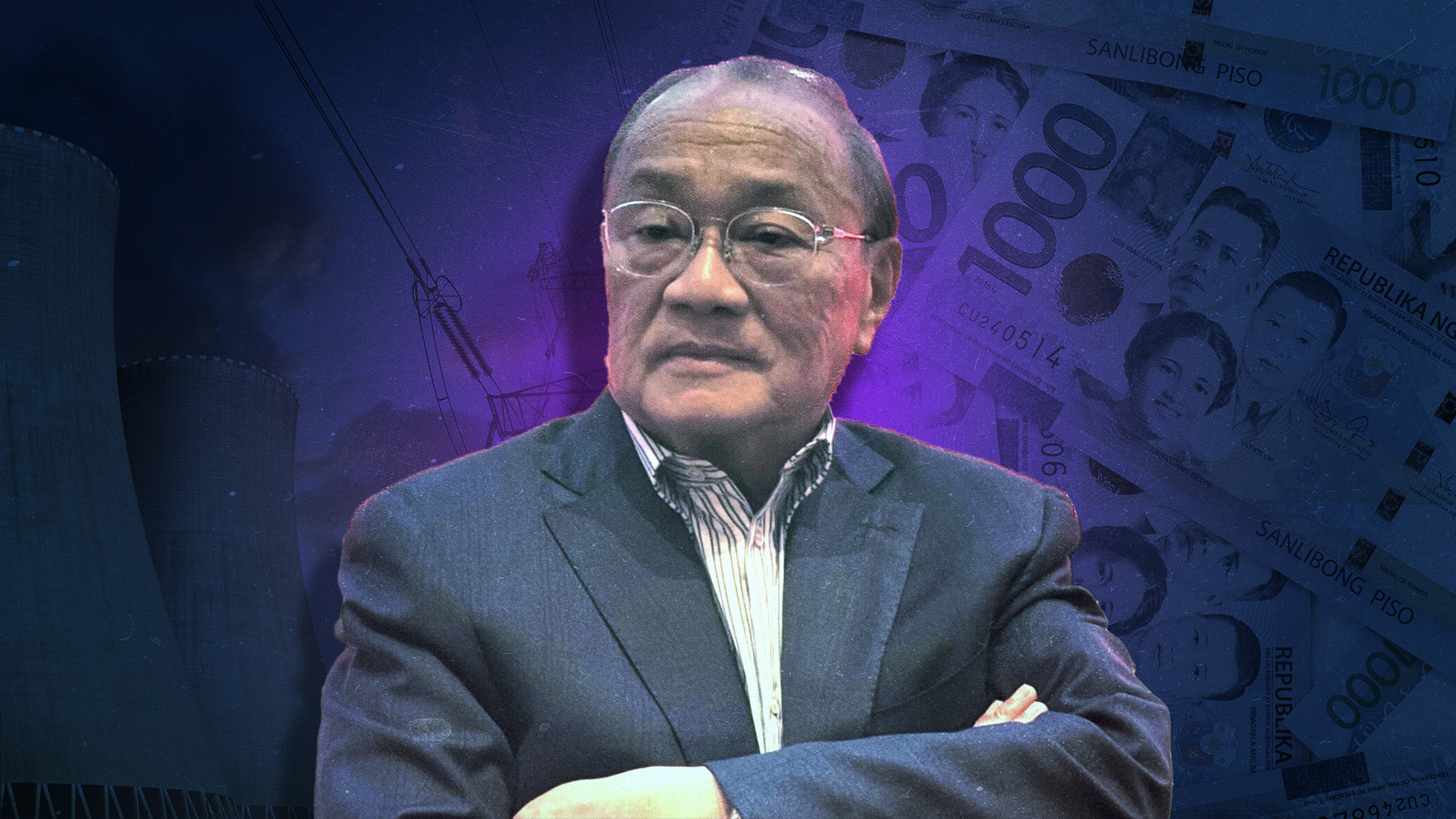
Meralco’s MVP: Nuclear may bring energy security, but it won’t come cheap
Nuclear energy may be enjoying a political comeback in the Philippines, but don’t count Meralco chairman Manuel V. Pangilinan among those convinced it will automatically translate into cheaper electricity.
And Pangilinan should know — his own power group has already been doing its homework on nuclear.

Meralco PowerGen (MGen) is studying the viability of small modular reactors (SMRs), backed by a $2.8-million US government grant to evaluate technologies and eventually identify a preferred option. Meralco has also been building up its own nuclear talent through its FISSION and NEST programs, sending engineers abroad to pursue nuclear engineering studies before returning to the Philippines.
Yet when Rappler asked Pangilinan about nuclear on Thursday, August 13, the businessman sounded considerably less starry-eyed about its economics.
“It’s not a slam dunk,” Pangilinan said.

His concern? Nuclear fuel may be cheap, but almost everything needed to get a plant up and running is prohibitably expensive.
Pangilinan estimated that building nuclear capacity could cost around $7 million per megawatt, before factoring in complications such as where to locate a plant and how to connect it to the grid.
“If you locate it in an earthquake-free zone, it’s most likely out there in the boondocks. So you have to connect it to the grid, to build the transmission assets. So hindi (it’s not) simple,” he told Rappler.
Then there is the political hurdle of convincing communities to host one.
“The LGU has got to consent. Mahirapan kayo. (You’ll have a difficult time.) ‘What’s this atomic bomb doing here in my constituency?’”

The expensive path to energy independence
Pangilinan’s skepticism comes just weeks after President Ferdinand Marcos Jr. used his State of the Nation Address to call for the Philippines to revisit nuclear power, pitching it as a potential source of affordable electricity and greater energy security. (READ: [OPINION] Shoddy, shoddy, shoddy: How they built the Bataan Nuclear Power Plant)
Government preparations have also been moving forward. The Philippines is progressing toward Phase 2 of the International Atomic Energy Agency’s milestone approach, while officials work on an independent nuclear regulator, potential sites, financing, and workforce development.
Private companies are positioning themselves too. AboitizPower recently signed an exploratory agreement with South Korea’s Korea Hydro & Nuclear Power to study nuclear technologies, while MGen has been examining SMRs.
To be clear, Pangilinan isn’t shutting the door on any of that. In fact, one of nuclear’s biggest attractions, he acknowledged, is precisely the energy independence the Marcos administration has been touting.
“You have to make a decision. It does give you energy independence because you buy the fuel 25 years or 30 years. So the fuel cost is very low but your capital cost is very high,” Pangilinan said.
![[READOUT] The race to deliver cheaper power](https://www.rappler.com/tachyon/2026/08/The-race-to-deliver-cheaper-power.jpg?fit=449%2C449)
Making the nuclear numbers work
But there lies the inherent trade-off. For MVP, the only way to make nuclear energy feasible in the Philippines is to give it “special treatment.”
Pangilinan said nuclear suppliers themselves have indicated that electricity from a new plant could end up more expensive than other available sources. Nuclear fuel is relatively cheap and can be secured years in advance, but that advantage has to offset the enormous upfront cost of building the plant, along with transmission and other infrastructure.
If nuclear power were to cost, say, P10 per kilowatt-hour to produce, Pangilinan suggested the country may have to accept that premium as the price of greater energy security.
“So you have to condition the minds of the people,” Pangilinan said. “We need energy security, energy independence,” he said. “So you have to pay for it.”
That makes nuclear a somewhat harder sell than the promise of simply bringing electricity prices down. It may still earn a place in the energy mix, but Pangilinan’s argument is that its value would have to be measured against more than just its impact on your monthly power bill.
![[OPINION] Beyond Bataan: Building the Philippines’ energy future](https://www.rappler.com/tachyon/2026/08/beyond-bataan-building-philippines-energy-future-August-6-2026.jpg?fit=449%2C449)
There is also the difficult matter of what nuclear would be competing against. The Philippines remains heavily dependent on coal, an exceptionally dirty fuel that has nevertheless proved difficult to shake off because it’s cheap and can satiate our hungry appetite for power around the clock.
Pangilinan said coal producers are well aware that low prices are their strongest selling point.
“Nobody likes coal. That’s why it’s cheap,” he said. “And the coal producers, the coal miners, make sure that they have the cheapest source of fuel. Because otherwise you won’t buy them.”
So even as the Philippines tries to wean itself off coal, any cleaner replacement still has to reckon with the economics that have kept it dominant. Nuclear offers dependable low-carbon power, but at a potentially steep upfront price. Renewables are cheaper to build in many cases, but bring their own challenge when the weather refuses to cooperate.
Pangilinan knows that last problem firsthand. His group has also poured money into solar power. But it seems even the weather has managed to dampen the energy tycoon’s sunny outlook. (READ: What will it take for solar power to take off in the Philippines?)
“We have the sun. Except it hasn’t been out,” he quipped. – Rappler.com