spacex sets new
| |

SpaceX sets new launch record with 2 Falcon 9 miss…

SpaceX has achieved a new launch turnaround milestone after sending two Falcon 9 rockets into orbit less than 40 minutes apart, carrying separate missions for Globalstar and the US Space Force.

The first Falcon 9 blasted off from Cape Canaveral Space Force Station at 9:12pm EDT on Saturday, deploying eight Globalstar satellites to reinforce the company’s low Earth orbit network. Its first-stage booster, designated B1090, completed its 14th mission before successfully returning to Landing Zone 40 roughly eight minutes after liftoff.

Just 38.5 minutes later, another Falcon 9 launched from Vandenberg Space Force Base in California, carrying the classified USSF-366 mission for the US Space Force. Details about the spacecraft’s payload were not disclosed because of the mission’s national security classification.

The second rocket’s B1088 booster successfully landed on SpaceX’s droneship Of Course I Still Love You in the Pacific Ocean, marking the 650th successful Falcon booster landing and adding another milestone to the company’s rapidly expanding reusable-launch program.

The Globalstar launch had originally been planned for May 17 but was postponed to allow additional preparation time for the satellites. Globalstar CEO Paul E. Jacobs described the successful launch as an important step toward maintaining and strengthening the satellite infrastructure used by the company’s customers.

The latest mission also comes as Globalstar prepares for its planned acquisition by Amazon, a transaction expected to be completed in 2027. The deal is aimed at supporting Amazon Leo’s direct-to-device satellite connectivity services.

Globalstar recently announced that it would pause further earnings calls and updates to its forward-looking guidance while the proposed transaction remains under consideration.
Similar Posts

  • |

    Google yanks Nano Banana from Earth after AI images spark chaos

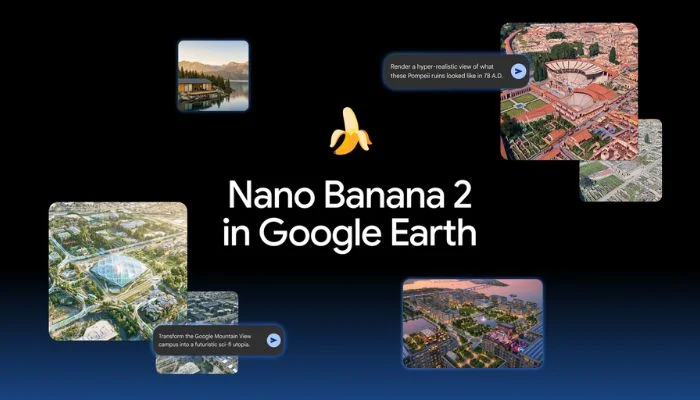
    It took less than a day for Google’s newest AI experiment to become a lesson in how fast image-based misinformation can spread. On Thursday, Google rolled out its Nano Banana 2 model directly inside Google Earth. The feature allowed users to type any prompt and get back a photorealistic image, layered right onto real satellite, aerial, and 3D map data. The intended uses were fairly harmless. People could visualize their dream home or picture how a location might change decades from now. Within just a few hours, users pushed the tool in a very different direction. People began generating fake disasters, staged terrorist attacks, and fabricated sinkholes. Others created images showing refugees or protest crowds in places where nothing of the sort had actually happened. One researcher used the tool to create a fake blast crater in Los Angeles. Another generated an image showing protesters marching right outside Google’s California headquarters. Since the tool used real Google Earth maps as its foundation, these fabricated images looked disturbingly convincing. At first, Google defended the feature. The company pointed to its SynthID watermarking system as a safeguard. It also noted that tools like Gemini or Google Lens could help users check whether an image had been AI-generated. That response did not satisfy critics. Many pointed out that most people encountering a screenshot online rarely take the time to verify it. Critics also argued that the fake images did not even need to stay inside Google Earth to cause harm. Screenshots alone were already spreading fast across social media platforms. By Friday, Google confirmed it was pulling the feature entirely while working on stronger safeguards. The company maintained that every generated image had carried a watermark. It also said none of the images had appeared within the shared, public version of the Earth experience. This incident has reignited larger concerns around generative AI tools and how easily they can be misused, even when protective measures are already built in. It also raises fresh questions about whether watermarking alone is enough to stop confusion once fabricated content starts spreading widely online. For now, Google says its focus is on rebuilding the feature with tighter controls in place. Whether that will be enough to prevent similar situations going forward still remains to be seen.

  • | | |

    Pakistan rejects Indian claims, calls allegations …

    ISLAMABAD: Pakistan has rejected allegations by Indian Home Minister Amit Shah linking Islamabad to the arrest of alleged terror suspects in India, describing the accusations as part of a politically motivated campaign against Pakistan. Foreign Office spokesperson Tahir Hussain Andrabi said the allegations were baseless and appeared aimed at shifting attention away from India’s own internal security challenges. He accused New Delhi of using anti-Pakistan rhetoric for domestic political purposes. The remarks followed claims by Shah that Indian security agencies had detained more than 200 suspected militants allegedly connected to Pakistan during a nationwide crackdown across 14 states on August 12. Shah said the suspects were linked to what he described as the Shahzad Bhatti Network and alleged that the arrests had prevented planned attacks. Rejecting the claims, Andrabi said Pakistan had repeatedly faced accusations that he described as part of an ongoing campaign to portray Islamabad as responsible for security problems inside India. The spokesperson also levelled counter-allegations against New Delhi, accusing India of suppressing minorities and dissent at home while allegedly supporting terrorism and destabilising activities abroad. He maintained that such accusations could not divert international attention from what Pakistan considers India’s involvement in terrorism and subversive activities. Andrabi referred to Indian national Kulbhushan Jadhav, who was convicted by a Pakistani military court and remains in Pakistani custody, as evidence of Islamabad’s longstanding allegations of Indian involvement in activities against Pakistan. Pakistan called on the international community to reject what it termed unfounded allegations and to hold India accountable for what Islamabad describes as state-sponsored terrorism and destabilising activities in the region. Moreover, Pakistan has strongly rejected what it described as India’s attempt to reshape the history of the 2025 military confrontation through a recently produced documentary on “Operation Sindoor,” calling the production a highly dramatized and factually distorted portrayal of events. In a statement, Pakistan said the documentary relied on selectively edited interviews, emotional narration and cinematic reconstructions to present a version of the conflict designed primarily for domestic political consumption. It argued that the production failed to provide an objective account of the military engagements and instead sought to portray a disputed outcome as an unequivocal Indian victory. Pakistan also questioned the documentary’s chronology surrounding the Pahalgam incident of April 22, 2025. It said India had subsequently claimed that the alleged perpetrators of the incident were identified and eliminated on July 28, nearly three months after Operation Sindoor. Islamabad argued that this timeline raised questions about India’s assertion that the May 7 operation was specifically intended to punish those responsible for the Pahalgam attack. The statement further rejected India’s claim of “100 percent mission success,” maintaining that Pakistani forces had effectively responded to the Indian offensive during what Pakistan refers to as Marka-e-Haq. Islamabad claimed that eight Indian military aircraft were shot down during the confrontation and said Pakistan later launched Operation Bunyanum Marsoos, targeting military installations with precision-guided rockets and missiles, precision air-launched munitions, loitering munitions and artillery. Pakistan said the documentary itself contained admissions that undermined its portrayal of decisive Indian dominance. According to Islamabad, references by Indian military officials to Pakistani missile and drone activity, prolonged engagements along the Line of Control and the activation of Indian air-defence systems demonstrated that the confrontation involved significant military exchanges on both sides. The Pakistani statement also challenged New Delhi’s account of how hostilities ended. It noted that the documentary acknowledged communication between the two countries’ Directors General of Military Operations and an agreed cessation of military activity. Islamabad said this account was inconsistent with portraying the conclusion of the conflict as an unconditional Indian military victory, particularly given the role of international diplomatic engagement in facilitating the ceasefire. Pakistan further accused the documentary of presenting contradictory explanations for India’s approach to escalation. While the production reportedly emphasised surprise attacks, precision strikes and escalation dominance, it simultaneously portrayed India as deliberately restricting the scope of the conflict and offering Pakistan an opportunity to withdraw. Islamabad described the documentary as an attempt to create a politically convenient narrative rather than an impartial military assessment. It maintained that cinematic reconstructions and official claims could not alter the chronology of events, the military engagements or the losses suffered during the confrontation. Pakistan said it had no need to construct an alternative narrative around Marka-e-Haq, arguing that battlefield developments, diplomatic interactions and subsequent statements by Indian officials provided sufficient material for assessing the conflict. Reaffirming its stated commitment to regional peace and stability, Pakistan said its armed forces remained prepared to protect the country’s sovereignty and territorial integrity. It warned that any future military escalation would receive a strong response, while asserting that no subsequent narrative or media production could change the actual course of events on the battlefield.

  • | |

    BBC documentary renews scrutiny of Jared Leto

    A new BBC documentary, Jared Leto: Hollywood’s Dark Secret, has renewed public scrutiny of Oscar-winning actor and musician Jared Leto after multiple women alleged they were teenagers when they first encountered him. Leto has strongly denied all allegations, while the documentary has also reignited debate over Hollywood’s handling of long-standing rumours involving powerful figures. The documentary examines allegations made by several women regarding their interactions with Leto. Although the claims have attracted widespread attention, the actor has categorically rejected every accusation made against him. In a statement, Leto said: “I have never sexually assaulted anyone in my entire life. These claims are absolutely and categorically false.” The documentary has prompted broader discussions beyond the allegations themselves, with many industry insiders questioning whether Hollywood has done enough to address persistent rumours before they become major public scandals. One talent agent interviewed in connection with the documentary criticised the industry’s culture of silence, saying: “Hollywood doesn’t have an information problem. It has a courage problem. Everybody hears the whispers. Almost nobody wants to be the first person to ask the hard question.” According to the documentary, reports and entertainment industry gossip regarding Leto’s interactions with younger women have circulated for years, including a 2005 Page Six report that cited anonymous allegations. However, none of those reports established criminal wrongdoing. Critics interviewed in the documentary argue that while allegations alone should not be treated as proof of misconduct, repeated concerns should have encouraged greater scrutiny instead of being dismissed. A veteran Hollywood manager commented: “Young actresses talk to each other. Hair and makeup artists talk. Assistants talk. Drivers talk. The idea that nobody knew anything is almost never true.” The documentary also draws comparisons with lessons learned during the #MeToo movement, suggesting that repeated allegations deserve careful attention even when they have not been legally proven. It argues that the entertainment industry should be willing to investigate concerns earlier rather than waiting until they receive widespread media coverage. A longtime entertainment executive featured in the programme summarised the broader issue by saying: “The real test of Hollywood isn’t how it reacts after a documentary airs. It’s what it does with the whispers years before anyone picks up a camera.” The documentary has therefore shifted part of the conversation away from Leto himself and towards the wider culture within the entertainment industry. Many observers believe the central question is whether Hollywood has truly changed since the #MeToo movement or whether concerns continue to be ignored until they become impossible to overlook. While Leto continues to deny all allegations and no criminal wrongdoing has been established in relation to the claims discussed in the documentary, Jared Leto: Hollywood’s Dark Secret has once again placed the spotlight on accountability within the entertainment industry. For many, the debate now extends beyond one celebrity to whether Hollywood is willing to confront troubling rumours before they evolve into public controversies. 

  • | | |

    LPG becomes costlier from August

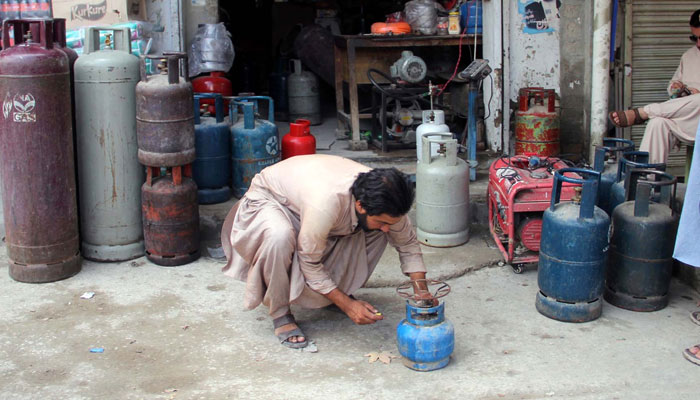
    The Oil and Gas Regulatory Authority (Ogra) has increased the price of liquefied petroleum gas (LPG) for August, raising the cost for both domestic and commercial consumers across Pakistan. According to an official notification issued by Ogra, the price of LPG has been increased by Rs12.89 per kilogram, taking the new official rate to Rs254.32 per kg for the month of August. The regulator also revised the price of the standard 11.8-kilogram domestic LPG cylinder, which will now cost Rs3,000.92 following the latest increase. The revised prices will come into effect for the entire month of August under Ogra’s monthly pricing mechanism. The increase is expected to place an additional financial burden on households that rely on LPG for cooking and heating, particularly in areas without access to natural gas. Commercial users, including restaurants, hotels and small businesses that depend on LPG, are also likely to face higher operating costs. Ogra reviews LPG prices every month based on prevailing market conditions and other relevant pricing factors before issuing revised rates through official notifications. Consumers are expected to pay the updated prices from the beginning of August unless further revisions are announced by the regulator.

  • | | |

    Pakistan, US renew Fulbright partnership for five …

    Pakistan and the United States have renewed their cooperation in higher education through a new five-year agreement between the Higher Education Commission (HEC) and the United States Educational Foundation in Pakistan (USEFP). The agreement will run from the 2026-27 financial year through 2031-32. It will continue several major academic exchange and scholarship programmes for Pakistani students, researchers and professionals. The renewed partnership covers the Fulbright Master’s and PhD programmes. It also includes the Visiting Scholar Programme for post-doctoral researchers, the Foreign Language Teaching Assistant Programme and the Hubert H. Humphrey Fellowship Programme. Under the new arrangement, the partners aim to support 66 Pakistani PhD scholars over the five-year period. Additional opportunities will be available through the other programmes covered by the agreement. The initiative is designed to help Pakistani students and academics access advanced education and research opportunities in the United States. Scholars are expected to bring back their expertise and contribute to the country’s academic and socio-economic development. The HEC will provide at least $4.54 million each year under the agreement. Its overall financial commitment for the five-year period has been capped at Rs6.48 billion. The funding will be released according to an agreed schedule. The arrangement includes an initial payment of $2 million by June 30, followed by another $2 million by January 31. The remaining amount will be released by April 30, subject to the availability of government funds. Any interest generated from HEC funds held by USEFP will be used again for student grants. This will provide additional support to beneficiaries of the programme. The selection of candidates will remain strictly merit-based. There will be no fixed quotas based on region, group or category. HEC representatives will also participate in selection panels. The commission will help identify areas of study that are considered important for Pakistan’s development and national priorities. The two institutions will establish a Joint Review Committee to monitor the programme. The committee will meet twice a year to assess progress, performance and the overall impact of the initiative. Financial oversight has also been included in the agreement. USEFP will provide annual audited financial statements to HEC. Relevant financial records will also remain available for review by the commission when required. The partnership will also focus on increasing awareness about international education opportunities. HEC and USEFP plan to conduct joint outreach activities across Pakistan. The initiative will use HEC’s network of universities and higher education institutions to reach a wider pool of potential applicants. The agreement also leaves room for future cooperation in areas such as faculty exchanges, administrator exchanges and other academic initiatives. The renewed arrangement builds on the earlier Fulbright-HEC PhD partnership signed in February 2016. Under that agreement, $25.786 million was committed to support 125 Pakistani scholars between 2016 and 2020.

  • | |

    KATSEYE’s Sophia takes break ahead of global tour

    KATSEYE member Sophia Laforteza has announced a temporary break from the group, leaving fans surprised just weeks before the girl group is scheduled to begin its upcoming global tour. The 23-year-old singer, who serves as one of the prominent members of KATSEYE, revealed that she will step away from upcoming promotional activities to focus on her health and overall well-being. The announcement was shared with fans on Friday, August 7, through a statement posted on Weverse. The group explained that Sophia’s mental health and wellness need to be prioritised and that she has been advised to take an extended period of rest following consultations with medical professionals. According to the statement, Sophia is receiving support while she takes time away from the group. The members and management also said they will continue to monitor her condition and stand by her during her recovery. The group said Sophia herself remains eager to return to performing alongside her bandmates. However, her health and long-term well-being have been placed ahead of her professional commitments. KATSEYE is expected to reassess Sophia’s condition in September, with another update promised for fans at that time. Until then, she will not participate in the group’s upcoming promotional activities. The announcement has triggered an emotional response from KATSEYE fans, with many expressing disappointment over the prospect of seeing the group perform without Sophia. Some fans described the situation as particularly difficult because of the group’s upcoming tour. Sophia’s temporary hiatus comes shortly before KATSEYE is scheduled to launch its first global headline arena tour, titled The Wildworld Tour. The tour is scheduled to begin on September 1, 2026, and will feature 30 shows across different locations. It is being organised in support of the group’s third EP, Wild, and is currently scheduled to conclude on November 27. The timing of Sophia’s announcement has therefore added uncertainty for fans preparing to see the group on its major international tour.

Leave a Reply

Your email address will not be published. Required fields are marked *