killed india temple
|

 7 killed in India temple stampede

At least seven people were killed and several others injured after a massive crowd triggered a stampede outside the Ashok Dham Temple in India’s Bihar state.

According to Indian media reports, the incident occurred early Monday morning, the third Monday of the Hindu month of Sawan, when a large number of devotees gathered at the temple to offer prayers.

District administration officials reached the scene shortly after the incident and began overseeing rescue efforts as well as measures to bring the crowd under control.

Officials said the crowd outside the temple suddenly surged after two trains arrived in the area in the morning. The sudden influx placed heavy pressure on the barricades installed at the site, causing one section to collapse. Several people fell over one another, triggering panic and a stampede.

Authorities said they had made arrangements in anticipation of a large turnout. However, the unexpected increase in the number of devotees quickly overwhelmed the arrangements and created a chaotic situation.

Rescue teams immediately began evacuating the injured, with around 10 to 15 people initially taken to nearby hospitals for medical treatment.

Indian media reports have also cited preliminary information suggesting that an electricity pole fell at the scene and some people may have suffered electric shocks. The incident reportedly caused further panic among the crowd and may have contributed to the subsequent stampede.

Authorities are continuing to assess the situation and investigate the circumstances surrounding the deaths and injuries.

Similar Posts

  • |

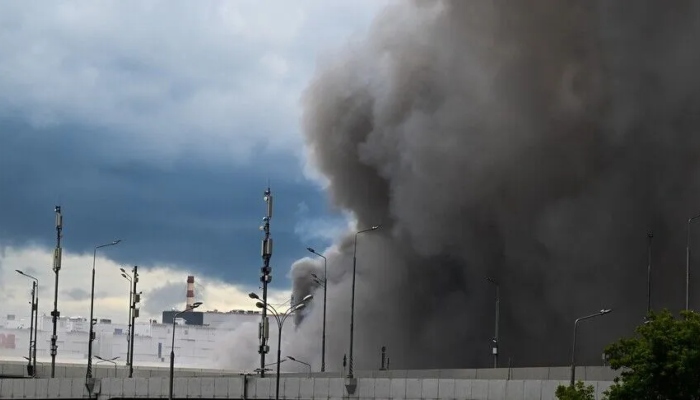
    Drone attack near Moscow kills 5, injures 6

    A drone attack in the Moscow region has killed at least five people and left six others critically injured, according to Russian news agencies. The attack reportedly struck an area near the Russian capital, causing a fire inside a warehouse. The blaze added to the damage caused by the drone strike and prompted emergency responders to move quickly to the scene. Rescue workers and medical teams are assisting those affected by the incident, while the injured victims have been taken for medical treatment. Officials have described the condition of six injured people as critical, raising concerns that the death toll could increase in the coming hours. Authorities are assessing the extent of the damage and continuing emergency operations at the site. The exact circumstances surrounding the drone attack, including the origin of the drones and the intended target, have not yet been fully established. The incident comes amid heightened security concerns in and around Moscow, where drone attacks have periodically targeted the Russian capital and surrounding areas. Such incidents have prompted authorities to strengthen air-defence measures and increase security around key infrastructure and industrial facilities. Russian officials are expected to provide further details as emergency teams complete their work and investigators examine the scene. The latest attack has once again highlighted the growing security challenges posed by drone warfare and its potential impact on civilian areas and critical facilities.

  • | |

    British Columbia declares emergency as fast-moving…

    British Columbia declared a provincial state of emergency on Saturday after a rapidly spreading wildfire forced thousands of residents in the western Canadian province to flee their homes overnight, with the blaze nearly doubling in size within hours. The Bald Range wildfire burned out of control and expanded rapidly to roughly 9,500 hectares, prompting evacuation orders across Summerland, Peachland and other districts west of Okanagan Lake in the province’s southern interior. The region produces the majority of British Columbia’s wine and ranks as Canada’s second largest wine producing area, adding an economic dimension to the disaster beyond the immediate threat to homes and lives. Officials describe explosive fire behaviour Premier David Eby told a news conference on Saturday that one fire official had compared the blaze to an explosion going off. Eby said the official described flames reaching 100 feet up trees, with additional flames shooting a further 200 feet above that, and the fire generating its own weather system that produced lightning, which in turn fed further fire growth in a self-sustaining cycle. “Homes have been lost, and properties have been destroyed,” Eby said, adding that some residents became trapped as conditions shifted rapidly and required rescue. The premier described the situation as highly dynamic and continuing to pose a serious threat to the region. Summerland had a population of about 12,000 residents according to the 2021 census, while neighbouring Peachland is home to roughly 6,500 people. Province activates emergency powers The declaration of a state of emergency grants provincial authorities immediate access to special powers, including the ability to impose travel restrictions, protect essential supplies from price gouging and deploy specific tools to coordinate rescue operations across affected areas. Officials said the Bald Range wildfire has triggered the largest evacuation event of the summer so far, with more than 20,000 people across British Columbia forced from their homes since the fire began its rapid expansion. Summerland Mayor Doug Holmes, speaking by phone from nearby Penticton, said a large number of farms in the area have been affected and that officials do not yet know the full extent of structural losses. “They’re still busy fighting the fire,” Holmes said, adding that the community needed to prepare for the worst possible outcome as firefighting efforts continued. Residents flee as highways begin closing Many residents left their homes overnight, driving south toward Penticton or north toward Kelowna before several highways in the region began closing due to the advancing fire. Terry Fries, a Summerland resident, said he was watching a football game on Friday night when a neighbour warned him to prepare an emergency bag as the fire continued to grow nearby. Fries said the fire remained visible behind nearby hills earlier in the evening before conditions worsened. When British Columbia authorities issued the formal evacuation order around midnight, Fries and his family drove approximately 45 kilometres north to the city of Kelowna to reach safety. Residents captured video footage showing fires burning along the highway and structures engulfed in flames as they fled the area. By Saturday afternoon, ash had begun settling on cars and houses in nearby communities as smoke from the fire cast an orange glow across the sky. Power and water systems disrupted Summerland lost electricity on Saturday and issued a boil water notice for residents after untreated water entered the municipal system when it bypassed the standard water treatment plant due to disruptions caused by the wildfire. Wildfires strain resources nationwide Several Canadian provinces, including Ontario and Quebec, have battled significant wildfires this year as hot and dry weather conditions fuelled blazes across dense forest regions. International firefighting crews from Mexico, Australia, France and New Zealand have travelled to Canada to assist local personnel in combating the fires. In British Columbia specifically, where continued hot and dry conditions have heightened the risk of further fire spread, approximately 1,500 firefighting personnel are currently battling more than 100 active fires across the province. Authorities have issued 40 formal evacuation orders and an additional 49 evacuation alerts as the fire season continues to intensify. Wildfires have burned through approximately 4 million hectares of land across Canada so far this year, according to figures from the Canadian Interagency Forest Fire Centre, underscoring the scale of a fire season that has placed sustained pressure on emergency services and firefighting resources nationwide.

  • |

    Does your native language control how you think?

    With over 7,000 distinct human languages spoken across the globe today, humanity communicates through fascinating sentence structures. A compelling debate has captivated thinkers for decades. Does the language you grow up speaking dictate the limits of what your mind can comprehend? This captivating idea lies at the heart of the Sapir-Whorf hypothesis. A theory that continues to provoke vibrant discussions across linguistics, philosophy, and cognitive science. The Power of Vocabulary and Perception The hypothesis was formulated in the early 20th century by linguists Edward Sapir and Benjamin Lee Whorf. It’s often referred to as linguistic relativity or linguistic determinism. They propose that the structure of a native language fundamentally shapes its speakers’ worldview and cognitive capacity. If a concept or object lacks a dedicated word in a person’s language, that person cannot truly perceive, categorize or conceptualize it. Consider how different cultures classify colors. Some languages possess dozens of specific terms for distinct shades. Whereas,  others operate with only a couple of basic terms distinguishing between light and dark tones. According to strong linguistic determinism, a speaker whose native tongue lacks a dedicated word for green would struggle to perceive a green leaf as distinct from yellow. Similarly, emotional vocabularies vary widely across cultures. German famously uses the word Schadenfreude to describe taking pleasure in someone else’s misfortune. According to Sapir-Whorf theory, an English speaker whose language lacks an exact single-word equivalent would supposedly find it difficult to recognize or isolate that specific emotional state within themselves. Why the Concept Fascinates Us? It is easy to see why the Sapir-Whorf hypothesis captured public imagination. The notion that our mother tongue acts as a unique way through which we view reality is deeply romantic. Philosophically, the theory suggests that the world contains thousands of distinct cognitive universes. If language entirely dictated thought, cross-cultural understanding would face profound barriers. It is so as the speakers of different languages would operate inside fundamentally incompatible mental frameworks. In semantic studies, labeling objects and experiences allows humans to organize chaotic sensory input efficiently. Giving a name to a precise group such as distinguishing toddlers, teenagers and senior citizens helps us categorize society into recognizable stages. The hypothesis demonstrated that naming things provides cognitive shortcuts. Such a naming method makes specific distinctions far easier to reference and discuss in daily life. Why Modern Science Rejects Strong Determinism Despite its initial popularity, modern linguistics and cognitive scientists reject strong linguistic determinism. The fundamental flaw in the hypothesis rests on a misunderstanding of the relationship between mind and speech. Language does not produce thought. Rather, human thought drives the creation and evolution of language. When people encounter new experiences, foods or technologies, they do not remain silent simply because they lack pre-existing terminology. Instead, humans spontaneously create new phrases. They adapt existing terms or borrow words from other cultures to describe what they have experienced. An English speaker can easily understand and feel pleasure at a rival’s failure without ever having heard the German word Schadenfreude. While English uses blue for both dark and light shades. Whereas Italian maintains separate primary words (blu and azzurro). English speakers are fully capable of seeing the difference between a midday sky and the deep ocean. Human cognition precedes language. Speech serves as a flexible tool designed to communicate human experiences, not a rigid cage that imprisons cognitive ability. The Lasting Value of Sapir-Whorf   The Sapir-Whorf hypothesis retains great value even if its most radical claim has been disproven. It paved the way for weak linguistic relativity. The claim further explores how language subtly influences cognition, memory and visual attention without imposing hard limits on intellect. Ultimately, Sapir and Whorf inspired generations of researchers to explore the mysterious connection between human culture, language and the mind.

  • |

    Turkish Vice President, top officials join Pakistan Day celebration in Ankara

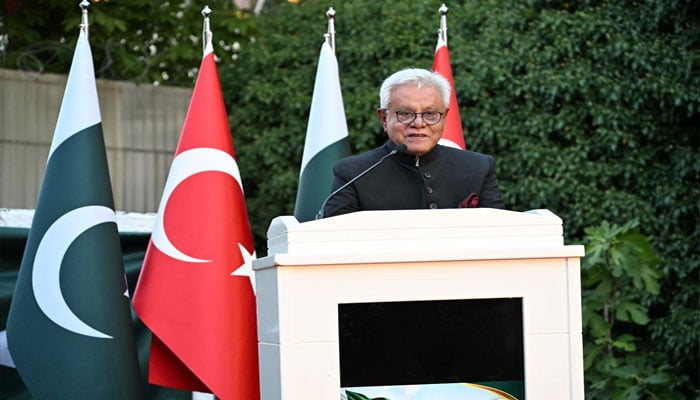
    ANKARA: Pakistan’s 79th Independence Day was celebrated with a grand ceremony at Pakistan House in Ankara, where Türkiye’s senior leadership joined Pakistani officials, diplomats and members of the community to highlight the deep and enduring friendship between the two countries. Türkiye’s Vice President Cevdet Yilmaz attended the event as chief guest, joined by senior political, military and diplomatic officials. The high-level participation underscored the importance Ankara attaches to its relationship with Islamabad and the longstanding bonds between the two nations. Among those attending were Turkish Defence Minister Yaşar Güler, Chief of General Staff Gen Selçuk Bayraktaroğlu, Naval Forces Commander Adm Ercüment Tatlıoğlu, Land Forces Commander Gen Metin Tokel and Air Force Commander Gen Ziya Cemal Kadıoğlu. Former senior officials, members of parliament, ambassadors, diplomatic representatives, Pakistani community members and media representatives also attended the ceremony. The event began with the recitation of the Holy Quran, followed by the national anthems of Pakistan and Türkiye. Students from the Pakistan Embassy International Study Group School added a colourful touch to the celebrations with national songs and traditional performances. Guests warmly applauded the cultural presentation. A documentary showcasing Pakistan’s history, cultural heritage, natural beauty, tourism potential and social and economic development was also screened. Yilmaz: Pakistan-Türkiye ties go beyond diplomacy Addressing the gathering, Vice President Yilmaz conveyed greetings from President Recep Tayyip Erdogan and the Turkish people to the government and people of Pakistan. He emphasised that the relationship between Pakistan and Türkiye went far beyond conventional diplomatic ties, describing it as a unique brotherly bond rooted in shared history and mutual solidarity. Yilmaz recalled the support shown by Muslims of the subcontinent to the Turkish people during the Turkish War of Independence, saying the historic connection continued to shape relations between the two countries. He reaffirmed Türkiye’s commitment to expanding bilateral cooperation with Pakistan and said both countries would continue working together to promote peace and stability in the region. The Turkish vice president also highlighted the importance of strengthening strategic cooperation and exploring new avenues for regional collaboration, including greater trilateral cooperation among Türkiye, Pakistan and Saudi Arabia. Pakistan envoy highlights sacrifices behind independence Pakistan’s Ambassador to Türkiye, Dr Yousaf Junaid, paid tribute to Quaid-i-Azam Muhammad Ali Jinnah and the sacrifices made during the Pakistan Movement. He said Pakistan’s independence was achieved through extraordinary courage, perseverance, determination and sacrifice. The ambassador urged Pakistanis to strengthen national unity and work collectively for the country’s stability, prosperity and development. Referring to Pakistan-Türkiye relations, Junaid said the partnership was based not merely on formal diplomacy but on shared values, history, mutual trust and strong public sentiment. He said cooperation between the two countries was expanding across defence, trade, investment, education, culture and people-to-people contacts. Jinnah exhibition adds historic touch The ceremony also featured a special photographic exhibition marking the 150th birth anniversary of Quaid-i-Azam Muhammad Ali Jinnah. Vice President Yilmaz, Ambassador Junaid and other dignitaries jointly inaugurated the exhibition, which highlighted Jinnah’s life, political vision, leadership and historic role in the creation of Pakistan. The event concluded with a traditional Pakistani dinner hosted in the gardens of Pakistan House. Against the backdrop of Pakistan’s green and white flags and warm Turkish hospitality, the Ankara celebration became more than an Independence Day ceremony. It served as a vivid reminder of a relationship built on history, affection and mutual trust — and of the two countries’ shared ambition to take that friendship into a stronger and broader future.


  • Trump’s wildfire blame game with Canada draws scientist backlash

    President Trump’s claim that Canada is “poisoning” American air with wildfire smoke is facing strong pushback from climate scientists, who say he is blaming a country for a crisis it did not create. Trump raised the issue with Canadian Prime Minister Mark Carney and later told reporters at Joint Base Andrews that the fires need to stop. The exchange happened during the World Cup final. Trump confronted Carney at the match, telling him directly that American air was being poisoned and that the fires had to be brought under control. Afterward, he floated financial consequences. He suggested Canada should either pay damages or face new tariffs over the smoke. Trump has framed the fires in unusually aggressive terms. On Truth Social, he wrote that the United States was being “unnecessarily invaded” by polluted air from Canada’s poorly maintained forests, calling it willful negligence that costs America billions every year. Some allies in Congress have echoed that tone, with talk of legislation targeting Canada’s forestry practices. Meanwhile, the smoke itself has been widespread. Fires that began in mid-June spread further in July, affecting roughly 100 million Americans across 14 states. Canadian officials note that this year’s boreal forest losses are running well above the historical average. Scientists reject the idea that Canada is at fault. Climate researcher Michael Mann has compared Trump’s stance to someone causing a car crash through reckless driving, then sending the other driver the repair bill. He went on arguing that the administration’s own fossil fuel expansion is worsening the very problem it’s blaming on Canada. Stanford’s Marshall Burke points out that most of the burning Canadian forest is remote and largely unmanaged, unlike forests in the US. That rising global temperatures, not any lack of Canadian action, are driving the surge in extreme fire conditions. Wildfire ecologist Lori Daniels of the University of British Columbia called the attacks on Canada uninformed, saying they ignore both the human toll and the firefighters risking their lives on the front lines. She noted that targeted forest thinning, inspired by Indigenous land practices, could help in some North American forests, but wouldn’t make much difference across Canada’s vast, sparse boreal landscape. Carney has pushed back too, telling reporters that fighting climate change is “the responsibility of all countries, including the United States”, noting that some U.S. energy policies work against clean energy goals even as Canada pursues its own climate efforts globally.

  • |

    France approves social media ban for under-15s

    France has approved legislation that will restrict children under the age of 15 from using social media platforms, with the new rules expected to take effect in January 2027. Under the law, social media platforms will have to verify the age of every user before allowing access to their services. The government says the measure aims to protect children from the potential harmful effects of excessive social media use, particularly concerns surrounding mental health, online safety, and exposure to inappropriate content. The move would make France the first European country to introduce such a broad age-based restriction on social media access. Authorities believe stronger safeguards are necessary as concerns continue to grow over the impact of social media on young people’s emotional well-being and development. The new rules will require social media companies to introduce reliable age-verification systems to prevent children below the minimum age from creating or maintaining accounts. The government is expected to work with technology companies and regulators to ensure that platforms comply with the new requirements. The decision comes as several other countries consider similar measures. The United Kingdom and the European Union are also examining ways to strengthen protections for children online, including possible age restrictions and tighter controls on social media platforms. Supporters of the French legislation argue that children need greater protection from the risks associated with prolonged social media exposure. However, the policy may also face challenges over privacy, enforcement, and how platforms can verify users’ ages without collecting excessive personal information.

Leave a Reply

Your email address will not be published. Required fields are marked *