hayden panettieres final
|

Hayden Panettiere’s final words on motherhood and struggles

Hayden Panettiere, the actress best known for portraying cheerleader Claire Bennet in the hit NBC science-fiction series Heroes, spoke openly about motherhood, postpartum depression and her personal struggles in one of her final interviews.

Panettiere died on Sunday, August 16, at the age of 36, according to her father, Skip Panettiere. She was just days away from celebrating her 37th birthday. Her family has not disclosed an official cause of death and has requested privacy as they cope with the loss.

Shortly before her death, Panettiere discussed her experiences as a mother in an interview with parenting outlet Momé magazine. During the conversation, she reflected on raising her daughter, Kaya Evdokia Klitschko, and the difficult circumstances surrounding the early years of her motherhood.

Panettiere shares Kaya, who is now 11, with her former fiancé, Ukrainian boxing champion Wladimir Klitschko. The actress previously spoke about experiencing a traumatic birth and struggling with postpartum depression after welcoming her daughter. Those challenges had a lasting impact on her life and contributed to a period when she was unable to be with Kaya as much as she wanted.

Despite those difficulties, Panettiere said her daughter had always remained a priority. She explained that she hoped Kaya would eventually understand her circumstances and the reasons she could not always be present during her childhood.

“I’ve been able to put her first no matter how I’ve felt or what I’ve experienced,” Panettiere said during the interview. She added that one day her daughter would understand her story and why she had not been able to be with her all the time.

The Nashville star also described herself as a work in progress and acknowledged that personal healing is an ongoing journey. She said she was taking life one day at a time while continuing to work on herself and do her best.

Panettiere also used the interview to encourage other mothers facing emotional difficulties after childbirth. Offering reassurance to women who may be struggling during the early stages of parenthood, she reminded them that they were stronger than they might realise and encouraged them to believe that things would eventually improve.

Panettiere leaves behind her daughter, Kaya, as well as her parents, Skip Panettiere and Lesley Vogel. Her final reflections on motherhood have added a deeply personal dimension to the tributes following her unexpected death.


Similar Posts

  • |

    Zohran Mamdani reveals he has been vibing to Shamoon Ismail

    New York City Mayor Zohran Mamdani was once known as rapper Young Cardamom. He has not left his music roots behind. This week, he revealed that Pakistani rapper Shamoon Ismail is currently on his playlist. Speaking with Rolling Stone, Mamdani was asked what he has been listening to. He named Radio & Weasel, a Ugandan duo that topped charts for years. He also mentioned Shamoon Ismail, saying he has followed the Pakistani rapper for a few years now. Whenever he is feeling reflective, he said, he puts on Kacey Musgraves. It is not clear how Mamdani discovered Ismail’s music. But the choice fits his background. He was born to a Ugandan father and an Indian mother, and raised in New York. His music taste reflects that mix. It also shows his close ties to the South Asian communities he represents. He has not specified which Ismail songs he is playing right now. This also is not the first time he has shown love for South Asian music. After his primary win, he walked off stage to the Bollywood hit “Dhoom Machale.” Fans still remember that moment. Mamdani’s taste is wide ranging. He has also spoken fondly of Taylor Swift, Jay Z, and Kim Petras. He is a fan of Indian American rapper Himanshu Suri, known as Heems. Mamdani has said Heems is part of the reason he entered politics. As for Ismail, his soulful rap style keeps building a strong following. Recent tracks like “used to it,” “Alone Together,” and “VOLUME” have racked up big streaming numbers. The singer recently took some time away from the spotlight. That break reportedly lined up with a major personal milestone, possibly an engagement or a wedding. He resurfaced on New Year’s Eve with a handwritten note to fans. He described the time away simply as a “transition.” Mamdani’s shoutout is likely to boost Ismail’s profile further. This is especially true among fans who enjoy seeing South Asian artists recognized on a global political stage.

  • | |

    Isla Fisher shares hilarious dating rules after sp…

    Isla Fisher is embracing her single era with a healthy dose of humor. The Australian actress recently revealed some of her biggest dating “icks,” and her brutally honest rules are already giving fans plenty to laugh about. Fisher, 50, has been in the spotlight following the end of her marriage to comedian Sacha Baron Cohen. The former couple, who were together for more than two decades, announced in 2024 that they had filed for divorce. Their divorce was finalized in June 2025. They share three children and have continued to prioritize their family while navigating life after marriage. (EW.com⁠) Now, Fisher appears to be having fun with the idea of dating again. During a recent appearance on KIIS FM’s The Smallzy Show, the actress was asked about the little things that can instantly turn her off. Her answer was anything but serious. One of Fisher’s biggest complaints? Backpacks. “Backpack, period,” she joked, explaining that she would immediately lose interest if a man showed up wearing one in a particular way. She admitted that simply carrying a backpack is not necessarily a problem. However, things change when a man clips the straps together across his chest. According to Fisher, that small detail is enough to make her say goodbye. But backpacks are not her only dating deal-breaker. Deck shoes also made the list. Fisher described the shoes as already being “a bit of an ick” before revealing the specific habit that really bothers her. She said she recently saw someone wearing deck shoes with the heel folded down, turning them into something resembling casual plimsolls. Her reaction was immediate and hilarious. “Repulsive,” she declared. The comments offer a glimpse into Fisher’s playful personality as she enters a different chapter of her life. Earlier, she had been candid about how difficult her separation was, describing it as one of the hardest experiences she had faced. She also credited her close female friends with helping her rediscover her strength and identity outside of a relationship. (Us Weekly⁠) Fisher has also been focusing on her acting career. Her latest projects include Spa Weekend, while she continues to take on new opportunities in film and comedy. Whether she is seriously dating or simply enjoying being single, Fisher’s hilarious list proves one thing: romance may be complicated, but her dating “icks” are surprisingly simple. For now, men with backpacks and badly worn deck shoes might want to take notes.

  • | |

    Rs. 38 trillion in Bank deposits raise alarm as Go…

      LAHORE: Former caretaker federal minister and prominent industrialist Dr. Gohar Ijaz has raised serious concerns over Pakistan’s economic direction, warning that growing bank deposits alongside declining industrial activity indicate that capital is moving away from productive sectors.   Speaking to *Minute Mirror*, Ijaz said bank deposits had increased from around Rs. 21 trillion three years ago to Rs. 38 trillion, describing the trend as evidence that people were increasingly choosing to keep their money in banks rather than invest in businesses. He argued that excessive taxation was making industrial activity increasingly difficult. According to Ijaz, an effective tax burden of around 45 percent has discouraged investors and forced several businesses to reduce operations or shut down. “Three years ago, Rs. 21 trillion was lying in banks. Today, it has increased to Rs. 38 trillion,” Ijaz said, arguing that the country needed to encourage investment in manufacturing, exports and employment instead of allowing capital to remain parked in financial institutions. He also claimed that Pakistan could address a significant portion of its external debt if the textile industry received appropriate policy support. Ijaz said the All Pakistan Textile Mills Association (APTMA) had been offering for years to help generate enough foreign exchange for Pakistan to repay $10 billion in debt within one year. According to him, the proposal would require measures such as competitive energy prices, rational taxation, export incentives and a stable policy environment. He maintained that Pakistan’s industrial sector had the capacity to significantly strengthen the country’s foreign exchange position if its competitiveness was restored. Ijaz also criticised what he described as policy distortions in the sugar sector. He alleged that sugar mill-owning families had benefited from additional profits of approximately Rs. 30 billion per month due to pricing mechanisms, subsidies and regulatory decisions. He did not present documentary evidence for the figure during the interview but argued that government policies should prioritize consumers, industrial growth and the national economy rather than benefiting a limited number of influential groups. The former minister further commented on the current political and civil-military leadership, saying the Army and Prime Minister were receiving unprecedented recognition. He expressed optimism that stronger economic policies could enable Pakistan to overcome its financial challenges. Economists and business leaders have similarly pointed to high interest rates, expensive energy, inflation, taxation and policy uncertainty as major factors behind weak private investment. When bank returns appear more attractive and less risky than establishing or expanding businesses, capital can increasingly shift toward financial assets. Industry leaders have therefore called for lower and more predictable taxes, competitive electricity and gas tariffs, faster refunds, fewer ad-hoc duties and incentives for export-oriented manufacturing. Ijaz’s remarks highlight a broader challenge facing Pakistan: having substantial liquidity does not necessarily translate into economic productivity. For the country to generate employment, increase exports and strengthen its ability to repay external debt, more capital needs to flow into productive businesses. The central question, therefore, is whether future economic policies will encourage investment, manufacturing and exports or continue to make bank deposits more attractive than business expansion.

  • | |

    Naqvi: ‘Cockroach’ youth can overturn …

    Interior Minister Mohsin Naqvi has called for the creation of new administrative units and provinces, saying Pakistan’s current governance system has failed and requires fundamental reforms to meet the country’s future needs. Speaking at Pakistan’s first Economic Summit in Islamabad, Naqvi said the existing administrative structure could no longer effectively address the country’s growing challenges. He stressed that establishing new administrative units was essential for improving governance and ensuring sustainable development. “The system we are living under has collapsed,” he said. “New administrative units or provinces are the only way forward.” Naqvi said Pakistan would continue facing the same problems even a decade from now unless major structural reforms were introduced. He urged policymakers to focus on fixing the country’s basic governance framework instead of relying on temporary solutions. The interior minister also highlighted the concerns of Pakistan’s youth. He said young people are no longer satisfied with receiving laptops, scholarships or financial assistance alone. Instead, they want employment opportunities based on merit and a transparent system that guarantees fairness. He warned that growing frustration among young people should not be ignored. Referring to the younger generation, he said if they unite, they could bring significant political and social change. Naqvi also pointed to Pakistan’s financial challenges, saying the country continues to rely heavily on borrowing while its debt burden keeps increasing. He argued that meaningful economic improvement would remain difficult unless the overall governance system was reset. He praised Prime Minister Shehbaz Sharif’s commitment to work, saying the prime minister spends long hours addressing national issues. However, he added that even working 18 hours a day would not be enough if the country’s underlying system remained unchanged. The interior minister said political parties must set aside their differences and work together to introduce reforms. He urged all major stakeholders, including the government and opposition, to sit together and develop a long-term national strategy. Later, while speaking informally with journalists, Naqvi said the country’s institutions and political leadership must improve the system if Pakistan is to achieve lasting progress. He said the efforts of the military leadership alone would not be sufficient without governance reforms. He also said all political parties, including the Pakistan Tehreek-e-Insaf (PTI), should participate in efforts to improve the country’s governance structure. Responding to a question about the PTI founder, Naqvi said the matter would be decided by the courts. He also dismissed speculation about becoming foreign minister, saying he would continue serving as interior minister.

  • | | |

    AJK election first phase concludes, vote counting …

    Polling for the first phase of the Azad Jammu and Kashmir (AJK) Legislative Assembly elections concluded on Monday, with vote counting now underway across 13 constituencies in Mirpur Division. The first phase covered three districts — Mirpur, Kotli and Bhimber. Polling was initially scheduled to end at 5pm but was extended by one hour. Voting continued until 6pm to provide voters with additional time to cast their ballots. More than 1.4 million registered voters were eligible to participate in the first phase. The Election Commission had established 2,454 polling stations across the three districts. Of these, 597 polling stations were set up across four constituencies in Mirpur district. Kotli had 1,107 polling stations across six constituencies, while 608 polling stations were established in three constituencies of Bhimber. A total of 296 candidates, including nominees from the Pakistan Peoples Party (PPP), Pakistan Muslim League-Nawaz (PML-N), Istehkam-e-Pakistan Party and independent candidates, contested the 13 seats. Polling disrupted at some stations Although polling remained largely peaceful, some polling stations reported disruptions. In Kotli’s Aghaar Colony, voting continued at Polling Station 38. However, polling could not begin at Stations 36 and 37 because voters did not arrive. PPP AJK Election Cell in-charge Sardar Abdul Shakoor claimed that disturbances occurred at polling stations 119, 120 and 121 in LA-5 Barnala. He said polling was affected for some time. According to Shakoor, voting resumed after security forces reached the area. However, he said the polling process remained slow. The PPP also established a central election monitoring cell in Islamabad. Senior party leaders, including Sherry Rehman, Nadeem Afzal Chan, Shazia Marri, Sharjeel Memon and Saeed Ghani, monitored developments and remained in contact with election officials, district administrations and party candidates. Former National Assembly speaker Raja Pervez Ashraf expressed concern over alleged irregularities at different polling stations. He called for additional security personnel at sensitive locations, including Gulpur, Thurochi and Muhajir Camp. He urged the Election Commission to immediately and impartially investigate all complaints and ensure free, fair and transparent elections. Political leaders urge voters to participate PML-N candidate Chaudhry Tariq Farooq cast his vote at Polling Station 161 in Bhimber’s LA-7 constituency. Speaking after voting, Farooq said voter turnout was expected to be higher in rural areas than in cities. He also expressed confidence in the security and election arrangements in Bhimber. PPP Chairman Bilawal Bhutto Zardari, accompanied by his sister Aseefa Bhutto Zardari, appealed to voters in Mirpur to participate in the elections. In a video message, Bilawal urged people to leave their homes and exercise their right to vote if they wanted Kashmir’s future to be decided by its people. He also asked voters to support PPP candidates. PPP Karachi Division President Saeed Ghani described the election as a contest between the genuine issues of Kashmiris and what he called false promises. Ghani said Kashmiris needed political rights, ownership rights and employment opportunities. He criticised the focus on providing a limited number of buses, saying development should address wider public needs. PPP leader Nadeem Afzal Chan also raised concerns about alleged federal interference and the use of government resources during the elections. He demanded that the polls remain free, fair and transparent. He also called on the federal government to avoid any involvement that could influence the electoral process. PPP spokesperson Shazia Marri said the people of Kashmir would deliver their verdict through their votes. She said the party’s election symbol, the arrow, represented hope for the people of Mirpur. Police praise peaceful polling AJK police said the first phase of polling remained peaceful across Mirpur Division. A spokesperson for the AJK police chief said voters had rejected calls for unrest and instead chose to exercise their democratic right. Voters began arriving at polling stations soon after voting opened at 8am. AJK Inspector General of Police Liaquat Ali Malik thanked residents for cooperating with law enforcement agencies and helping maintain peace during the election. He warned that no individual, including political workers, would be allowed to take the law into their own hands. Mirpur Commissioner Raja Tahir Mumtaz and DIG Kamran Ali also visited Ward 16/17 in LA-3 to review the polling arrangements. The commissioner said polling had remained peaceful across Mirpur, Kotli and Bhimber. He urged voters to come out without fear and assured them that the administration had made arrangements for a secure environment. Security arrangements strengthened Authorities made extensive security arrangements for the elections. AJK Chief Election Commissioner Justice (retd) Ghulam Mustafa Mughal said legal action would be taken against anyone attempting to disrupt the voting process. AJK Chief Secretary Khushal Khan said state institutions were fully prepared to maintain peace during the elections. He said the people had rejected attempts to create disorder and demonstrated confidence in the democratic process.

  • | |

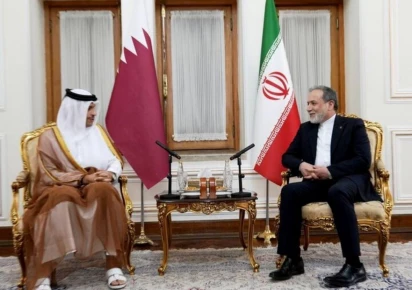
    Araghchi says diplomacy possible if US changes course

    Iranian Foreign Minister Abbas Araghchi has said a return to diplomacy with the United States remains possible, but Washington must first accept that its pressure-based approach will not work. Araghchi made the remarks on Friday after holding what he described as constructive and creative discussions with Qatar’s Prime Minister and Foreign Minister Jassim Al Thani. The Iranian foreign minister said the United States should take steps to rebuild trust and engage Tehran through respectful dialogue. He also called on Washington to recognise Iran’s rights and honour commitments made under previous agreements. The comments come amid heightened tensions between Iran and the United States, particularly over sanctions, maritime restrictions and the future of the Strait of Hormuz. Iran and the US reached a 14-point memorandum of understanding in Islamabad in June through mediation by Pakistan and Qatar. The understanding included measures aimed at ending hostilities, reopening the Strait of Hormuz, removing a US naval blockade and beginning a 60-day negotiating process. Tehran has since accused Washington of failing to implement important parts of the agreement. Iranian officials have maintained that the Strait of Hormuz will not be fully reopened until the United States fulfils its commitments. The diplomatic dispute has also triggered a sharp exchange between Iranian and US officials. Iranian Parliament Speaker Mohammad Bagher Ghalibaf criticised US Treasury Secretary Scott Bessent after Bessent accused Tehran of spending large amounts of money abroad while Iranian citizens face economic difficulties. Ghalibaf rejected the criticism and argued that Washington should focus on its own domestic challenges rather than spending heavily on overseas military deployments and allies. The latest statements come as the United States maintains pressure on Iran and closely monitors maritime traffic in the Strait of Hormuz, one of the world’s most important energy routes. US Central Command said its forces had cleared sea mines from internationally recognised shipping lanes in the strait. Commander Admiral Brad Cooper said American military personnel from several branches had taken part in the operation. According to US officials, American forces have helped commercial vessels pass through the waterway while also stopping ships accused of attempting to bypass the maritime blockade. Iran, however, disputes Washington’s position and has warned that continued economic and maritime restrictions could provoke retaliation. Iranian Supreme National Security Council Secretary Mohsen Rezaei said Tehran would target US economic interests if the blockade continued. He also claimed that Iran had managed to maintain significant oil exports and establish alternative routes despite restrictions. Rezaei further warned against any military advance toward Beirut or southern Lebanon, calling the area a red line for Iran.

Leave a Reply

Your email address will not be published. Required fields are marked *