worried sharifs more

What worried Sharifs more: Bilawal’s attack or Naqvi’s remark?

Lahore: A routine family gathering or an emergency political huddle? That is the question many analysts are asking after Saturday night’s meeting of the Sharif family at Raiwind.

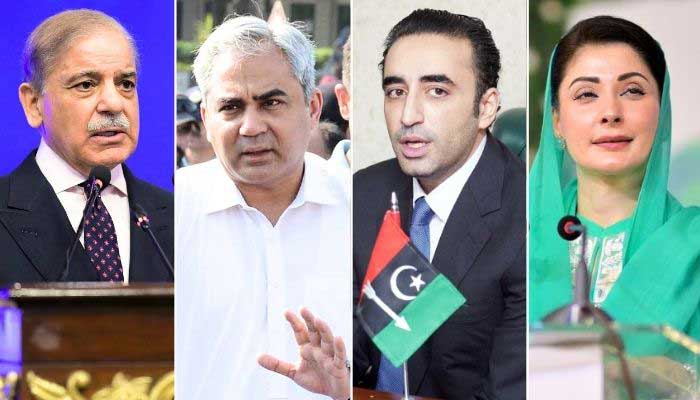
PML-N President Nawaz Sharif, Prime Minister Shehbaz Sharif, Deputy Prime Minister Ishaq Dar and Punjab Chief Minister Maryam Nawaz met at the family’s residence amid rising political turbulence.

Officially, it was their regular weekly meeting. Unofficially, it came at a time when Interior Minister Mohsin Naqvi’s remarks about a “governance system collapse” had sent shockwaves through political circles. The timing alone was enough to trigger speculation.

According to reports, Shehbaz Sharif briefed Nawaz Sharif on developments at the Centre, while Maryam Nawaz presented the political picture from Punjab. The meeting also reviewed Azad Jammu and Kashmir (AJK) elections, where the PML-N defeated its main rival, the PPP, in first phase of the polls.

The first phase of the AJK polls, however, have refused to die down. Analysts continue to question their credibility, while PPP Chairman Bilawal Bhutto Zardari has mounted an aggressive campaign against the PML-N. Bilawal has even warned that the federal government could face consequences if the elections in second and third phases were manipulated.

Yet many political observers believe Bilawal’s criticism is not the Sharifs’ biggest headache. For them, Naqvi’s remark carries far greater political weight.

The reason is simple. Bilawal is the head of a coalition partner and his criticism is part of routine political sparring. Naqvi, however, occupies a far more sensitive position. His words are rarely treated as ordinary political rhetoric. That also explains why the PML-N responded swiftly to Bilawal’s attacks but chose not to publicly challenge Naqvi’s remarks. And many believe silence, in politics, often speaks louder than rebuttals.

Naqvi made the comments while addressing members of the business community in Islamabad. Although he somehow elaborated on what he meant by “system failure”, the phrase immediately ignited debate across political and media circles.

Some analysts see the statement as a warning about governance failures. Others believe it reflects growing unease within influential quarters over the government’s performance. There are also those who argue it should not be overinterpreted and was merely a critique of the country’s political dysfunction.

The debate gained further traction after the DG ISPR, during his recent media interaction, also described Pakistan’s problems as political failures, though in a different context. Lieutenant General Ahmed Sharif Chaudhry on Friday termed good governance “quintessential” for Pakistan’s security and stability. He made the remarks while addressing a press conference on the country’s overall security situation, particularly the situation in Balochistan. However, together, the two statements have fueled fresh political speculation.

Whether that speculation has any substance remains an open question. Analysts themselves remain divided. Senior analyst Najam Sethi believes the Shehbaz is not going anywhere yet reshuffling of the federal cabinet and constitutional changes that could strengthen the Centre’s authority are on cards.

Veteran journalist Sohail Warraich, weeks ago, had read the situation differently He argues that governments ultimately survive on economic performance, not political messaging. In his view, the coalition that has governed Pakistan since the parliamentary vote that removed former prime minister Imran Khan in April 2022 has struggled to convince the public that it can turn the economy around. If economic indicators fail to improve, he believes political pressure will only intensify.

The political temperature continued to rise on Sunday. For now, the Raiwind meeting has ended, but the questions it has raised remain unanswered. Was it merely another weekly family consultation? Or did Naqvi’s “system failure” remark force the ruling family to reassess an increasingly uncertain political landscape? The coming weeks may provide the answer.

Similar Posts

  • | | |

    Pakistan receives $3.6 billion in remittances in J…

      KARACHI: Pakistan received $3.6 billion in workers’ remittances from overseas Pakistanis during July 2026, marking a significant increase compared with the same period last year, according to data released by the State Bank of Pakistan (SBP). The central bank reported that remittance inflows increased by 13% year-on-year in July and also recorded a 4.5% rise compared with the previous month. The latest figures highlight the continued importance of overseas Pakistanis in supporting the country’s foreign exchange position and overall economic stability. Saudi Arabia remained the largest source of remittances during the month, sending $913.9 million to Pakistan. The United Arab Emirates (UAE) followed with $737.3 million, while overseas Pakistanis in the United Kingdom contributed $555.5 million. The United States also remained an important source, accounting for $317.2 million in remittance inflows. Prime Minister Shehbaz Sharif welcomed the increase and expressed satisfaction over the $3.6 billion received in July. In a statement issued by the Prime Minister’s Office, he said the 13% year-on-year increase in remittances was encouraging and reflected the continued contribution of overseas Pakistanis to the national economy. The prime minister also highlighted the 4.5% month-on-month growth, saying that the consistent financial support provided by overseas Pakistanis was playing an important role in strengthening Pakistan’s economy. He described overseas Pakistanis as a valuable and integral part of the country’s economic mainstream. The latest figures have also generated positive expectations regarding Pakistan’s remittance outlook for the ongoing financial year. Topline Research estimated that remittances could reach around $40.1 billion during FY27 if the current trend continues. Economist Dr Khaqan Najeeb said remittances were becoming increasingly important as a source of foreign exchange, particularly at a time when Pakistan’s export sector continued to face difficulties. According to him, the country’s weak domestic economic conditions, limited employment opportunities and significant differences between local and international wages were encouraging more Pakistanis to seek employment abroad. He noted that the movement of workers overseas was resulting in a corresponding flow of foreign exchange back into Pakistan. The economist said these inflows were helping the country manage its balance of payments and reduce pressure on its external accounts. However, he also warned that the growing dependence on remittances highlighted deeper structural weaknesses within the domestic economy. Dr Najeeb pointed out that Pakistan’s increasing reliance on overseas employment reflected the country’s inability to generate enough productive and well-paying jobs at home. While remittances provide valuable financial support and strengthen foreign exchange reserves, he argued that sustainable economic growth requires stronger domestic employment opportunities and a more competitive export sector. The July figures therefore present both an encouraging development and a broader economic challenge. Rising remittances are providing Pakistan with much-needed foreign exchange, but policymakers also face the task of improving domestic economic conditions so that overseas employment becomes a choice rather than a necessity for a growing number of Pakistanis.

  • | |

    18 Girls’ Schools in Upper Dir recommended for t…

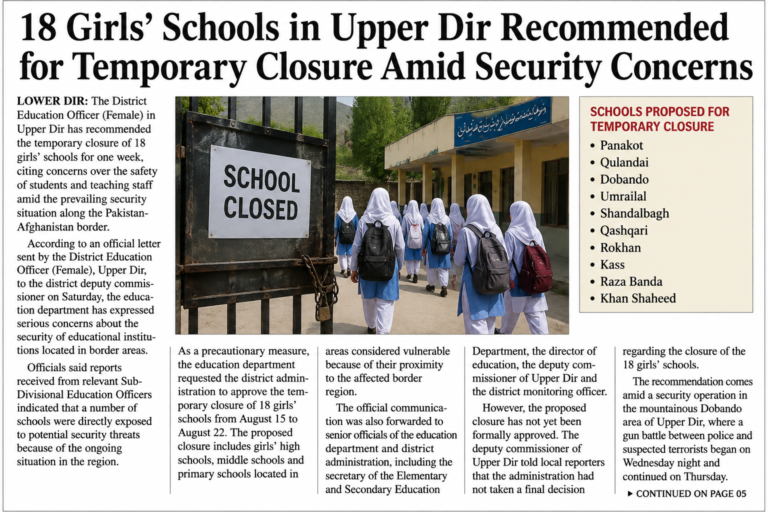
      LOWER DIR: The District Education Officer (Female) in Upper Dir has recommended the temporary closure of 18 girls’ schools for one week, citing concerns over the safety of students and teaching staff amid the prevailing security situation along the Pakistan-Afghanistan border. According to an official letter sent by the District Education Officer (Female), Upper Dir, to the district deputy commissioner on Saturday, the education department has expressed serious concerns about the security of educational institutions located in border areas. Officials said the uncertain situation has raised fears about the safety of students and teachers travelling to and attending schools in vulnerable areas. The letter stated that reports received from relevant Sub-Divisional Education Officers indicated that a number of schools were directly exposed to potential security threats because of the ongoing situation in the region. As a precautionary measure, the education department requested the district administration to approve the temporary closure of 18 girls’ schools from August 15 to August 22. The proposed closure includes girls’ high schools, middle schools and primary schools located in areas considered vulnerable because of their proximity to the affected border region. The schools included in the recommendation are situated in Panakot, Qulandai, Dobando, Umrailal, Shandalbagh, Qashqari, Rokhan, Kass, Raza Banda and Khan Shaheed. The official communication was also forwarded to senior officials of the education department and district administration, including the secretary of the Elementary and Secondary Education Department, the director of education, the deputy commissioner of Upper Dir and the district monitoring officer. However, the proposed closure has not yet been formally approved. The deputy commissioner of Upper Dir told local reporters that the administration had not taken a final decision regarding the closure of the 18 girls’ schools. The recommendation comes against the backdrop of heightened security concerns in the mountainous areas of Upper Dir. A security operation is currently underway in Dobando, where a gun battle between police personnel and suspected terrorists began on Wednesday night and continued into Thursday. Officials said the opposing sides remained positioned against each other during the operation and that heavy weapons were reportedly being used. At the time of the reports, however, authorities had not confirmed any casualties resulting from the encounter. The latest security concerns come after a separate deadly incident in neighbouring Lower Dir last month. Two policemen were martyred and 16 others were injured during an exchange of fire with suspected terrorists at Haidari Top, a mountainous location in the district. According to officials, law enforcement personnel had launched a search-and-strike operation in the area after receiving information about the presence of suspected terrorists. During the operation, armed militants reportedly launched a sudden attack on the security personnel. The ensuing gun battle continued for several hours, resulting in casualties among the law enforcement personnel. The security situation has prompted authorities to remain cautious, particularly in areas where schools are located close to conflict-affected or sensitive zones. The education department’s recommendation to temporarily suspend classes is intended as a preventive measure rather than a permanent closure. The final decision regarding the 18 girls’ schools will rest with the district administration. Officials are expected to assess the security situation before deciding whether educational activities can continue safely or whether the temporary closure should be implemented. For now, authorities are closely monitoring developments in the border areas, while the education department has emphasised that the safety of students and teaching staff remains the primary concern.

  • | |

    Iranian envoy hails Pakistan on 79th Independence …

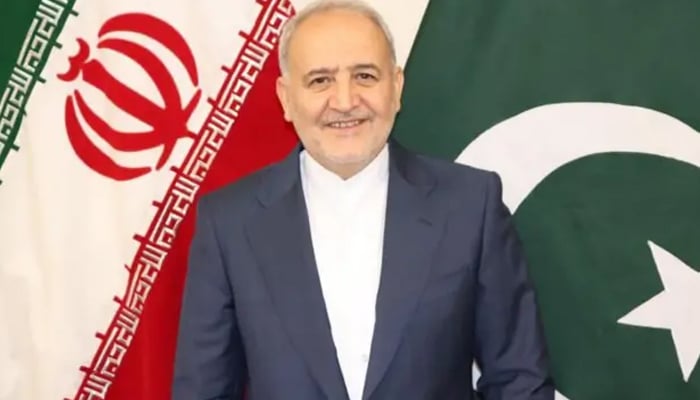
    ISLAMABAD: Iranian Ambassador to Pakistan Reza Amiri Moghaddam has extended heartfelt greetings to the Pakistani government and people on the country’s 79th Independence Day. In his message, the Iranian envoy described Pakistan as a great friend, neighbour and brotherly country. He praised the Pakistani people’s resilience, unity and achievements, saying Iran deeply valued their determination. Amiri Moghaddam said Iran attached great importance to its longstanding ties with Pakistan, based on friendship, mutual respect and cooperation. He said the commitment demonstrated by the leadership of both countries had opened the way for a new phase in bilateral relations. The ambassador said Iran-Pakistan relations were passing through an important turning point, with a new era of engagement and cooperation beginning between the two neighbouring countries. He said Iran wished continued prosperity, peace, security, development and wellbeing for the people of Pakistan. Amiri Moghaddam reaffirmed Iran’s desire to further strengthen the historic friendship between the two countries. He said Tehran remained committed to deepening bilateral relations in a manner that served the mutual interests of the Iranian and Pakistani peoples.

  • |

    Govt increases petrol by Rs1.09, HSD by Rs2.42

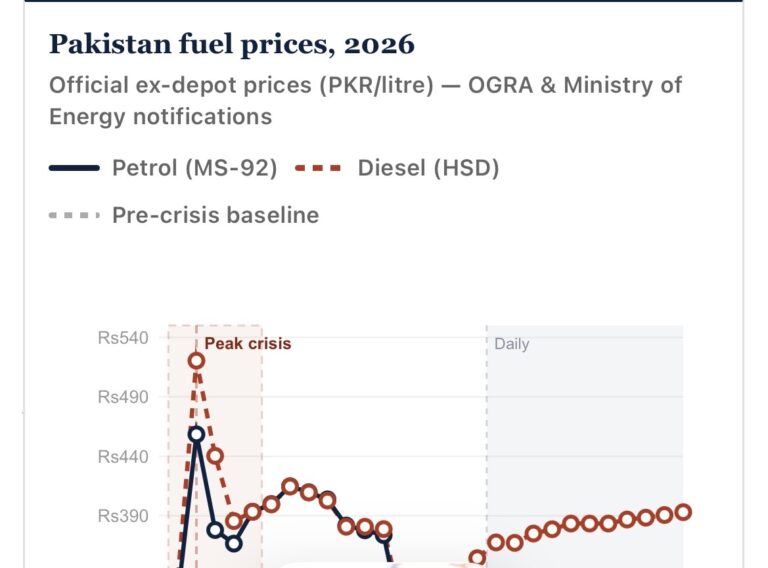
    The government on Thursday increased the prices of petrol and high-speed diesel (HSD) by Rs1.09 and Rs2.42 per litre, respectively, passing on the impact of fluctuating global oil prices amid ongoing Middle East tensions. Following the revision, petrol will retail at Rs336.15 per litre, while HSD will cost Rs393.04 per litre. The government continues to levy Rs110 per litre in taxes and duties on petrol and Rs96 per litre on diesel. The Petroleum Division’s notification said the new prices would be applicable for July 31 (Friday). The diesel price has come down from a peak of Rs520.35 recorded on April 3, after beginning its upward trajectory from Rs281 per litre when the US-Iran war broke out on February 28. Similarly, petrol had peaked at Rs458.41 on April 3 after rising from Rs266 in the first week of March. Earlier, Petroleum Minister Ali Pervaiz Malik announced that fuel prices would now be fixed on a daily basis due to fluctuations in international market prices following renewed hostilities between Iran and the US. The government had been announcing weekly revisions since early March, alongside conservation measures amid possible oil supply disruptions due to the ongoing conflict in the Middle East. In April, the federal government also announced targeted relief measures to provide subsidised fuel. The petroleum minister stated that the cabinet and the prime minister had decided to give the Oil and Gas Regulatory Authority (OGRA) the responsibility of deciding fuel prices on a daily basis based on international market trends. The daily pricing decision was rejected by the All Pakistan Dealers Association, which said it would consider a protest plan this week. Petrol is mainly used in private transport, small vehicles, rickshaws and two-wheelers, and changes in its price affect the middle and lower-middle classes. Similarly, diesel price changes impact the public at large, as it is primarily used in the heavy transport sector, power plants and large generators. Petrol and HSD are the major revenue earners, with monthly sales of about 700,000 to 800,000 tonnes, compared to just 10,000 tonnes of monthly demand for kerosene.

  • |

    Woman held in Lahore after snatching girl’s …

    LAHORE: Police have arrested a woman accused of forcibly snatching an earring from a young girl in Lahore’s Islampura area, officials confirmed on Thursday. According to police, the suspect was traced and taken into custody with the help of CCTV footage captured near the scene of the incident. SP Atif said the accused has a history of involvement in theft and street-snatching cases registered at multiple police stations. He added that investigators are examining her possible links to other similar incidents. Police said further legal proceedings are underway as the investigation continues.

  • | |

    Khawaja Asif accuses PTI of supporting PPP candida…

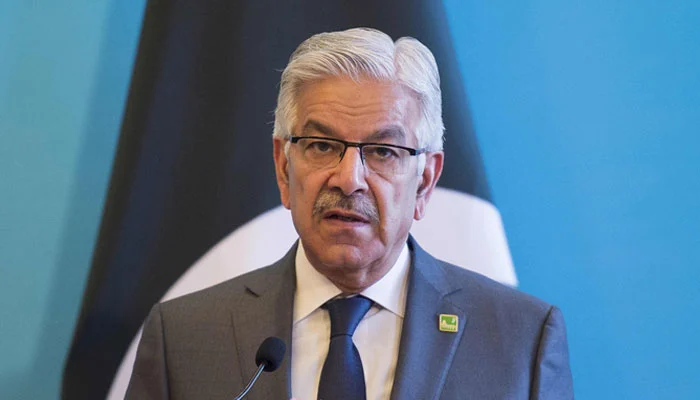
    Pakistan’s Defence Minister Khawaja Asif has claimed that the Pakistan Tehreek-e-Insaf (PTI) supported candidates of the Pakistan Peoples Party (PPP) during the recent elections. He alleged that in several constituencies, it appeared that both political parties had made joint efforts to influence the electoral outcome. Khawaja Asif stated that there were visible signs of cooperation between PTI and PPP in certain areas. According to him, the political activities and election strategies of both parties suggested that they were working together against other candidates. However, he did not provide specific evidence to support his claim. The Defence Minister said that he had been observing elections in Azad Kashmir for the past 55 years and had witnessed many political developments over different periods. He described the current election as significant, particularly because voter participation in urban areas was higher compared to previous elections. Khawaja Asif praised the efforts of his party’s workers, saying that they had worked hard during the election campaign. He claimed that the increased voter turnout in cities reflected greater public engagement and interest in the electoral process. He stated that urban areas recorded a turnout of more than 45 percent, describing it as an important achievement. According to Asif, the higher participation rate demonstrated that voters had actively participated in the democratic process and responded positively to his party’s campaign efforts. While discussing the performance of the Pakistan Peoples Party, Khawaja Asif claimed that the party’s popularity had declined among voters. He pointed out that the PPP had last won an election from the city in 1970, suggesting that the party had lost much of its previous political influence in the region. Asif argued that the current political landscape in Azad Kashmir was different from previous decades. He suggested that changing voter preferences and recent electoral trends indicated that political support for traditional parties had shifted over time. The Defence Minister’s remarks came amid political debate following the Azad Kashmir elections, where opposition parties raised concerns about the fairness of the electoral process. The PPP and other opposition groups have alleged irregularities, while government representatives have defended the transparency of the elections. Khawaja Asif maintained that his party’s success was the result of extensive political efforts and public support. He credited party workers for their dedication and said that the election outcome reflected the changing political dynamics of the region. The allegations regarding PTI’s support for PPP candidates have added another layer to the ongoing political discussions. Both PTI and PPP have their own positions regarding the election process, and any claims of coordination between them remain a subject of political debate. As the political situation develops, statements from different parties are expected to continue shaping discussions about the election results, voter trends, and the future direction of politics in Azad Kashmir.

Leave a Reply

Your email address will not be published. Required fields are marked *