two policemen injured
| |

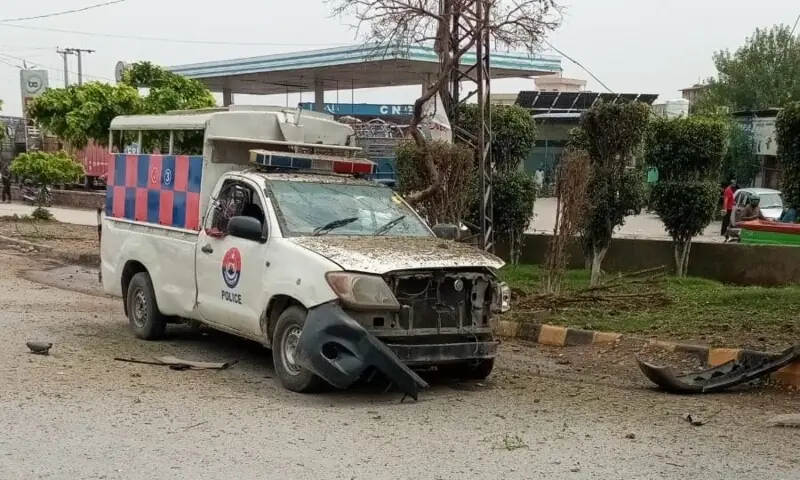
Two policemen injured in Peshawar IED attack

PESHAWAR: Two police personnel sustained minor injuries after an improvised explosive device (IED) exploded near a police vehicle in Peshawar on Sunday, officials said.

The blast occurred near Pir Zakorhi Bridge, close to the Peshawar-Islamabad Motorway toll plaza, where a police van was travelling on routine duty. The explosion damaged the vehicle and left the driver and a police constable with minor injuries.

Rescue teams and law enforcement officials quickly reached the site and shifted the injured officers to a nearby hospital for medical treatment. Authorities said both policemen were in stable condition and suffered only minor wounds.

The Bomb Disposal Unit (BDU) launched a search operation in the surrounding area after the explosion. Initial findings suggested that the explosive device had been planted along the roadside in a green belt and was detonated as the police vehicle passed by. Security personnel thoroughly scanned the area to ensure no additional explosive devices were present.

Police cordoned off the scene and began collecting evidence to determine those responsible for the attack. An investigation has been launched, while officials are examining the nature of the explosive and the method used in the incident.

The latest attack comes amid a surge in militant violence across Khyber Pakhtunkhwa. In recent days, several security personnel have lost their lives in separate terrorist attacks and counterterrorism operations in different parts of the province.

Similar Posts

  • | | | | |

    Hlun Solo’s Death Devastates Fans, We Explain Why He Was The Exact Opposite of Most Influencers and YouTubers and Why He Was So Beloved by Thais

    Thailand/Georgia His real name was Bowornthat Pengsuk, born in 1999 in Kalasin province in northeastern Thailand, he grew up in modest circumstances. After his father died, he was raised primarily by his grandmother, who focused on education and practical values. He attended local schools that offered scholarships and support, then worked factory jobs in Bangkok, […]

  • |

    Umerkot flour millers reject Rs128/kg official rate, seek fresh price review

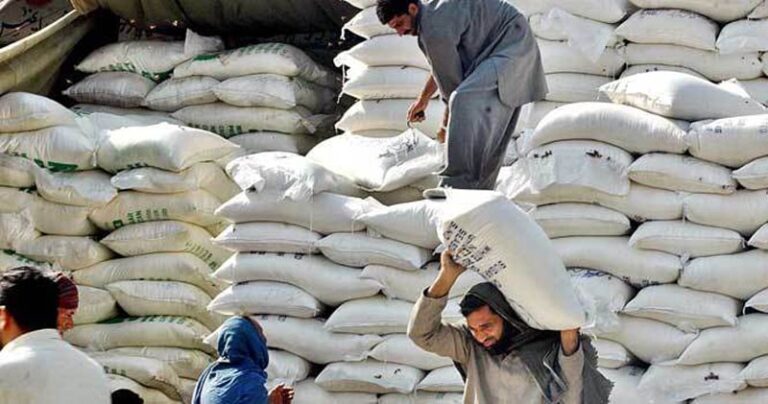
    UMERKOT: Flour mill owners in Umerkot district have rejected the government-fixed price of Rs128 per kilogram, arguing that the sharp increase in wheat prices has pushed their production costs far above the officially notified rate. The millers said the prevailing wheat price in the open market had climbed to around Rs125 per kilogram, while additional expenses related to milling, labour, electricity, transportation and other operations had increased the overall cost of producing flour to nearly Rs140 per kilogram. They maintained that selling flour at Rs128 per kilogram was therefore commercially unsustainable and would force mill owners to operate at a loss. In this regard, representatives of the flour milling industry have submitted written applications to the Mirpurkhas commissioner and the Umerkot deputy commissioner, requesting authorities to reconsider the existing flour price and determine a new rate based on prevailing market conditions and production costs. The mill owners also raised objections to what they described as excessive administrative action against flour mills across the district. They specifically complained about raids and wheat seizures allegedly carried out by assistant commissioners in Umerkot, Kunri, Samaro and Pithoro. According to the millers, government policy allows flour mill owners to maintain wheat stocks of up to 850 bags per stone at their mills or designated warehouses. They alleged that despite the provision, local administrative officials had conducted raids on mills and storage facilities and seized wheat stocks. The mill owners termed the alleged seizures unjustified and said such actions were creating additional difficulties for an already financially pressured industry. They urged the authorities to ensure that enforcement measures were carried out strictly in accordance with the relevant government policy. The millers further called for an investigation into alleged irregularities involving food department inspectors. They demanded that senior provincial officials examine the complaints and take appropriate action if any wrongdoing is established. They appealed to the Sindh chief minister, provincial food secretary, Mirpurkhas commissioner, Umerkot deputy commissioner and other concerned authorities to intervene in the matter and review the officially fixed flour price. The mill owners argued that the price should be determined after taking into account the current cost of wheat as well as electricity, labour, transportation, maintenance and other expenses associated with flour production. They warned that continued enforcement of a price they consider economically unviable could increase financial losses for flour mills and put further pressure on the district’s milling industry. The millers said they were willing to cooperate with the administration in maintaining the availability of flour and preventing unjustified price increases, but stressed that any official pricing mechanism must reflect actual market and production costs. They also urged the provincial government to establish a transparent mechanism for monitoring wheat stocks and flour prices so that disputes between millers and local administrations could be resolved through clear rules rather than repeated raids and seizures.

  • 32 dead as gas blast rips through Quetta coal mine

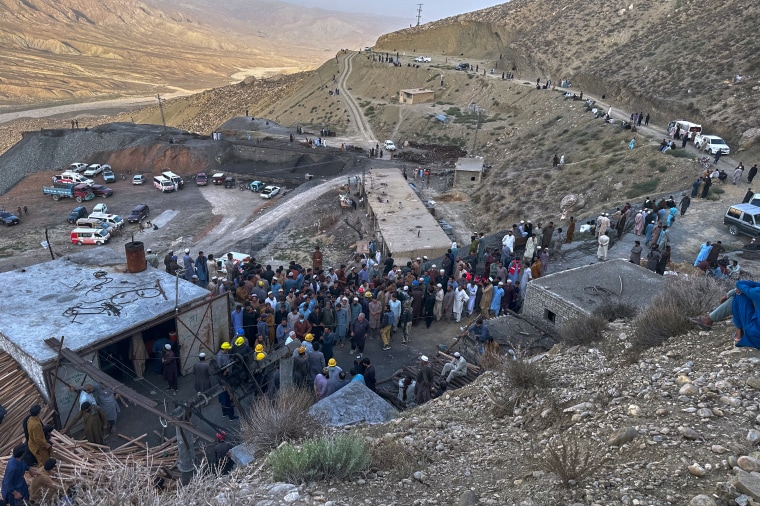
    At least 32 bodies were recovered overnight from two coal mines in the Sorange coalfield near Quetta after a methane gas explosion tore through the site. The search for two more miners continued on Friday, an official told Dawn. The explosion took place on Thursday at a private coal mine in the Sorange coalfield, about 30 kilometres northeast of Quetta. The methane gas blast set off a fire, caused the mine to collapse, and also affected a nearby mine. Chief Inspector of Mines Balochistan Muhammad Atif told Dawn that 34 miners were inside the two mines at the time of the explosion. He said that so far 32 bodies had been recovered from both mines, and that the operation to recover the remaining two miners was continuing in the mine where the explosion originally took place. Officials said the explosion happened on Thursday afternoon while 24 miners were working around 4,000 feet underground in the first mine. A fire broke out soon after the blast, causing parts of the mine structure to collapse. The sound of the explosion was heard across a wide area of Sorange. A second, nearby mine was also badly affected. Twelve miners were working inside this mine when the explosion occurred. Mining engineers and workers built alternative routes to reach both affected mines, but large amounts of methane gas along with the ongoing fire made it extremely difficult to reach the bodies and the miners still trapped deep underground. Provincial Minister for Mines and Minerals Mir Shoaib Nosherwani announced that the provincial government will pay Rs500,000 in compensation to the family of each miner who died, and Rs300,000 to every injured worker. He said an inquiry into the incident would also be carried out. This is not the first such tragedy in the region. In June, three people were injured when explosive material used in mining accidentally went off in Quetta division’s Khanuzai area. In April, at least five coal miners were killed in two separate accidents in the Bolan and Duki coalfield areas. Meanwhile, Khyber Pakhtunkhwa’s Shangla district is mourning the loss of 28 young coal miners who died in the blast, including 23 residents of a single village, Mian Kaly. The Shangla Coal Mine Workers Association said that almost every household in Mian Kaly is now grieving the loss of a family member. Abid Yaar, president of the association, said Mian Kaly has become the centre of repeated coal mine tragedies. He said that of the 28 deceased workers from Shangla district, 23 were from Mian Kaly, also known as Pir Abad, two were from Kana, and one each came from Bada and Gata Bely Baba. He said the victims were between 17 and 25 years old, and many belonged to the same families, being cousins or close relatives. He added that several of the dead were orphans whose fathers had also died in earlier coal mine accidents. Yaar alleged that the tragedy was caused by negligence on the part of the mine administration and a lack of basic safety measures. He claimed there was no proper ventilation system in the government run mine, which led to the deadly gas explosion. He said this was not just an accident but a lifelong trauma for the families, orphans, widows and mothers who lost their loved ones. He said these young men had gone to work in the mine only to earn a living and support their families back home. He also said that Shangla lacks factories and other skilled job opportunities, which forces young people to risk their lives in dangerous coal mines just to make ends meet. Family members of the victims criticised the government for failing to arrange ambulances to transport the bodies home. They said they had to bring the remains back in a van at their own expense. According to the Shangla administration, one body arrived on Friday evening, with the rest expected to arrive later that night and early Saturday morning. Three of the miners who died in the tragedy were brothers.

  • | |

    Former Pakistan test cricketer Basit Ali hospitali…

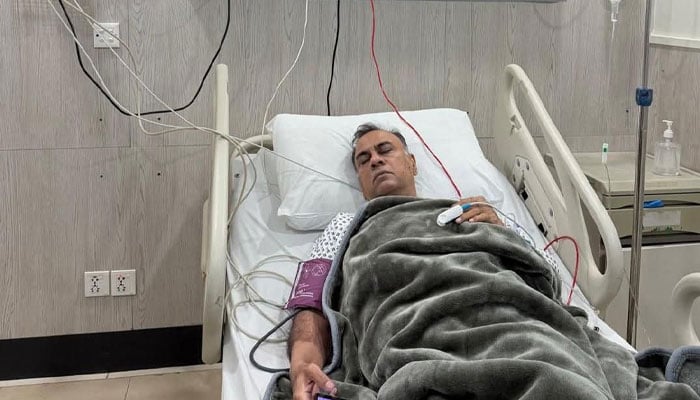
      Former Pakistan Test cricketer Basit Ali has been hospitalized after experiencing a heart-related health issue. The 55-year-old former international cricketer was taken to a private hospital, where doctors are currently treating him. According to Basit Ali’s wife, the former cricketer was brought to the hospital for an angioplasty procedure. She said that Basit Ali is currently under medical care and that doctors are monitoring his condition. Further details about his health are expected to emerge following the treatment. Basit Ali is a well-known former Pakistani cricketer who represented the national team during the 1990s. He was regarded as a talented middle-order batsman and became known for his aggressive approach at the crease. During his international career, he represented Pakistan in both Test and One Day International cricket. Basit Ali played 19 Test matches for Pakistan, scoring 858 runs. In the longer format, he was part of the national side during a period when Pakistan had a highly competitive cricket team and several established international batsmen. In One Day International cricket, Basit Ali represented Pakistan in 50 matches and scored 1,265 runs. His ability to score quickly and play attacking strokes made him a notable member of Pakistan’s limited-overs squad. The former cricketer’s hospitalization has drawn attention from the Pakistani cricket community, with fans and former players expressing concern over his health. His family has confirmed that he is receiving treatment at the private hospital. Angioplasty is a medical procedure commonly used to restore blood flow through narrowed or blocked arteries. During the procedure, doctors generally open the affected blood vessel to improve circulation. The decision to perform angioplasty depends on the patient’s medical condition and the assessment of the treating doctors. Basit Ali’s illness comes as a reminder of the importance of timely medical attention when symptoms related to the heart occur. His family brought him to the hospital for treatment, where specialists are currently attending to him. Born in Karachi, Basit Ali made his international debut for Pakistan in the early 1990s. Although his international career was relatively short, he remained a familiar figure in Pakistani cricket. Following his playing career, he continued to remain associated with the sport through cricket-related activities and analysis. His experience as a former international player has also allowed him to remain connected with Pakistan’s cricketing circles. Over the years, he has regularly shared his views on Pakistan cricket and the performances of national players. The cricket fraternity is now awaiting further updates regarding his condition. His family has requested prayers and good wishes as he undergoes treatment. At present, Basit Ali remains under medical supervision at the private hospital. His wife has confirmed that he was admitted for angioplasty and that treatment is underway. Fans and cricket supporters across Pakistan are hoping for his speedy recovery and a return to good health.

  • | | |

    Aurangzeb, Baker discuss stronger Pak-US economic …

    Federal Minister for Finance Muhammad Aurangzeb met US Chargé d’Affaires Natalie Baker on Monday to discuss ways to strengthen Pakistan-US economic relations, trade and investment cooperation. According to the Finance Ministry, Aurangzeb briefed the US diplomat on his recent visit to Washington and meetings with senior American officials, including the US Treasury secretary. He also shared details of discussions with officials from the International Monetary Fund (IMF), US International Development Finance Corporation (DFC) and US Export-Import Bank. The meeting focused on increasing US investment and financing for commercially viable projects in Pakistan. Both sides also discussed improving Pakistan’s access to US markets and expanding Pakistani exports. The two sides agreed to advance a framework aimed at increasing bilateral trade and investment. They also discussed Pakistan’s participation in international capital markets and efforts to diversify the country’s sources of financing. According to the ministry, discussions also covered measures to strengthen foreign exchange reserves and improve Pakistan’s credit profile. Opportunities for greater investment by US financial institutions in Pakistan were reviewed. Cooperation in key sectors, including ports, logistics, energy and telecommunications, also came under discussion. The two sides explored potential collaboration in digital technology and artificial intelligence. Aurangzeb said significant progress had been made in negotiations on a bilateral trade framework between Pakistan and the United States. He said the government was working to create a more favourable environment for private-sector investment. The finance minister welcomed the interest of US companies and investors in Pakistan. He said the government was continuing reforms aimed at improving the business and investment climate. Aurangzeb also briefed the US chargé d’affaires on Pakistan’s new system for daily adjustments in petroleum product prices. He explained that the mechanism was designed to align domestic prices more closely with developments in the international market. He said the government’s priorities included maintaining fiscal discipline, strengthening foreign exchange reserves and increasing exports. He added that reforms were underway to improve economic stability and attract investment. Natalie Baker appreciated Pakistan’s efforts to manage its economic situation during a period of regional tensions. She also praised the country for maintaining economic and financial stability despite rising energy prices.

  • |

    Japan earthquake disrupts auto and chip production as death toll rises to 34

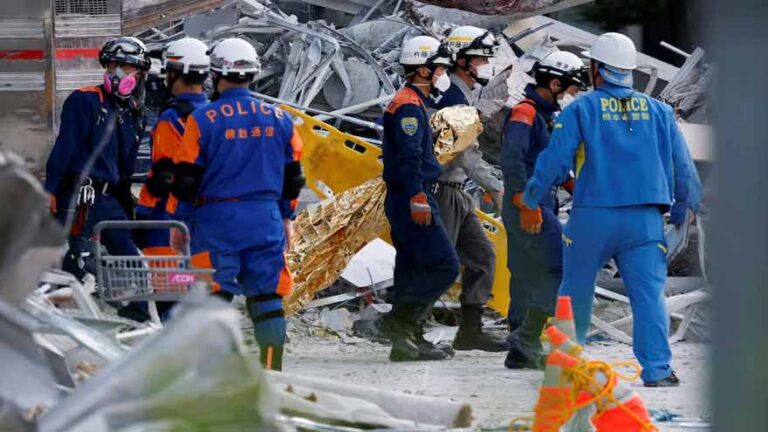
    A powerful earthquake that struck Japan’s Kumamoto region has killed at least 34 people and disrupted major manufacturing operations, exposing the continued vulnerability of the country’s industrial supply chains. The 7.1 magnitude quake damaged roads, interrupted essential services and forced several automobile and semiconductor companies to suspend production, raising concerns about delays across global supply networks. The earthquake struck on Tuesday, causing widespread destruction in southern Japan. Thousands of households were left without basic utilities while damaged roads and transport links made it difficult for businesses to continue normal operations. Kumamoto is one of Japan’s most important manufacturing regions and plays a key role in producing vehicles, auto parts and semiconductors used around the world. Toyota has temporarily suspended production at three factories in Fukuoka until August 5 because of concerns about employee safety and disruptions affecting suppliers and transport companies. The company has also decided to halt operations at one of its plants in Aichi, located more than 600 kilometres from the disaster zone, showing how shortages of essential components can quickly affect factories far from the earthquake’s epicentre. One of Toyota’s major suppliers, Aisin, also suffered disruptions at its factory near the hardest hit area. The company manufactures engines, doors and other vehicle parts for Toyota, Nissan and Daihatsu. Aisin said it plans to restart production gradually after confirming that facilities are safe and product quality can be maintained. However, it has not announced when full operations will resume. Trucks carrying supplies, including portable toilets, were seen entering the factory as recovery work continued. Local businesses reported that water services had been interrupted although electricity remained available. The latest disaster has revived memories of the 2016 Kumamoto earthquake, which caused severe damage to the same Aisin plant and forced Toyota to suspend production across Japan because of shortages of a critical door component. Industry officials said smaller suppliers further down the supply chain may also have been affected this time, increasing the risk of continued production delays. Auto parts manufacturer Denso said one of its suppliers had already reported damage while several others were still assessing conditions. Nissan has suspended some production at its two vehicle plants in Kyushu because of delays in receiving parts. Mitsubishi Motors has also halted certain production lines at its factory in Okayama as the effects of the earthquake continue to spread through the manufacturing sector. Kumamoto has also become one of Japan’s leading centres for semiconductor production in recent years. The region is often referred to as the country’s Silicon Valley because of its concentration of advanced chip manufacturers. Taiwan Semiconductor Manufacturing Company, the world’s largest contract chipmaker, evacuated workers from its Kumamoto plant immediately after the earthquake. The company later confirmed that operations had started to resume within a few hours. Other semiconductor companies are expected to take longer to recover. Renesas said damage at one of its facilities included fallen ceiling panels, cracked walls and water leaks. The company plans to restart production in stages beginning on August 5. Tokyo Electron announced that it expects to resume production next week, while Sony said efforts are continuing to restore operations at its semiconductor factory in Kumamoto. Although the number of deaths is lower than the more than 260 people killed in the 2016 earthquake, this disaster has still caused significant human and economic losses. Nearly half of the fatalities occurred inside commercial buildings. Nine people died when severe structural damage struck a Nippon Paper Industries mill near the epicentre. Another seven people lost their lives at an Aeon shopping mall where authorities believe a gas explosion occurred more than an hour after the initial earthquake. The disaster has once again highlighted the challenge Japan faces in protecting both its population and its globally important manufacturing industry from natural disasters.

Leave a Reply

Your email address will not be published. Required fields are marked *