shehbaz sharif orders
| |

PM Shehbaz Sharif orders digital system to end oil…

ISLAMABAD: Prime Minister Shehbaz Sharif has directed the implementation of a modern digital monitoring system in Pakistan’s oil and gas sector, aiming to eliminate profiteering, hoarding and improve transparency across the energy supply chain.

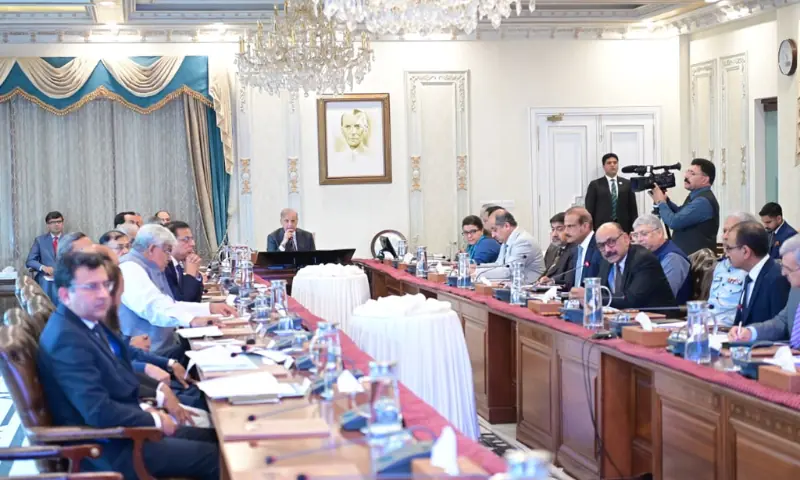
The directive came during a meeting in Islamabad where the prime minister met a delegation led by the World Bank’s country director. The delegation presented a set of policy recommendations focused on strengthening governance, improving regulatory oversight and enhancing efficiency in the country’s energy sector.

During the meeting, Prime Minister Shehbaz instructed the relevant authorities to establish a committee to review the World Bank’s recommendations and submit practical proposals for implementation. The committee is expected to evaluate the report and identify reforms that could modernize the sector while protecting consumers.

The prime minister also issued specific instructions to the Oil and Gas Regulatory Authority (OGRA) to introduce an advanced digital system capable of monitoring the movement, storage and distribution of petroleum products. The initiative is intended to increase transparency, curb illegal practices and prevent artificial shortages caused by hoarding.

Officials said the digital platform is expected to strengthen regulatory oversight by enabling authorities to monitor supply chains in real time, making it more difficult for unscrupulous elements to manipulate fuel availability or earn unlawful profits through price distortions.

The government believes greater digital integration will improve accountability, ensure a more reliable supply of petroleum products and build public confidence in the country’s energy market. Officials also hope the move will support broader economic reforms by promoting fair competition and reducing opportunities for market abuse.

The meeting reflects the government’s continued focus on improving governance in key economic sectors through technology-driven reforms. Energy experts say stronger digital oversight could help streamline operations, enhance regulatory compliance and provide consumers with greater protection against unfair pricing and supply disruptions.

The government is expected to announce further details regarding the implementation timeline after the review committee completes its assessment of the World Bank’s recommendations.

Similar Posts

  • Thailand to Transform Cannabis Shops into Medical Clinics

    BANGKOK — Thailand’s new administration is steering the country’s cannabis industry tightly toward a medical framework, with ordinary cannabis shops set to disappear as operators renewing their licences will be required to transform their businesses into medical facilities, the Bangkok Post reported. Krabi Police Raid Israeli-Linked Cannabis Farm Operated Through Thai Nominees The policy shift […]

  • US And Iran Sign Historic Agreement To Halt Middle East Conflict

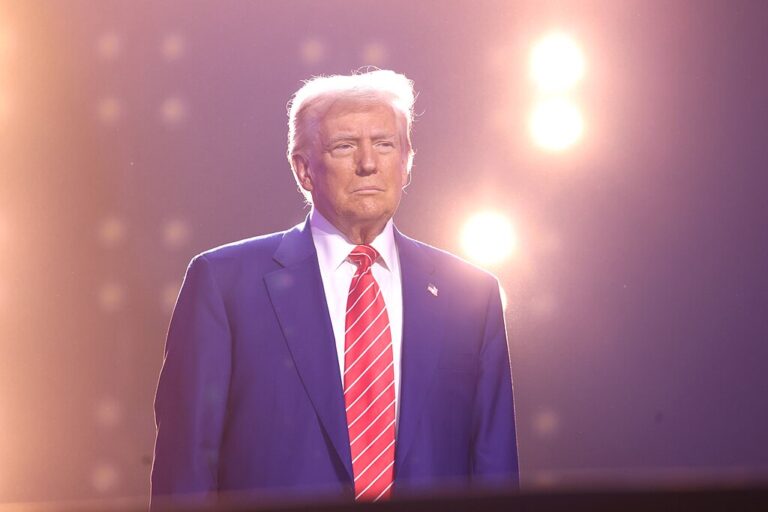
    BANGKOK, Thailand — United States President Donald Trump and the President of Iran have signed a landmark memorandum of understanding designed to end the ongoing Middle East war, with Tehran agreeing to dilute its enriched uranium stockpiles in exchange for sweeping economic relief and the lifting of a US naval blockade. US and Israel Launch […]

  • |

    Iran appoints former revolutionary guards chief Mohsen Rezaei to National Security Council

    TEHRAN: Iran has appointed veteran military and political figure Mohsen Rezaei to a senior position within the country’s Supreme National Security Council (SNSC), replacing Mohammad Baqer Zolqadr and bringing one of the Islamic Republic’s most prominent former Revolutionary Guards commanders back into a central security role. The appointment was announced late Sunday by the office of Iranian President Masoud Pezeshkian’s deputy director of communications. No official explanation was immediately provided for the change, and it remains unclear whether Rezaei’s appointment will result in any significant shift in Iran’s security or foreign policy. Rezaei, 71, has extensive experience in Iran’s military, security and political institutions. He served as commander of the Islamic Revolutionary Guard Corps (IRGC) from 1981 until 1997, a period that included most of the Iran-Iraq war. His return to a prominent security position comes at a particularly sensitive time for Iran, amid continuing tensions with the United States and Israel, as well as uncertainty surrounding the security of the strategically important Strait of Hormuz. The SNSC is one of Iran’s most important institutions for coordinating national security and foreign policy. Although the council is formally chaired by the elected president, it brings together senior military, intelligence and government officials, along with representatives of Supreme Leader Mojtaba Khamenei. Major strategic decisions ultimately remain subject to the authority of the supreme leader. Zolqadr’s short tenure ends Zolqadr had been appointed secretary of the SNSC only in late March. He took over the position following the death of his predecessor, Ali Larijani, who was killed in an air strike during the conflict involving Iran, the United States and Israel. Unlike Zolqadr, Rezaei has maintained a considerably higher public profile over the course of his political career and has frequently spoken on major domestic, economic and foreign-policy issues. In a separate decree issued Sunday, Supreme Leader Mojtaba Khamenei appointed Rezaei as his representative to the SNSC. The decree referred to Rezaei’s extensive experience, including his service during the 1980-1988 Iran-Iraq war. Hardline politician Saeed Jalili also serves as the supreme leader’s representative on the council. The same decree appointed Zolqadr as Khamenei’s political adviser, suggesting that his departure from the SNSC leadership does not represent a complete withdrawal from the country’s senior political establishment. Rezaei’s long political career Rezaei’s career has extended well beyond the military. After leaving his post as IRGC commander, he served for more than two decades as secretary of Iran’s Expediency Discernment Council, an influential body involved in resolving disputes between state institutions and advising the supreme leadership. He later entered the executive branch, serving as vice president for economic affairs from 2021 to 2023 during the administration of former President Ebrahim Raisi. Rezaei also holds a doctorate in economics from the University of Tehran. Despite his academic background, much of his professional life has been spent within Iran’s military, security and political establishment. His appointment therefore places an experienced figure with a long history in Iran’s national security apparatus at the center of a council responsible for coordinating some of the country’s most consequential strategic decisions. Strait of Hormuz remains key issue The leadership change comes as Tehran continues discussions over the future of shipping through the Strait of Hormuz, a critical international energy route. Iranian Foreign Minister Abbas Araqchi said Saturday that Tehran and Oman were nearing an understanding on a possible new shipping route through the strait. The waterway has faced severe disruption during months of conflict and escalating regional tensions. However, Iranian officials have indicated that reopening the route would depend on broader conditions being met. These reportedly include demands related to US compensation for Iran and an end to what Tehran describes as American threats and aggression. Zolqadr had previously outlined several demands, including an end to US threats against Iran, the cessation of military action against Iran and its regional allies, the lifting of sanctions and blockade measures, and the release of Iranian assets. The demands highlight the wider diplomatic and security challenges facing Tehran as it attempts to manage relations with Washington while dealing with continuing regional instability. Policy direction remains uncertain The replacement of Zolqadr by Rezaei does not necessarily indicate an immediate change in Iran’s foreign-policy direction. The SNSC operates within a broader political system in which the supreme leader has ultimate authority over major matters of national security and international affairs. However, Rezaei’s extensive military background and long involvement in Iran’s senior political institutions could make his appointment significant, particularly as Tehran navigates negotiations, military tensions and economic pressure.

  • Thailand to Deport Qatari Man For Assaulting Disabled Woman

    BANGKOK – A Qatari tourist visiting Thailand faces immediate deportation following a sudden and violent street outburst. The terrifying street rampage left six innocent people injured in the peaceful coastal town of Hua Hin. Local police authorities moved quickly to secure the area and safely arrest the dangerous suspect. The shocking incident actually began on […]

  • |

    PCB unveils commentary panel for Champions Cup 2026

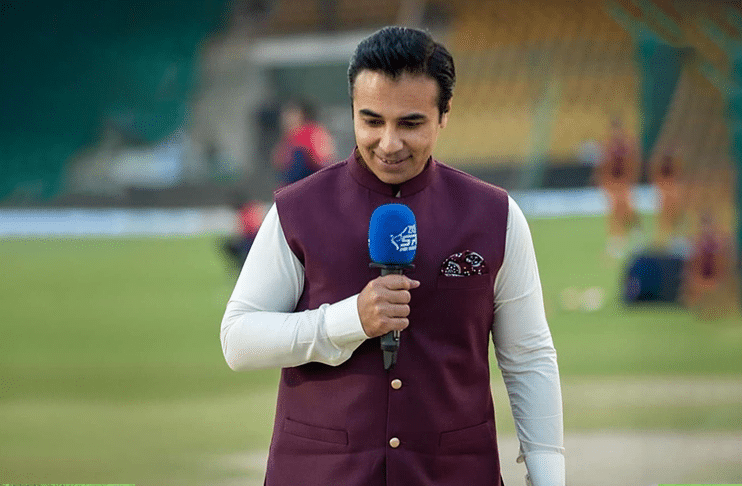
    MULTAN: The Pakistan Cricket Board (PCB) has announced a star-studded commentary panel for the National Champions Cup 2026, adding further excitement to a tournament that could prove important in shaping Pakistan’s future international squad. The seven-match competition will be played at Multan Cricket Stadium from August 11 to 18, with four teams — Pakistan Greens, Pakistan Whites, Pakistan Blues and Pakistan Gold — competing in a single round-robin format. Former Pakistan captain Salman Butt will headline the commentary team alongside Ali Younis, Tariq Saeed, Aimen Anwar and Raja Asad. Their experience and analysis are expected to provide viewers with deeper insight into the performances of established players and emerging prospects. Under the tournament format, each team will face the other three sides once. The two teams collecting the most points at the end of the league stage will advance to the final. The Champions Cup carries added significance as the PCB looks ahead to the ICC Men’s Cricket World Cup 2027. Selectors will use the competition to closely monitor players competing for national recognition, while younger cricketers will have an opportunity to make a strong impression. The PCB has selected 44 players across the four squads, with another 13 players included in a reserve pool. Reserve players can replace members of the main squads only in cases involving injury or concussion. With established internationals sharing the field with promising domestic talent, the tournament is expected to offer a revealing look at Pakistan’s emerging cricketing depth. For selectors, every match could become an audition. For players, the Champions Cup may represent a crucial step towards earning a place in Pakistan’s plans for the 2027 World Cup, to be jointly hosted by South Africa, Zimbabwe and Namibia. Squads Pakistan Greens Playing XI: Shadab Khan (c), Faheem Ashraf, Fakhar Zaman, Farhan Yousuf, Mehran Mumtaz, Mohammad Hasnain, Mohammad Salman Mirza, Naseem Shah, Omair Bin Yousuf, Saad Baig (wk) and Sameer Minhas. Pakistan Whites Playing XI: Saim Ayub (c), Akif Javed, Ali Raza, Haris Rauf, Hasan Nawaz, Khushdil Shah, Mohsin Riaz, Mohammad Wasim Jnr, Saad Masood, Shahzaib Khan and Usman Khan (wk). Pakistan Blues Playing XI: Sahibzada Farhan (c), Abdullah Shafique, Ahmed Daniyal, Arafat Minhas, Hasan Ali, Hussain Talat, Jahandad Khan, Rohail Nazir (wk), Shamyl Hussain, Sufyan Moqim, Taimur Khan (wk). Pakistan Gold Playing XI: Shaheen Shah Afridi (c), Abdul Samad, Abdul Subhan, Faisal Akram, Haider Ali, Kamran Ghulam, Maaz Sadaqat, Mohammad Nawaz, Muhammad Akhlaq (wk), Muhammad Imran and Saad Khan.

  • |

    Pakistan wins historic double gold at Ju-Jitsu Worlds

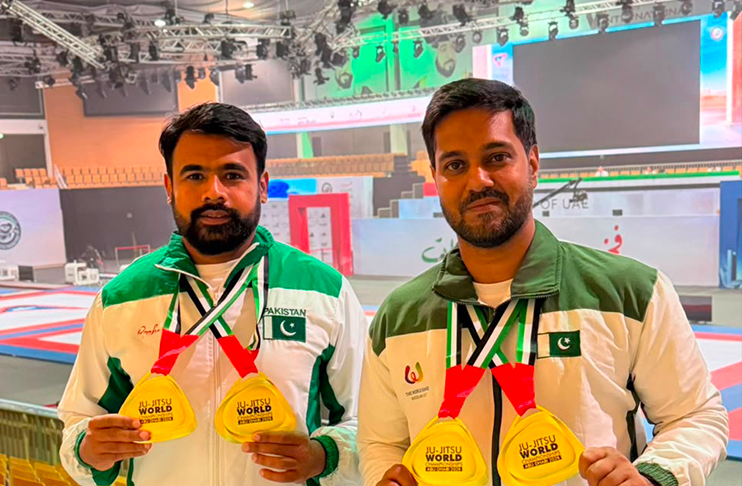
    Pakistan achieved a historic milestone at the 2026 World Ju-Jitsu Championship by winning two gold medals and one bronze medal, marking one of the country’s finest performances in the international competition. The championship, being held at the Mubadala Arena in Abu Dhabi, has attracted more than 1,500 athletes from across the world. Competitors are taking part in Under-16, Under-18, Under-21, adult and Masters categories, with the event continuing until August 9. Pakistan’s biggest success came through former Asian champions Abu Huraira and Muhammad Ammar, who secured gold medals in both the Masters Duo and Duo Show events. Their victories created history as it was Pakistan’s first-ever participation in the Masters category at the World Ju-Jitsu Championship. The pair produced outstanding performances throughout the competition, demonstrating exceptional coordination, technical excellence and consistency to finish at the top of both events. Pakistan added another medal to its tally when young athletes Muhammad Yousaf and Muhammad Umar captured the bronze medal in the Under-21 Duo category. The duo impressed judges with their teamwork, precision and discipline during the competition. Yousaf and Umar are also scheduled to compete in the Under-21 Duo Show event, where they will look to add another medal for Pakistan before the championship concludes. Pakistan Ju-Jitsu Federation Chairman Khalil Ahmed Khan congratulated the athletes on their remarkable achievements and described the victories as a proud moment for the country. He said the success would inspire young athletes to pursue excellence in the sport. Secretary General Tariq Ali also praised the national team, saying the results reflected years of dedication, hard work and continuous improvement by Pakistan’s ju-jitsu athletes on the international stage. The federation congratulated Abu Huraira, Muhammad Ammar, Muhammad Yousaf and Muhammad Umar for their outstanding performances and expressed confidence that the national team would continue to achieve success in the remaining events of the championship.

Leave a Reply

Your email address will not be published. Required fields are marked *