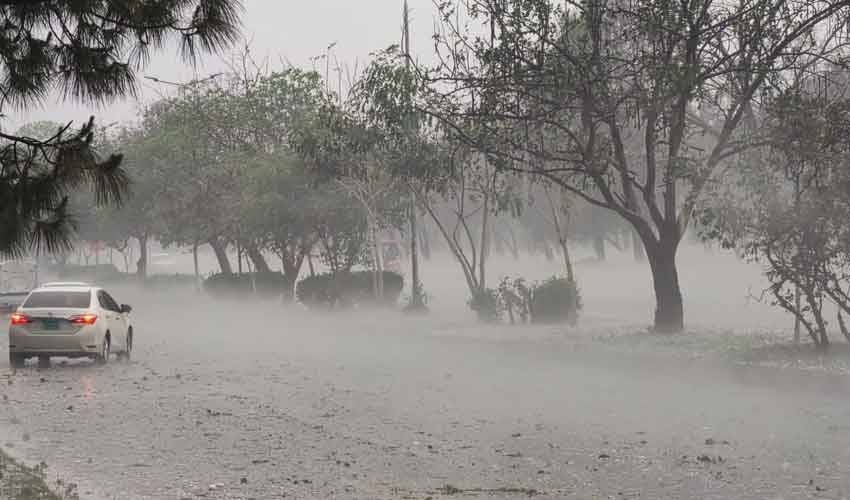
heavy rains trigger
| |

Heavy rains trigger NDMA flood warning for multipl…

The National Disaster Management Authority (NDMA) has issued a nationwide flood alert, warning that rising river levels and continued monsoon rainfall could lead to flooding in several parts of Pakistan through Sunday. The authority has urged citizens to remain vigilant and avoid unnecessary travel to flood-prone areas.

According to the NDMA, the Indus River is currently experiencing moderate flooding at Guddu, while low flood conditions persist at Kalabagh, Chashma, and Sukkur. The Chenab River is also expected to witness moderate to high water flows at Marala, with low to moderate flows forecast at Khanki and Qadirabad.

The authority further stated that the Jhelum, Ravi, and Kabul rivers, along with their tributaries, are expected to experience low to moderate flows. However, water levels in streams and tributaries connected to the Jhelum, Chenab, and Ravi rivers are likely to increase significantly due to ongoing rainfall.

Hill torrents in Dera Ghazi Khan and Rajanpur are also expected to experience heavy water flows, raising the risk of flash flooding. Similar conditions are forecast for rain-fed streams and nullahs in central and southern districts of Khyber Pakhtunkhwa and northern Balochistan.

The NDMA warned that districts including Mohmand, Bajaur, Buner, Mardan, Kurram, South Waziristan, Shangla, and Peshawar in Khyber Pakhtunkhwa could experience flooding in streams and nullahs. In northern Balochistan, the Nari, Bolan, Kangri, and Lehri rivers are also at risk of flash flooding.

Urban flooding is expected in several Punjab districts, including Rawalpindi, Jhelum, Gujranwala, Sargodha, Mandi Bahauddin, Sialkot, Gujrat, Narowal, Lahore, Okara, Sahiwal, and Faisalabad. Similar conditions may affect Sindh districts such as Sukkur, Hyderabad, Shaheed Benazirabad, Thatta, Badin, Sanghar, Khairpur, Mirpurkhas, Umerkot, Tando Muhammad Khan, Tando Allahyar, Tharparkar, and Nawabshah. Cities including Peshawar, Nowshera, Charsadda, and Mardan may also experience urban flooding.

The NDMA has advised the public to avoid crossing flooded roads, rivers, and streams, particularly in mountainous areas where landslides, debris flows, and flash floods are more likely during the monsoon season. Travelers are encouraged to carry emergency supplies, including drinking water, dry food, a flashlight, a first-aid kit, a power bank, and emergency contact numbers.

Citizens have also been urged to stay informed through the official Pak NDMA Disaster Alert mobile application and follow instructions issued by local authorities to ensure their safety during the ongoing monsoon season.

Similar Posts

  • | | |

    Bangladeshi muslims India crackdown: Deportation d…

    A growing controversy over undocumented migrants in India’s West Bengal has drawn attention after authorities launched a crackdown targeting people accused of illegal entry from Bangladesh. The move has created uncertainty among many migrant families and sparked debate over immigration policies, legal procedures, and human rights. In border areas such as Hakimpur, families who migrated from Bangladesh in search of better economic opportunities say they are now facing an uncertain future. Many claim they came to India years ago to find work and support their families but are now worried about detention and possible deportation. India shares a long border with Bangladesh, and movement of people between the two regions has a complex historical background. Communities on both sides have long-standing cultural, linguistic, and economic connections, particularly in border states such as West Bengal and Assam. Authorities supporting the crackdown say action is being taken against people who do not have valid documents to remain in India. Officials argue that the country has laws for dealing with undocumented foreign nationals and that proper procedures are being followed. However, human rights organizations have raised concerns about whether individuals are being given sufficient legal protection before removal. Rights groups have emphasized that anyone facing deportation should have access to legal representation and a fair process to verify their citizenship status. The issue has also increased diplomatic sensitivity between India and Bangladesh. Dhaka has called for established verification procedures to be followed before any person is sent across the border, while Indian officials maintain that deportation procedures are carried out according to existing laws. For many migrant families, the dispute is not only about documents and borders but also about their livelihoods and future. Some workers who spent years building lives in India say they now fear losing their homes, jobs, and social connections. The controversy has also fueled wider discussions about identity, religion, and politics in India. Critics argue that vulnerable communities should not become victims of political disputes, while supporters of stricter immigration controls say governments have the right to protect their borders. As authorities continue their actions, the situation remains a sensitive issue involving immigration policy, regional relations, and the rights of individuals caught between two countries.

  • |

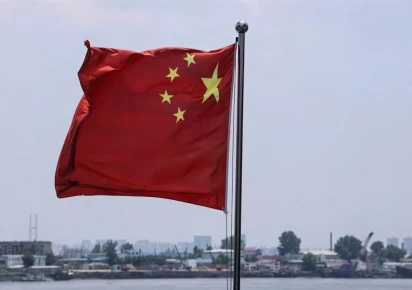
    China rejects US sanctions on research institutions

    China has strongly opposed a US decision to place several Chinese research institutions on a sanctions list. Beijing criticised the move on Wednesday. It accused Washington of using national security concerns to restrict scientific and technological cooperation between the two countries. A spokesperson for China’s Ministry of Commerce said Beijing would take necessary steps to protect the legitimate rights and interests of its research institutions. The spokesperson also said China wanted to maintain a stable environment for normal scientific exchanges and cooperation with international partners. Beijing accused the United States of repeatedly expanding the definition of national security. It said Washington had created discriminatory barriers against Chinese institutions. China also criticised what it described as the politicisation and weaponisation of scientific research. According to Beijing, such policies could damage cooperation between researchers and universities in both countries. The Chinese government said the US measures were against the broader global trend of international cooperation in science and technological innovation. Beijing urged Washington to withdraw what it called unjustified accusations against Chinese research institutions. China also called on the United States to correct its policies as soon as possible. It demanded fair, just and non-discriminatory treatment for Chinese research organisations. The dispute comes amid wider tensions between Washington and Beijing over technology, trade and national security. The United States has increasingly tightened restrictions on Chinese access to advanced technologies. Semiconductor manufacturing has become a major area of competition between the two countries. China is also working to expand its domestic semiconductor industry. Beijing aims to reduce its dependence on advanced foreign chips affected by US export restrictions. Last week, the US Department of Defence updated a list of foreign institutions it considers involved in “problematic activities”. The updated list included Chinese defence-related academies and several universities. Shanghai-based Fudan University was also among the institutions added to the list. The latest move is likely to add another point of tension to already strained US-China relations. Beijing has repeatedly opposed US measures targeting Chinese companies, universities and research organisations. Washington, meanwhile, has maintained that its restrictions are linked to national security and technology concerns.

  • | | |

    PSX ends week on negative note, KSE-100 loses near…

    The Pakistan Stock Exchange (PSX) witnessed a bearish trend during the outgoing business week, with the benchmark KSE-100 Index losing 2,938 points as investor sentiment remained under pressure. The KSE-100 Index closed the week at 177,166 points, compared with its previous level. During the week, the index fluctuated within a range of 5,048 points, reaching a high of 181,158 points and falling to a low of 176,110 points. Trading activity remained substantial throughout the week, with around 4.22 billion shares changing hands at a total value of approximately Rs205 billion. Meanwhile, the market’s overall capitalization declined by Rs247 billion during the week, settling at around Rs19.88 trillion. The weekly performance reflects continued volatility in the stock market as investors closely monitor domestic economic developments and regional geopolitical conditions. Earlier, Pakistan’s benchmark stock index opened on a positive note on Friday, with strong buying interest across major sectors pushing the KSE-100 Index more than 800 points higher in the early trading session. At around 9:19am, the KSE-100 Index was trading at 177,399.75 points, recording a gain of 807.99 points, or 0.46%, compared with the previous close. The early-session rally reflected renewed investor interest in several key sectors of the market. Automobile assemblers, cement companies, commercial banks, fertiliser manufacturers, oil marketing companies (OMCs) and refineries remained among the prominent areas attracting buying activity. Several index-heavy stocks also traded in positive territory, providing support to the benchmark. Shares of Attock Refinery Limited (ARL), Mari Energies Limited (MARI), Fauji Fertilizer Company (FFC), Habib Bank Limited (HBL), Meezan Bank Limited (MEBL), National Bank of Pakistan (NBP) and United Bank Limited (UBL) were among the notable gainers during the opening phase. The positive start comes a day after the Pakistan Stock Exchange witnessed a volatile trading session amid concerns over geopolitical developments and elevated international oil prices. On Thursday, the KSE-100 Index lost 254.59 points, or 0.14%, to settle at 176,591.77 points. Selling pressure in several heavyweight stocks outweighed selective buying and kept the market in negative territory by the close. Investors are now closely monitoring developments in global financial markets, particularly movements in bond yields, oil prices and international geopolitical conditions, which could influence capital flows and market sentiment. Global markets remain under pressure The positive opening at the PSX came against a mixed backdrop in Asian markets, where several major stock indices remained on track for weekly declines. Investor sentiment globally continued to be affected by rising government bond yields and uncertainty surrounding inflation and fiscal conditions. A diplomatic stalemate in the Gulf region also contributed to a rise in oil prices, with crude prices reaching their highest level in about a month. Higher oil prices have renewed concerns over inflation, particularly for economies that rely heavily on energy imports. For Pakistan, movements in international crude prices remain particularly important because they can affect the country’s import bill, exchange-rate pressures and domestic inflation expectations. In the United States, Treasury yields resumed their upward movement after a brief respite following an unexpected intervention by the US Treasury on Wednesday. US Treasury Secretary Scott Bessent has indicated that the government could potentially expand its purchases of US Treasuries. He has also raised the possibility of fiscal consolidation as authorities seek to address concerns surrounding the country’s growing budget deficit. However, market participants remain cautious about the prospects of significant fiscal adjustment. Analysts have questioned whether sufficient expenditure reductions can be achieved to meaningfully narrow a budget deficit exceeding 6% of US gross domestic product. The rising cost of servicing government debt is another concern. Interest payments alone are estimated to have reached around $1.2 trillion during the year, highlighting the pressure created by elevated borrowing costs. Higher yields pose challenge for equities The continued increase in bond yields has broader implications for international equity markets. Higher yields can increase borrowing costs for governments and businesses while making fixed-income investments relatively more attractive. The impact is particularly significant for technology companies that are undertaking substantial borrowing to finance investments in artificial intelligence infrastructure and other capital-intensive projects. At the same time, higher interest rates increase the discount rate applied to future corporate earnings, potentially putting pressure on equity valuations. Asian markets reflected some of these concerns on Friday. Japan’s Nikkei index declined around 0.8%, taking its losses for the week to approximately 4.4%. South Korean and Taiwanese stocks managed modest gains during the session but remained lower on a weekly basis. Meanwhile, MSCI’s broadest index of Asia-Pacific shares excluding Japan advanced around 0.5%, indicating some selective risk appetite despite continued uncertainty in global markets.

  • | |

    Armed men storm prison van, free murder suspect on…

    JHELUM: In a major security lapse, armed men intercepted a prison van on the busy GT Road near Mandra and forcibly freed a murder suspect who was being taken back to District Jail Jhelum after appearing in court. The escape involved Malik Hamad, who is facing a murder case registered with Saddar Beruni police. He had initially been held at Adiala Central Jail before being transferred to Jhelum following the recovery of a mobile phone and other prohibited items during a surprise inspection. Hamad was brought to Rawalpindi on Tuesday for a court hearing. While the prison van was returning to Jhelum, it slowed near Galaxy Hotel at Bacha Stop, where another vehicle approached the van. According to sources, the occupants told prison officials that Hamad’s mother was seriously ill and requested a brief meeting with him. Taking advantage of the confusion, several armed men surrounded the van with their vehicles, pulled Hamad out and escaped. The incident immediately triggered a security alert, with senior police and jail officials rushing to the location. Police teams were subsequently formed to track down and arrest the escaped suspect. The incident has raised fresh concerns about the security arrangements for transporting prisoners. It comes weeks after 14 high-risk prisoners escaped from another prison van while returning from Kahuta in late June. All of them were later recaptured following an extensive search operation, while cases were registered against the policemen responsible for their security. Following that escape, Rawalpindi police introduced new standard operating procedures aimed at strengthening prisoner transportation security. The latest incident, however, has renewed questions about whether those measures are being properly implemented. Four policemen reportedly assigned to guard Hamad have been detained for questioning. Sources also claimed that the suspect had links with an influential individual associated with a private housing society. Despite the seriousness of the incident, senior police officials declined to comment publicly, while a search operation to recapture Hamad remained underway.

  • | |

    Delhi court orders removal of objectionable content about Tabu

    NEW DELHI: Bollywood actress Tabu has received relief from the Delhi High Court in a personality rights case, with the court directing several websites and online platforms to remove content deemed objectionable by the actress. According to Indian media reports, Tabu had approached the court, arguing that the material available on various websites and digital platforms violated her personality rights and was defamatory and obscene. Justice Jyoti Singh, while hearing the petition represented by senior advocate Swati Sukumar, directed multiple social media platforms, e-commerce listings and websites to remove the allegedly objectionable content. Various scenes from Tabu’s films were also discussed during the hearing. Tabu’s lawyer told the court that certain video clips were being promoted using search terms that portrayed the actress in an inappropriate manner. Some scenes, the lawyer said, had been slowed down or given altered titles to create a sexualised impression. Sukumar argued that the repeated appearance of such material through new accounts and posts made the issue more serious than an ordinary copyright or content infringement dispute. During the hearing, counsel representing an online platform referred to another personality rights case being heard by the court on the same day. The lawyer suggested that personality rights proceedings could sometimes be used to seek removal of allegedly defamatory material. The court observed that the legal questions raised in Tabu’s case could have wider implications beyond the present matter. Justice Jyoti Singh said that highly harmful material may require a mechanism capable of preventing such content from appearing online in the first place. The court also examined the safeguards currently used by online platforms, including automated content detection systems, in-app complaint mechanisms and grievance redressal procedures under the Information Technology Rules. Justice Singh observed that the key challenge was not simply the formulation or implementation of policy, but the creation of an effective system capable of preventing objectionable material from being uploaded at the initial stage. The court said an amicus curiae would be appointed to assist it in examining the broader legal questions involved in the case. The proceedings will also identify related legal issues that may require detailed consideration at a later stage. The court further indicated that it would consider developing a standard operating procedure (SOP) for dealing with similar cases involving harmful or objectionable online content.

  • | | |

    Pakistani leaders praise Makkah Agreement as histo…

    Federal ministers, ministers of state, cabinet members and parliamentarians have welcomed the Makkah Agreement between Pakistan, Türkiye and Saudi Arabia. They described the agreement as a major step towards peace, security and stability in the region. The leaders said the agreement reflects a shared vision among the three countries. They said it could strengthen cooperation and improve regional security. Federal Minister Ahsan Iqbal said Pakistan had achieved a historic diplomatic success. He said the defence agreement could help open a new chapter of peace and stability in the region. Information Minister Attaullah Tarar also welcomed the agreement. He described it as a milestone for peace and security. He said the people had welcomed the development. Federal Minister Owais Leghari said the defence agreement between Pakistan, Saudi Arabia and Türkiye was a positive development. He said it would help strengthen the security of the three countries and contribute to peace in the region. Tariq Fazal Chaudhry said the agreement reflected the vision of the leadership of the three countries. He said it would further strengthen bilateral and trilateral relations. He added that the agreement could also promote unity among Muslim countries. He described it as a new source of hope for the Muslim world. Tariq Fazal Chaudhry said the agreement was an important step towards greater unity among Muslim countries. Amir Muqam said Pakistan was achieving significant diplomatic successes under the leadership of Prime Minister Shehbaz Sharif. Abdul Aleem Khan said the agreement would promote brotherhood and cooperation among Islamic countries. He congratulated the nation and the Muslim Ummah on the development. Minister of State Shaza Fatima said Pakistan was increasingly being recognised as a country committed to peace. She said the historic agreement would help strengthen Pakistan’s position internationally. Rana Sanaullah said signing the agreement in the holy city of Makkah was a matter of honour for Pakistan. He said the agreement between the brotherly countries could create new opportunities for peace and cooperation. He also praised the efforts of Prime Minister Shehbaz Sharif and Field Marshal Asim Munir in making the agreement possible. Sanaullah said stronger cooperation among Muslim countries could contribute to their development and prosperity. Daniyal Chaudhry described the Makkah joint defence agreement as a major diplomatic and security milestone for Pakistan. He said the leadership of Prime Minister Shehbaz Sharif and Field Marshal Syed Asim Munir had played an important role in achieving the historic agreement.

Leave a Reply

Your email address will not be published. Required fields are marked *