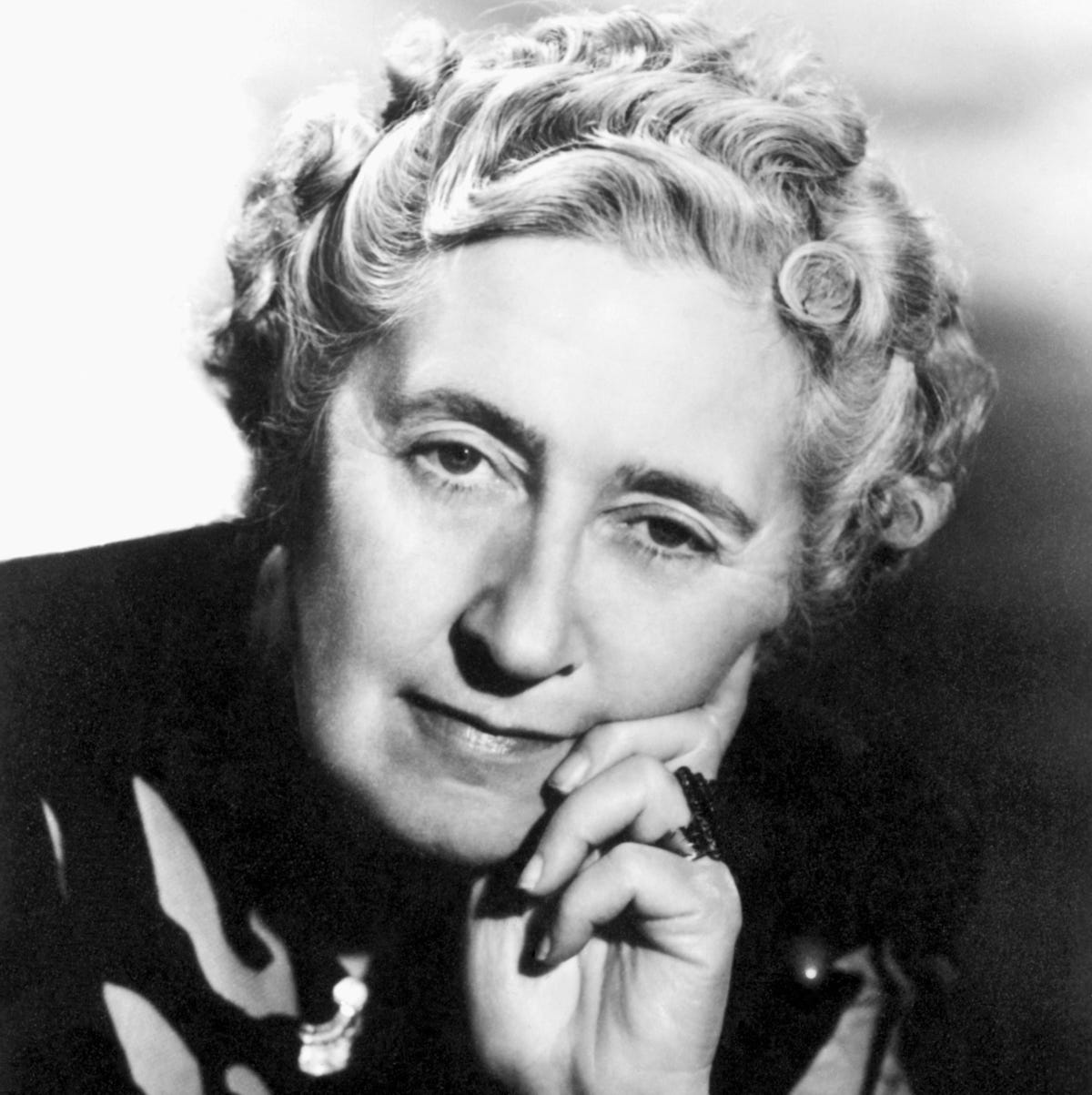
decoding genius agatha
| |

Decoding the genius of Agatha Christie

When readers open a detective novel by Agatha Christie, they often expect hidden motives and a dramatic reveal. Yet, behind the elaborate plots and suspenseful twists lies something far deeper. It is a masterclass in human psychology. Christie is celebrated globally as the Queen of Crime. However, her legacy rests on her profound grasp of human nature, emotion, and behavior.

Beyond “Who [has] done it?”

At first glance, a classic crime novel centers on a simple formula: a crime is committed, evidence is gathered, and a perpetrator is exposed. However, Christie’s narratives stand apart because she recognized that every criminal act is fundamentally driven by internal human conditions. It can be jealousy, greed, fear, desperate love, betrayal or pride. Her stories serve as an investigation into what happens when everyday human emotions turn into extraordinary actions.

Christie demonstrated that a person’s surface appearance rarely tells the whole story. In her fictional world, a polite neighbor or a charming gentleman could conceal dark secrets. Christie challenged her readers to look beneath pleasant facades and observe the subtle tension between public personas and private motives.

A Tale of Two Detectives

Nothing illustrates Christie’s psychological acuity better than her two iconic sleuths. The meticulous Belgian detective Hercule Poirot and the observant villager Miss Jane Marple. Their methods and personal backgrounds could not be more distinct.  Yet, both figures share an uncanny reliance on psychological insight rather than physical evidence alone.

Poirot prioritizes method, order, and intellectual analysis. He famously encourages paying attention to the little grey cells of the brain. Poirot understands that people inevitably reveal their true character through body language and small inconsistencies. Poirot allows suspects to expose themselves by asking precise questions and observing subtle emotional shifts.

In contrast, Miss Marple operates from the quiet routine of the small English village of St. Mary Mead. Despite her gentle demeanor and knitted shawls, Miss Marple possesses a sharp mind shaped by decades of watching human behavior in a small community. She operates on the principle that human nature is universal. People react to passion, greed, and fear in remarkably similar ways. Her ability to draw parallels between a suspect’s behavior and local village gossip allows her to solve complex murder cases.

The Art of Patience

In a fast-paced world where hasty judgments and decisions are common, Christie’s stories offer a lesson in the value of patience, active listening, and careful observation. Her detectives succeed precisely because they resist early conclusions. They listen to what is said and  what is left unsaid.

This approach reflects many real-world disciplines, including psychotherapy, journalism, and conflict resolution. So, understanding another person requires suspending immediate judgment and noticing subtle nuances. Christie turns her audience into active participants in a process of empathetic inquiry.

For generations of fans, revisiting Christie’s novels or watching cinematic adaptations is more than an intellectual exercise. It is a warm, comforting ritual. Many readers recall discovering her books during youth or sharing screen adaptations with family members. The nostalgic atmosphere of early 20th-century trains, country manors, and seaside resorts provides a captivating backdrop for timeless human dramas.

Decades after her death, Agatha Christie remains one of the most widely read authors in human history. Her popularity persists not because audiences simply enjoy detective stories, but because the complexity of human nature never grows old. Her work continues to remind us that behind every smile, silence, or stray comment lies a story waiting to be understood.


 

Similar Posts

  • | | |

    Omar Musa secures 2026 Miles Franklin Award with Fierceland

    Omar Musa has been named the winner of the prestigious 2026 Miles Franklin Literary Award for his novel, Fierceland. Recognized as Australia’s most celebrated literary prize, the award honors novels of the highest literary merit that explore Australian life in all its phases. Musa’s victory highlights a powerful shift in the country’s literary landscape, celebrating a work that fearlessly confronts historical legacies while weaving together rich cultural folklore. Deconstructing Colonial Narrative Frameworks At the core of Fierceland lies an ambitious, multi-layered critique of Joseph Conrad’s classic 1899 novella, Heart of Darkness. Where Conrad’s seminal text depicted the non-Western world through a lens of exoticism, peril, and foreign mystery, Musa flips the narrative on its head. He reclaims the riverlands and lush rainforest environments not as places of terrifying obscurity, but as vibrant ecosystems steeped in history, memory, and indigenous knowledge. The True “Darkness” Musa confronted the colonial storytelling. In fact, he challenges readers to examine how Western literature has historically framed non-Western landscapes and their people. Fierceland presents the journey inward as a descent into moral decay. This journey is an essential process of unlearning, confrontation and reclamation. The novel demonstrates that the darkness lies within the unchecked impulses of imperial exploitation. It also compels the reader to not surrender to the historical erasure. The Role of Spectral Presence and Cultural Folklore Ghosts and supernatural forces drift consistently throughout the narrative of Fierceland. These forces serve as both literal story elements and profound allegorical symbols. Rather than functioning purely as horror tropes, these spectral figures act as guardians of history and physical manifestations of unhealed wounds. Musa attributes this atmospheric depth to his upbringing and heritage. He reflects on the influence of his family and heritage. Musa noted that ghost stories are deeply woven into the fabric of Malaysian culture. Growing up, he listened to his father recount haunting tales from his homeland. He developed an early appreciation for oral traditions where the living and spiritual realms continually intersect. In Fierceland, these inherited myths explore themes of displacement, grief, and ancestral connection.  These myths gave a voice to forgotten histories that refuse to remain buried. A Multidisciplinary Voice in Modern Storytelling Musa’s background is of an acclaimed spoken-word poet, hip-hop artist, and woodcut printmaker. His own roots shine brightly throughout the pages of Fierceland. The prose is defined by a rhythmic, visceral cadence that reflects his poetic mastery. His ability to blend social commentary with lyricism creates a sensory reading experience.   Winning the 2026 Miles Franklin Literary Award positions Musa as one of the most compelling voices. The judging panel has recognized the evolving nature of Australian literature. Fierceland stands as a testament to the power of reclaiming narrative agency. The novel proves that when old myths are critically dissected, extraordinary stories can emerge.

  • Closer of petrol pump in badar

    I want to draw the attention of the concerned authorities to the closure of the petrol pump in Badar. The people of the area are facing many difficulties because of its closure. Badar is an important place where many people stop to get fuel for their vehicles. Due to the closure of the petrol pump, drivers have to travel a long distance to buy petrol or diesel. This causes inconvenience and wastes both time and money. I request the concerned authorities to take immediate action and reopen the petrol pump. This will greatly help the local people and travellers. I hope the authorities will solve this problem as soon as possible.

  • |

    Post-graduate depression

    No one talks about the depression, hopelessness, and anxiety that fresh university graduates face. They suffer silently, wondering what to do next and how to find opportunities. Even their families often don’t understand what they are going through. Many graduates slowly fade away. They stop talking to friends, lose contact with classmates, and avoid social gatherings. At family functions, relatives ask questions like, “Beta, what are you doing now?”, “How long are you going to stay at your parents’ home?” If it’s a girl, people ask, “When are you getting married?” or “What have you achieved after getting your degree? Have you earned any money? Look at our daughters—they’re married, have two kids, and are happy. Meanwhile, your poor parents are still taking care of you.” When it comes to boys, they face endless questions from uncles and relatives. Many become demotivated. Some dream of moving abroad but don’t have the money to do so. Others try trading after taking advice from friends and sometimes fail. Some start giving home tuition while constantly thinking about how to settle in life and repay their parents, who are getting older every day. This is the reality of our society. Those who can afford it pursue a master’s degree or go abroad for higher studies. Many work overtime just to prove that they are capable of achieving something in life. Otherwise, people label them as a burden on their parents. Many daughters are pressured into marriage instead of being allowed to pursue private jobs. If they want to build a career, they are expected to prepare for competitive government exams. Even after 14 or 16 years of education, they still have to study further to clear exams like CSS or PPSC. Only then do parents and society begin to appreciate them, and their names are respected. Otherwise, to society, you are just another university graduate—and that’s all.

  • Remembering Maryam Mirzakhani

    When Maryam Mirzakhani approached complex mathematical problems, she did not rush to find immediate solutions. Instead, she unrolled large sheets of paper across her floor, sat down with markers, and drew intricate shapes, loops, and abstract surfaces. A ritual so visual that her young daughter described her rigorous research simply as painting. Behind those quiet, methodical sketches was one of the most brilliant mathematical minds of her generation. A scholar whose work reshaped our understanding of spatial geometry and dynamic systems forever. Born and raised in Tehran, Iran, Mirzakhani’s early childhood ambitions centered on literature rather than numbers. She devoured books and dreamed of writing novels. However, during her high school years, her focus shifted dramatically as she discovered the creative, puzzle-like nature of advanced mathematics. Her extraordinary talent surfaced on the world stage when she represented Iran at the International Mathematical Olympiad, winning gold medals in back-to-back years at ages 17 and 18, including a flawless top score in her second appearance. After completing her undergraduate studies at Sharif University of Technology in Tehran, Mirzakhani moved to the United States to pursue graduate research. At Harvard University, under the mentorship of Fields Medalist Curtis McMullen, she tackled complex problems in theoretical geometry that had baffled researchers for decades. She earned her PhD at age 27, producing a doctoral dissertation so groundbreaking that it yielded multiple papers published in top-tier mathematical journals. Her career progressed rapidly, leading to a full professorship at Stanford University by the age of 31. Mirzakhani’s work specialized in theoretical areas such as hyperbolic geometry, Riemann surfaces, and moduli spaces. She’s expert in abstract concepts that involve understanding the geometry and dynamic possibilities of complex curved surfaces. While her research was firmly rooted in pure mathematics, it held profound implications for theoretical physics, quantum field theory and cryptography. In 2014, at the age of 37, Mirzakhani achieved a historical milestone. She was awarded the Fields Medal, officially known as the International Medal for Outstanding Discoveries in Mathematics. Widely regarded as the equivalent of the Nobel Prize for mathematics, the honor is presented only once every four years to exceptional scholars under 40. Mirzakhani became both the first woman and the first Iranian ever to receive the award since its establishment in 1936. Despite national and international acclaim, Mirzakhani remained famously modest. She often referred to herself as a slow mathematician. She emphasized that true insight comes from patience, resilience, and a willingness to feel lost before finding a breakthrough. To her, mathematics was not about fast calculations, but about deep, enduring understanding. Tragically, her life was cut short. Diagnosed with breast cancer in 2013, she continued her scholarly pursuits while fighting the disease. By 2016, the cancer had spread to her liver and bones. On July 14, 2017, Mirzakhani passed away at Stanford Hospital at the age of 40. Her passing sparked widespread tributes across the globe, with academic institutions, world leaders, and fellow scientists celebrating her contributions. Today, her legacy endures as a testament to human curiosity. Her life is an enduring inspiration for women pursuing careers in science and mathematics worldwide.    

  • Natural face pack for facial hair

    Many young women worry about fine facial hair and dull looking skin. Tiny facial hairs can make the skin appear less smooth while dry or dead skin cells may make the face look tired. Instead of using strong chemical products waxing or threading some people prefer simple home remedies made with natural ingredients.  One such homemade face pack uses rice flour milk sugar lemon juice and coconut oil. Ingredients •2–3 tablespoons rice flour •1 teaspoon sugar •A small amount of milk •Juice of half a lemon •A few drops of coconut oil How to make the face pack Put the rice flour in a clean bowl. Add sugar and a little milk then mix well until the sugar dissolves as much as possible. This step is important because undissolved sugar grains can make the skin more irritated when the mixture is rubbed or removed. Next add lemon juice and a few drops of coconut oil.  Mix everything until you get a smooth paste. How to use it Apply a thin layer of the mixture to your face and leave it for around 15–20 minutes until it dries. Remove it gently with light movements. Avoid rubbing the skin too hard as excessive scrubbing can cause irritation or small skin injuries. Rice flour and sugar may help remove dead skin cells from the surface.  Gentle massage may also remove some very fine facial hairs making the skin look temporarily smoother and brighter. Use with care This face pack may make the skin feel cleaner and smoother but there is limited scientific evidence that it can permanently reduce facial hair.  Facial hair growth is mainly affected by hormones and genetics. Lemon juice and repeated scrubbing may cause dryness redness burning or irritation especially in people with sensitive skin.  Lemon can also make the skin more sensitive to sunlight. Do a patch test first Before applying any new homemade mixture to your entire face test a small amount on a small area of skin first.  If you notice itching burning swelling or redness wash it off and stop using it. For long term or unwanted facial hair growth safer hair removal options can be discussed with a dermatologist.

  • Heart stents save Lives not heart disease

    For many people getting a heart stent is a life saving procedure.  During angioplasty doctors place a small metal stent inside a blocked artery to restore blood flow to the heart. This helps reduce chest pain and in many cases can save a person’s life during a heart attack. However heart specialists say that a stent is not a cure for heart disease. A stent only opens the artery that is already blocked. It does not stop the disease that causes fatty deposits known as plaque to build up inside the arteries. If a person does not manage the risk factors new blockages can develop over time. Doctors explain that a stent works like a small support tube that keeps the artery open so blood can flow more easily. But it cannot prevent cholesterol and other harmful substances from collecting in other parts of the blood vessels. If someone continues to smoke has uncontrolled diabetes high cholesterol unhealthy eating habits or does not take prescribed medicines regularly the risk of future heart problems remains high. Heart experts compare the arteries to the water pipes in a house. Even if one blocked section is repaired the rest of the pipes can still become clogged if the main problem is not fixed. Modern drug coated stents are very effective but they do not remove every risk. In some patients scar tissue may grow inside the stent causing the artery to narrow again. This condition is called restenosis. Although it is less common with today’s stents it can still happen. Another serious but rare complication is stent thrombosis where a blood clot forms inside the stent. This can lead to a heart attack and may become life threatening.  Doctors say the risk increases if patients stop taking blood thinning medicines without medical advice. Heart disease is a long term condition that can continue to progress. Even if the treated artery stays open plaque can build up in other arteries increasing the chance of another heart attack. Experts say patients can greatly reduce these risks by following their treatment plan. This includes taking all prescribed medicines especially blood thinners and cholesterol-lowering drugs exactly as directed. Lifestyle changes are just as important. Quitting smoking eating a healthy diet exercising regularly after getting a doctor’s approval maintaining a healthy weight and controlling diabetes blood pressure and cholesterol can all help protect the heart. Regular medical checkups are also important to detect any new problems early. Doctors advise seeking immediate medical care if you experience chest pain or pressure shortness of breath heavy sweating dizziness fainting pain spreading to the arm jaw or back or unusual tiredness after having a stent. Early treatment can prevent serious complications and save lives. While a heart stent is an important treatment that can restore blood flow and save lives it should not be seen as a permanent cure. Long term heart health depends on taking medicines regularly living a healthy lifestyle and paying attention to any warning signs.

Leave a Reply

Your email address will not be published. Required fields are marked *