stray dogs turbat

Stray dogs in Turbat raise public safety concerns

From Muzzamil Karim

To,

The editorial team

Stary Dogs in Turbat

Respected Sir,

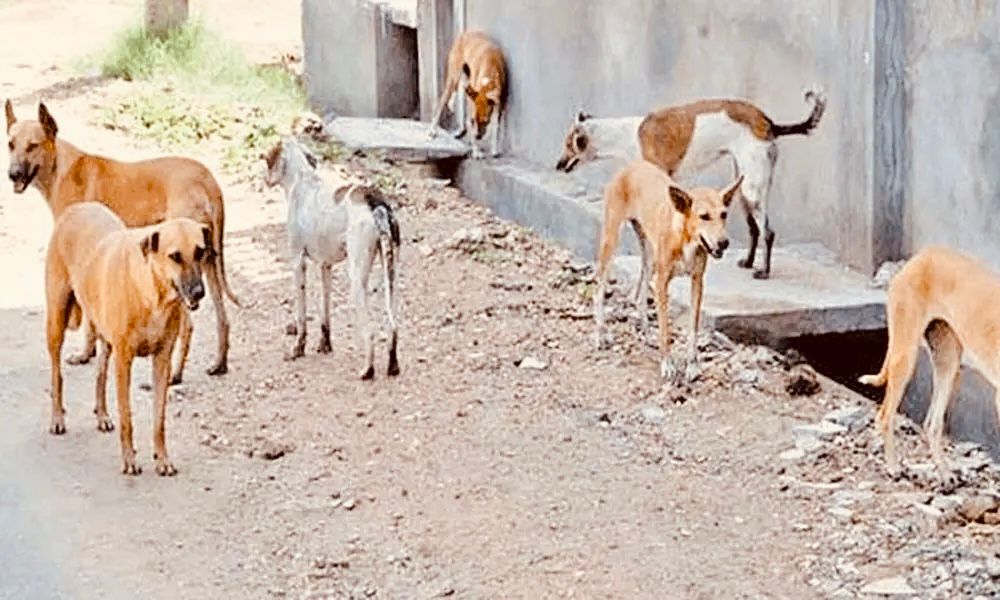
Through the columns of your esteemed newspaper, I wish to highlight the serious issue of stary dogs in Turbat. There are many dogs on the street.

Recently, a boy in my street was bitten on his leg. Now parents are afraid to send their children to outside.

According to a health officials, report, six people died of rabies. Mostly, they attacks on children and old people.

When they bites, they can spared deadly rabies without quick medical care. Even people feel scared to walk outside early in the morning or late at night.

Stary dogs roam the streets and enters home whenever they can. The government must take serious action to address this issue.

Similar Posts

  • |

    Iqbal’s philosophy shapes modern freedom movements

    Ghulami Mein Na Kaam Ati Hain Shamsheerain Na Tadbeerain Jo Ho Zauq-E-Yaqeen Paida To Kat Jati Hain Zanjeerain (In slavery, neither swords nor plans are effective but when the taste for conviction is forged, the chains are shattered.) In these timeless couplets, Allama Muhammad Iqbal captivated a fundamental truth about human liberation. It’s that the physical force (shamsheerain) and strategic maneuvering (tadbeerain) are utterly powerless if a nation or an individual is trapped in a mindset of subjugation. True emancipation does not start on the battlefield or at a diplomatic negotiation table. It begins within the human psyche through Zauq-e-Yaqeen. An unshakeable conviction, profound self-belief, and faith in a higher purpose accordingly.  When one examines the contemporary global events, Iqbal’s words understand modern struggles for sovereignty, social justice, and systemic reform. In the modern world, servitude rarely presents itself through colonial rule or physical iron chains. Instead, modern subjugation often manifests as economic dependency, cultural imperialism, digital surveillance, and ideological defeatism. Entire populations often find themselves caught in systems that dictate their economic choices. They systems that diminish their local heritage, and undermine their self-reliance. Iqbal’s verse applies to this contemporary reality. The verse reveals why so many political reform efforts or heavily funded technological solutions fail to bring real change. When a society suffers from an internal sense of inferiority, no amount of advancement or external assistance can bring genuine autonomy. Strategy and weapons are just instruments. They remain inert without the driving force of genuine conviction. Psychological emancipation must precede material victory. Until a community believes it is worthy and capable of self-determination, external freedom remains an illusion. What does it mean to cultivate Zauq-e-Yaqeen (the taste of deep certainty) in today’s complex world? It represents a transition from passive endurance to active self-realization (Khudi). Historically and in present times, the most profound societal revolutions did not succeed purely because they had superior resources. They succeeded because a critical mass of people developed an unshakeable belief in the justice of their cause. Modern historical struggles show that authoritarian regimes with military apparatuses often crumble when faced with non-violent movements engined by absolute moral certainty. In an era of informational dominance, Zauq-e-Yaqeen requires reclaiming intellectual sovereignty. It demands rejecting narrative manipulation and trusting one’s collective identity and ethical values. Developing nations breaking free from debt cycles and foreign leverage do so by encouraging local innovation, education, and confidence in their human capital. Iqbal’s poetry is not a eulogy for the past. It is an urgent command for the present. The chains of the modern era: political suppression, economic exploitation, or personal despair, cannot be let go of by adopting foreign systems or waiting for political saviors. Real liberation requires an internal awakening. When a society cultivates faith in its intrinsic worth, its moral foundation, and its capacity to shape its destiny, the structural barriers that once seemed insurmountable inevitably begin to shatter. Strategic plans and practical tools then become effective because they are finally guided by an invincible spirit.  

  • Why does food make your mouth water

    Have you ever seen your favorite food smelled it or simply thought about it and suddenly felt your mouth watering? This can happen even when you are not very hungry. Just seeing or smelling food can make your body prepare for eating. Experts call this the “cephalic phase of digestion.” In simple words it means your body can start preparing for digestion before food even reaches your mouth. Your brain prepares your body When you see, smell or think about a favorite food your brain gets a signal that food may be coming.  It then sends signals to different parts of the digestive system. One of the first things that happens is that your mouth produces more saliva.  Saliva makes food softer and easier to chew and swallow. It also helps start the digestion process. That is why seeing hot pizza, biryani, jalebi or another favorite dish can make your mouth water.  Your body is already getting ready to eat. It is not always about hunger Mouth watering does not always mean you are very hungry.  You may even feel full and still have a strong reaction to your favorite food. Food cravings can be affected by its smell appearance memories and past experiences. For example, the smell of a homemade dish from childhood may bring back old memories and make you want to eat it again. Smells can trigger strong reactions Sometimes you do not even need to see food. A delicious smell from the kitchen can make you feel hungry within seconds. But the opposite can also happen. A bad smell unpleasant sight or negative memory can make you feel sick or lose your appetite. For example if you once became sick after eating a certain food, your brain may connect that food with the bad experience. Later even its smell may make you feel nauseous. •Your body has a protective system These reactions are part of the close connection between the brain and the digestive system.  Your brain does not only help you notice food you like it can also help protect you from food that may be harmful. A bad smell or unpleasant appearance can make you avoid certain food. In some cases it may even cause nausea or reduce your appetite. So the next time your mouth waters when you see your favorite dish remember that your body may already be preparing for the meal before you take your first bite.

  • |

    Writers are embracing flaws to fight AI prose

    In an era where generative artificial intelligence can generate essays in seconds, the digital world is quietly witnessing a linguistic backlash. Readers are increasingly attuned to the invisible fingerprint of large language models. Perfectly balanced sentences, predictable three-item lists, flawless grammar and fondness for the em dash. In response, a movement of novelists, journalists, essayists, and even corporate creators are opting an anti-AI literary counterculture. These writers are actively reintroducing human idiosyncrasies ranging from unorthodox metaphors to intentional typos to declare that a human is behind the keyboard. The hallmark of standard AI-generated text is not necessarily bad grammar. In fact, it is often too clean. Text-generation algorithms default to statistically probable phrasing. It’s resulting in a distinctively smooth, neutral tone that rarely takes stylistic risks. Over the past few years, certain visual and structural patterns have become clear red flags for readers. Excessive dependence on em dashes. Relying on clinical or dramatic transitions like “In conclusion,” “Delve,” or “Navigating the landscape of…” Prose that seems lacking the natural rhythm, pauses, and unpredictable detours of spontaneous speech. To break free from these algorithmic habits, authors are adopting techniques anchored in absolute negation. Novelist Laura Brooke Robson, author of Love Is an Algorithm, noted that she actively altered her sentence structures to avoid robotic cadence. Instead of relying on conventional metaphors, she intentionally sought out unexpected punctuation. For creators, avoiding the default traps of language models has surprisingly made their writing more original and lively. This counterculture goes beyond simply avoiding specific punctuation marks. Writers are cultivating a distinct aesthetic centered on authenticity, vulnerability, and friction. After years of detached or objective styles, creators are leaning back into intimate first-person storytelling. Specific personal experiences, odd sensory details, and messy real-life observations serve as proof of lived experience. They prove to be something synthetic text generators cannot genuinely claim. Minor human flaws, casual slang and even subtle typos are being viewed as authentic signatures. Some digital platforms and creators have even experimented with tools that preserve raw keystrokes to signal genuine human origin. Instead of smoothing out every transition, writers are introducing erratic pacing, quirky similes, and inventive vocabulary. Authors create an experience that keeps the reader engaged. Deliberately reassuring them that the text wasn’t produced by an automated model. Can Artificial Intelligence Just Copy It? Skeptics of this trend point out an obvious paradox! If large language models are capable of processing complex prompts, they can just as easily be instructed to “write with typos,” “use casual grammar,” or “tell a quirky story in the first person.” From a purely technical perspective, intentional mistakes does not make prose impossible for a machine to imitate. However, proponents of the movement emphasize that outsmarting algorithms was never the primary goal. Instead, the anti-AI counterculture is an artistic statement about human craft and intention. Writing is fundamentally an act of personal communication between two minds. When readers engage with text, they are seeking the author’s unique perspective, effort, and creative voice. Ultimately, this movement signals how society values written communication. As machine-generated text becomes ubiquitous, hyper-polished prose is losing its premium status. What readers increasingly crave is not frictionless perfection, but the warmth and oddity of a human voice.  

  • Keeps you full for longer

    Garlic is not the only food with useful nutrients. Roti especially whole wheat roti can also provide important nutrients and may have some benefits when eaten after cooling. May help control blood sugar When cooked roti cools down some of its starch can change into resistant starch.  Research has found that roti kept for about 24 hours may contain more resistant starch than fresh roti. This type of starch is digested differently from regular starch and may help reduce the rise in blood sugar after a meal.  However more research is still needed. Good for digestion resistant starch can support healthy bacteria in the large intestine.  If the roti is made from whole wheat flour its fiber may also help prevent constipation and support better digestion. Keeps you full for longer The fiber and resistant starch in roti may help you feel full for a longer time.  Eating it with healthy foods such as yogurt eggs or vegetables can make it a more balanced breakfast. A nutritious breakfast option Whole-wheat roti contains fiber vitamins and minerals making it a useful part of a healthy and balanced breakfast. Important note Stale roti is not automatically healthier than fresh roti.  Its nutritional value depends on the type of flour how the roti is prepared and how safely it is stored. Always make sure stored roti is kept properly to avoid spoilage.

  • Plants reach Space as scientists study growth in orbit

    Green plants have now made their way to the International Space Station. NASA astronaut Jessica Meir who is commanding Expedition 75 aboard the International Space Station has shared pictures of the plants on social media platform X. Jessica Meir said that the Expedition 75 crew has welcomed some new members and they are none other than Russian plants. She explained that the plants include Red Russian kale and wasabi mustard. The crew members are taking care of the plants during their free time. The astronaut explained that the purpose of the experiment is to understand how plants grow in the open cabin environment of the International Space Station compared with their natural environment. The research also aims to examine how storing seeds in orbit affects their viability or ability to successfully grow. Jessica Meir added that having plants aboard the spacecraft feels like a form of “nature therapy.”

  • Solo travel finding its footing in Pakistan

    The image of travel in Pakistan is changing. At bus terminals in Rawalpindi, at Islamabad International Airport, and on trails in Hunza, a growing number of travellers are moving with just one thing in common — they are alone. Solo travel, once seen as unusual, is now a quiet but visible trend among Pakistanis. Industry data and tour operators say bookings by single travellers have risen steadily over the last two years, driven by social media, remote work, and a desire for independence. For decades, Pakistani travel meant family trips to Murree, Nathiagali, or Swat, or group tours arranged through agencies. That model is shifting. Nevertheless, reasons are practical and personal. Let’s say, no need to coordinate leave or budgets with others, or time to navigate new places on one’s own terms. These days , hostels, cafés, and trekking groups in places like Karimabad and Skardu have become meeting points for solo travellers. However, safety remains the top concern, especially for women. That is pushing both travellers and the industry to adapt. Hotels in major tourist towns now offer female-only dorms. Ride-hailing apps provide trip sharing. Also, the Ministry of Tourism has started listing registered guesthouses and guides on its website. Taking about the top destinations, Domestically, the most popular solo destinations of 2026 are, Hunza, Skardu, and Fairy Meadows for trekking and landscapes, Swat and Kalam for short trips, easier access. And Islamabad and Lahore, for weekend culture trips, history, and food walks. Internationally, Pakistanis traveling alone are choosing Turkey, Malaysia, and Saudi Arabia for Umrah-plus-tourism packages. Portugal and Japan are also rising for first-time solo travellers abroad due to safety and transit systems. But I would say Sri Lanka is the must go. For traveling solo, One of the biggest challenge is price. Single rooms and ‘single supplements’ on tours can add 20-30% to costs. However, to counter this, some operators are launching “solo-friendly” departures — group tours where you get your own room but share activities. To combat this, solo travellers usually travel in shoulder months and spend more on local experiences — guides, food, and home-stays. I am a travelwriter, who travels solo weather traveled domestically or internationally, my advise is basic precautions, let say, safe hotels, air travel, authentic agents and no home stays, since for my travel I only prefer top notch hotels, always get the travel plan from reputable travel agencies, and travel with the guide from company. Also, I avoid night life.

Leave a Reply

Your email address will not be published. Required fields are marked *