stray dogs turbat

Stray dogs in Turbat raise public safety concerns

From Muzzamil Karim

To,

The editorial team

Stary Dogs in Turbat

Respected Sir,

Through the columns of your esteemed newspaper, I wish to highlight the serious issue of stary dogs in Turbat. There are many dogs on the street.

Recently, a boy in my street was bitten on his leg. Now parents are afraid to send their children to outside.

According to a health officials, report, six people died of rabies. Mostly, they attacks on children and old people.

When they bites, they can spared deadly rabies without quick medical care. Even people feel scared to walk outside early in the morning or late at night.

Stary dogs roam the streets and enters home whenever they can. The government must take serious action to address this issue.


Similar Posts

  • Dark spots? Expert tips for clear skin

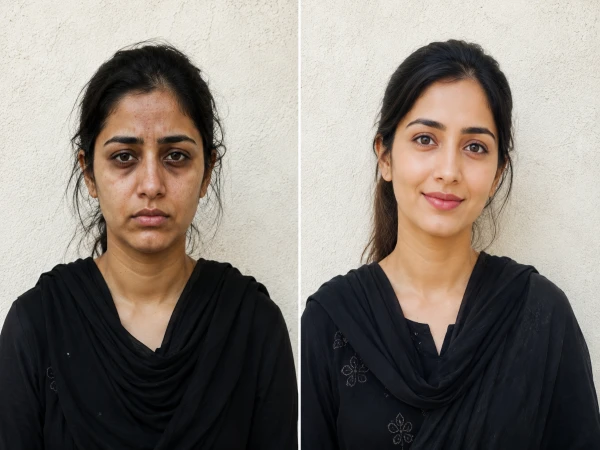
    Clear healthy skin is something many women want but sun exposure acne marks hormonal changes skin irritation and poor skincare can all lead to dark spots on the face. Many people try quick home remedies or low quality creams to remove these marks but these products can sometimes make the skin more sensitive instead of improving it. Experts say it is important to understand the cause of dark spots rather than just trying to hide them. •What causes dark spots? Dark spots can appear after acne heals from skin injuries or irritation hormonal changes or too much sun exposure.  In some cases using skincare products that irritate the skin can also lead to discoloration. •Simple habits for healthier skin A daily skincare routine can help keep your skin clear.  Wash your face every day to remove dirt sweat and makeup especially before going to bed. Using sunscreen every day is also important. Dermatologists say sunlight can make existing dark spots darker and increase the risk of new ones forming. •Be careful with home remedies Natural ingredients such as rose water honey and yogurt are commonly used in home beauty treatments but they may not suit every skin type. Avoid applying lemon juice or other acidic ingredients directly to your face as they can cause irritation redness and make dark spots worse. •When to see a dermatologist If your dark spots keep getting worse return frequently or do not improve despite proper skincare it is best to consult a dermatologist.  Finding the real cause of the problem is the first step toward choosing the right treatment.

  • | | |

    Parliament should focus on Pakistan’s real c…

    Pakistan is an Islamic republic whose Constitution defines not only the structure of the state but also its ideological foundation. It explicitly states that the country should create an environment in which Muslims can live their lives in accordance with the teachings of the Quran and Sunnah. Against this constitutional backdrop, it is surprising that the issue of women wearing the abaya—or an Islamic financial institution including the abaya in its employee dress code—has become a matter of concern for a parliamentary committee. This naturally raises an important question: Who is setting the country’s priorities, and are these truly the issues that deserve Parliament’s attention? Pakistan continues to face pressing challenges, including rising inflation, unemployment, an unequal tax system, a struggling economy, and serious shortcomings in education and healthcare. These are the issues that directly affect the daily lives of millions of citizens. If a parliamentary standing committee, whose primary responsibility is financial oversight, chooses to focus instead on the dress code of Islamic banks, it is reasonable for the public to question whether legislative priorities are aligned with the country’s most urgent needs. The debate also raises questions about consistency. Critics have objected to the abaya as part of an institutional dress code, yet there is little discussion about uniforms in many government departments that follow Western styles of dress. Women serving in the police, the Federal Investigation Agency (FIA), and several other public institutions are commonly required to wear trousers and shirts as part of their official uniforms. If clothing is to become a matter of parliamentary debate, then similar standards should apply across the board. Selective criticism can create the perception of bias. Supporters of Islamic dress codes argue that the issue extends beyond clothing itself and reflects broader concerns about cultural and religious identity. From this perspective, the concern is not simply about the abaya but about a mindset that views visible expressions of religious identity as obstacles to modernization. They question whether institutions with an Islamic identity should be expected to abandon their traditions in the name of progress. This leads to a broader debate: Who defines what it means to be modern? Does modernization necessarily require reducing the public expression of religious values or adopting Western cultural norms? For institutions operating within Pakistan’s Islamic banking framework, supporters argue that their identity is rooted not only in financial principles but also in ethical and religious values. If such institutions adopt internal policies that comply with Pakistani law and reflect constitutional and religious principles, they contend that those choices should be respected. The discussion also draws comparisons with international examples. In countries such as France, restrictions on religious clothing have generated significant criticism from human rights advocates. Supporters of religious freedom argue that Pakistan, which was established with a distinct religious and cultural identity, should carefully consider whether adopting similar approaches is consistent with its own constitutional framework and historical foundations. Ultimately, the central argument is that Parliament should devote its time and resources to addressing issues that directly affect governance, economic stability, and public welfare. Matters of personal attire, religious belief, and institutional identity, many argue, should not become subjects of unnecessary official intervention when the country faces far more pressing social and economic challenges.

  • Human civilisation has always been scared of forgetting

    By Syed Tahir Rashdi A time ago before the first computer, the first library or even the first book people thought memory was the most important thing for knowledge. Whole societies relied on it. People remembered laws and stories by heart. Passed them down to their children. To remember something was not just to recall facts it was to keep your identity, culture and history alive. A time ago in ancient Greece people started to worry about memory. In a book called “Phaedrus” Socrates tells a story about a god named Theuth. Theuth invented writing. Thought it would make people wiser and help them remember more.. The king of Egypt, Thamus did not agree. He said that writing would actually make peoples memories weaker. People would start to rely on written words of trying to remember things themselves. They would think they know something just because they can read it. They would not really understand it. Course that is not what happened. Writing did not hurt society it changed it. Books became a way to store knowledge and share ideas with people all over the world. Socrates was worried about something that is still important today. The question now is not whether we remember things because of books. It is whether we remember anything all. Today we have information stored somewhere than ever before. Our phones remember our conversations. Computers store our photos forever. We can find answers to questions in seconds. Machines can summarise books. Help us find information fast. Never before has much information existed outside of our own minds. This is a change in how people relate to knowledge. A man named Marshall McLuhan said that every new technology is like an extension of our abilities. The wheel is like an extension of our feet. The telescope is like an extension of our eyes. By that logic our phones are like an extension of our memories. They help us remember things. The problem is obvious. As we get better at storing information outside of our minds we get worse at remembering things ourselves. We do not remember phone numbers because our phones do. We do not remember birthdays because our computers do. We do not remember how to get places because our phones tell us. We are not trying to remember things much as we used to. We are just looking them up. That small change might be one of the most important things that has happened to our minds in the past century. It is easy to see why we like to store information outside of our minds. Who would want to go to using paper maps or big books to find answers? Digital technology has made it easy for everyone to get information. We can find things out in seconds that used to take days. The question is not whether this is useful. It is whether it is changing our minds in some way. Some psychologists did a study in 2011. Found out something interesting. They found out that when people know they can find information easily they do not try to remember it much. They just remember where to find it. This is a deal. Our minds are changing from storing information to finding it. We are getting better at finding the path. Not the destination. This is not a habit it is how we think. Remembering things is not about storing facts it is about using them to make decisions to imagine things and to be creative. When we remember things we can connect them in ways and have new ideas. When we store information outside of our minds that changes. A man named Nicholas Carr said that digital technology is not just changing how we get information it is changing how we think. The internet is great at giving us answers. It is not so good at helping us really understand things. If we get used to getting answers we might not be as good at thinking deeply about things. This does not mean that technology is making us less smart. It means that our intelligence is changing. The problem is not that we do not know things. It is that we are too dependent on technology to remember them for us. A student might think that they can just look up answers and not really learn anything. A professional might rely much on reminders that they do not even try to remember things. Machines are getting better at remembering things for us. That might mean we do not have to try as hard. Slowly remembering things is becoming more like looking them up. Knowledge is becoming about getting access to information. Thinking is becoming more about getting things done. Technology has definitely helped us store information than ever before. The question is whether it is also making us less likely to try to remember things ourselves. Memory is not just about storing information. It is about how we experience life. A computer can store every document ever written. A machine can look up every photo ever taken.. They cannot turn experience into wisdom. Our memories are not just storage they are how we interpret things. We forget some things we remember others. We use them to understand ourselves. A writer named Jorge Luis Borges wrote a story about a man who could remember everything.. This gift was actually a curse. The man could not forget anything so he could not think about things in a way. He was trapped by his memory. Borges was saying that forgetting is not a thing it is actually necessary for thought. This is not about how we think as individuals. It is about how we learn and how we understand ourselves as a society. Education used to be about more than learning facts. It was about learning how to think. If we just store information outside of our minds education might just become about looking things up. The same thing applies to our society.

  • Poor road conditions in Ginna

    Meer Baloch The poor condition of roads in Ginna, Kech, has become a serious problem for residents. Large potholes damaged road surfaces and the lack of proper maintenance make daily travel difficult and unsafe.   Students, patients, workers and elderly people suffer the most while motorists risk accidents and costly vehicle damage every day. During the rainy season these roads become even more hazardous, disrupting transportation and delaying emergency services. Good roads are essential for public safety and economic development, yet the people of Ginna continue to face neglect. I urge the concerned authorities to repair the damaged roads without further delay and ensure regular maintenance. The residents of Ginna deserve safe and reliable infrastructure.

  • Whitening creams may damage your skin

    Many people use skin whitening creams and bleaching products to make their skin look lighter and brighter. While these products may change skin tone for a short time experts say they can cause serious skin problems if used for a long period. In Pakistan and many other Asian countries skin lightening creams are widely used. Many people buy and use these products without first talking to a dermatologist. According to skin experts many whitening creams contain strong chemicals and steroids. These ingredients can make the skin appear lighter for a while but they may also damage the skin over time and lead to long lasting problems. One common side effect is acne. Experts say corticosteroids found in some creams can make the skin look smooth at first but continued use may trigger pimples. These pimples can later leave permanent dark marks or scars. This problem can affect both men and women. Some whitening creams also contain hydroquinone. Research suggests that using hydroquinone for a long time may cause a condition called exogenous ochronosis. This condition leads to blue or dark patches on the skin especially in people with sensitive skin. These marks can be difficult to hide even with makeup. Another possible risk is dermatitis a skin condition that causes irritation and inflammation. It may lead to redness itching, swelling, dry skin, rashes blisters and in severe cases painful sores. Dermatologists advise stopping the use of any whitening cream if you notice redness itching swelling unusual spots or other skin changes. They recommend seeking advice from a qualified skin specialist instead of relying on products that promise quick results. Protecting your skin and following professional medical advice is a safer and healthier choice.

  • |

    The comfort of familiar stories

    In a world that constantly demands novelty, the act of re-reading can feel like a radical act of slowing down. The digital feeds update every second and endless streams of new books hit shelves each month. In this case, opening a novel whose plot twists you already know by heart, whose characters are familiar companions, and whose ending holds no surprises might seem inefficient to an outsider. Yet, psychologists and literary scholars recognize that re-reading is not a passive repetition. It is a claimed psychological profound and an essential dimension of human storytelling. At its core, returning to a beloved text satisfies a deep need for emotional regulation. Life is unpredictable, chaotic, and frequently overwhelming. When we navigate complex personal challenges or heightened anxiety, processing entirely new information requires significant cognitive effort. Re-reading, by contrast, lowers the mental load. It offers what psychologists call predictable comfort. Knowing exactly how a narrative conflict resolves provides a soothing sense of control and stability. In the pages of a familiar book, the universe behaves according to rules we already understand. The phenomenon offers a safe harbor when the real world feels chaotic. However, the appeal of re-reading goes far beyond simple comfort. It also acts as a mirror reflecting our own internal growth. Heraclitus famously remarked that you cannot step into the same river twice, for it is not the same river, and you are not the same person. The same principle applies to literature. The physical words printed on the page do not change over time, but we do. When you re-read a book after five, ten, or twenty years, you bring a completely different set of life experiences, heartbreaks, victories, and insights to the text. A passage that meant little to you as a teenager might suddenly strike depth in adulthood. A character you once viewed as an antagonist might reveal subtle vulnerabilities that evoke your empathy today. In this way, re-reading becomes an intimate dialogue between your past and present selves. It is a clear timeline of your emotional and intellectual evolution. Additionally, re-reading changes our focus from what happens next to how the story is constructed. Our brains are liberated to appreciate the finer nuances of literary craft. We begin to notice subtle foreshadowing, thematic motifs, delicate sentence rhythms, and character moments that flew past us during our breathless initial read. Ultimately, re-reading reminds us that literature is not a checklist of titles to be consumed and discarded. The greatest books are living spaces. The places we can inhabit again and again, finding new rooms every time we cross the threshold.  

Leave a Reply

Your email address will not be published. Required fields are marked *