south korea estimates
|

South Korea estimates North Korea’s economy grew over 3 percent for third year

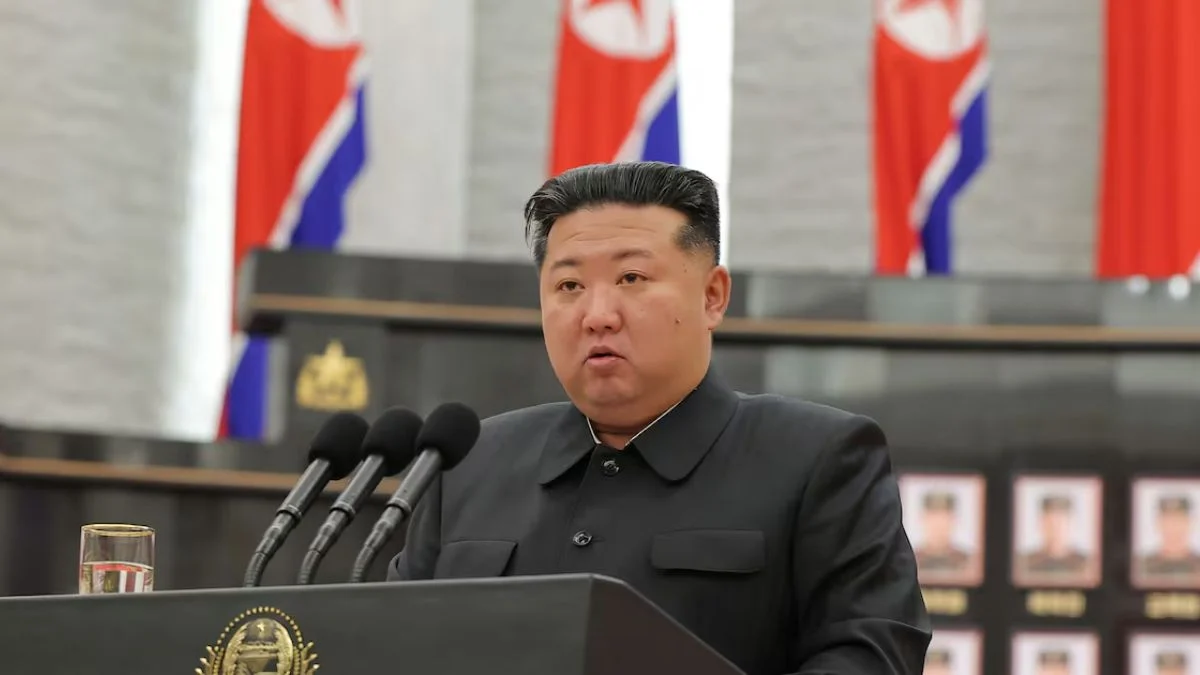
North Korea’s economy expanded by more than three percent in 2025 for the third consecutive year, according to new estimates released by South Korea’s central bank. The report suggests that stronger economic and military cooperation with Russia played a major role in boosting growth despite North Korea’s continued international isolation.

The Bank of Korea, which has published annual estimates of North Korea’s economy since 1991 because Pyongyang does not release official economic data, estimated that the country’s real gross domestic product grew by 3.5 percent last year. The report valued North Korea’s economy at approximately 38.26 trillion won, or about 26.6 billion dollars.

According to Bank of Korea officials, expanded cooperation with Russia was one of the main reasons for the improvement. Analysts have said North Korea has strengthened ties with Moscow by supplying troops and military equipment for Russia’s war in Ukraine. In return, Pyongyang is believed to have received financial assistance, food supplies, energy resources and military technology.

A Bank of Korea official said increased weapons exports to Russia supported growth in North Korea’s manufacturing sector. The official also noted that a rise in Russian tourists and improved transport links between the two countries contributed to stronger performance in construction and service industries.

The report estimated that North Korea’s exports increased by 30 percent during 2025, reaching around 470 million dollars. Among the leading export products were prepared feathers and wigs, along with toys and sporting goods. Although the report did not identify all exported items, officials said stronger overseas sales contributed significantly to economic growth.

The latest figures were released as reports continued to highlight growing military cooperation between Moscow and Pyongyang. Ukraine’s military intelligence, quoted by the Kyiv Independent, claimed that more than 7,000 North Korean troops were killed or wounded while fighting alongside Russian forces during military operations in Russia’s Kursk region between 2024 and 2025. Neither Russia nor North Korea has independently confirmed those figures.

Separately, the Ukrainian human rights organisation Truth Hounds said Russia and North Korea are close to completing their first road bridge connecting the two countries. The group said such a link could strengthen military and economic cooperation by allowing easier movement of personnel, equipment and supplies across the border.

The Bank of Korea also reported a significant increase in North Korea’s gross national income, which measures the total income earned by a country’s residents. The estimate showed GNI rising by 9.4 percent to 48.5 trillion won, or approximately 33.8 billion dollars. Officials said the increase was supported by higher foreign currency earnings, including income linked to North Korean personnel sent to Russia.

Despite the recent growth, North Korea’s economy remains extremely small compared with its southern neighbour. According to the Bank of Korea, North Korea’s gross national income is still less than two percent of South Korea’s economy, highlighting the large economic gap that continues to separate the two countries.

The latest estimates suggest that while North Korea remains under international sanctions and largely isolated from global markets, its expanding partnership with Russia is providing new sources of economic activity that have helped sustain growth for a third straight year.

Similar Posts

  • |

    Pakistan announces Hajj 2027 packages, 107,526 government seats

    ISLAMABAD: The federal government has announced the initial arrangements for Hajj 2027, allocating 107,526 seats under the Government Hajj Scheme and introducing a fully digital application and payment system aimed at making the pilgrimage process easier and more transparent for applicants. Federal Minister for Religious Affairs Sardar Muhammad Yousaf said the government has set the estimated cost of the 40-day Hajj package at Rs1.2 million, while the 20 to 25-day package will cost Rs1.3 million. According to the minister, the Hajj 2027 process has been transformed into an end-to-end digital system on the directions of Prime Minister Shehbaz Sharif, with the Ministry of Religious Affairs working in coordination with the Ministry of Information Technology and the National IT Board. The new arrangements are designed to allow intending pilgrims to complete most of the necessary procedures without repeatedly visiting government offices or banks. Applicants will be able to submit their Hajj applications from their homes, deposit the required dues through digital channels and access information and other facilities through the Pak Hajj App and Hajj Portal. Yousaf said the ministry’s primary objective was to reduce the difficulties traditionally faced by pilgrims during the application process. He said the digital system would help eliminate lengthy queues, unnecessary journeys and waiting periods while also making the overall process more convenient for applicants. First instalment to be collected from August 17 The minister announced that the first phase of payments under the approved Hajj Policy 2027 would begin on August 17. Applicants selected under the relevant phase will be required to deposit 50% of the total package cost as the first instalment. The government will subsequently demand the second instalment during the first week of October. The authorities have also opened the final application phase for Hajj 2027. Around 400,000 pilgrims who have already completed the pre-registration process will now be eligible to proceed with their formal applications. Officials expect the digital registration mechanism to simplify verification and reduce delays as the large number of pre-registered applicants move into the next stage. Passport information to be verified digitally The Religious Affairs Ministry has also established a data-sharing arrangement with the Passport Office as part of the government’s efforts to strengthen the digital Hajj registration system. Through the integration, applicants’ passport information can be verified more efficiently, potentially reducing paperwork and manual intervention during the application process. Yousaf said linking databases of different government institutions would improve the accuracy and speed of processing while increasing transparency. The minister maintained that the use of digital verification would also reduce the possibility of errors arising from manual data entry and repeated documentation. HBL named banking partner Habib Bank Limited (HBL) has been designated as the authorised banking partner for the Government Hajj Scheme. According to the minister, the Ministry of Religious Affairs and HBL have signed a Memorandum of Understanding covering the banking arrangements associated with Hajj applications and payment of dues. Pilgrims will have three digital payment options available under the government scheme. They can pay through a OneLink PSID, use a credit or debit card, or download a digital challan through the Pak Hajj App and deposit the required amount at any HBL branch. The government has stressed that applicants should use only the officially prescribed channels when making payments. Seats to be confirmed on first-come, first-served basis Under the Government Hajj Scheme, applicants who successfully deposit the required amount through the online payment system will have their seats confirmed on a first-come, first-served basis. Once the allocated seats are filled, the authorities will stop accepting further payments for that category. The government has separately allocated 30,000 seats for the Short Hajj Scheme. Online payments for the short-duration package will be closed once the allocated quota is exhausted. Authorities have also outlined arrangements for applicants who are unable to secure a seat during the current phase. If the available Hajj 2027 quota is filled, remaining registered applicants will be placed on a waiting list for the following year. At the same time, registration for the Hajj 2028-2030 period will continue according to the announced policy. The minister said details concerning the 10% payment requirement for the Long-Term Hajj Scheme would be announced after completion of the current application phase. Private Hajj Scheme gets 71,684 seats Alongside the government programme, the federal government has allocated 71,684 seats for the Private Hajj Scheme for 2027. Under the new digital mechanism, pilgrims opting for the private scheme will be able to compare packages offered by 25 government-approved authorised Hajj organisers. The available packages and participating companies will be displayed through the official Hajj Portal and Pak Hajj App, allowing intending pilgrims to choose an organiser and package according to their preferences. The government has made it clear that the selection of private Hajj organisers and payments must also be completed through the designated official digital system. Pilgrims warned against direct payments The Religious Affairs Ministry has issued a specific warning to intending pilgrims against handing over money directly to private Hajj operators or tour companies. Yousaf said any payment or financial transaction conducted outside the officially designated government system would not be recognised. Pilgrims have therefore been advised to verify the status of Hajj organisers through the official digital platform before making any payment. The government believes that centralising the selection and payment process through the digital Hajj system will help protect pilgrims from potential fraud, unauthorised operators and disputes over payments.

  • | | |

    PM orders digital overhaul of oil sector

    Prime Minister Shehbaz Sharif on Friday directed the Oil and Gas Regulatory Authority (Ogra) to implement a modern digital monitoring system across Pakistan’s oil and gas sector to improve transparency, eliminate hoarding and curb profiteering. The directive was issued during a high-level meeting chaired by the prime minister to review Ogra’s institutional reforms and measures aimed at strengthening the regulator’s performance. The prime minister said the government was committed to protecting public money and would not allow anyone to exploit consumers or manipulate the country’s energy system for personal gain. He instructed authorities to accelerate Ogra’s reform process and ensure that the government’s institutional reform agenda was implemented effectively across the organisation. Shehbaz Sharif also directed officials to develop a comprehensive digital tracking mechanism for fuel movement, using the Federal Board of Revenue’s modern tracking system as a model. He said the system should closely monitor the transportation of petroleum products from ports and refineries to fuel stations across the country. The prime minister stressed that digital oversight of the entire fuel supply chain would help improve transparency, reduce irregularities and strengthen regulatory enforcement. To improve Ogra’s institutional capacity, he called for the induction of qualified professionals from the private sector with strong reputations and relevant expertise. He also ordered the restructuring of the authority, saying appointments to all positions should be made through a transparent and merit-based process. Shehbaz Sharif assured officials that the federal government would provide all necessary professional and technical support to ensure the successful implementation of Ogra’s reform and restructuring programme. During the meeting, the Ogra chairman briefed participants on the regulator’s current performance, key challenges and the progress of its reform agenda. The meeting was attended by Deputy Prime Minister Ishaq Dar, Law Minister Azam Nazeer Tarar, Petroleum Minister Musadik Malik, Planning Minister Ahsan Iqbal’s representative Ahad Cheema, Information Minister Attaullah Tarar, IT Minister Shaza Fatima Khawaja, Minister Ali Pervaiz Malik, Special Assistant to the Prime Minister Tariq Bajwa and other senior government officials.

  • | |

    Lahore building collapse kills 10, several critica…

    At least 10 people lost their lives and several others were injured after a three-storey residential building collapsed in Lahore’s Baghbanpura area late Wednesday night, prompting a large-scale rescue operation. Emergency teams rushed to the scene shortly after the incident and recovered 16 people from beneath the debris. Six victims were pronounced dead at the site, while the remaining injured were shifted to nearby hospitals. Four more later died from their injuries, raising the death toll to 10. Rescue officials said four people remain in critical condition and are receiving treatment, while two injured victims have been discharged after medical care. Search teams continued clearing the rubble to ensure no one remained trapped. According to preliminary findings, the roof of the ageing building collapsed at around 10:15pm, causing the entire structure to cave in. Members of an extended family living on different floors were inside the building when the collapse occurred. Police and rescue workers immediately launched a coordinated operation, using heavy machinery and manual equipment to search for survivors. Authorities said the exact number of people inside the building at the time of the collapse is still being determined. Punjab Chief Minister Maryam Nawaz expressed grief over the loss of lives and directed senior officials to monitor the rescue and relief efforts. The city commissioner visited both the accident site and the hospital to review the situation and meet the injured survivors. Local lawmakers also visited the area and assured affected families that all possible assistance would be provided during the rescue operation and rehabilitation process. The latest tragedy has renewed concerns over the safety of old and deteriorating buildings in Lahore. It comes only weeks after a deadly roof collapse at a private tuition centre in Kahna claimed the lives of 14 children. Following that incident, provincial authorities had ordered safety inspections of educational institutions and other ageing structures.

  • | |

    Meghan reportedly in talks for role in Netflix series

    LONDON: Meghan, Duchess of Sussex, could be set to return to acting with a possible role in the Netflix crime drama The Gentlemen, according to media reports. The Hollywood Reporter reported that Meghan is in advanced discussions to appear in the third season of the series, which was created by filmmaker Guy Ritchie. However, Deadline reported that the talks remain tentative because Netflix has not yet officially renewed the show for a third season. The second season is scheduled to premiere next month. No specific character or role has reportedly been confirmed for Meghan. Netflix and representatives for Meghan and Prince Harry have not commented on the reports. Meghan previously gained international recognition for her role as Rachel Zane in the legal drama Suits, which she starred in from 2011 to 2018 before stepping away from acting. The reports come amid renewed attention on the Duke and Duchess of Sussex and their future plans. Harry and Meghan are currently based in California with their two children. The Gentlemen, starring Theo James, follows an aristocrat who unexpectedly inherits a country estate and discovers that the property is connected to a large cannabis operation and Britain’s criminal underworld.

  • |

    India’s Independence Day faces protests and boycotts

    NEW DELHI: India’s Independence Day celebrations were met with protests, shutdowns and boycott calls in several regions on Saturday, including Indian Illegally Occupied Jammu and Kashmir (IIOJK) and parts of the country’s northeast. Several political, community and regional groups called for strikes and non-participation in official celebrations, with some organisations observing the day as a “Black Day”. In IIOJK, boycott and shutdown calls were reported ahead of the celebrations. Security was significantly increased in Srinagar, with additional personnel deployed around key locations and routes leading to the main Independence Day venue. The protests and boycott calls were also reported in several northeastern states, including Assam, Nagaland, Manipur and Arunachal Pradesh. In Nagaland, Naga nationalist groups observed August 14 as their own Independence Day, recalling the Naga National Council’s declaration of independence in 1947. The groups continue to emphasise their separate political identity and longstanding demand for self-determination. Naga leader Thuingaleng Muivah reiterated that his group would not compromise on its demands concerning sovereignty, a separate flag and constitution. The Naga Students’ Federation also opposed the mandatory singing of Vande Mataram, citing concerns related to religious freedom and freedom of conscience. In Manipur, several organisations called a 12-hour general strike and shutdown. Black flags were reportedly displayed in parts of the state as groups urged people to stay away from official celebrations. Similar boycott calls were issued in Assam and neighbouring areas. Security forces were placed on alert around sensitive locations and border regions amid concerns over possible disruptions. The developments came as India held nationwide celebrations marking its Independence Day, with Prime Minister Narendra Modi leading the main ceremony in New Delhi. Meanwhile, India’s opposition also remained divided over the official celebrations. Congress president Mallikarjun Kharge and Leader of the Opposition Rahul Gandhi did not attend Modi’s ceremony. Their absence was linked to continuing political differences, including disagreements over seating arrangements and protocol.

  • | |

    Pakistan rejects Taliban allegations over Badakhsh…

    ISLAMABAD: Pakistan has rejected allegations by the Afghan Taliban that Pakistani forces were involved in or supported armed opposition groups during violence in Afghanistan’s Badakhshan province. The Ministry of Information dismissed the allegations as baseless and said no credible evidence had been presented to support the claims. The ministry issued the response after Afghan Taliban spokesman Zabihullah Mujahid alleged in an interview with Aamaj News that Pakistani authorities were physically involved in the unrest in Badakhshan. Pakistan strongly rejected the assertion and said the claim did not reflect the facts on the ground. According to the Ministry of Information, the situation in Badakhshan is linked to Afghanistan’s own internal security and governance challenges. It maintained that there was no evidence establishing Pakistani involvement in the violence. The ministry said independent reports had described the clashes as an armed conflict involving opposition to what it called the Taliban’s non-inclusive and oppressive rule. It added that such reporting had not established any Pakistani role in the fighting. Pakistan also reiterated its stated position that it wants peace and stability in Afghanistan. The ministry said Islamabad had no interest in destabilising its neighbouring country. It urged the Afghan Taliban authorities to focus on addressing the challenges emerging from their own governance rather than attributing Afghanistan’s internal problems to Pakistan. The ministry stressed that allegations unsupported by evidence could not replace established facts. Pakistan has repeatedly called for a peaceful and stable Afghanistan and has maintained that instability inside the neighbouring country should be addressed through political and internal measures.

Leave a Reply

Your email address will not be published. Required fields are marked *