
south korea estimates
|

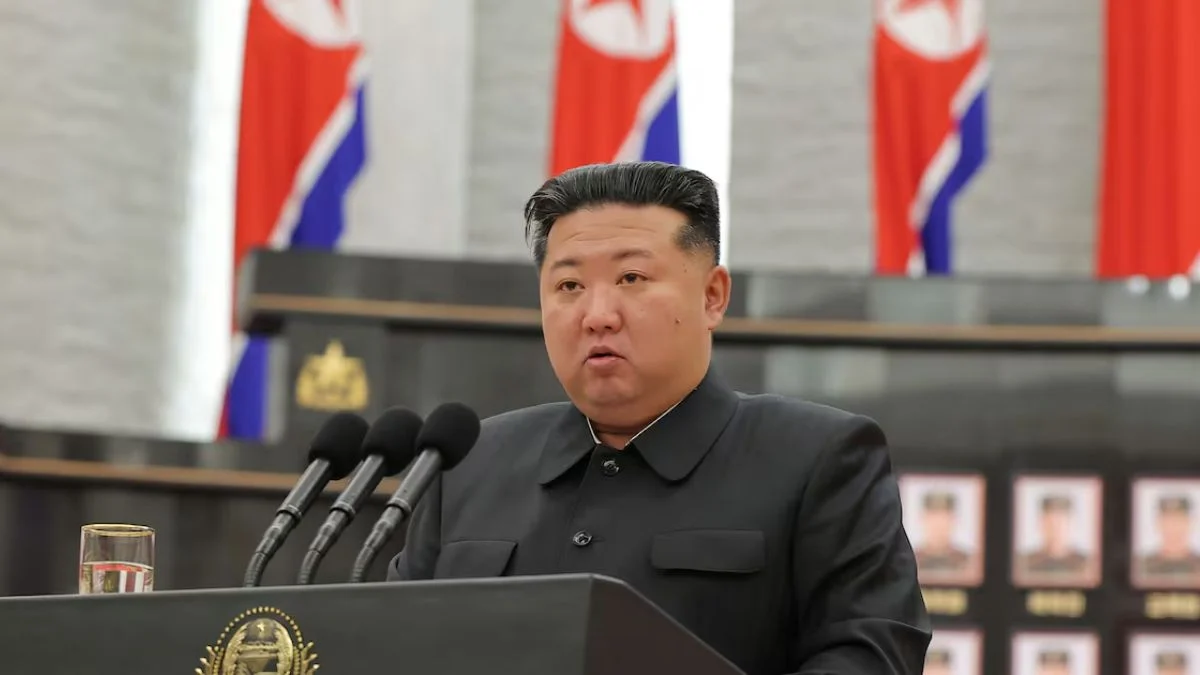
South Korea estimates North Korea’s economy grew over 3 percent for third year

North Korea’s economy expanded by more than three percent in 2025 for the third consecutive year, according to new estimates released by South Korea’s central bank. The report suggests that stronger economic and military cooperation with Russia played a major role in boosting growth despite North Korea’s continued international isolation.

The Bank of Korea, which has published annual estimates of North Korea’s economy since 1991 because Pyongyang does not release official economic data, estimated that the country’s real gross domestic product grew by 3.5 percent last year. The report valued North Korea’s economy at approximately 38.26 trillion won, or about 26.6 billion dollars.

According to Bank of Korea officials, expanded cooperation with Russia was one of the main reasons for the improvement. Analysts have said North Korea has strengthened ties with Moscow by supplying troops and military equipment for Russia’s war in Ukraine. In return, Pyongyang is believed to have received financial assistance, food supplies, energy resources and military technology.

A Bank of Korea official said increased weapons exports to Russia supported growth in North Korea’s manufacturing sector. The official also noted that a rise in Russian tourists and improved transport links between the two countries contributed to stronger performance in construction and service industries.

The report estimated that North Korea’s exports increased by 30 percent during 2025, reaching around 470 million dollars. Among the leading export products were prepared feathers and wigs, along with toys and sporting goods. Although the report did not identify all exported items, officials said stronger overseas sales contributed significantly to economic growth.

The latest figures were released as reports continued to highlight growing military cooperation between Moscow and Pyongyang. Ukraine’s military intelligence, quoted by the Kyiv Independent, claimed that more than 7,000 North Korean troops were killed or wounded while fighting alongside Russian forces during military operations in Russia’s Kursk region between 2024 and 2025. Neither Russia nor North Korea has independently confirmed those figures.

Separately, the Ukrainian human rights organisation Truth Hounds said Russia and North Korea are close to completing their first road bridge connecting the two countries. The group said such a link could strengthen military and economic cooperation by allowing easier movement of personnel, equipment and supplies across the border.

The Bank of Korea also reported a significant increase in North Korea’s gross national income, which measures the total income earned by a country’s residents. The estimate showed GNI rising by 9.4 percent to 48.5 trillion won, or approximately 33.8 billion dollars. Officials said the increase was supported by higher foreign currency earnings, including income linked to North Korean personnel sent to Russia.

Despite the recent growth, North Korea’s economy remains extremely small compared with its southern neighbour. According to the Bank of Korea, North Korea’s gross national income is still less than two percent of South Korea’s economy, highlighting the large economic gap that continues to separate the two countries.

The latest estimates suggest that while North Korea remains under international sanctions and largely isolated from global markets, its expanding partnership with Russia is providing new sources of economic activity that have helped sustain growth for a third straight year.

Similar Posts

  • EASA issues urgent advisory warning airlines to avoid Jordanian airspace

    The European Union Aviation Safety Agency (EASA) has issued a security bulletin urging commercial airlines to suspend all operations within Jordanian airspace. The safety agency highlighted an escalation in cross-border military strikes and ballistic missile trajectories as primary drivers behind the severe risks currently facing civilian flights in the region. The newly released directive instructs European carriers and EASA-authorized foreign operators to avoid the Amman Flight Information Region (FIR) across all flight levels. Alongside this new warning, EASA officially extended its existing airspace warnings for several neighboring Middle Eastern territories through August 31, 2026. According to official EASA statements, security conditions across the region have deteriorated rapidly since mid-July. The airspace over and around Jordan has become increasingly hazardous due to active kinetic military engagements, including drone deployments, ballistic missile transit, and the frequent activation of heavy air defense systems. The regulatory agency highlighted several critical factors endangering high-altitude commercial flights. The heightened operational state of regional air-defense units increases the probability that radar systems could accidentally target civilian airliners. Active aerial engagements create unpredictable hazard zones caused by mid-air missile interceptions, anti-aircraft fire, and descending shrapnel. Rapid combat developments often leave local aviation authorities without adequate time to issue timely rerouting orders or close vulnerable corridors. Because Jordanian authorities have not yet published definitive local flight restrictions or comprehensive safety mitigations, European regulators felt compelled to intervene directly to protect commercial flights. Jordan’s addition to the no-fly advisory list reflects a widespread expansion of flight restrictions across key aviation transit hubs in the Middle East. EASA had previously reinstated and strengthened safety advisories for several other nations and maritime zones following intensified conflicts involving U.S. assets and Iranian forces. The full list of airspaces currently subject to EASA’s strict operational warnings includes Jordan (Amman FIR); Iran, Iraq, and Lebanon; Bahrain, Kuwait, Qatar, and the United Arab Emirates; overwater corridors in the Gulf of Oman. All related advisories, which were previously scheduled to expire on July 29, have now been synchronized and extended until at least August 31, 2026. The decision to bypass Jordan forces international airlines to implement extensive flight path revisions. Carriers are diverting long-haul journeys around extended no-fly zones, leading to longer flight durations, increased fuel consumption and higher operating costs.  Also, the potential schedule shifts for passengers traveling along major international routes. EASA emphasized that all affected air operators must continuously track real-time Notice to Air Missions (NOTAMs) and conduct rigorous safety evaluations prior to dispatching aircraft near or around adjacent flight zones. European regulators stated they will continue to monitor regional security developments closely and modify their airspace guidelines as conditions evolve.  

  • | |

    Deadly heatwave sweeps South Korea, claims 16 live…

    SEOUL: South Korea is grappling with one of the most intense heatwaves in its recorded history, with at least 16 people losing their lives and more than 2,000 others suffering from heat-related illnesses as extreme temperatures continue to grip the country. According to South Korean authorities, the nation recently recorded its highest temperature in 122 years of weather observations, with the southern city of Yangsan reaching a scorching 42.5°C. For the first time, officials have issued an extreme heat warning for the capital, Seoul, highlighting the severity of the ongoing weather conditions. President Lee Jae Myung has instructed government agencies to step up emergency measures to protect vulnerable groups, including the elderly, outdoor workers, and people with underlying health conditions. He also directed officials to closely monitor the country’s electricity supply as soaring demand for cooling systems places added pressure on the power grid. Climate experts say the unprecedented heat is being driven by a combination of persistent high-pressure weather systems and the growing impact of climate change, which has intensified extreme weather events across the region. Authorities continue to urge residents to limit outdoor activities, stay hydrated, and take precautions as the record-breaking heatwave shows little sign of easing.

  • | |

    Imran Khan asks Akbar S Babar to reunite former PT…

    PTI founder Imran Khan has sent an important message to former party colleague and founding member Akbar S Babar from jail. According to Babar, Khan has asked him to play a role in bringing together the party’s early members. He has also been asked to reach out to disgruntled leaders and workers. Babar confirmed that he received the message through another longtime associate of the PTI founder who is currently in jail. The message reportedly focuses on reconnecting with people who were associated with the Pakistan Tehreek-e-Insaf during its early years. It also includes party members and workers who later became unhappy with the party leadership or distanced themselves from it. Babar said the message reflects Khan’s desire to bring former colleagues closer together. The aim is to create greater unity among PTI’s old associates and workers. The former PTI leader also shared another significant part of the message. He said Imran Khan told him that after being released from jail, he would first visit Babar’s home. The message is being viewed in the context of PTI’s efforts to maintain political unity. The party has faced internal disagreements and differences among several of its former and current leaders. Akbar S Babar was among the founding members of PTI. He later developed serious differences with the party leadership. His disagreements with the party eventually led to a long-running legal and political dispute. Babar has remained critical of several aspects of PTI’s internal affairs. However, the latest message indicates a possible attempt to reconnect with the party’s early associates. The reported communication also highlights the importance of PTI’s original members and workers. Many of them played a role in establishing the party during its early political years. According to Babar, the message from jail was clear. He has been asked to help bridge differences and bring people together. The development could become significant if former leaders and workers respond positively to the outreach. It may also open the possibility of renewed communication between PTI’s current leadership and some of its former associates. For now, Babar has publicly confirmed receiving the message. Further details about the proposed efforts to reunite former PTI members have not been disclosed.

  • | |

    KP government orders immediate closure of mines

      The Khyber Pakhtunkhwa (KP) government has ordered the immediate closure of all mines where explosive materials are used, as part of a broader effort to strengthen security and tighten oversight of potentially hazardous substances across the province. According to official directives issued by the Provincial Home Department in Peshawar, all district administrations have been instructed to take immediate action and ensure strict implementation of the government’s orders. The directive emphasizes the need for swift compliance and close coordination among local authorities to enforce the new measures without delay. The Home Department has also directed all districts to prepare and submit comprehensive lists of mines operating within their jurisdictions. These lists will distinguish between mines that use explosives and those that do not. Officials have been instructed to classify all mines using explosive materials under a Red List, indicating that they fall under stricter regulatory scrutiny and are subject to immediate closure or further action. On the other hand, mines extracting soft rock without the use of explosive materials will be placed on a Green List. These mines are considered comparatively safer from a security perspective and may continue operations in accordance with existing regulations, provided they comply with all relevant legal requirements. The department has instructed district administrations to submit both the Green List and the Red List as soon as possible. The reports are expected to provide a clear picture of mining activities across the province and help authorities monitor compliance with the latest directives. In addition to regulating mining operations, the Home Department has ordered strict monitoring of the purchase, sale, transportation, storage, and use of explosive materials. Authorities have also been instructed to closely monitor the movement and use of urea fertilizer, which can potentially be misused in the manufacture of improvised explosive devices if diverted from legitimate agricultural purposes. As part of these measures, all districts have been asked to compile and submit complete district-wise lists of licensed urea dealers. The purpose of collecting this information is to strengthen oversight of the distribution chain and prevent the illegal sale or diversion of urea for unlawful activities. The Home Department has further instructed all relevant officials to submit the required reports and lists without delay. Once these reports are received, the provincial government will review the findings and determine any additional actions that may be necessary. Relevant authorities are expected to take further administrative, regulatory, or legal measures based on the information collected from across the province. The latest directives reflect the KP government’s commitment to enhancing public safety, improving regulatory oversight of mining activities, and preventing the misuse of explosive materials. By introducing a district-wise classification system and increasing surveillance over explosives and urea distribution, the provincial administration aims to strengthen law enforcement efforts and reduce potential security risks associated with unauthorized use of hazardous substances. The implementation of these measures is expected to improve coordination among government departments and ensure greater accountability in the mining and chemical supply sectors across Khyber Pakhtunkhwa.

Leave a Reply

Your email address will not be published. Required fields are marked *