|

Kartik Aaryan joins Salman Khan in Assam flood relief effort

Kartik Aaryan has stepped forward for Assam. He has donated Rs 1 crore to the state’s Chief Minister’s Relief Fund. The contribution comes as the state continues to battle severe flooding. His gesture follows a similar move by Salman Khan just days earlier.

The Assam CM’s office confirmed the donation on X. The post expressed gratitude for the actor’s generous support. It called the gesture commendable and timely, especially given how badly the state has been hit this year.

Chief Minister Himanta Biswa Sarma also shared his own message of thanks. He said he was truly moved by Aaryan’s contribution. He added that the support would go a long way in helping the people of Assam through this difficult period.

Salman Khan had already been involved before this. He quietly partnered with one of his fan clubs based in Assam. Together, they launched a phased relief campaign through his NGO, Being Human. The effort reportedly started with distributing food to families in need.

Other Bollywood stars have pitched in as well, though in different ways. Bhumi Pednekar and Alia Bhatt have both used their social media platforms to spread awareness. They have been sharing resources and relief information with their followers.

The situation on the ground, however, remains serious. According to the latest ASDMA bulletin, two more deaths were reported in Sivasagar district. One of the victims was a child. This has pushed the year’s flood death toll to 80.

Around 2.12 lakh people are currently affected across four districts. These include Charaideo, Golaghat, Jorhat and Sivasagar. Charaideo has been hit the hardest. Nearly 80,000 people there have been displaced from their homes.

There has been some improvement since Wednesday. Back then, more than three lakh people were reported affected. Despite the drop in numbers, relief operations are still in full swing across the state.

Authorities have set up 112 relief camps so far. These camps are currently housing over 75,000 displaced residents. Multiple agencies are working together on the ground. The Army, NDRF, SDRF and other state bodies remain actively involved in rescue and relief efforts.

As Assam works through one of its toughest flood seasons in recent memory, support from public figures like Aaryan and Khan is being seen as a welcome boost. For many affected families, though, the road to recovery is still just beginning.

Similar Posts

  • | | |

    Congo Ebola outbreak death toll crosses 2,000

    KINSHASA: The Ebola outbreak in the Democratic Republic of Congo has intensified dramatically, with the death toll reaching 2,061 as authorities reported 4,449 confirmed cases, highlighting the growing challenge facing health workers and communities. The latest figures, reported by Congolese authorities on Tuesday, show how quickly the outbreak has expanded since it was officially declared on May 15. The outbreak is being driven by the Bundibugyo virus, a species of Ebola for which there is currently no licensed vaccine or specific treatment. Health authorities have been relying heavily on early diagnosis, supportive care, surveillance and infection-control measures. The outbreak began in Ituri province, with cases subsequently reported in other parts of the country. The World Health Organisation has warned that insecurity, population movement and limited healthcare infrastructure are complicating efforts to contain transmission. The current epidemic is Congo’s 17th Ebola outbreak, according to health authorities. Its rapid growth has raised concerns among international health agencies, particularly as affected communities face humanitarian and security challenges. Medical teams are working under difficult conditions, wearing protective equipment while treating patients and tracing contacts. WHO has said that strengthening surveillance, contact tracing, clinical care and community engagement remains central to the response. Recent research has also suggested that the outbreak may involve a previously unrecorded variant of the Bundibugyo strain and could have resulted from a new animal-to-human transmission event, underscoring the importance of monitoring potential spillover from wildlife. With thousands of confirmed infections and deaths already recorded, authorities face an urgent race to slow transmission and prevent the outbreak from spreading further across the region.

  • |

    Lala Rukh predicts Rajab Butt’s second marriage soon

    Rajab Butt is once again at the centre of social media attention after astrologer Lala Rukh made a surprising prediction about his personal life. The popular YouTuber is among Pakistan’s most followed digital creators and frequently makes headlines because of his controversies, public disputes and ongoing marital issues. Rajab has been facing considerable speculation surrounding his relationship with his wife, Emaan Fatima. Although the couple are still legally married, questions about their relationship and the possibility of a second marriage have continued to circulate online. The subject has now gained renewed attention following a prediction made by Lala Rukh. The astrologer recently shared a series of predictions in which she reportedly claimed that Rajab Butt could have a future connection with the Sistrology family. Her comments quickly caught the attention of social media users because of the unexpected nature of the prediction. Sistrology is a well-known YouTube family made up of sisters who have built a strong following through their lifestyle and family-oriented vlogs. Over the years, the sisters have become familiar faces within Pakistan’s digital creator community and have collaborated or appeared alongside several prominent influencers. The group is also known to have close connections with other popular social media personalities, including Ducky Bhai and Aroob Jatoi. Their frequent appearances with major names from Pakistan’s influencer community have helped them maintain a strong presence on social media. According to Lala Rukh’s latest prediction, there could be a union between the Rajab Butt family and the Sistrology family. She reportedly suggested that Rajab’s second marriage could take place within the Sistrology family, sparking widespread curiosity among viewers. The prediction is particularly notable because Lala Rukh had previously made claims about Rajab’s marriage to Emaan Fatima. She had reportedly predicted that the couple would eventually separate, while discussions surrounding their relationship have since moved towards legal proceedings. Following the latest prediction, social media users were quick to share their reactions. Many appeared surprised by the possibility, while others questioned whether the astrologer’s prediction would eventually prove accurate. One social media user commented that the Sistrology sisters “have high standards,” while another responded with the phrase “Dhur Fitay Moo.” Others took a more neutral approach and suggested waiting to see whether the prediction actually comes true. For now, Lala Rukh’s claim remains only a prediction, and there has been no confirmation from Rajab Butt or anyone from the Sistrology family regarding the possibility of such a relationship or marriage. Nevertheless, the statement has once again placed Rajab’s personal life in the spotlight and generated considerable discussion across social media. As speculation continues, fans will likely be watching closely for any response from Rajab, Emaan or the Sistrology family. Until then, the prediction remains unverified and should be treated as speculation rather than a confirmed development.

  • | |

    Punjab University staff demand forensic audit, war…

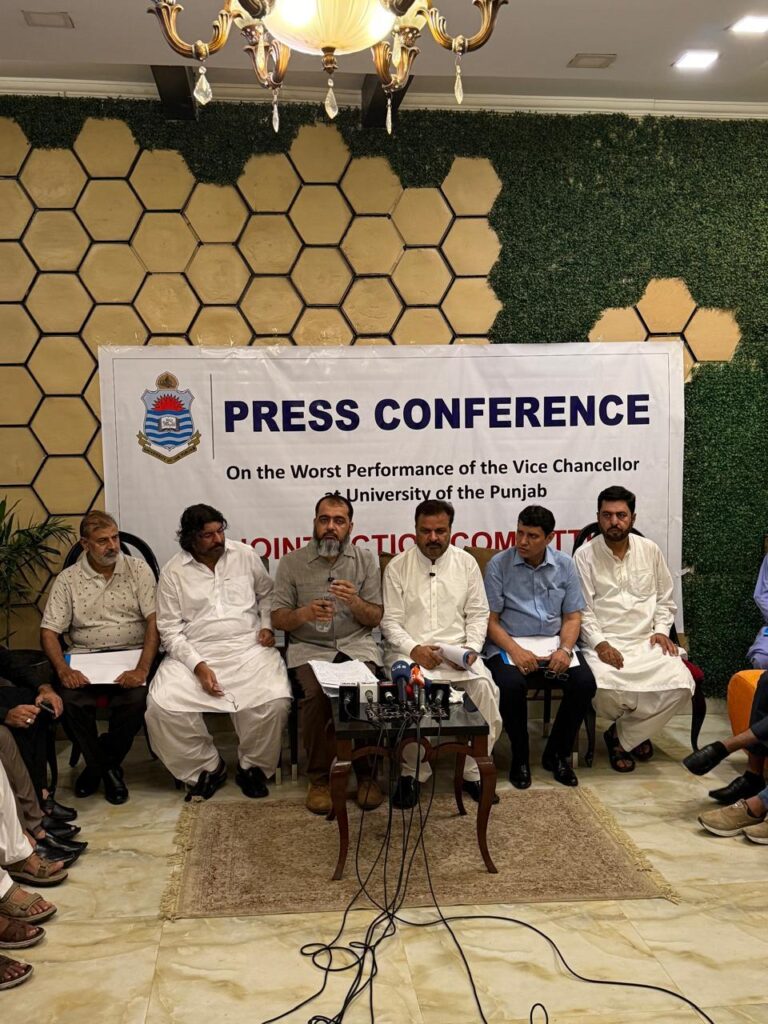
    Lahore: A joint platform representing teachers, officers, employees, and other stakeholders at the University of the Punjab has accused the university administration of driving the country’s oldest and largest public university into a deep financial, administrative, academic, and research crisis, while warning of a protest movement if their demands remain unaddressed within two weeks. Addressing a press conference in Lahore, the Joint Action Committee (JAC) said its purpose was not to target individuals but to present what it described as documented concerns regarding the university’s governance, financial management, academic standards, and research environment. The committee appealed to the Chancellor of the University, the Governor of Punjab, and the provincial government to intervene immediately to safeguard the institution.   The committee alleged that reserve funds worth approximately Rs4.88 billion, accumulated over many years, had been utilized within just 14 months without approval from the Finance and Planning Committee. It claimed that the university’s 2025–26 budget reflected a deficit of Rs2.57 billion and argued that, when combined with the depletion of reserves, the institution was effectively facing a financial shortfall of nearly Rs8 billion. It also questioned expenditures allegedly made beyond approved budget limits and called for greater transparency in financial decision-making. JAC further claimed that around Rs786 million belonging to various academic departments and institutes had been transferred to a central account under the One-Account Policy and later utilized, raising questions about whether the expenditures had received approval from the relevant statutory bodies. It also expressed concern over what it described as the first-ever financial deficit of nearly Rs350 million in the university’s self-supporting programmes. The committee also pointed to an apparent discrepancy in financial reporting, claiming that while the Finance and Planning Committee was informed of a Rs2.57 billion budget deficit at the end of the financial year, a subsequent Syndicate meeting was told the deficit stood at Rs1.6 billion. According to the committee, the variation requires a transparent explanation. Expressing concern over campus security, the committee referred to the killing of a student and the son of a university employee near the Vice Chancellor’s residence despite the presence of armed security personnel, arguing that the incident had raised serious questions about the effectiveness of the university’s security arrangements. On governance, the committee alleged that key statutory bodies, including the Senate, Deans’ Committee, Chairpersons’ Committee, Syndicate, and Selection Boards, had met only infrequently during the current administration, resulting in delays in appointments, promotions, and major policy decisions. It further criticized what it described as an excessive concentration of administrative authority in the office of the Director General (Students, Estate and Security), saying such an arrangement was inconsistent with principles of transparency, institutional balance, and accountability. The committee also referred to pending complaints and inquiries involving the office-holder, questioning the wisdom of assigning additional responsibilities while such matters remain unresolved. Highlighting academic concerns, JAC said the university had slipped from 542nd to 588th position in the QS World University Rankings and had also experienced a decline in the Higher Education Commission’s Office of Research, Innovation and Commercialization (ORIC) rankings. It alleged that faculty members were facing an atmosphere of insecurity and harassment, while research grants, travel support, and publication funding had effectively come to a halt. The committee claimed that although research grants of up to Rs1 million had been announced, no faculty member had yet received financial assistance under the initiative. It further alleged that several researchers had been forced to abandon nationally and internationally funded projects because of inadequate institutional support, damaging both research output and the university’s reputation with funding agencies. According to the committee, hostel accommodation remains unavailable for many students, including research scholars, while an increasing number of inquiry committees against faculty members and officers has created an atmosphere of fear and professional uncertainty. It also expressed concern over delays in permanent appointments to several senior administrative positions, saying the lack of regular appointments had weakened institutional efficiency. The Joint Action Committee demanded an independent forensic audit of the university’s financial affairs, including the use of reserve funds, deficit budgets, the One-Account Policy, and the finances of self-supporting programmes. It also called for the immediate removal of the Director General (Students, Estate and Security) under the principle of “one person, one post,” an end to what it described as retaliatory inquiries, restoration of a secure and professional working environment, immediate advertisement and transparent appointment of a permanent Registrar, payment of outstanding financial dues and benefits to teachers and employees, and the restoration of regular meetings of all statutory bodies in accordance with the University Act. The committee warned that if its demands are not addressed within two weeks, it will launch a phased protest campaign, including demonstrations outside the university, a sit-in outside the Punjab Assembly, publication of a white paper containing documentary evidence, and a boycott of classes that could ultimately disrupt academic activities at the historic institution. The university administration had not issued an official response to the allegations at the time this report was filed.


  • | | |

    FinMin Aurangzeb seeks US backing for global marke…

    Pakistan has sought stronger support from the United States to improve its access to international capital markets, strengthen foreign exchange reserves and enhance its sovereign credit ratings as part of its broader strategy to accelerate economic growth and attract foreign investment. Finance Minister Muhammad Aurangzeb discussed these priorities during a meeting with US Treasury Secretary Scott Bessent in Washington. The meeting focused on Pakistan’s economic progress, financial reforms and opportunities to deepen economic cooperation between the two countries. During the talks, Aurangzeb briefed the US treasury secretary on Pakistan’s improving economic outlook. He said the country has successfully moved beyond the phase of macroeconomic stabilization and is now entering a period focused on sustainable, export-led growth. He noted that ongoing structural reforms and prudent fiscal management have helped improve economic stability and restore investor confidence. The finance minister also highlighted the challenges posed by regional geopolitical tensions. He said instability in the region has affected Pakistan’s economy and continues to create uncertainty for trade, investment and financial markets. He emphasized that stronger international cooperation would help Pakistan maintain economic stability despite these external challenges. Aurangzeb requested greater US support to help Pakistan improve access to international capital markets. He said easier access to global financing would strengthen the country’s financial position, increase foreign exchange reserves and improve sovereign credit ratings, making Pakistan more attractive to international investors. The two sides also discussed ways to expand bilateral economic cooperation. They reviewed opportunities to increase US investment in Pakistan and explored prospects for advancing strategic development and investment projects that could strengthen economic ties between the two countries. Both governments reaffirmed their commitment to enhancing economic relations, promoting investment and supporting initiatives aimed at expanding trade and long-term financial cooperation. Separately, Aurangzeb held a virtual meeting from Washington with senior representatives of international banking consortia participating in Pakistan’s Global Medium-Term Note Programme and International Sukuk Programme. The meeting marked the beginning of a strategic partnership with selected international financial institutions that will assist Pakistan in raising funds from global capital markets through both conventional bonds and Islamic financing instruments. The banking consortia have been appointed for a three-year period and will support future sovereign bond and Sukuk issuances whenever the government decides to enter international financial markets in line with its financing strategy. Officials said Pakistan’s return to international capital markets has become more feasible due to significant improvements in the country’s macroeconomic environment. Continued fiscal discipline, stronger external financial buffers, better debt management and ongoing structural reforms have improved investor confidence and strengthened Pakistan’s economic credibility. Government officials believe these improvements have also contributed to better market sentiment, with international investors showing growing confidence in Pakistan’s economic reforms and long-term growth prospects.

  • | |

    Pakistan blames Afghan-based militants for rising …

    Islamabad: Pakistan’s Deputy Prime Minister and Foreign Minister Ishaq Dar has said that banned militant groups, including Tehreek-e-Taliban Pakistan (TTP), the Balochistan Liberation Army (BLA), and the East Turkestan Islamic Movement (ETIM), are operating from Afghan territory under the protection of the Afghan Taliban. Speaking at the Shanghai Cooperation Organization (SCO) Council of Foreign Ministers meeting, Dar described terrorism originating from Afghanistan as a serious threat to regional peace and stability. He said these militant groups continue to carry out attacks from across the border, posing a major security challenge for Pakistan. Dar stated that Pakistan has witnessed more than 2,000 terrorist attacks so far this year, resulting in the deaths of over 560 civilians. He also claimed that evidence had emerged linking some Afghan nationals to several of these attacks. The foreign minister urged SCO member states to call on the Afghan Taliban to fulfill their counterterrorism commitments and prevent Afghan territory from being used by militant organizations. Reaffirming Pakistan’s commitment to regional peace, Dar said dialogue, diplomacy, and mutual respect remain the only sustainable solutions to regional disputes. He highlighted Pakistan’s role in promoting diplomatic engagement and stressed the importance of supporting ongoing peace initiatives. Dar also noted that Pakistan hosted talks between Iran and the United States in April 2026, which, according to him, led to the signing of the Islamabad Memorandum of Understanding in June 2026. He urged the international community to support diplomatic efforts while remaining vigilant against attempts to undermine the peace process. Looking ahead, Dar said Pakistan will assume the chairmanship of the SCO Council of Heads of State in September 2026 and host the SCO Summit in 2027. During its chairmanship, Pakistan plans to prioritize regional connectivity, trade, agricultural cooperation, youth exchanges, and stronger people-to-people ties. On the sidelines of the SCO meeting, Dar also met Iranian Foreign Minister Abbas Araghchi. The two leaders discussed bilateral relations, regional developments, and efforts to promote peace and stability. Dar emphasized the need for restraint, de-escalation, and continued diplomatic engagement in addressing regional challenges, while both sides agreed to maintain close coordination on issues of mutual interest.

  • |

    Sultana Siddiqui reveals women empowerment approach

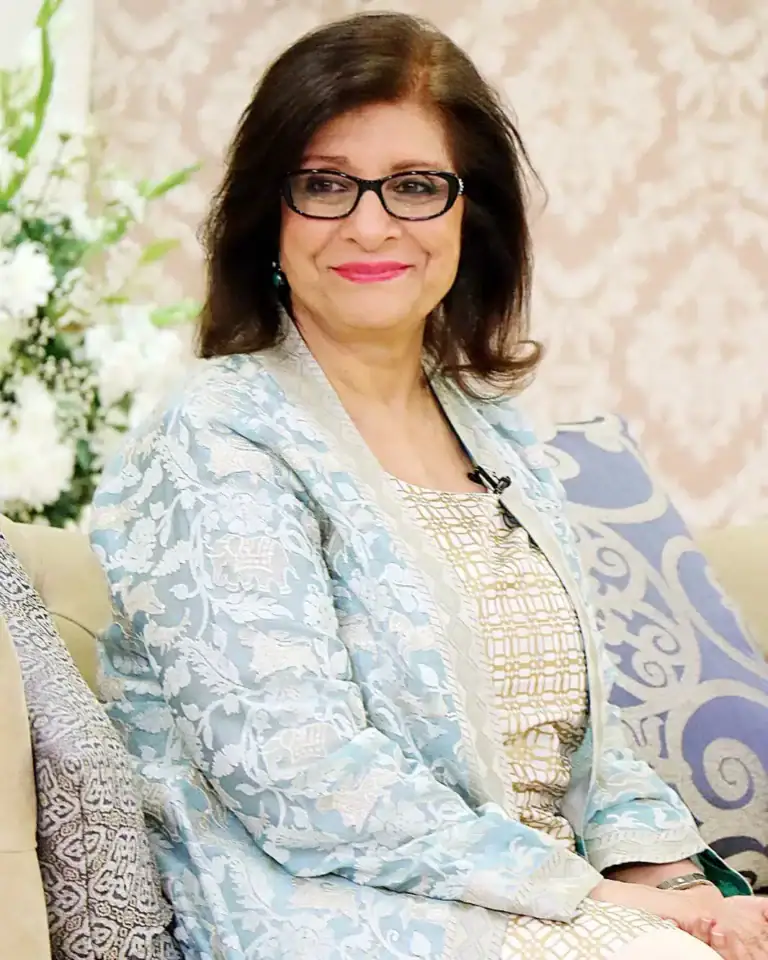
    Sultana Siddiqui, the founder of HUM Network and one of Pakistan’s most influential television producers, has spoken about her long-held belief in empowering women by giving them meaningful leadership roles. During a recent podcast appearance, she reflected on how she entrusted her daughters-in-law with running production houses, saying she has always believed women should be encouraged to take responsibility and shape the future of the entertainment industry. Sharing her journey, Siddiqui explained that she never considered it wrong to empower women, especially within her own family. She revealed that when her elder daughter-in-law, Moomal, got married, she established Moomal Entertainment and handed over its management to her. Later, after Momina joined the family, Siddiqui launched MD Productions and entrusted the company to her as well. According to Siddiqui, Momina had completed a degree in business and initially had no plans to work in television. However, after observing the creative atmosphere around her, she gradually became interested in the industry and accepted the challenge of contributing to meaningful storytelling. Recalling their conversations, Siddiqui said Momina told her that she wanted to educate audiences through television content rather than simply produce entertainment. That vision, she said, inspired the production of several memorable dramas that combined strong storytelling with social messages. The veteran producer highlighted that Pakistani television was going through a difficult period at the time. She remembered that audiences were increasingly drawn to Indian television serials, making it challenging for local productions to compete. Even attracting sponsors for new dramas was a major hurdle, as confidence in the local industry had declined. Despite these obstacles, Siddiqui said her team remained determined to revive Pakistani dramas by focusing on quality scripts and emotionally engaging stories. She credited the dedication of her production houses and creative teams for helping restore viewers’ interest in local television. Reflecting on that era, she pointed to critically acclaimed projects such as Dastaan as examples of the kind of meaningful content that helped bring audiences back to Pakistani dramas. She said productions like these played an important role in rebuilding the industry’s reputation and proving that locally produced stories could resonate with viewers. Siddiqui also recalled how the revival of Pakistani dramas required patience and persistence. She noted that the industry had to overcome financial challenges, limited sponsorship opportunities, and tough competition before eventually regaining its strong position in the entertainment landscape. Throughout the discussion, Siddiqui emphasized that empowering women has always been one of her core values. Rather than limiting opportunities, she believes women should be trusted with leadership positions and given the freedom to make important decisions. Her remarks offered a glimpse into the philosophy that has shaped both her family and professional life. By placing confidence in the abilities of her daughters-in-law and encouraging them to lead successful production houses, Siddiqui said she hoped to create an environment where women could thrive, innovate, and make a lasting impact on Pakistan’s television industry.

Leave a Reply

Your email address will not be published. Required fields are marked *