thar communities demand

Thar communities demand fair share of coal royalties

MITHI: The representatives of communities affected by the Thar Coal project, activists of civil society organisations, lawyers, journalists and youth groups on Wednesday adopted a 12-point resolution calling for a comprehensive legal framework to govern the distribution and utilisation of coal royalties, describing the issue of Thar Coal Royalty as central to the region’s future development.

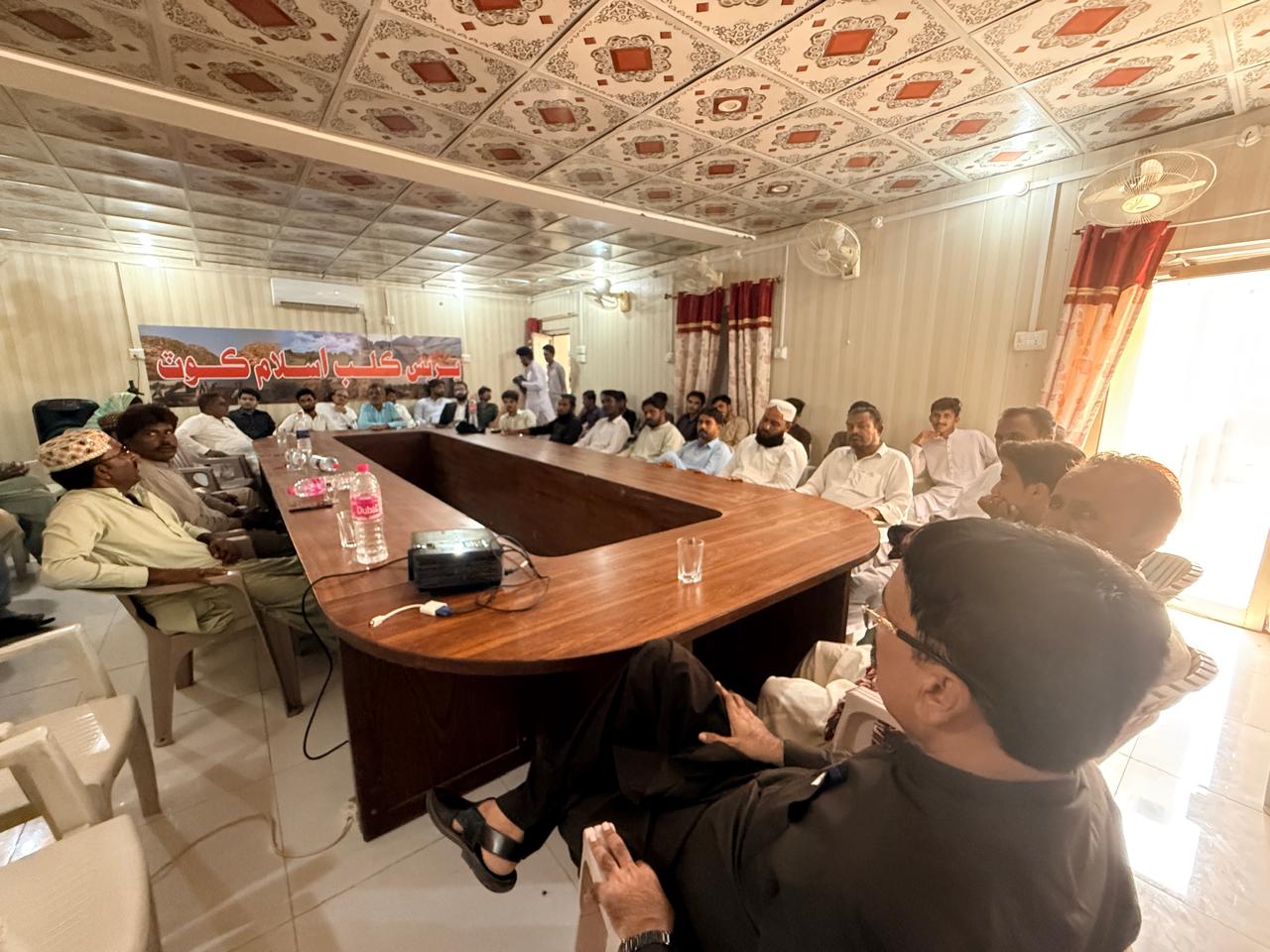
The resolution was adopted at a consultative meeting held at the Islamkot Press Club, where participants urged the provincial government to recognise the legal and moral claims of Tharparkar’s residents over royalties generated from coal extracted from the desert.

The participants demanded the establishment of a Thar Coal Royalty Fund, proposing that at least 50 per cent of royalty revenues be earmarked for the development of Tharparkar. They also called for annual white papers detailing royalty collections and expenditures, independent financial audits, and legislation to ensure transparent management of the fund.

According to the resolution, the proposed fund should be administered by a representative board comprising members from affected villages, women, youths, civil society, locally elected representatives and technical experts.

The resolution further proposed that royalty revenues be invested in healthcare, education, clean drinking water, environmental restoration, afforestation, pollution control, vocational training, employment opportunities for local residents, scholarships, technical institutes, university campuses and youth skills development.

Participants also sought fair compensation, rehabilitation and alternative livelihood opportunities for families displaced by mining activities or affected by devastating environmental impacts. They recommended annual public hearings on the utilisation of the royalty fund, the enactment of a Thar Coal Royalty Management Act, and the establishment of a Future Generation Fund to finance long-term investments in education, healthcare, water security and climate resilience.

The meeting emphasised that the principle of “Thar’s coal, Thar’s right” should guide future policy, urging authorities to ensure transparency, accountability, public oversight and greater participation of affected communities in decisions concerning royalty utilisation.

The resolution recommended that copies be forwarded to the Chief Minister of Sindh, the Speaker of the Sindh Assembly, the provincial departments of Mines and Energy and Finance, elected representatives of Tharparkar, the district administration, mining companies and relevant federal institutions for consideration.

During the meeting, speakers including Ubhayo Junejo, Aijaz Bajeer, Sajan Charo, Nashad Rahim Ali, Advocate Qurban Samejo, GM Bajeer, Ms Uzma Abring, Abdul Ghani Bajeer, Nehal Mehranpoto, Hassan Rizvi, Azad Asad Hingorjo, Naseer Noon, Aijaz Baloch, Soomar Khaskheli and others expressed their deep concern over the environmental and social impacts of coal mining, including land acquisition, loss of grazing areas, groundwater contamination and limited employment opportunities for local residents. They maintained that a substantial amount of royalty revenue had accumulated over the years and urged both the federal and Sindh governments to ensure that these funds are utilised for the sustainable development and welfare of the people of Tharparkar.

Participants warned that if their demands for a transparent and equitable royalty mechanism remained unaddressed, they would consider launching a coordinated protest campaign.

Similar Posts

  • | |

    Pakistan, Kuwait agree to expand bilateral cooperation

    Pakistan and Kuwait have agreed to strengthen cooperation in several key areas, including trade, investment, energy, labour, agriculture, information technology, health, mining and minerals, and defence. The understanding came during delegation-level talks held at the Ministry of Foreign Affairs in Islamabad on Wednesday. Deputy Prime Minister and Foreign Minister Ishaq Dar and Kuwait’s Foreign Minister Sheikh Jarrah Jaber Al-Ahmad Al-Sabah co-chaired the meeting. Sheikh Jarrah arrived in Islamabad on Tuesday for a two-day official visit aimed at reviewing Pakistan-Kuwait relations and discussing regional and international developments of mutual interest. According to the Ministry of Foreign Affairs, the two sides reviewed the full range of bilateral ties and explored ways to expand economic cooperation and strengthen partnerships across various sectors. The two foreign ministers also agreed to improve institutional coordination by building stronger links between relevant institutions and maintaining regular high-level exchanges. Pakistan and Kuwait further reaffirmed their commitment to working closely at multilateral forums on matters of shared interest. During the talks, Sheikh Jarrah thanked the Pakistani government and people for their warm welcome and hospitality. He also appreciated Pakistan’s support to Kuwait during the COVID-19 pandemic.

  • | |

    New CCTV footage emerges in Mir Raza Ali murder in…

    Fresh CCTV footage has surfaced in the investigation into the murder of Mir Raza Ali, providing investigators with another potential lead as police continue to examine the circumstances surrounding his death. The newly obtained footage, captured by a surveillance camera overlooking the area where Ali’s body was discovered, shows a motorcycle stopping briefly at the location. According to investigators, the recording is timestamped at 3:36 a.m. on July 29, with the motorcycle remaining at the scene for approximately 20 seconds before leaving. Due to poor lighting, the footage does not clearly reveal the number of people riding the motorcycle or provide any identifying details, making further forensic analysis necessary. Mir Raza Ali, a resident of Karachi’s Pakistan Employees Cooperative Housing Society (PECHS), went missing on July 28 after leaving his home at around 4:09 a.m. in an online taxi. His body was found two days later in Gulistan-e-Jauhar. Police said the victim had sustained a gunshot wound to the chest, and his body was recovered in a severely deteriorated condition, indicating that it had remained at the location for some time before being discovered. Investigators have also revealed that all of Mir Raza Ali’s social media accounts were deactivated a day before his body was found, adding another element to the ongoing probe. Authorities are continuing to review CCTV footage, forensic evidence, and digital records as they work to determine the motive behind the killing and identify those responsible for the crime.

  • | |

    Bilawal begins consultations after JAAC backs reco…

    PPP Chairman Bilawal Bhutto Zardari has announced that he has received a response from the banned Joint Awami Action Committee (JAAC) regarding his proposal to establish a Truth and Reconciliation Commission to address the ongoing crisis in Azad Jammu and Kashmir (AJK). He said the response marked an important step towards finding a peaceful and institutional solution to the unrest. In a statement issued on Saturday, Bilawal said the committee had shown willingness to consider the proposed commission. He welcomed the response and said it reflected support for resolving the dispute through dialogue rather than confrontation. He added that the proposal had already been endorsed by the Azad Jammu and Kashmir Legislative Assembly. The PPP chairman said the loss of every life during the recent unrest was a national tragedy. He stressed that his foremost priority was to help restore peace, reduce tensions, and bring normal life back to the people of AJK as soon as possible. Bilawal said the next stage would involve consultations with AJK Prime Minister Faisal Mumtaz Rathore. He explained that the prime minister would hold discussions with the federal government and other relevant stakeholders to determine whether sufficient consensus exists to move forward with the proposed commission. According to Bilawal, these consultations are necessary before any final decision is taken. He expressed hope that all parties would work together to develop a mutually acceptable framework capable of addressing the concerns raised during the recent protests. The proposal comes after weeks of political tension between the AJK government and the Joint Awami Action Committee. The dispute intensified over the committee’s demand to abolish the 12 seats in the AJK Legislative Assembly reserved for refugees from Indian-administered Jammu and Kashmir who settled in Pakistan after 1947. The disagreement led to widespread demonstrations across the region and increased political uncertainty. Bilawal has repeatedly called for the establishment of an independent Truth and Reconciliation Commission over the past month. He believes such a body could impartially investigate the recent violence, determine the facts surrounding the unrest, and help create conditions for meaningful dialogue between the government and protesters. Speaking at a public gathering in Muzaffarabad earlier this week, Bilawal said maintaining peace, fairness, and transparency was essential during the election period. He argued that resolving the crisis should not be viewed as a political victory or defeat for any party but as a national responsibility aimed at protecting the future of Kashmir and safeguarding Pakistan’s position on the Kashmir issue.

  • | |

    Zardari, Shehbaz among officials depositing gifts …

    President Asif Ali Zardari, Prime Minister Shehbaz Sharif and other senior officials have deposited numerous gifts received from foreign dignitaries in the Toshakhana. The government has released details of gifts received by senior officeholders during the recent period. The Cabinet Division has also made records of gifts received by public officials since 2002 available on its official website. Information Minister Attaullah Tarar said details of deposited gifts are published periodically. He said the records cover gifts received by the president, prime minister, deputy prime minister, federal ministers and other government officials. However, the names of the foreign dignitaries who presented the gifts have not been made public. The Cabinet Division has stated that the valuation of some of the newly listed gifts is still being completed. It has also clarified that the published information is based on records and declarations submitted by individuals and departments. The records show that President Zardari received several valuable and ceremonial items. These included a tea set, sword, golden desert model, woollen overcoat and a Vacheron Constantin Geneve wristwatch. Other gifts listed for the president included a decorative piece, ceremonial sabre set, chessboard, serving bowl and an oil painting. First Lady Assefa Bhutto-Zardari and Bakhtawar Bhutto-Zardari also received jewellery. The records show that both received necklaces. Jewellery sets were also listed among their gifts. Assefa Bhutto-Zardari additionally received a Kumis set. Prime Minister Shehbaz Sharif also received a wide range of gifts. The items included shields, souvenirs, portraits, ties, frames and swords. Some jewellery items were also listed among the gifts received by the prime minister. The records further show several watches, including Rolex and Patek Philippe models. Other items included a coin, traditional dress, clock, sugar bowl and car model. Cups, pens and cufflinks were also among the listed gifts. Deputy Prime Minister Ishaq Dar received several items as well. His gifts included a decorative piece and a traditional Chinese stamp. The records also mention a Burmese string puppet, a Myanmar cultural frame, a Rolex watch, vase, medal and Chinese leather belt. Dar also received an Egyptian statue, pen and cufflink set. Several other federal officials were also listed in the records. Economic Affairs Minister Ahad Khan Cheema received a book about Uzbekistan and a T-shirt. Economic Affairs Secretary M. Humair Karim received a ballpoint pen. Information Minister Tarar was listed as having received a Rolex watch. Several members of the president’s staff also received watches. These included the military secretary, chief security officer, Air ADC, principal staff officer and presidential spokesperson. National Assembly Speaker Ayaz Sadiq received a large ceramic jar. Senator Saleem Mandviwalla received a Bvlgari watch. Former NAB chairman retired Lt Gen Nazir Ahmed received a wristwatch and an INTERPOL commemorative book. Deputy Chief of State Protocol Hafeezullah received a Tag Heuer watch. Special Assistant to the Prime Minister on Foreign Affairs Tariq Fatemi received a Rolex watch and a hand-chased tea set. Prime Minister’s spokesperson for foreign media Mosharraf Ali Zaidi received a Tag Heuer watch. Special Assistant to the Prime Minister for Industries and Production Haroon Akhter received a hand-chased tea set with 24-karat gold plating. The government has said the details of Toshakhana gifts will continue to be uploaded periodically. The Cabinet Division has also placed a disclaimer on the records. It said the information is based on available records and declarations made by officials and departments under the rules applicable at the time.

  • | |

    Sindh High Court seeks record in Mustafa Amir murd…

    The Sindh High Court has expressed concern over delays in the trial of Mustafa Amir’s murder case. The court has sought the complete case record from the trial court. Mustafa Amir’s mother approached the high court against what she described as slow progress in the case. During the hearing, the court questioned why the proceedings had not moved forward. The court also asked whether Section 302 had been added to the case. The complainant’s lawyer said several cases were pending against suspect Armaghan. He alleged that different delaying tactics were being used to slow the proceedings. According to the lawyer, the defence had given several reasons for the delays. At times, disagreements reportedly occurred between the suspect and his parents. On other occasions, the defence lawyer did not appear in court. The suspect had also expressed a lack of confidence in the trial court. The court questioned why the cases were not proceeding despite the suspect being in jail. It observed that continued delays could keep him behind bars for years if he failed to secure bail. The complainant’s lawyer said the case was highly important. However, he claimed that the proceedings were mainly resulting in new hearing dates. The court said the trial should move forward quickly if the accused was using delaying tactics. It said the trial court and prosecution would be given directions to ensure the case proceeds without unnecessary delays. Justice Abdul Rahman also asked whether a medical board had been formed to conduct a psychological examination of the suspect. The complainant’s lawyer said the board had not yet been constituted. Justice Iqbal Kalhoro asked whether charges had been formally framed in the case. The court also directed the complainant to file an application seeking an early trial. The judges warned that prolonged delays could affect the evidence of witnesses. They said witnesses could forget important details if the proceedings remained pending for a long period. Meanwhile, CIA police have also started investigating the alleged drug-related aspect of the Mustafa Amir murder case. The complainant’s lawyer told the court that an application had already been submitted. He said the relevant material was available in the case diary. The court directed the authorities to submit a report at the next hearing. The report will include details of the case’s progress and the adjournments that have taken place. Speaking outside the Sindh High Court, Mustafa Amir’s mother said the case had been delayed for around one and a half years. She alleged that unnecessary delays were affecting the proceedings.

  • | | |

    PTI to file contempt plea over Imran Khan hospital…

    ISLAMABAD: Pakistan Tehreek-e-Insaf (PTI) has announced that it will approach the Supreme Court over what it describes as the government’s failure to implement its order regarding Imran Khan’s transfer to Shifa International Hospital. PTI Secretary General Salman Akram Raja said the party would file a contempt petition on Saturday. He alleged that the authorities did not comply with the court’s directions and failed to constitute the medical board ordered by the Supreme Court. The development follows the government’s decision to take Imran Khan to the Pakistan Institute of Medical Sciences (PIMS) for a medical examination instead of Shifa International Hospital. Information Minister Attaullah Tarar said Imran was taken to PIMS during the night between August 20 and 21 because of security concerns around Shifa Hospital. According to Tarar, doctors from Shifa were present during the examination, while a team comprising specialists examined Imran and declared him medically fit. He said Imran was later taken back to Adiala jail at around 5am. Raja rejected the government’s explanation, saying there was no unusual rush on the roads leading to Shifa. He also claimed that Imran’s personal physician, Dr Faisal Sultan, was taken to the hospital in a police-escorted vehicle. The PTI leader said the party’s political and parliamentary committees were meeting to determine its next course of action. He also reiterated that PTI had already announced plans for street protests over the issue. PTI Chairman Barrister Gohar Khan separately criticised the government’s handling of the matter. He questioned how political negotiations could continue when, according to him, a clear Supreme Court order had not been implemented. Gohar said the party had been assured that the court’s directions would be followed. He argued that the order clearly required Imran to be shifted to a hospital for treatment and undergo medical tests. He also questioned why the PTI leadership and Imran’s family were not properly informed about the transfer and medical examination. “You do not shake hands like this. Negotiations do not happen like this,” Gohar said while responding to the government’s offer for political dialogue. Speaking in the National Assembly, he warned that PTI could reconsider its participation in Parliament. He said the party would decide within a few days whether it would continue attending the assembly. Opposition leader Mahmood Khan Achakzai also raised questions over the overnight transfer. He said people had expected Imran to be taken to Shifa after the Supreme Court order, but later learned that he had been taken to another hospital. Achakzai expressed concern that elements within the government could be attempting to damage prospects for political dialogue between PTI and the government. The controversy stems from a Supreme Court order issued earlier this week directing that Imran Khan be shifted to Shifa International Hospital for treatment for several days. The court also ordered weekly meetings between Imran and his family and allowed access to his personal physician. The court directed that a medical board comprising an ophthalmologist, general physician and cardiologist be formed, with Dr Faisal Sultan and Imran’s sister, Dr Uzma Khan, associated with the process. The Supreme Court also ordered that Imran’s medical reports remain confidential and should not be used for political purposes. It instructed PTI supporters and lawyers not to hold political activities or press conferences outside the hospital.

Leave a Reply

Your email address will not be published. Required fields are marked *