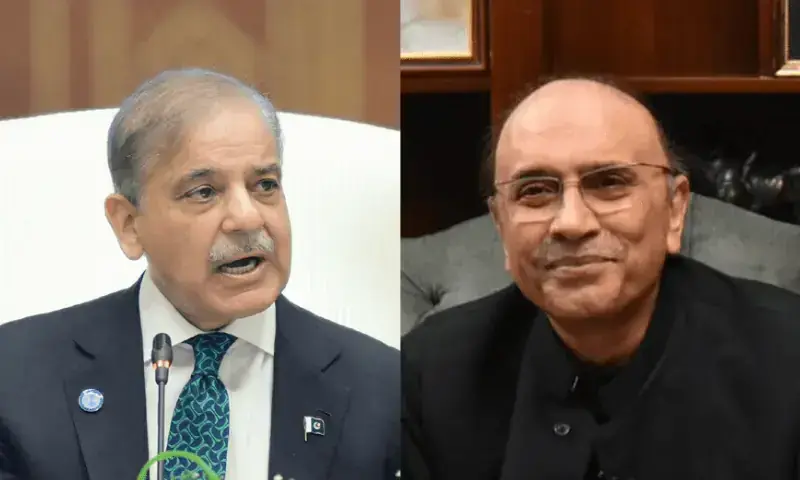
zardari shehbaz among
| |

Zardari, Shehbaz among officials depositing gifts …

President Asif Ali Zardari, Prime Minister Shehbaz Sharif and other senior officials have deposited numerous gifts received from foreign dignitaries in the Toshakhana.

The government has released details of gifts received by senior officeholders during the recent period. The Cabinet Division has also made records of gifts received by public officials since 2002 available on its official website.

Information Minister Attaullah Tarar said details of deposited gifts are published periodically. He said the records cover gifts received by the president, prime minister, deputy prime minister, federal ministers and other government officials.

However, the names of the foreign dignitaries who presented the gifts have not been made public.

The Cabinet Division has stated that the valuation of some of the newly listed gifts is still being completed. It has also clarified that the published information is based on records and declarations submitted by individuals and departments.

The records show that President Zardari received several valuable and ceremonial items. These included a tea set, sword, golden desert model, woollen overcoat and a Vacheron Constantin Geneve wristwatch.

Other gifts listed for the president included a decorative piece, ceremonial sabre set, chessboard, serving bowl and an oil painting.

First Lady Assefa Bhutto-Zardari and Bakhtawar Bhutto-Zardari also received jewellery. The records show that both received necklaces. Jewellery sets were also listed among their gifts.

Assefa Bhutto-Zardari additionally received a Kumis set.

Prime Minister Shehbaz Sharif also received a wide range of gifts. The items included shields, souvenirs, portraits, ties, frames and swords.

Some jewellery items were also listed among the gifts received by the prime minister. The records further show several watches, including Rolex and Patek Philippe models.

Other items included a coin, traditional dress, clock, sugar bowl and car model. Cups, pens and cufflinks were also among the listed gifts.

Deputy Prime Minister Ishaq Dar received several items as well. His gifts included a decorative piece and a traditional Chinese stamp.

The records also mention a Burmese string puppet, a Myanmar cultural frame, a Rolex watch, vase, medal and Chinese leather belt.

Dar also received an Egyptian statue, pen and cufflink set.

Several other federal officials were also listed in the records.

Economic Affairs Minister Ahad Khan Cheema received a book about Uzbekistan and a T-shirt. Economic Affairs Secretary M. Humair Karim received a ballpoint pen.

Information Minister Tarar was listed as having received a Rolex watch.

Several members of the president’s staff also received watches. These included the military secretary, chief security officer, Air ADC, principal staff officer and presidential spokesperson.

National Assembly Speaker Ayaz Sadiq received a large ceramic jar. Senator Saleem Mandviwalla received a Bvlgari watch.

Former NAB chairman retired Lt Gen Nazir Ahmed received a wristwatch and an INTERPOL commemorative book.

Deputy Chief of State Protocol Hafeezullah received a Tag Heuer watch.

Special Assistant to the Prime Minister on Foreign Affairs Tariq Fatemi received a Rolex watch and a hand-chased tea set.

Prime Minister’s spokesperson for foreign media Mosharraf Ali Zaidi received a Tag Heuer watch.

Special Assistant to the Prime Minister for Industries and Production Haroon Akhter received a hand-chased tea set with 24-karat gold plating.

The government has said the details of Toshakhana gifts will continue to be uploaded periodically.

The Cabinet Division has also placed a disclaimer on the records. It said the information is based on available records and declarations made by officials and departments under the rules applicable at the time.

Similar Posts

  • | |

    Federal Shariat Court to hear challenge to under-1…

    ISLAMABAD: A legal challenge to Punjab’s recently enacted law criminalising marriages involving individuals under the age of 18 has moved forward after the Federal Shariat Court cleared procedural objections and directed that the petition be fixed for hearing. The petition, filed by Mufti Muhammad Aslam through his counsel Mudassar Chaudhry Advocate, questions key provisions of the Punjab Child Marriage Restraint Act 2026. The Governor of Punjab, through the provincial secretary, and other relevant authorities have been named as respondents in the case. According to the petition, Sections 2(d), 2(c) and other provisions of the law are inconsistent with the Constitution and Islamic principles. The petitioner argues that declaring marriages involving individuals under the age of 18 as a criminal offence is contrary to Shariah and contends that the state has no authority to interfere in matters governed by Islamic law. The petitioner has requested the court to declare the provisions prescribing criminal penalties for under-18 marriages unlawful and strike down the disputed sections of the Act. The plea also seeks a stay on the implementation of the law until the Federal Shariat Court reaches a final decision. The case had initially faced a procedural objection because it challenged an ordinance that has since been passed by the Punjab Assembly and enacted as law. After the legislation was formally approved, the petitioner amended the plea to challenge the Act instead of the ordinance and resubmitted it before the court. Following the amendment, the Registrar of the Federal Shariat Court removed the objection and ordered that the matter be scheduled for hearing before the bench. The upcoming proceedings are expected to attract significant legal and public attention, as they concern the interpretation of child marriage laws, constitutional provisions and Islamic jurisprudence. The court’s eventual ruling could have important implications for the implementation of the Punjab Child Marriage Restraint Act 2026 and the broader debate surrounding the legal age of marriage in Pakistan. Until the court hears the matter, the law remains in force unless a stay order is granted during subsequent proceedings.

  • | |

    Justin Baldoni’s company ordered to pay New York…

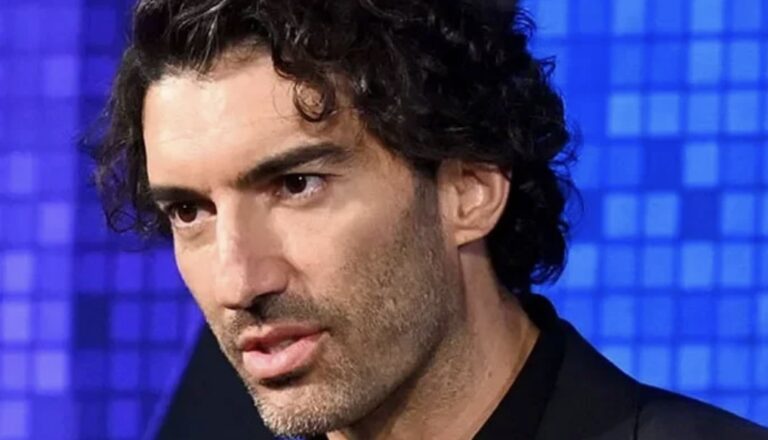
    Justin Baldoni’s production company, Wayfarer Studios, has suffered another legal setback after a New York court ordered it to pay more than $171,000 in legal fees to The New York Times. The ruling comes after the studio’s defamation lawsuit against the newspaper was dismissed, marking the latest chapter in the long-running legal battle connected to the It Ends With Us controversy.  According to court documents, Justice Gerald Lebovits ordered Wayfarer Studios to pay $171,616.20 to cover a large portion of the newspaper’s attorney fees. The award stems from New York’s anti-SLAPP law, which is designed to protect journalists and media organizations from lawsuits that attempt to silence reporting on matters of public interest.  The dispute began after The New York Times published a December 2024 investigative report examining allegations made by actress Blake Lively regarding the production of It Ends With Us. The article detailed claims of sexual harassment and workplace retaliation and included allegations that a public relations campaign had been used to damage Lively’s reputation after she raised concerns.  In response, Wayfarer Studios filed a $250 million defamation lawsuit against the newspaper, arguing that the report relied on misleading information and unfairly portrayed Baldoni and the company. However, the case was dismissed in 2025 after a judge concluded that The New York Times had acted within the protections afforded to journalists reporting on issues of public concern. The court also found that Wayfarer had failed to provide sufficient evidence to support its defamation claims.  After winning the case, The New York Times sought reimbursement for the legal costs it incurred while defending itself. Although the newspaper initially requested more than $181,000 in attorney fees, the judge approved a slightly lower amount of $171,616.20. The court also rejected Wayfarer Studios’ request to delay the payment while pursuing an appeal, noting that a previous settlement had effectively waived that option.  The latest ruling adds to a difficult period for Baldoni and his production company, which have been involved in several high-profile legal disputes connected to It Ends With Us. While many of those matters have now been resolved or settled, the financial consequences continue to unfold.  Neither Justin Baldoni nor Wayfarer Studios had publicly commented on the latest order at the time of publication. Meanwhile, The New York Times welcomed the outcome, maintaining that its reporting was accurate, responsibly sourced and protected under the law. 

  • |

    French and British coastguards rescue over 150 migrants following engine fire in English Channel

    Joint emergency response teams from France and the United Kingdom rescued 157 migrants after their vessel caught fire during an attempted crossing of the English Channel early on Tuesday morning. The vessel, which departed from the northern coast of France near Normandy, was under monitoring by French maritime authorities when its engine caught fire in France’s search-and-rescue zone close to British territorial waters. The blaze caused the boat’s condition to deteriorate rapidly, forcing emergency crews to initiate an immediate extraction operation involving naval helicopters, lifeboats, and medical units from both nations. Prior to the engine fire, French patrol vessels had retrieved five individuals who requested medical aid overnight. Maritime officials noted that passengers making irregular crossings frequently decline preventative assistance from coastal patrols, accepting aid only when confronted with catastrophic emergencies. All rescued individuals were disembarked at the northern French port of Boulogne-sur-Mer for formal health evaluations and processing. Authorities confirmed that no fatalities were recorded during the incident.

  • | | |

    PSX gains nearly 1,380 points in early Friday trad…

    The Pakistan Stock Exchange (PSX) staged a strong recovery during the first half of trading on Friday, with the benchmark KSE-100 Index climbing nearly 1,380 points before trading was temporarily suspended for the weekly Friday prayer break. The market opened on a positive note, extending gains throughout the morning session as investors returned to selective buying following recent losses driven by regional geopolitical tensions. By midday, the KSE-100 Index had risen 1,378 points, or 0.79%, to reach 176,926. During intraday trading, the benchmark touched a high of 177,108.66 before easing slightly. The index also found support around 176,405.33, indicating sustained buying interest across key sectors. Trading activity remained steady, with more than 101.8 million shares changing hands during the morning session. The total value of traded shares reached approximately Rs6.96 billion, reflecting healthy market participation despite the shortened trading period. Trading was suspended at midday in line with the Pakistan Stock Exchange’s routine Friday prayer break and was scheduled to resume later in the afternoon. The market’s rebound followed a volatile trading week shaped by uncertainty in the Middle East and fluctuations in global oil prices. Investors appeared to set aside concerns over rising regional tensions and instead focused on attractive valuations in selected stocks. On Thursday, the benchmark index had closed at 175,547.98 after selling pressure weighed on investor sentiment. Friday’s recovery helped the market regain a significant portion of those losses. Broader market performance also remained positive, with the All-Share Index and several sectoral indices posting gains during the morning session. Market participants are expected to closely monitor both domestic economic developments and geopolitical events in the Middle East as trading resumes, with investors assessing their potential impact on market sentiment in the coming sessions.

  • |

    US Senate confirms Trump nominees for labor board, cementing Republican control

    The US Senate confirmed President Donald Trump’s nominees for two positions on the federal labour law enforcement agency on Friday. The move provides Republicans with the necessary votes to overturn several key decisions that previously supported union organising. The Republican-led Senate approved a block of over 70 federal government nominees in a 51–47 vote. Among those confirmed were James Macy and David Prouty to serve on the National Labor Relations Board. James Macy, a Republican, held several roles at the US Department of Labour after spending four decades representing employers in labour disputes. David Prouty, a former union lawyer serving as the board’s sole Democrat, was confirmed for a second term. The five-member board already held a 2–1 Republican majority prior to the confirmation vote. By tradition, the panel maintains two Democrats, two Republicans, and a chair designated by the president. The NLRB investigates complaints from private-sector workers and unions whilst overseeing workplace elections. Formal complaints filed by the general counsel are heard by administrative judges before reaching the full board, whose rulings can be appealed in federal court. This internal process faces ongoing legal challenges from companies such as Amazon and SpaceX, which argue that the framework violates the US Constitution. Under long-standing tradition, the board requires three affirmative votes to overturn established precedent. Existing Republican appointees Scott Mayer and Chairman James Murphy had previously stated they would not break with that practice without a third vote. Trump’s appointees are expected to target policies favoured by trade unions that contributed to a recent surge in organising efforts. Murphy and Mayer have already revived a rule making it harder to hold companies accountable as joint employers of contract workers, whilst relinquishing jurisdiction over a SpaceX case to another federal agency. The board previously lost its quorum and was unable to process cases last year after Trump took the unprecedented step of removing Democratic member Gwynne Wilcox. Her dismissal left hundreds of cases unresolved for nearly a year. Wilcox sued and brief reinstatement was granted before a federal appeals court paused and reversed the decision. In June, the US Supreme Court upheld Trump’s removal of a Democratic Federal Trade Commission member, ruling that statutory protections against removal without cause were invalid. Wilcox’s petition for Supreme Court review regarding an identical protection remains pending.

  • | |

    US and Japan join hands to stabilize weakening Jap…

    In a rare show of financial coordination, the United States and Japan have confirmed that they jointly intervened in currency markets last week to support the Japanese yen after it plunged to its weakest level in four decades against the US dollar. The move marks the first coordinated intervention between the two allies since 2011, when they acted together following Japan’s devastating earthquake and tsunami. The intervention comes as both governments seek to stabilize the yen and prevent further market volatility that could ripple across the global financial system. Japanese officials and US Treasury Secretary Scott Bessent made it clear that they are prepared to take additional coordinated action if needed to counter excessive fluctuations in the currency. Economists say the joint effort reflects growing concerns that a prolonged depreciation of the yen and instability in Japan’s government bond market could have wider consequences, including increased borrowing costs for the United States and heightened uncertainty in global markets. Analysts also believe that even limited interventions can discourage speculative trading by signaling that authorities are willing to act decisively. The yen has remained under pressure largely because Japan continues to maintain significantly lower interest rates than other major economies. While the Bank of Japan raised its benchmark interest rate to 1% in June—the highest level in nearly three decades—it remains well below the US Federal Reserve’s policy rate of 3.50% to 3.75%, making the dollar a more attractive choice for investors. Japan is also grappling with long-term economic challenges, including a shrinking working-age population, sluggish productivity growth and heavy dependence on imported energy priced in US dollars, all of which have contributed to the currency’s weakness. Japan’s Ministry of Finance stated that the coordinated intervention was aimed at countering excessive volatility and restoring orderly conditions in foreign exchange markets. Secretary Bessent echoed that message, saying the United States strongly supports Japan’s efforts to correct what it views as a significantly undervalued yen. President Donald Trump also defended the move, saying Japan had sought assistance in stabilizing its currency and reaffirming Washington’s commitment to supporting its longtime ally. Following the announcement, the dollar briefly weakened against the yen before regaining some ground. Market observers estimate that Japan may have spent nearly $59 billion purchasing yen in recent interventions, while reports suggest the United States may have bought between $5 billion and $10 billion worth of the Japanese currency, although US officials have not officially confirmed the amount. Financial markets are now closely watching whether further coordinated interventions will be required if pressure on the yen continues, with analysts expecting both governments to remain ready to act in order to preserve stability in global currency markets.

Leave a Reply

Your email address will not be published. Required fields are marked *